Polyester is the backbone of India’s synthetic textile industry, and India is now among the largest producers and consumers of polyester yarn in the world. Whether you’re a fabric mill, a garment exporter, or a home textile brand, choosing the right polyester yarn suppliers india directly affects your fabric quality, dyeing consistency, and delivery reliability. This article walks through the different categories of polyester yarn on the market, what separates a good supplier from a mediocre one, and how a Surat-based, vertically integrated manufacturer like Madhusudan Group fits into a modern sourcing strategy.
The Different Types of Polyester Yarn
Not all “polyester yarn” is the same product. Buyers should understand the main categories before comparing suppliers:
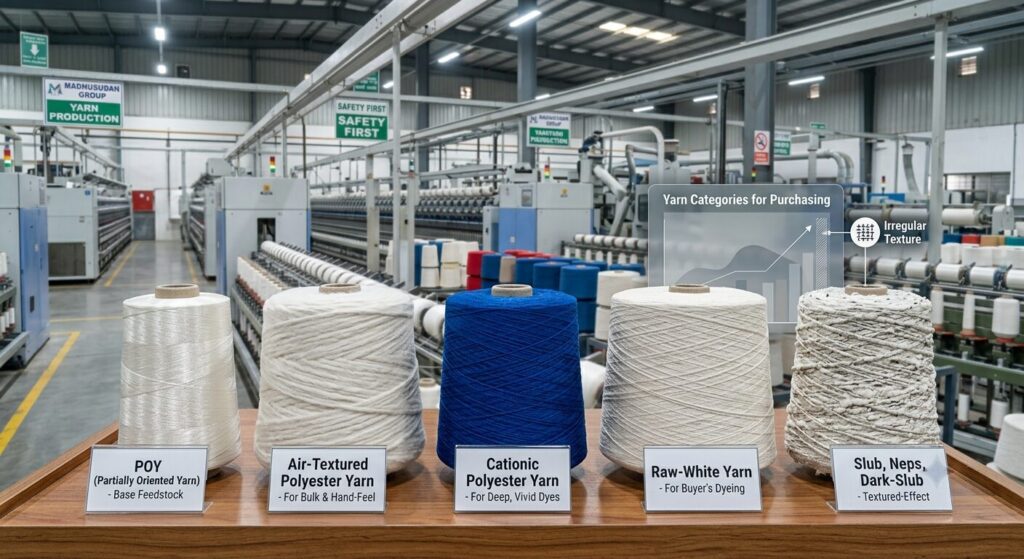
- POY (Partially Oriented Yarn) the base filament yarn used as a feedstock for further texturizing.
- Air-textured / texturized polyester yarn POY that has been texturized to add bulk, stretch, and a more natural hand-feel, commonly used in suiting, shirting, and home furnishing fabrics.
- Cationic polyester yarn a modified polyester that accepts basic (cationic) dyes, producing deeper, more vivid, and more consistent shades than standard polyester important for fashion fabrics and sarees.
- Dyed and raw-white yarn yarn supplied either pre-dyed to a specific shade or in raw-white form for the buyer’s own dyeing process.
- Slub, neps, and dark-slub effect yarns texture-effect yarns used to create fabric with a deliberately irregular, fashion-forward surface.
Knowing which of these your fabric program actually needs rather than asking generically for “polyester yarn” will get you faster, more accurate quotes from any supplier.
Trading House vs. Integrated Manufacturer for polyester yarn suppliers india.
Broadly, polyester yarn buyers in India source from two kinds of suppliers:
- Trading houses / consolidators, who buy from multiple mills and resell. These can offer a wide catalog but less control over quality consistency and lead times, since they don’t control production.
- Vertically integrated manufacturers, who texturize, dye, weave, and sometimes process fabric under one roof. These suppliers typically offer tighter quality control, shorter communication chains, and better batch-to-batch color consistency because dyeing and yarn production sit inside the same organization.
For color-critical or high-volume programs, integrated manufacturers are usually the safer long-term partner, even if a trading house occasionally quotes a marginally lower price on a single order.
What Sets Madhusudan Group’s Polyester Yarn Apart
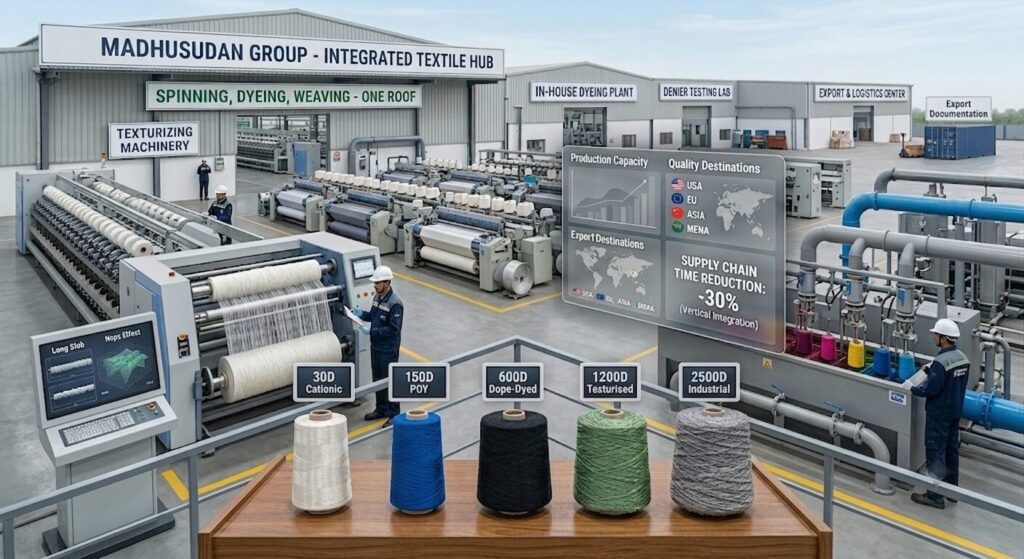
Madhusudan Group, headquartered in Surat with manufacturing at Palsana, Gujarat, has been in polyester and fancy yarn production for decades and has built its business specifically around air-textured, cationic, and dyed polyester yarn. Key strengths worth evaluating against your requirements:
- Wide denier range polyester and cationic polyester yarn spanning roughly 30 to 2,500 denier, covering everything from fine shirting yarns to heavier home-textile and industrial deniers.
- Texturizing technology modern air-texturizing machinery capable of producing plain, slub, neps, dark-slub, and long-slub effect yarns for fashion-forward fabric.
- In-house dyeing a dedicated yarn dyeing plant, which matters enormously for buyers who need consistent shade matching across large production runs rather than managing dyeing separately with a third party.
- Vertical integration into weaving yarn, dyeing, and weaving under one group structure (including sister concerns focused on weaving and fabric trading), which shortens the supply chain from yarn to finished fabric.
- Export experience a track record supplying international markets, with marketing presence in key sourcing hubs, useful for overseas buyers who want a supplier already familiar with export documentation and quality expectations.
Questions to Ask Any Polyester Yarn Supplier
Before you commit to a supplier relationship, ask:
- What is your monthly production capacity for the specific denier/effect I need?
- Do you dye in-house, or do you outsource dyeing?
- Can you share lab-dip samples and typical shade-matching tolerance?
- What is your standard lead time from order confirmation to shipment?
- Do you have export references to my region, and can you handle the required documentation?
- What is your minimum order quantity per shade/denier combination?
Red Flags to Watch For
- Suppliers who can’t tell you their actual monthly capacity by product type
- No in-house dyeing capability for color-critical orders
- Vague answers about lead times or export documentation experience
- No sample cards or physical yarn samples available on request
Final Thoughts
Polyester yarn sourcing in India rewards buyers who go one level deeper than a generic supplier list. Understanding whether you need POY, texturized, cationic, or effect yarn and whether your supplier controls dyeing and weaving in-house will save time and reduce quality risk. Vertically integrated manufacturers based in established textile hubs like Surat, such as Madhusudan Group, are generally better positioned for buyers who need consistent shade matching and reliable lead times across large production runs.