Linen has been prized for thousands of years for its unmatched breathability, strength, and timeless elegance. As sustainability becomes a top priority for fashion and home textile brands, linen made from the flax plant has seen a significant resurgence in demand. However, the quality of the final linen fabric depends almost entirely on the expertise of the linen yarn manufacturer behind it.
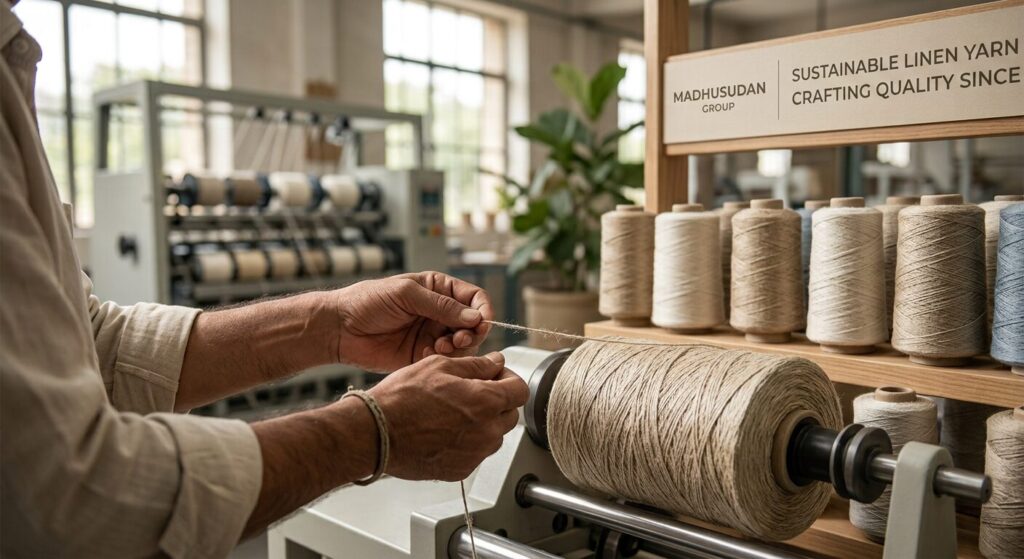
Madhusudan Group, a vertically integrated textile manufacturer based in Surat, Gujarat, brings its decades of yarn, dyeing, and weaving expertise to the growing linen and linen-blended yarn segment helping apparel and home textile brands source natural, breathable, and sustainably positioned yarns with reliable quality and consistency.
This guide covers everything about linen yarn: how it’s made, its key benefits, its various types, and why Madhusudan Group is well-positioned as your linen yarn sourcing partner.
What is Linen Yarn?
Linen yarn is spun from the fibers of the flax plant (Linum usitatissimum), one of the oldest cultivated fibers in human history. Unlike cotton, which comes from a seed pod, linen fiber is extracted from the stem of the flax plant through a process that requires significant skill and precision. This natural origin gives linen yarn its characteristic strength, natural texture, and cool, breathable feel qualities that have made it a staple in warm-climate clothing and premium home textiles for centuries.
The Linen Yarn Manufacturing Process
A skilled linen yarn manufacturer like Madhusudan Group follows a meticulous, multi-step process to transform raw flax stalks into finished yarn:
1. Retting
Flax stalks are soaked in water or left in fields to allow natural microbial action to break down the pectin binding the fibers to the woody stem. This step is crucial under-retting or over-retting can significantly affect fiber quality.
2. Breaking and Scutching
The retted stalks are mechanically broken to separate the woody core (shive) from the long fibers, followed by scutching, which removes remaining woody particles.
3. Hackling
The fibers are combed to separate long, fine “line” fibers from shorter “tow” fibers. Line fibers are used for high-quality, fine yarns, while tow fibers are used for coarser, rustic yarns.
4. Spinning
Linen yarn can be spun using two primary methods: – Wet Spinning: Fibers are spun in hot water, producing fine, smooth, and lustrous yarn ideal for apparel and fine woven fabrics. – Dry Spinning: Fibers are spun without water, resulting in a coarser, more textured yarn commonly used for rustic home textiles and canvas.
5. Finishing and Winding
The spun yarn is cleaned, conditioned, and wound onto cones or hanks, ready for dyeing, weaving, or shipment to customers.
Types of Linen Yarn Offered by Manufacturers
A professional linen yarn manufacturer typically provides a range of options to meet diverse market needs:
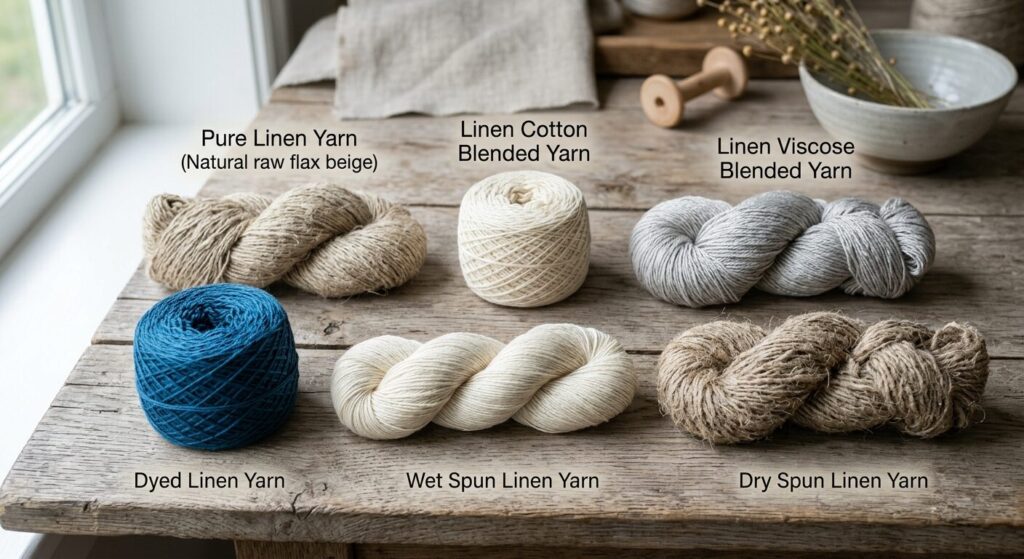
- Pure Linen Yarn – 100% flax fiber, prized for its natural texture and breathability.
- Linen Cotton Blended Yarn – Combines the softness of cotton with the strength and coolness of linen, offering better drape and easier care.
- Linen Viscose Blended Yarn – Merges linen’s texture with the silky sheen of viscose yarn for elegant drape.
- Dyed Linen Yarn – Available in a wide palette of colors for ready-to-weave applications (see our dyed yarn manufacturer page for custom shade options).
- Wet Spun Linen Yarn – Fine, smooth yarn suited for high-end apparel and shirting fabrics.
- Dry Spun Linen Yarn – Coarser yarn ideal for upholstery, canvas, and rustic-style textiles.
Key Benefits of Linen Yarn
1. Exceptional Breathability
Linen fibers have a naturally porous structure that allows excellent air circulation, making linen yarn one of the best choices for hot-weather clothing.
2. Outstanding Durability
Linen is one of the strongest natural fibers, with fibers that are even stronger when wet resulting in fabrics that withstand years of use and washing.
3. Natural Moisture-Wicking
Linen can absorb up to 20% of its weight in moisture without feeling damp, keeping the wearer cool and dry.
4. Hypoallergenic Properties
Linen is naturally resistant to bacteria and allergens, making it a great choice for sensitive skin and bedding applications.
5. Timeless Aesthetic
The characteristic slubby texture and matte luster of linen yarn give fabrics a naturally elegant, textured appearance that never goes out of style.
6. Sustainability
Flax plants require significantly less water and fewer pesticides than cotton, and nearly every part of the plant can be used, making linen one of the more environmentally responsible natural fibers available today, as noted by the European Confederation of Linen and Hemp.
Applications of Linen Yarn
- Apparel: Shirts, dresses, trousers, and summer wear
- Home Textiles: Bed linens, tablecloths, curtains, and upholstery
- Fashion Accessories: Bags, scarves, and woven accessories
- Blended Fabrics: Linen-cotton or linen-viscose blends for enhanced comfort and drape
- Industrial Uses: Canvas, twine, and heavy-duty woven materials
How to Choose the Right Linen Yarn Manufacturer
Selecting the right linen yarn manufacturer requires careful evaluation of several factors:
1. Fiber Sourcing
Ask where the manufacturer sources its flax fiber from. European flax (particularly from France, Belgium, and the Netherlands) is widely regarded as some of the highest quality in the world.
2. Spinning Technology
Determine whether the manufacturer offers wet-spun yarn (for fine apparel), dry-spun yarn (for rustic textiles), or both, depending on your product requirements.
3. Count Range and Consistency
A reliable manufacturer should offer a wide range of yarn counts with consistent thickness and minimal slub variation, unless a rustic, textured look is specifically desired.
4. Dyeing Capabilities
Since linen has a naturally absorbent structure, verify that the manufacturer’s dyeing process ensures deep, even color penetration and strong colorfastness.
5. Certifications
Look for certifications such as European Flax, OEKO-TEX Standard 100, and GOTS, which confirm sustainable sourcing and safe production practices.
6. Minimum Order Quantities and Lead Times
Confirm the manufacturer’s MOQ policies and average lead times, especially if you require fast turnaround for seasonal collections.
7. Blending Capabilities
If your product line requires blended yarns such as linen-cotton or linen combined with a stretch yarn for added flexibility ensure the manufacturer has the technical capability to produce consistent blends.
Linen Yarn vs. Other Yarns: A Quick Comparison
| Property | Linen Yarn | Cotton Yarn | Viscose Yarn |
| Origin | Flax plant (bast fiber) | Cotton plant (seed fiber) | Regenerated cellulose |
| Strength | Very High | Moderate | Moderate |
| Breathability | Excellent | Good | Good |
| Texture | Slightly coarse, textured | Soft | Smooth, silky |
| Wrinkle Resistance | Low (natural crease) | Moderate | Moderate |
| Sustainability | High | Moderate | Moderate-High |
Why Choose Madhusudan Group as Your Linen Yarn Manufacturer
As a vertically integrated textile group operating out of Surat and Palsana, Gujarat, Madhusudan Group offers several advantages for brands sourcing linen and linen-blended yarn:
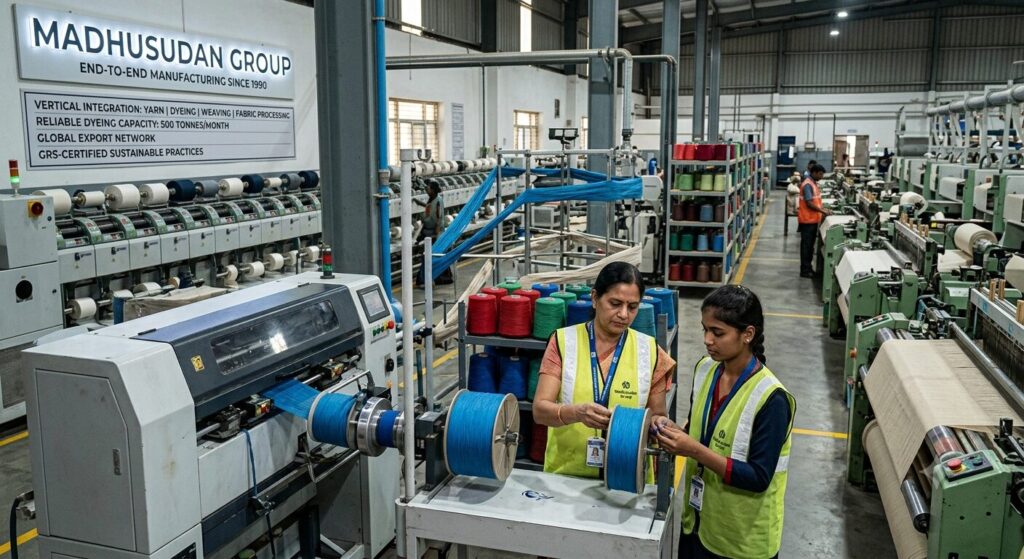
- End-to-End Manufacturing: Madhusudan Group manages yarn manufacturing, yarn dyeing, weaving, and fabric processing in-house, giving buyers a single accountable partner from fiber to finished fabric.
- Established Group Companies: Group entities such as Madhusudan Rayons Pvt. Ltd. and Sudamo Impex Pvt. Ltd. bring specialized expertise across yarn production and fabric trading, supporting diverse linen and linen-blend requirements.
- Reliable Dyeing Infrastructure: With a yarn dyeing capacity of roughly 500 tonnes per month, Madhusudan Group can deliver evenly dyed linen and linen-blended yarns with consistent shade accuracy.
- Four Decades of Experience: Since its first dyeing mill was established in 1990, Madhusudan Group has continually expanded its infrastructure and expertise across the textile value chain.
- International Export Network: With a presence across the Middle East, Southeast Asia, Europe, and beyond, Madhusudan Group is equipped to fulfill both domestic and export orders reliably.
- Sustainability Commitment: Madhusudan Group has invested in GRS-certified recycled yarn lines, reflecting a broader commitment to responsible manufacturing that pairs well with linen’s natural sustainability credentials.
Frequently Asked Questions
Q1: Why does linen fabric wrinkle so easily?
Linen fibers are naturally stiff and less elastic than cotton, which causes visible creasing. This is considered part of linen’s natural charm and authenticity.
Q2: Is linen yarn suitable for year-round wear?
While linen is best known for summer wear due to its breathability, heavier-weight linen yarns can also be used for transitional and layered clothing in cooler months.
Q3: Can linen yarn be blended with synthetic fibers?
Yes, linen is commonly blended with polyester, viscose, or elastane to improve wrinkle resistance, drape, or stretch, depending on the desired end use.
Q4: What is the difference between wet-spun and dry-spun linen yarn?
Wet-spun linen yarn is finer and smoother, ideal for apparel, while dry-spun linen yarn is coarser and more textured, better suited for home textiles and heavy-duty fabrics.
Q5: How can I verify the quality of linen yarn before bulk ordering?
Request yarn samples and lab test reports for tensile strength, count consistency, and colorfastness before placing a bulk order.
Conclusion
A dependable linen yarn manufacturer is the foundation of any successful linen-based product line. From breathable summer apparel to elegant home textiles, high-quality linen yarn delivers the durability, natural texture, and sustainability that modern consumers increasingly demand and Madhusudan Group’s vertically integrated, Surat-based operations make it a dependable long-term sourcing partner.
Ready to source premium linen yarn for your next collection? Get in touch with Madhusudan Group for samples and pricing, or explore our complementary yarn ranges including viscose yarn, dyed yarn, and stretch yarn to build the perfect fabric blend for your brand.