Color is often the very first thing a customer notices about a fabric or garment and getting that color exactly right, batch after batch, is one of the biggest challenges in textile production. This is why choosing an experienced dyed yarn manufacturer is so critical. From vibrant fashion collections to muted home textile palettes, the quality of dyed yarn directly impacts the final look, feel, and durability of every product made from it.
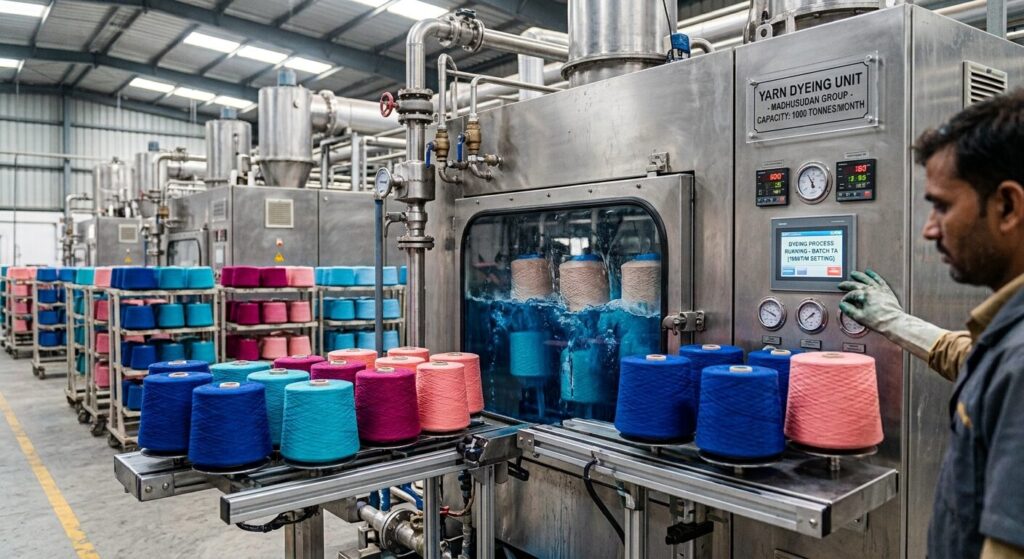
Madhusudan Group operates one of the more established yarn dyeing setups in Surat, Gujarat, with a dedicated dyeing plant capable of processing approximately 1000 tonnes of yarn per month. This scale, combined with decades of textile manufacturing experience, allows Madhusudan Group to deliver accurate, repeatable color across both trial orders and large bulk production runs.
In this guide, we’ll explore the yarn dyeing process, the different types of dyed yarn available, their benefits, and why Madhusudan Group is a dependable partner for your dyed yarn requirements.
What is Dyed Yarn?
Dyed yarn refers to yarn that has been colored before it is woven or knitted into fabric as opposed to “piece dyeing,” where an already-woven or knitted fabric is dyed afterward. Yarn dyeing allows for greater design flexibility, enabling manufacturers to create intricate patterns such as stripes, checks, and jacquards directly during the weaving or knitting process, since each yarn is already a specific color before fabric construction begins.
Dyed yarn can be produced from a wide variety of base fibers, including cotton, viscose, linen, polyester, and blended yarns, making it one of the most versatile categories in yarn manufacturing.
The Yarn Dyeing Process
A professional dyed yarn manufacturer like Madhusudan Group typically follows these key stages:
1. Yarn Preparation
Raw or “greige” yarn is wound onto perforated dyeing cones, hanks, or beams, depending on the dyeing method to be used. Any impurities, oils, or sizing agents are removed through a scouring process to ensure even dye absorption.
2. Selection of Dyeing Method
- Cone Dyeing (Package Dyeing): Yarn is wound onto perforated cones and dyed under pressure in a dye bath, ideal for bulk production and consistent shade matching.
- Hank Dyeing: Yarn is loosely wound into hanks before dyeing, often producing a softer, bulkier feel commonly used for hand-knitting yarns and specialty textiles.
- Space Dyeing: A technique used to apply multiple colors along a single yarn strand for unique, multi-toned effects.
- Solution Dyeing (Dope Dyeing): Pigments are added to the fiber solution before extrusion (used primarily for synthetic yarns), resulting in exceptional colorfastness.
3. Dye Selection
Depending on the fiber type, manufacturers select the appropriate dye class: – Reactive Dyes – Used for cotton, viscose, and other cellulosic fibers; forms a strong chemical bond for excellent wash-fastness. – Disperse Dyes – Used for polyester and synthetic yarns. – Acid Dyes – Used for protein fibers like wool and nylon. – Vat Dyes – Known for superior colorfastness, often used for denim and workwear yarns.
4. Dyeing and Fixation
The yarn is immersed in the dye bath under controlled temperature, pH, and time settings to ensure even color penetration. A fixing agent is then applied to lock in the color and improve wash and rub fastness.
5. Washing and Drying
After dyeing, the yarn is thoroughly washed to remove unfixed dye and chemicals, then dried under controlled tension to maintain its shape and elasticity.
6. Quality Control
Every batch is checked for shade matching against approved lab dips, along with testing for colorfastness to washing, rubbing, and light exposure.
Types of Dyed Yarn Offered by Manufacturers
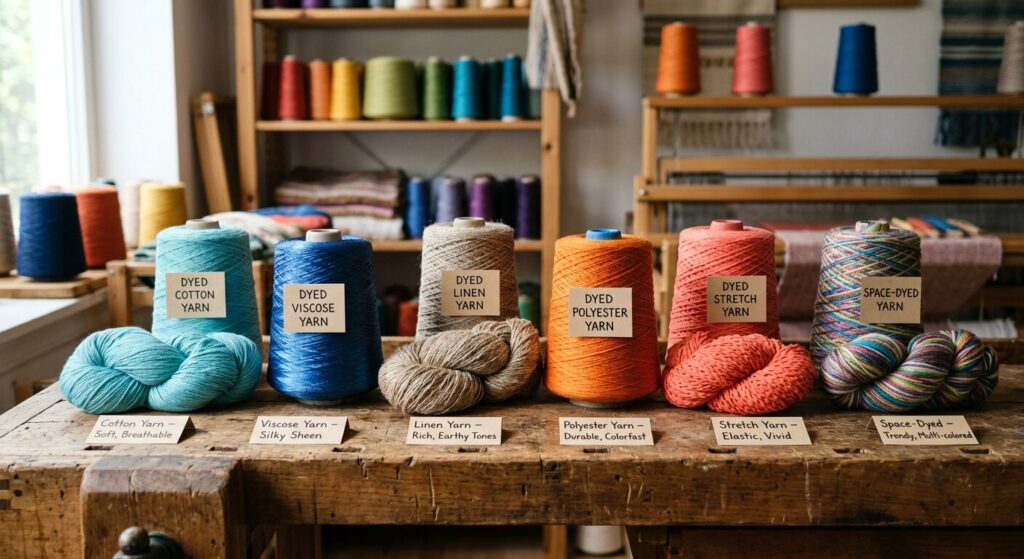
- Dyed Cotton Yarn – Soft, breathable, and ideal for everyday apparel and home textiles.
- Dyed Viscose Yarn – Combines vibrant color with silk-like sheen; explore our viscose yarn manufacturer page for more details.
- Dyed Linen Yarn – Rich, earthy tones suited for natural, textured fabrics; see our linen yarn manufacturer guide.
- Dyed Polyester Yarn – Highly colorfast and durable, popular for activewear and outdoor textiles.
- Dyed Stretch Yarn – Combines elasticity with vivid color, perfect for form-fitting garments; learn more from our stretch yarn manufacturer page.
- Space-Dyed Yarn – Multi-colored yarn used for trendy, artisanal fabric designs.
Key Benefits of Sourcing from a Professional Dyed Yarn Manufacturer
1. Design Flexibility
Yarn dyeing enables the creation of woven patterns like stripes, checks, and jacquards that simply aren’t possible with piece-dyed fabric.
2. Superior Colorfastness
Because the dye penetrates the fiber at the yarn stage, properly dyed yarn typically offers better wash and light fastness compared to garment or piece dyeing.
3. Consistent Bulk Color Matching
Established manufacturers use standardized lab-dip systems and spectrophotometer shade matching to ensure consistency across large production runs.
4. Wide Color Range
A skilled dyed yarn manufacturer can typically match any color from standard systems like Pantone or Pantone TCX, giving brands complete creative freedom.
5. Reduced Production Time
Since the yarn arrives pre-dyed and ready for weaving or knitting, manufacturers can skip a separate fabric-dyeing stage, streamlining production timelines.
Applications of Dyed Yarn
- Apparel: Shirts, dresses, sweaters, and knitwear with striped or checked patterns
- Home Textiles: Upholstery, curtains, and decorative fabrics with woven color patterns
- Denim and Workwear: Vat-dyed yarns known for exceptional durability
- Fashion Accessories: Scarves, bags, and multi-colored woven items
- Hand-Knitting Yarns: Hank-dyed yarns favored by craft and hobbyist markets
How to Choose the Right Dyed Yarn Manufacturer
1. Dyeing Infrastructure
Ensure the manufacturer has an in-house dyeing facility with modern package or hank dyeing machines, rather than outsourcing dyeing to third parties, which can lead to inconsistent quality and longer lead times.
2. Color Matching Accuracy
Ask about their lab-dip process and whether they use spectrophotometers for objective, repeatable shade matching rather than relying solely on visual inspection.
3. Fastness Testing
A reputable manufacturer should provide test reports for colorfastness to washing, rubbing (crocking), light, and perspiration especially important for export-quality orders.
4. Range of Fiber Compatibility
Choose a manufacturer capable of dyeing multiple fiber types cotton, viscose, linen, polyester, and stretch blends so you can source all your colored yarn needs from a single, reliable partner.
5. Environmental Compliance
Look for manufacturers using eco-friendly dyeing practices, such as low-water dyeing technology and effluent treatment plants (ETPs), in line with standards set by organizations like ZDHC (Zero Discharge of Hazardous Chemicals).
6. Minimum Order Quantities
Confirm whether the manufacturer can accommodate smaller trial or sample orders in addition to bulk production runs.
7. Turnaround Time
Since custom color matching can take time, ask about typical lead times from lab-dip approval to bulk dyeing and delivery.
Dyed Yarn vs. Piece-Dyed Fabric: What’s the Difference?
| Aspect | Dyed Yarn | Piece-Dyed Fabric |
| Dyeing Stage | Before weaving/knitting | After fabric construction |
| Pattern Capability | Stripes, checks, jacquards | Solid colors only |
| Colorfastness | Generally higher | Moderate to high |
| Cost | Higher (more processing steps) | Lower for solid colors |
| Best For | Patterned fabrics, premium apparel | Basic solid-color garments |
Why Choose Madhusudan Group as Your Dyed Yarn Manufacturer
Madhusudan Group’s dyeing capabilities are backed by real infrastructure and decades of operating experience in Surat and Palsana, Gujarat:
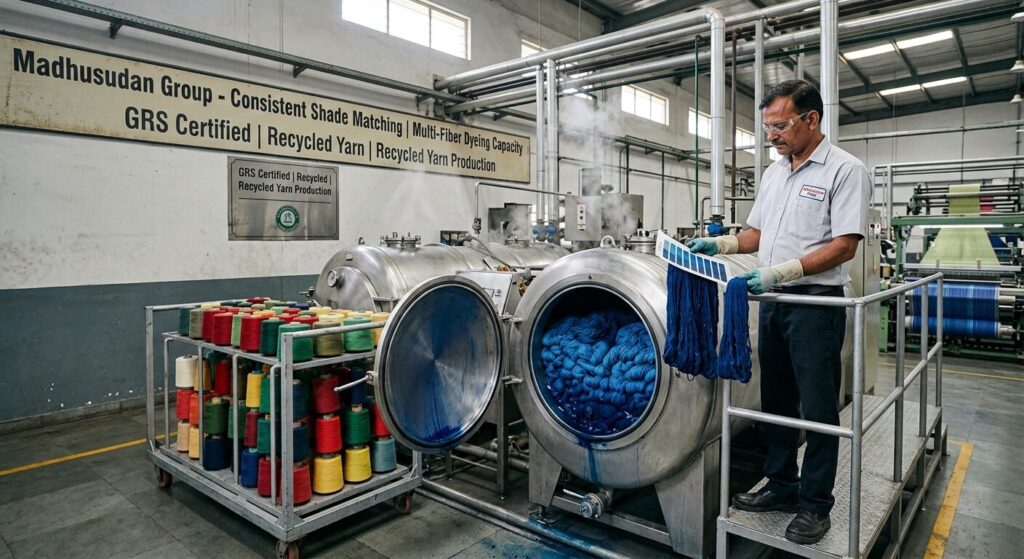
- Substantial Dyeing Capacity: A yarn dyeing plant with roughly 1000 tonnes per month capacity, supported by a large fleet of jet dyeing machines, enables consistent shade matching even on high-volume orders.
- Vertically Integrated Process: Because yarn manufacturing, dyeing, weaving, and fabric processing all happen within the Madhusudan Group ecosystem, color specifications carry through cleanly from yarn to finished fabric.
- Multi-Fiber Dyeing Expertise: Madhusudan Group dyes across cotton, viscose, polyester, and blended yarns, allowing brands to consolidate their colored-yarn sourcing with a single trusted partner.
- Decades of Track Record: Operating since the early 1975s, Madhusudan Group has built long-standing relationships with fabric manufacturers across India and export markets including the Middle East, Southeast Asia, and Europe.
- Responsible Manufacturing: Madhusudan Group’s investment in GRS-certified recycled yarn production reflects a broader commitment to responsible, traceable manufacturing practices.
Frequently Asked Questions
Q1: What is the difference between yarn dyeing and fabric dyeing?
Yarn dyeing colors the yarn before weaving or knitting, allowing for patterns like stripes and checks, while fabric dyeing colors the finished fabric, typically resulting in solid colors.
Q2: Which dye type offers the best colorfastness?
Vat dyes generally offer the best overall colorfastness, particularly for cellulosic fibers, though reactive dyes are also highly durable and widely used.
Q3: Can dyed yarn be custom color-matched to my brand’s exact shade?
Yes, most professional manufacturers can match custom shades using Pantone references or physical swatches through their lab-dip process.
Q4: Is dyed yarn more expensive than raw or greige yarn?
Yes, dyed yarn typically costs more due to the additional dyeing, fixing, and quality testing processes involved, but it offers design flexibility and time savings later in production.
Q5: What certifications indicate safe and sustainable dyeing practices?
Look for OEKO-TEX Standard 100, GOTS, and ZDHC compliance, which confirm the use of safe chemicals and responsible wastewater management.
Conclusion
Working with a trusted dyed yarn manufacturer ensures your brand consistently achieves the vibrant, accurate, and long-lasting colors your designs demand. From reactive-dyed cottons to solution-dyed synthetics, the right dyeing partner gives you the creative flexibility to bring any color vision to life and Madhusudan Group’s large-scale dyeing infrastructure in Surat, Gujarat makes it a capable partner for both boutique and bulk requirements.
Ready to bring vibrant, consistent color to your next collection? Contact Madhusudan Group for lab-dip samples and pricing, or explore our related yarn categories including viscose yarn, linen yarn, and stretch yarn.