Sustainability has stopped being a buzzword in the textile industry and become a sourcing requirement. Global apparel brands are setting hard targets for recycled fibre content, retailers are asking suppliers for traceability documents, and consumers are actively checking labels for eco-friendly claims. At the centre of this shift sits one material: recycled polyester yarn.
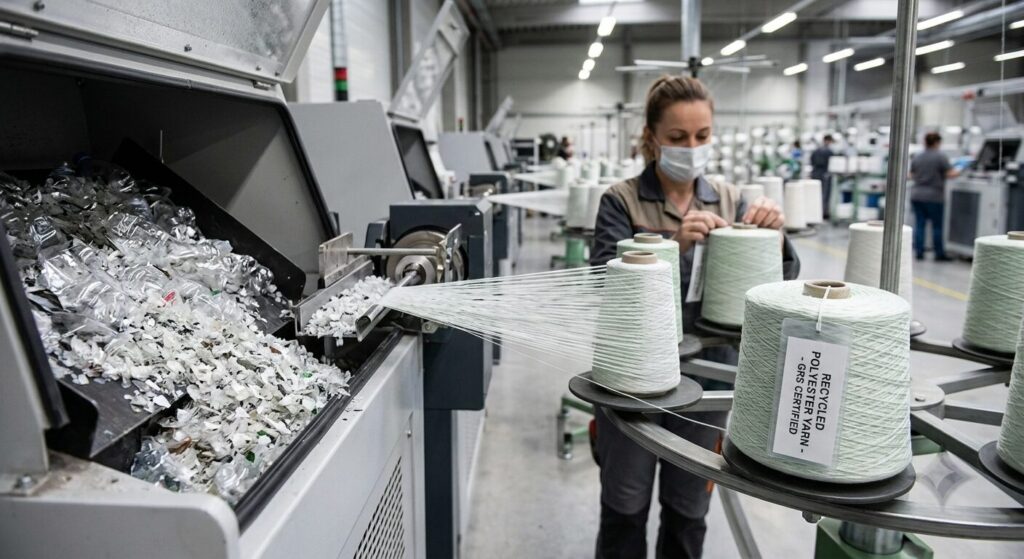
If you’re a garment manufacturer, fabric buyer, or brand sourcing team trying to understand this category what recycled polyester yarn actually is, how it’s made, how it compares to virgin polyester, and how to choose a reliable supplier this guide walks through everything you need before placing your next order.
What is Recycled Polyester Yarn?
Recycled polyester yarn, commonly called rPET yarn, is polyester yarn manufactured from recycled PET (Polyethylene Terephthalate) rather than newly manufactured virgin polymer. The raw material typically comes from two sources: post-consumer waste, such as used plastic water and soft-drink bottles, and post-industrial waste, such as fabric cuttings, rejected polyester fibre, and manufacturing scrap.
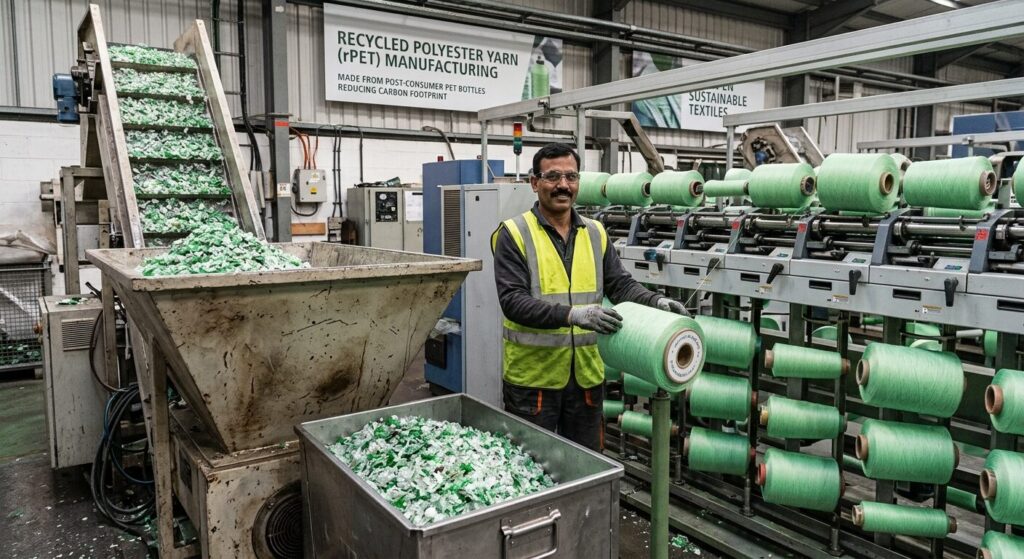
Instead of extracting fresh PTA (Purified Terephthalic Acid) and MEG (Monoethylene Glycol) from petrochemicals, manufacturers collect, clean, and reprocess existing plastic waste into polyester chips, which are then spun into yarn using largely the same spinning and texturising equipment used for virgin polyester.
The result is a yarn that looks, feels, and performs almost identically to standard polyester yarn but with a significantly smaller environmental footprint.
How is Recycled Polyester Yarn Made? The Step-by-Step Process
Understanding how to make polyester yarn from recycled sources helps explain why quality can vary so much between suppliers. The process generally follows these stages:
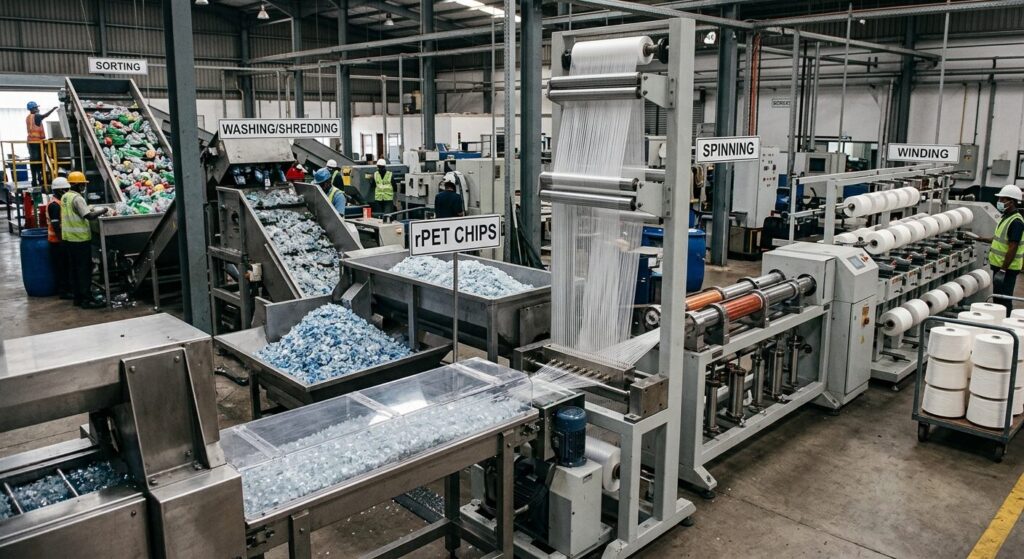
- Collection & Sorting: Used PET bottles and polyester waste are collected, sorted by colour and polymer grade, and stripped of labels, caps, and contaminants.
- Washing & Shredding: The sorted material is washed to remove dirt, adhesive, and residue, then shredded into small PET flakes.
- Melting & Chip Formation: Clean flakes are melted and re-formed into recycled polyester chips, similar to virgin PET chips.
- Extrusion & Spinning: The chips are melted again and extruded through a spinneret to form continuous filaments, which are then drawn to increase strength the same core step used in standard polyester yarn manufacturing.
- Texturising: Depending on the intended use, the yarn may be air-textured or false-twist textured to create bulk, stretch, and a fabric-friendly hand-feel.
- Quality Testing & Winding: Finished yarn is tested for denier consistency, tenacity, elongation, and colour, then wound onto cones for dispatch.
Reputable manufacturers also maintain batch-level traceability records, allowing brands to verify that the recycled content in their yarn genuinely originates from certified waste streams a growing requirement for GRS (Global Recycled Standard) compliance.
Recycled Polyester Yarn vs Virgin Polyester Yarn: How Do They Compare?
One of the most common questions buyers ask is whether recycled polyester yarn sacrifices quality. In well-manufactured rPET yarn, the answer is generally no.
- Strength & Durability: Comparable tenacity and abrasion resistance to virgin polyester when processed correctly.
- Feel & Appearance: Visually and texturally similar; most consumers cannot distinguish rPET fabric from virgin polyester fabric.
- Dyeability: Responds well to disperse dyeing, similar to virgin polyester, allowing consistent colour matching.
- Environmental Impact: Uses significantly less energy and water than virgin polyester production, and diverts plastic waste from landfills and oceans.
- Cost: Typically priced at a modest premium over commodity-grade virgin polyester due to collection and processing costs, though this gap continues to narrow as recycling infrastructure scales.
Where Does Recycled Polyester Yarn Fit Among Other Polyester Yarn Types?
Recycled polyester yarn isn’t a separate category from the standard range of polyester yarn types it’s a raw-material variant that can be produced across most of them. Understanding the broader landscape of polyester yarn types helps buyers see exactly where rPET fits in:
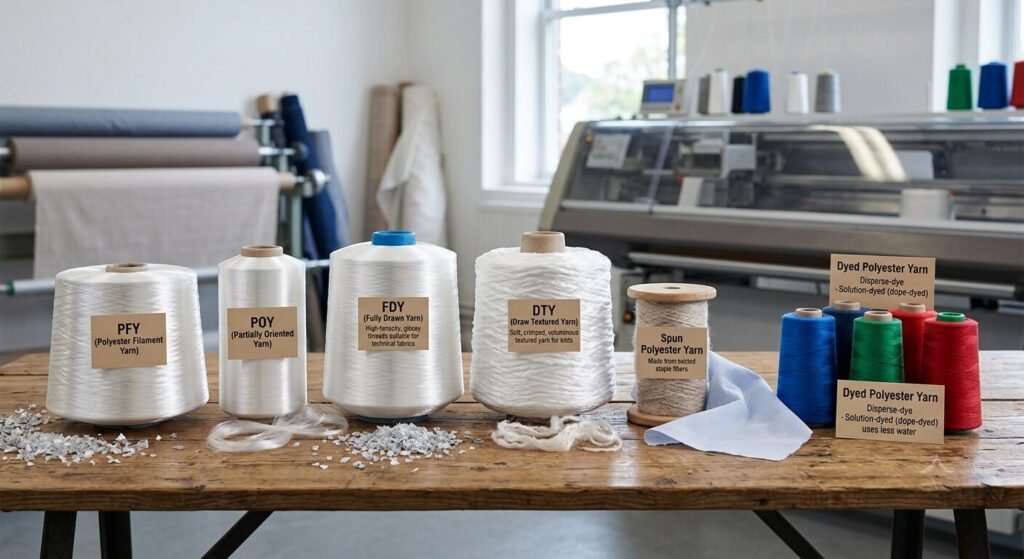
- Polyester Filament Yarn (PFY): Continuous filament yarn; can be produced from recycled or virgin chips.
- Partially Oriented Yarn (POY): The undrawn intermediate yarn used to produce DTY and FDY.
- Fully Drawn Yarn (FDY): High-tenacity yarn used in woven and technical fabrics; available in recycled variants.
- Draw Textured Yarn (DTY): Textured yarn for knits and stretch fabrics; one of the most common forms of recycled polyester yarn in the market.
- Spun Polyester Yarn: What is spun polyester yarn? It’s yarn made by twisting short staple fibres together rather than using continuous filaments recycled polyester staple fibre can also be spun this way for shirting and home-textile applications.
- Dyed Polyester Yarn: Recycled yarn can be dyed using the same disperse-dye processes used for virgin dyed polyester yarn, including solution-dyed (dope-dyed) options that use less water overall.
Certifications That Matter When Sourcing Recycled Polyester Yarn
Because “recycled” is a claim, not just a description, certifications matter enormously in this category. When evaluating polyester yarn manufacturers offering rPET, buyers should look for:
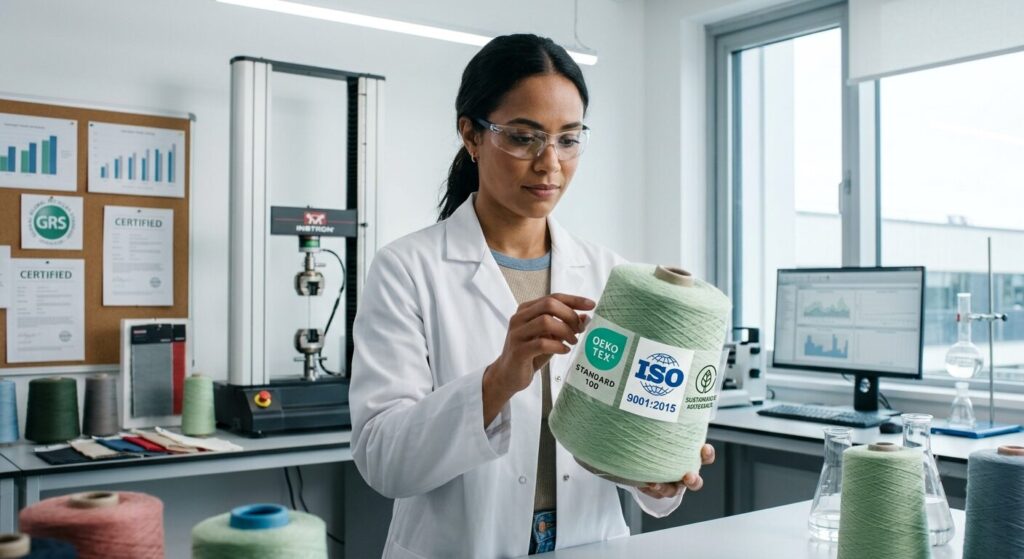
- GRS (Global Recycled Standard): Verifies recycled content, chain of custody, and responsible social and environmental production practices.
- OEKO-TEX Standard 100: Confirms the yarn is tested for harmful substances and is safe for use in apparel.
- ISO 9001:2015: Confirms a documented, audited quality management system across the manufacturing process.
Buyers who skip certification checks risk unverifiable sustainability claims a real reputational risk for brands making public commitments around recycled content.
What is Polyester Yarn Used For? Applications of Recycled Polyester Yarn
Recycled polyester yarn is now used across nearly every application where virgin polyester once dominated:
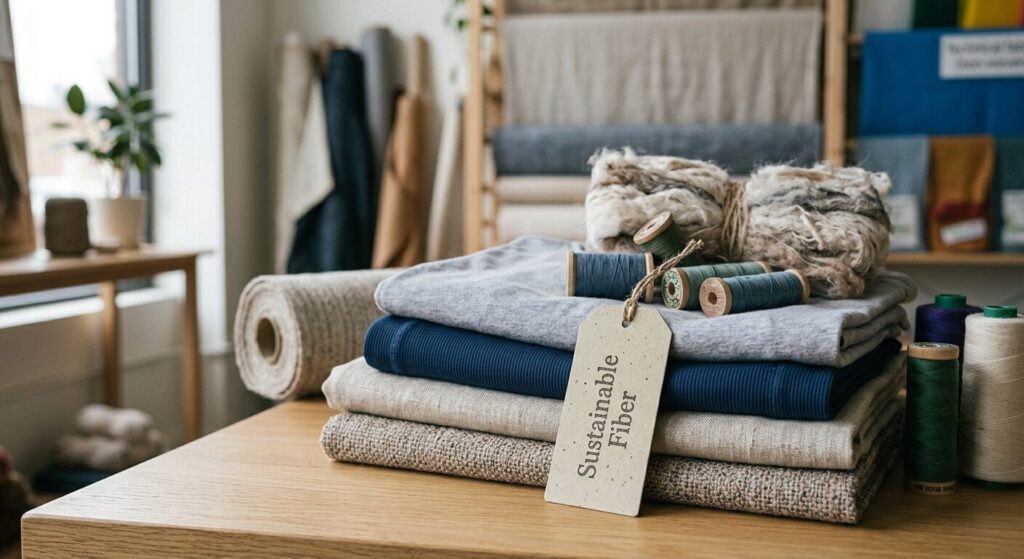
- Apparel: T-shirts, activewear, shirts, and dresses, especially for brands with public sustainability commitments
- Home Textiles: Curtains, upholstery, cushion covers, and bedsheets
- Technical & Industrial Fabrics: Non-wovens, filtration fabric, and select automotive interior applications
- Embroidery & Sewing Threads: Increasingly available in recycled variants for eco-conscious garment finishing
- Fashion & Value-Added Fabrics: Sarees, dress materials, and fancy yarn fabrics using recycled DTY with slub or twisted effects
Choosing a Reliable Recycled Polyester Yarn Manufacturer
Not all suppliers offering “recycled polyester yarn” are equal. Here’s what serious buyers should verify before placing an order:
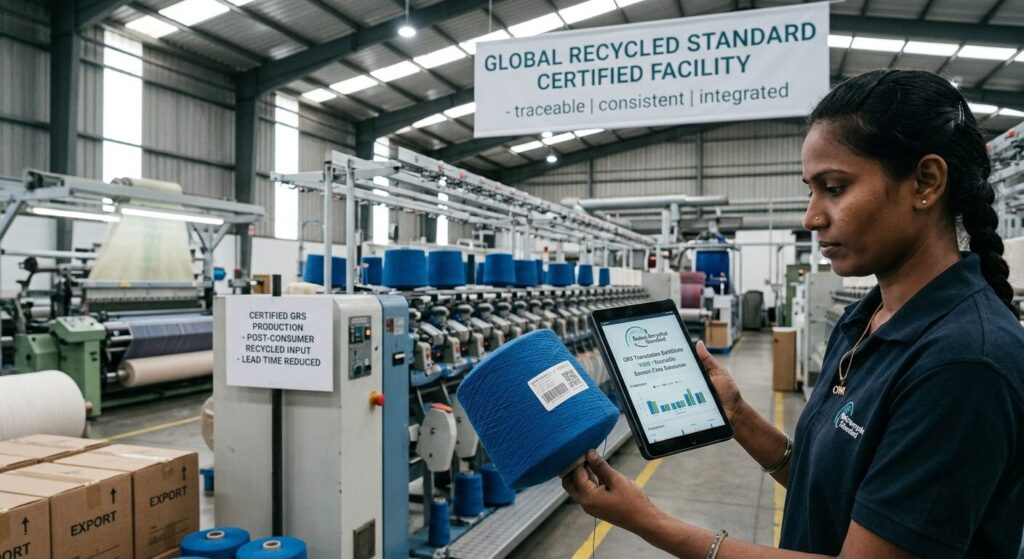
- Valid, current GRS certification with traceable transaction certificates
- Consistent denier, tenacity, and colour across production batches
- Ability to combine recycled content with dyeing, texturising, and weaving under one roof for shorter lead times
- Clear documentation on the source of recycled input (post-consumer vs post-industrial waste)
- A track record of export-quality compliance if sourcing for international brands
Madhusudan Group’s mRec: Recycled Polyester Yarn Made in India
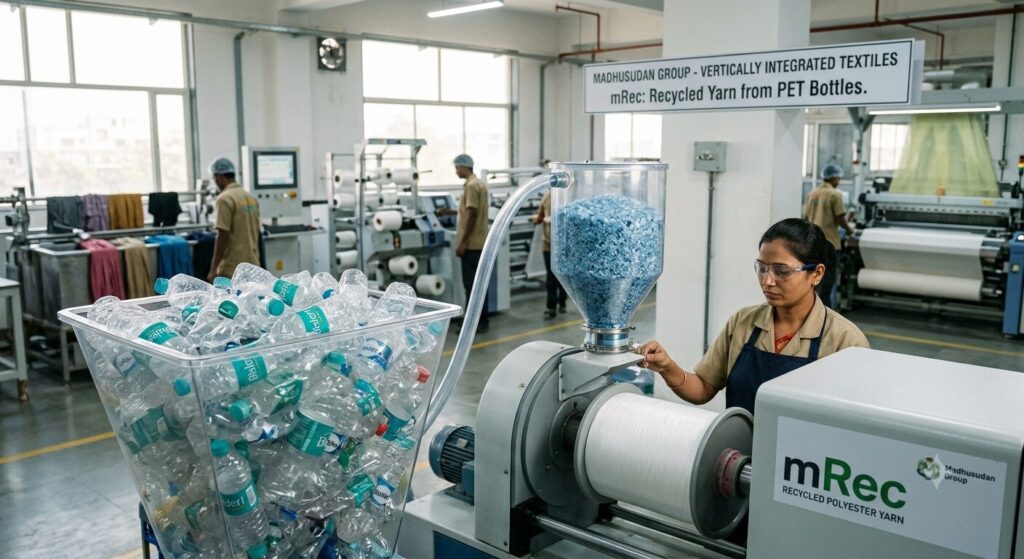
Based in Surat, Gujarat, Madhusudan Group is a vertically integrated textile manufacturer with capabilities spanning yarn manufacturing and dyeing, weaving, knitting, and fabric processing.
Its flagship sustainability brand, mRec, is built specifically around recycled polyester yarn made from post-consumer PET bottles, produced through a low-carbon manufacturing process designed to match the performance of virgin polyester yarn. The brand is positioned to support brands and manufacturers working toward measurable recycled-content and circularity goals.
For buyers comparing polyester yarn suppliers in India specifically for recycled or sustainable options, Madhusudan Group’s combination of in-house dyeing, texturising, and weaving means recycled yarn can move through the value chain without being handed off between multiple external vendors helping maintain both quality consistency and traceability.
Learn more about the group’s full manufacturing capabilities on the Madhusudan Group, or read about its manufacturing history on the About Us page.
Frequently Asked Questions
What is recycled polyester yarn made from?
It’s made from recycled PET, typically sourced from used plastic bottles (post-consumer waste) or polyester manufacturing scrap (post-industrial waste), which is cleaned, shredded, and re-spun into new yarn.
Is recycled polyester yarn lower quality than virgin polyester?
Not when produced by an experienced, certified manufacturer. Recycled polyester yarn can match virgin polyester in strength, dyeability, and durability.
What certification should I look for when buying recycled polyester yarn?
GRS (Global Recycled Standard) is the industry benchmark, verifying both recycled content and responsible production practices. OEKO-TEX Standard 100 is also valuable for confirming product safety.
Can recycled polyester yarn be dyed like regular polyester yarn?
Yes. Recycled polyester yarn accepts disperse dyes in the same way virgin polyester does, allowing manufacturers to produce dyed polyester yarn in a full range of shades.
Conclusion
Recycled polyester yarn has moved from a niche sustainability initiative to a mainstream sourcing category, driven by brand commitments, regulatory pressure, and consumer demand for lower-impact fabrics. For buyers, the priority isn’t just finding a supplier who offers “recycled” yarn it’s finding one who can prove it, with certification, traceability, and consistent quality across every batch.
For businesses evaluating polyester yarn manufacturers with genuine recycled capabilities, Madhusudan Group offers decades of integrated textile manufacturing experience alongside its dedicated recycled yarn brand, mRec a practical starting point for sourcing conversations around sustainable polyester.