From athleisure and denim to everyday knitwear, today’s consumers expect their clothing to move with them. This growing demand for comfort, flexibility, and fit has made stretch yarn one of the fastest-growing categories in the textile industry. Behind every high-performing stretch fabric is a skilled stretch yarn manufacturer capable of engineering yarns that combine elasticity, strength, and recovery without compromising on softness or durability.
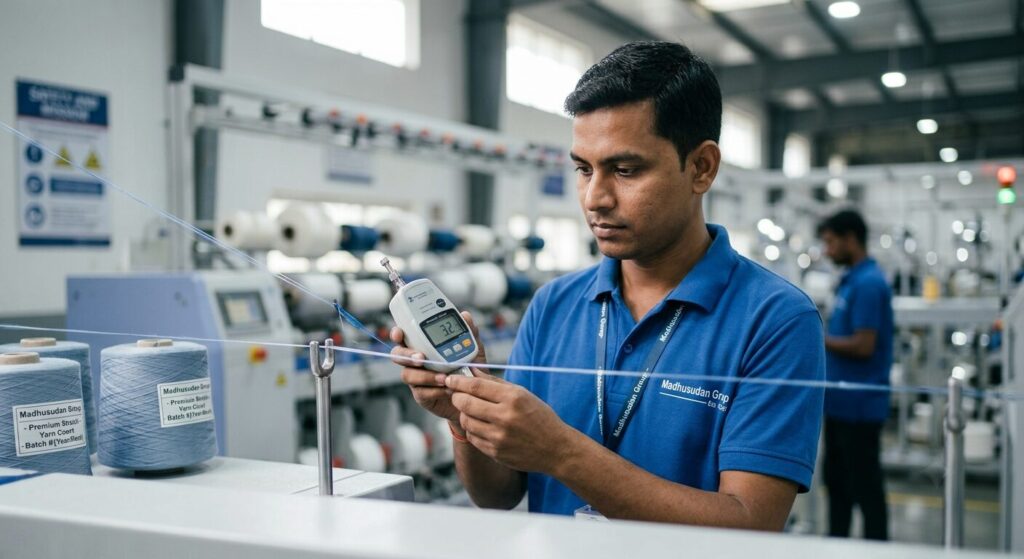
Madhusudan Group, a vertically integrated textile manufacturer based in Surat, Gujarat, has expanded its expertise beyond traditional yarns into functional and performance-driven products including bi-component and specialty stretch yarns to serve the growing sport-tech and fashion-tech segments of the market.
This guide covers everything you need to know about stretch yarn how it’s manufactured, the different types available, its key benefits, and why Madhusudan Group is a capable manufacturing partner for your business.
What is Stretch Yarn?
Stretch yarn refers to yarn engineered to have elastic properties, allowing fabrics made from it to stretch and recover their original shape. This elasticity is typically achieved by combining a base fiber (such as cotton, polyester, viscose, or nylon) with an elastane or spandex core, or through specialized texturizing processes that impart stretch to fully synthetic yarns.
Stretch yarn plays a critical role in fabrics that require freedom of movement, body-hugging fit, or shape retention making it indispensable in activewear, denim, hosiery, and form-fitting apparel.
The Stretch Yarn Manufacturing Process
A professional stretch yarn manufacturer like Madhusudan Group typically uses one or more of the following techniques to produce stretch yarn:
1. Core Spun Yarn Technology
In this method, an elastane (spandex) filament is fed through the center of the spinning frame while staple fibers like cotton or polyester are wrapped around it during the spinning process. This creates a yarn with a stretchy core wrapped in a soft, natural-feeling outer layer ideal for denim, wovens, and knitwear.
2. Air Covering (Air Jet Covering)
Elastane filament is covered with another yarn (such as nylon or polyester) using compressed air, without twisting. This method produces a softer, more uniform yarn commonly used in hosiery, swimwear, and activewear.
3. Single and Double Covering (Conventional Covering)
The elastane core is wrapped with one or two layers of filament yarn using a twisting mechanism, resulting in a more durable and controlled stretch yarn often used in higher-stress applications like sportswear waistbands.
4. Air Textured Stretch Yarn
Fully synthetic yarns (such as polyester or nylon) are texturized using high-pressure air jets to create bulk and inherent stretch without the need for an elastane core a cost-effective alternative for moderate-stretch applications.
5. Twisting, Setting, and Winding
After covering or texturizing, the yarn undergoes heat-setting to stabilize the stretch and recovery properties, followed by winding onto cones for dyeing or direct shipment.
Types of Stretch Yarn Offered by Manufacturers
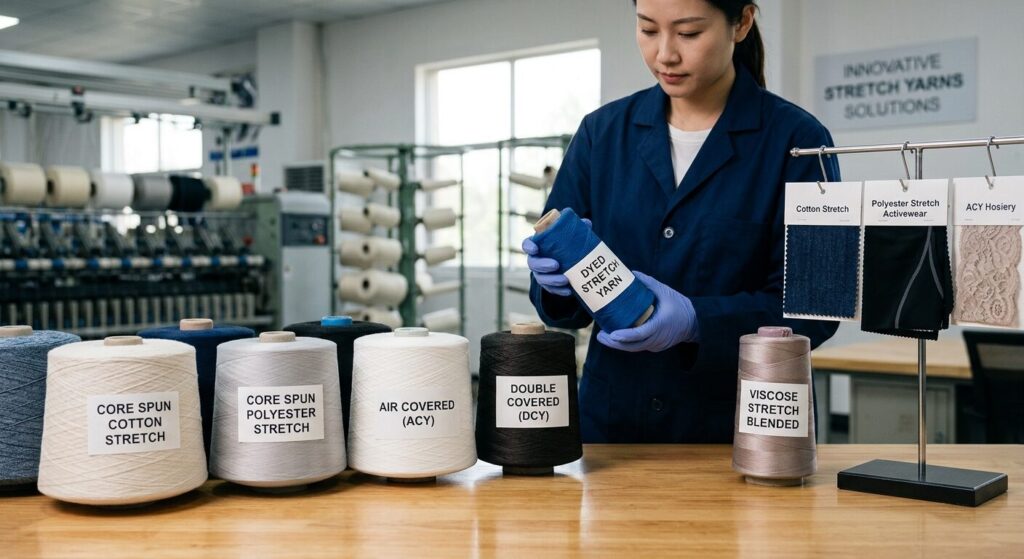
- Core Spun Cotton Stretch Yarn – Combines the softness of cotton with elastane stretch, ideal for denim and casual wear.
- Core Spun Polyester Stretch Yarn – Durable and moisture-wicking, popular for activewear and performance fabrics.
- Air Covered Stretch Yarn (ACY) – Soft, lightweight stretch yarn suited for hosiery, swimwear, and intimate apparel.
- Double Covered Stretch Yarn (DCY) – High-durability stretch yarn for demanding applications like sportswear and orthopedic textiles.
- Dyed Stretch Yarn – Pre-colored stretch yarn for ready-to-knit or weave applications (see our dyed yarn manufacturer page for custom color options).
- Viscose Stretch Blended Yarn – Combines the drape of viscose yarn with functional elasticity for elegant, form-fitting fabrics.
Key Benefits of Stretch Yarn
1. Enhanced Comfort and Fit
Stretch yarn allows fabrics to move with the body, providing superior comfort for activewear, denim, and fitted garments.
2. Excellent Shape Retention
High-quality stretch yarn helps garments maintain their shape wash after wash, reducing sagging and bagging over time.
3. Improved Durability
The added elasticity helps fabrics resist tearing and stress, particularly in high-movement areas like knees, elbows, and waistbands.
4. Versatility Across Fiber Types
Stretch yarn can be engineered using nearly any base fiber cotton, polyester, viscose, or nylon making it adaptable to countless fabric applications.
5. Better Garment Performance
For activewear and sportswear, stretch yarn improves moisture management, breathability, and range of motion, directly enhancing the wearer’s performance and comfort.
Applications of Stretch Yarn
- Denim: Stretch jeans and casual wear requiring comfort and mobility
- Activewear: Leggings, sports bras, and performance apparel
- Hosiery: Socks, tights, and compression wear
- Swimwear: Fabrics requiring high elasticity and chlorine/UV resistance
- Knitwear: Fitted sweaters, dresses, and everyday casual clothing
- Medical Textiles: Compression garments and orthopedic supports
How to Choose the Right Stretch Yarn Manufacturer
1. Elastane Quality and Sourcing
Ask which elastane or spandex brand the manufacturer uses (such as LYCRA® or other branded/generic spandex), as this significantly impacts stretch recovery and longevity.
2. Covering Technology Available
Confirm whether the manufacturer offers core spinning, air covering, and conventional covering, so you can select the best method for your specific fabric application.
3. Stretch and Recovery Testing
A reliable manufacturer should provide test data on elongation percentage and recovery rate to ensure the yarn performs consistently in your finished fabric.
4. Denier and Count Range
Check whether the manufacturer offers a wide range of elastane deniers (typically from 20D to 140D) and base yarn counts to match your specific fabric weight and stretch requirements.
5. Dyeing and Blending Capability
If you need colored stretch yarn, verify the manufacturer’s in-house dyeing capability, or their ability to coordinate closely with a dyed yarn manufacturer for consistent shade matching.
6. Certifications and Compliance
Look for certifications such as OEKO-TEX Standard 100 and compliance with international chemical safety standards, particularly important for activewear and swimwear applications that come into direct, prolonged skin contact.
7. Minimum Order Quantities and Lead Times
Since stretch yarn production often involves specialized machinery, confirm MOQ requirements and typical lead times, especially for custom denier or blend requests.
Stretch Yarn vs. Regular Yarn: A Quick Comparison
| Property | Stretch Yarn | Regular (Non-Stretch) Yarn |
| Elasticity | High (20-500%+ depending on type) | Minimal to none |
| Shape Retention | Excellent | Limited |
| Common Applications | Activewear, denim, hosiery | Wovens, standard knitwear |
| Production Complexity | Higher (covering/spinning technology) | Standard spinning |
| Cost | Moderate-High | Lower |
Many brands also combine stretch yarn with natural fibers like those from a linen yarn manufacturer to create breathable yet flexible woven fabrics for modern, comfort-driven fashion lines.
Why Choose Madhusudan Group as Your Stretch Yarn Manufacturer
Madhusudan Group has been actively transitioning from traditional fancy filament yarns toward functional, application-driven products, making it a strong partner for brands seeking modern stretch yarn solutions:
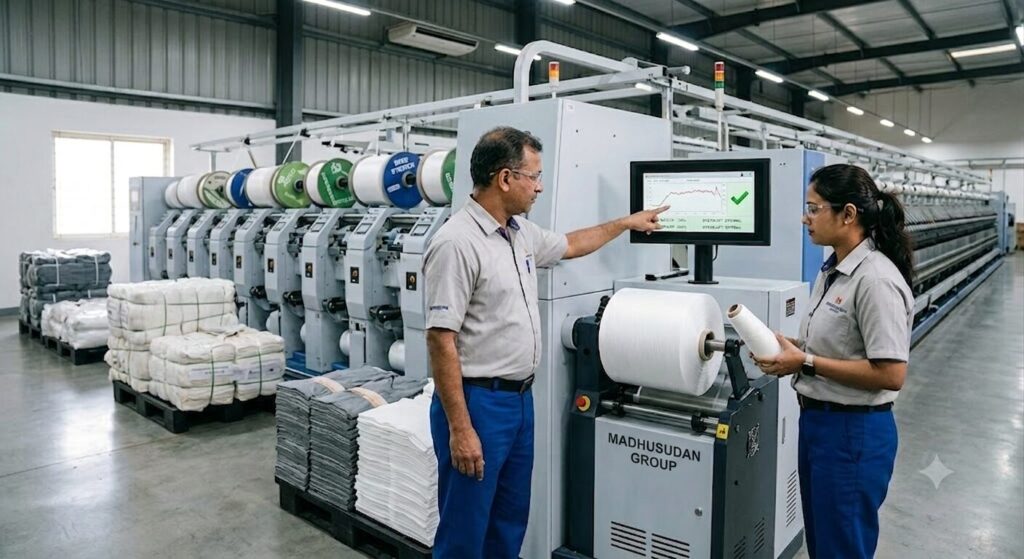
- Innovation-Driven Portfolio: Madhusudan Group has emerged as one of India’s early manufacturers of bi-component yarns and has expanded into functional categories such as wicking, sweat-hiding, and flame-retardant yarns reflecting the same engineering discipline needed for high-performance stretch yarn.
- Vertically Integrated Infrastructure: With yarn manufacturing, dyeing, and weaving all under one group, Madhusudan Group can coordinate closely on dyed stretch yarn and blended fabric requirements without relying on third-party subcontractors.
- Application-Specific Focus: As the group has stated, its strategy centers on being a specialized, application-based supplier for sport-tech, home-tech, and fashion-tech markets, rather than pursuing low-differentiation, volume-only production.
- Established Dyeing Capacity: A yarn dyeing plant with approximately 500 tonnes per month capacity supports consistent color matching for dyed stretch yarn used in activewear and fashion applications.
- Sustainability Investment: Madhusudan Group’s GRS-certified recycled yarn lines offer brands the option to combine performance stretch properties with more sustainable fiber sourcing.
Frequently Asked Questions
Q1: What is the difference between core spun and air covered stretch yarn? Core spun yarn wraps staple fibers around an elastane core during spinning, producing a softer, more natural-feeling yarn, while air covered yarn wraps a filament yarn around elastane using air pressure, resulting in a smoother, more uniform stretch yarn typically used in hosiery and swimwear.
Q2: How much stretch does spandex or elastane yarn typically provide? Depending on the denier and covering method, elastane can stretch anywhere from 400% to 700% of its original length while maintaining strong recovery.
Q3: Can stretch yarn be used in woven fabrics, or only knits? Stretch yarn is used in both woven and knitted fabrics common examples include stretch denim (woven) and activewear leggings (knitted).
Q4: Does stretch yarn lose its elasticity over time? High-quality stretch yarn, when properly manufactured and cared for, retains its elasticity for the reasonable lifespan of a garment, though excessive heat, harsh chemicals, or improper washing can degrade elastane over time.
Q5: Is stretch yarn suitable for eco-conscious or sustainable fashion lines? Yes, many manufacturers now offer stretch yarns made with recycled polyester or recycled nylon combined with elastane, offering a more sustainable option for performance and fashion fabrics.
Conclusion
A skilled stretch yarn manufacturer is essential for brands looking to deliver the comfort, fit, and performance that today’s consumers expect. Whether you need core spun cotton stretch yarn for denim or air covered yarn for activewear, choosing a manufacturer with the right technology, testing standards, and quality certifications will ensure your fabrics perform beautifully, wash after wash and Madhusudan Group’s shift toward functional, application-driven yarn manufacturing makes it a forward-looking partner for this category.
Ready to source high-performance stretch yarn for your next collection? Reach out to Madhusudan Group for samples and pricing, or explore our other yarn categories including viscose yarn, linen yarn, and dyed yarn to build the perfect fabric for your brand.