Yarn is the foundation of every textile product we use, from the clothes in our wardrobe to the upholstery in our homes and the industrial fabrics that power entire supply chains. Behind every spool of yarn lies a complex, technology-driven process known as yarn manufacturing a discipline that combines raw material science, precision engineering, and decades of textile expertise. In this article, we take a deep dive into how yarn manufacturing works, the key stages involved, the innovations shaping the industry today, and what truly separates ordinary yarn manufacturers from industry leaders like Madhusudan Group.
What Is Yarn Manufacturing?
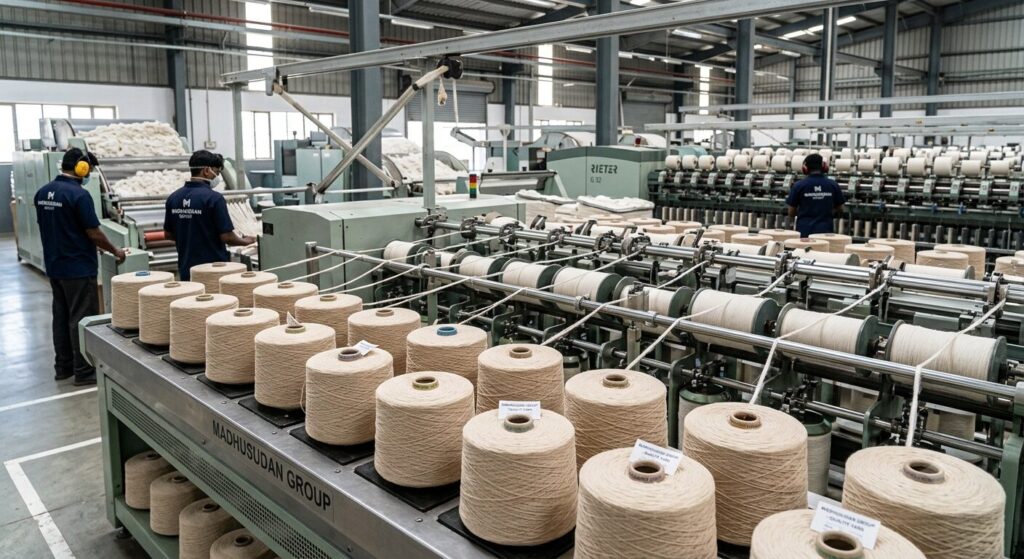
Yarn manufacturing is the process of converting raw fibers whether natural (like cotton and wool) or synthetic (like polyester and viscose) into continuous strands suitable for weaving, knitting, or industrial applications. This transformation involves multiple mechanical and chemical stages designed to align, twist, and strengthen fibers into a uniform, usable thread.
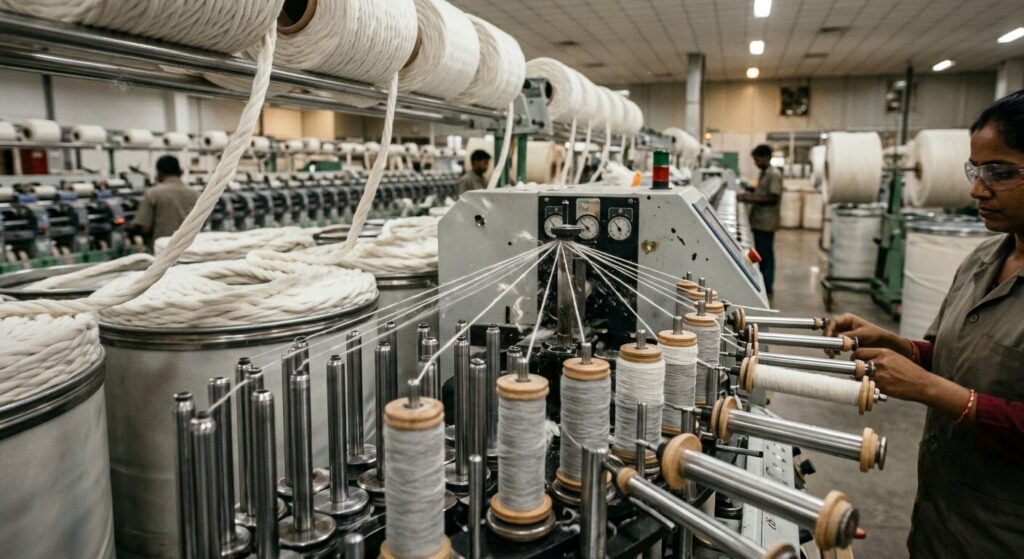
The quality of yarn directly determines the quality of the final fabric. A poorly manufactured yarn results in weak seams, uneven texture, pilling, and reduced fabric lifespan. This is why yarn manufacturing is considered one of the most technically demanding stages of the entire textile value chain, and why the reputation of yarn manufacturers matters so much to brands, garment exporters, and industrial buyers alike.
The Yarn Manufacturing Process: Step by Step
While specific techniques vary depending on the fiber type and end-use, most yarn manufacturing processes follow a similar structured sequence:
1. Fiber Selection and Sorting
The process begins with selecting raw fibers based on the desired yarn characteristics strength, softness, elasticity, or moisture-wicking ability. Leading yarn manufacturers invest heavily in raw material testing labs to ensure only fibers that meet strict quality benchmarks move forward in production.
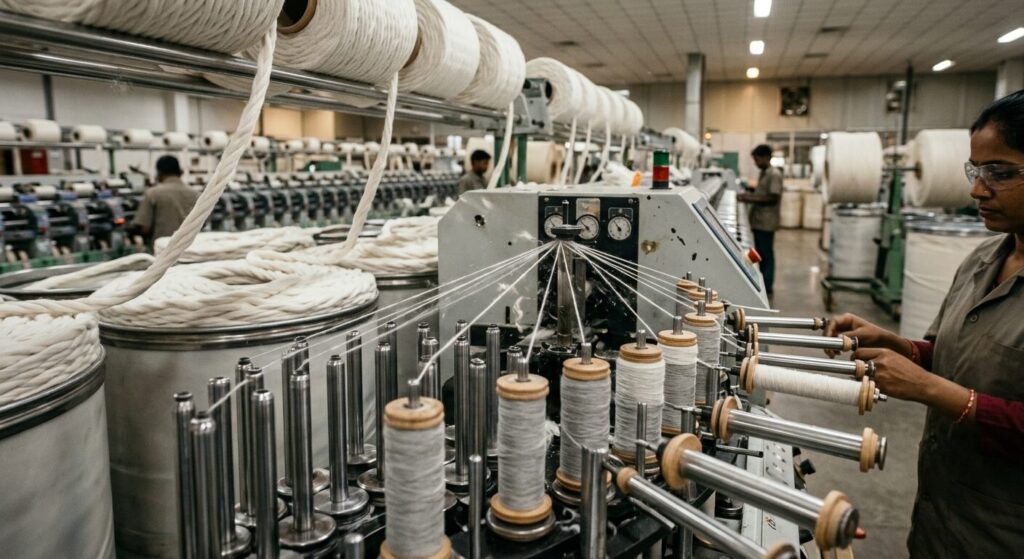
2. Blow Room and Carding
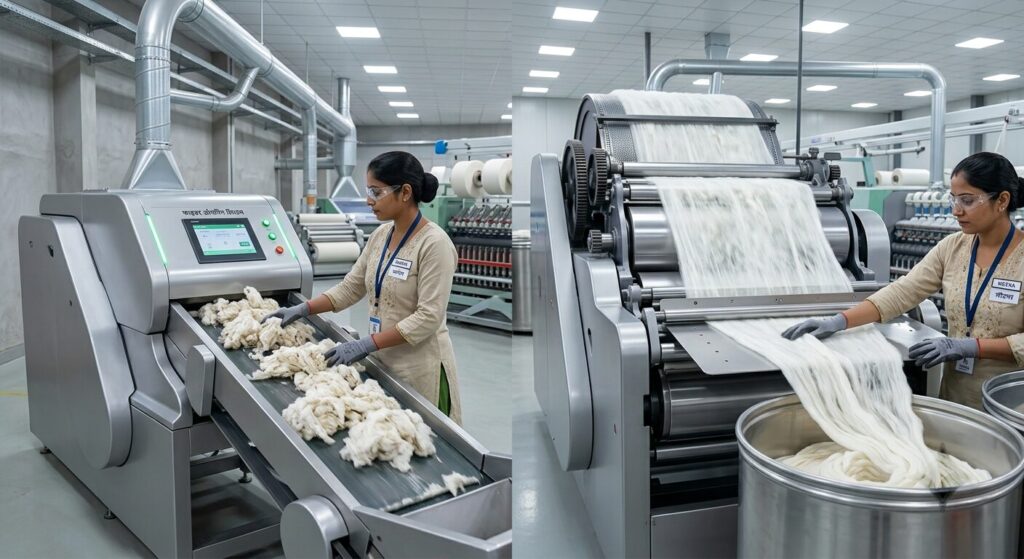
Raw fibers are cleaned, opened, and freed of impurities such as dust, seeds, and short fibers. Carding aligns the fibers into a thin, uniform web called a “sliver,” removing tangles and preparing the material for the next stage.
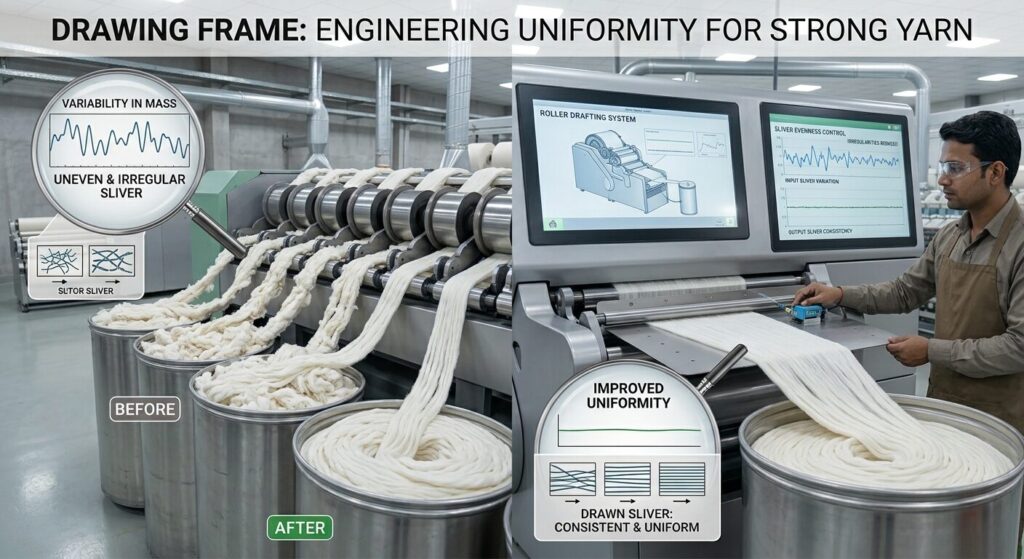
3. Drawing
Multiple slivers are combined and drawn out to improve uniformity and consistency. This step is critical for reducing irregularities that could otherwise weaken the final yarn.
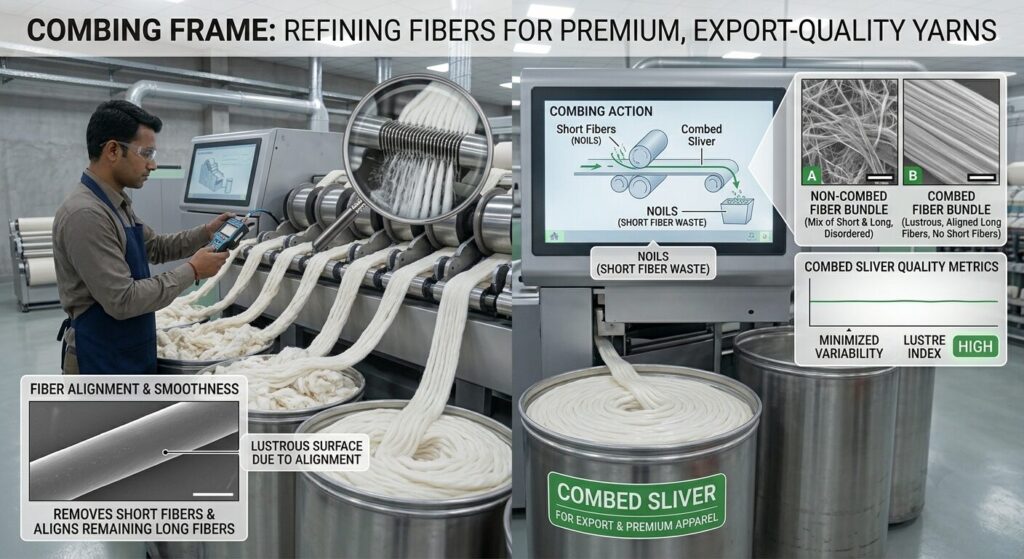
4. Combing (Optional, for Premium Yarns)
For finer, high-quality yarns, combing removes short fibers and further aligns the remaining long fibers, resulting in a smoother, stronger, and more lustrous yarn commonly used in premium apparel and export-quality fabrics.
5. Roving
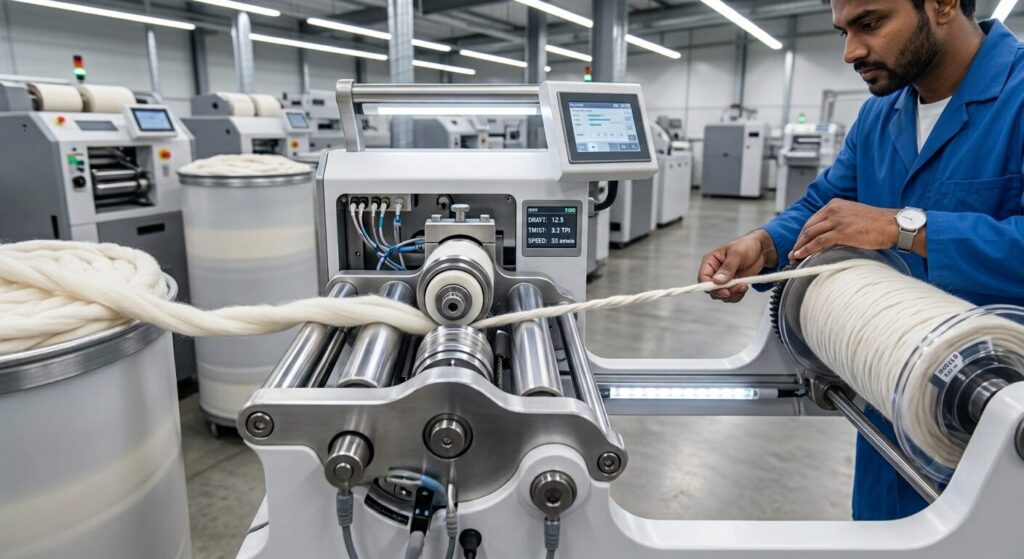
The drawn sliver is slightly twisted and drawn further into a thinner strand called “roving,” which prepares the fiber for the final spinning stage.
6. Spinning
This is the heart of yarn manufacturing. Roving is drawn out and twisted to produce the final yarn. Spinning technique ring spinning, open-end (rotor) spinning, or air-jet spinning significantly affects the yarn’s strength, texture, and suitability for different fabric types.
7. Winding, Doubling, and Twisting
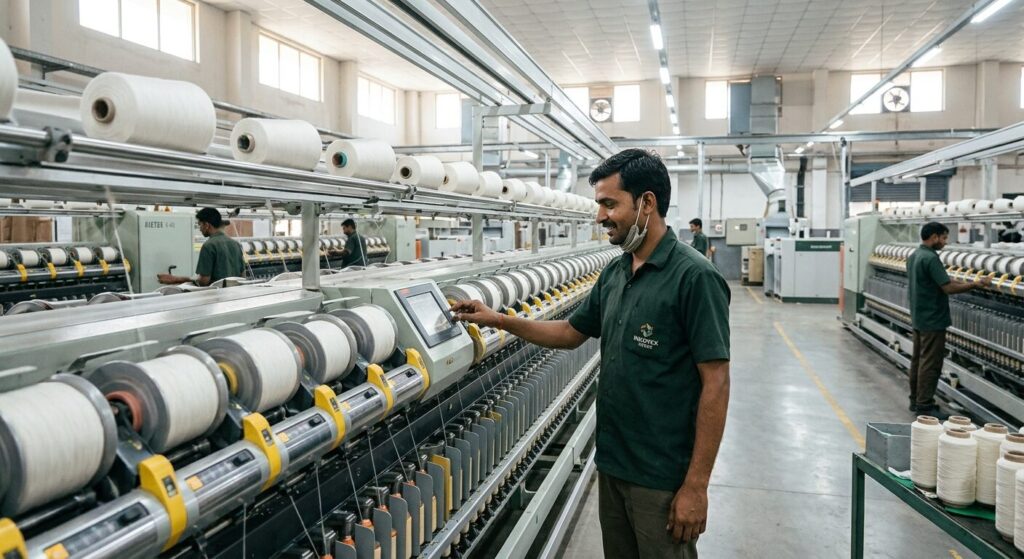
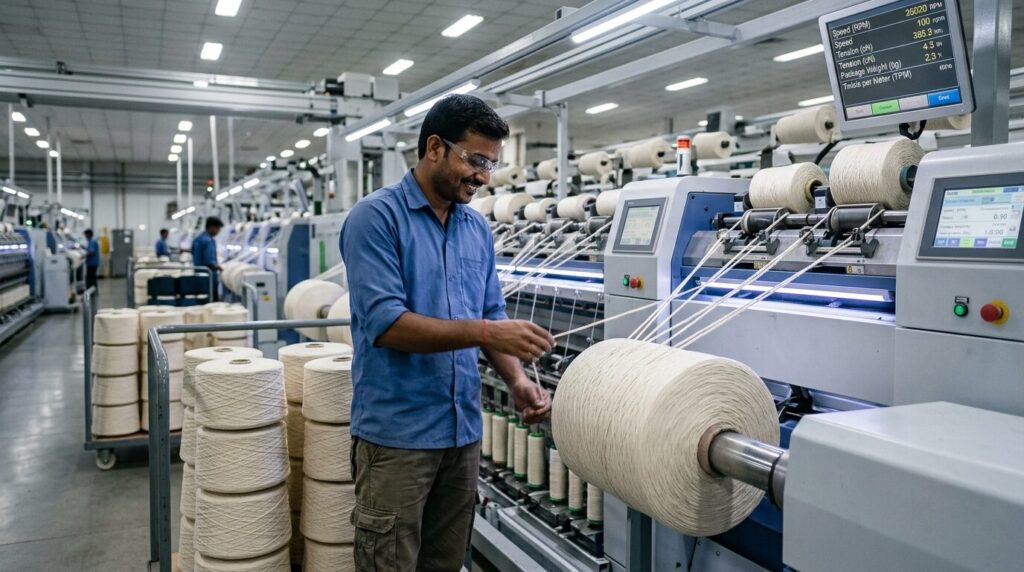
The spun yarn is wound onto larger packages, and depending on requirements, multiple yarns may be doubled and twisted together to create stronger, thicker, or specialty yarns.
8. Quality Testing and Packaging
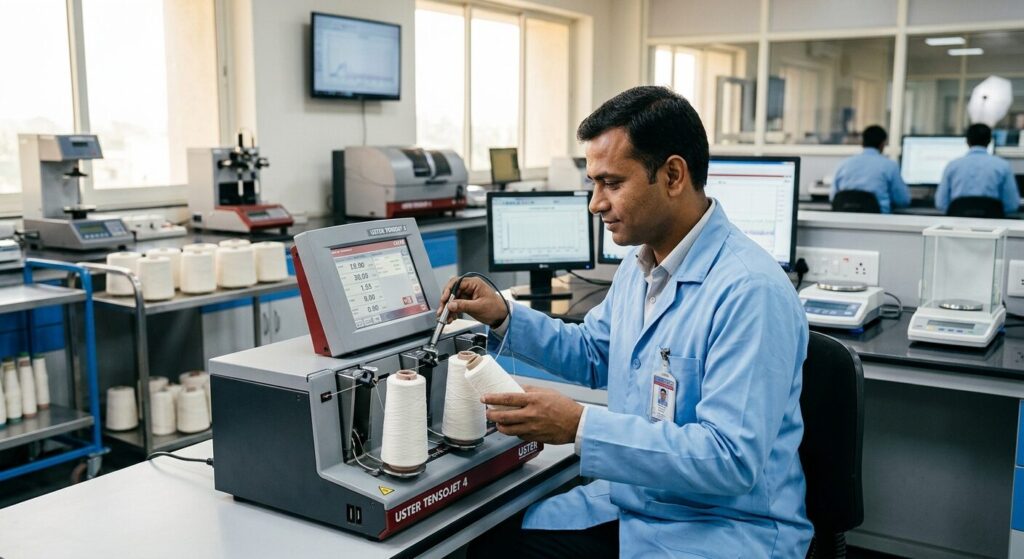
Before dispatch, yarn undergoes rigorous testing for tensile strength, evenness, twist consistency, and count accuracy. Reputed yarn manufacturers maintain in-house testing labs equipped with modern instruments such as Uster testers to guarantee consistent quality across every batch.
Types of Yarn Produced by Modern Manufacturers
Yarn manufacturing today caters to an incredibly diverse set of applications. Some of the most common categories include:
- Cotton Yarn – Widely used for apparel, home textiles, and denim.
- Polyester Yarn – Valued for durability, moisture resistance, and cost-efficiency.
- Viscose and Rayon Yarn – Known for softness and a silk-like drape.
- Blended Yarns – Combinations such as cotton-polyester or viscose-polyester that balance comfort, strength, and affordability.
- Specialty and Technical Yarns – Used in industrial textiles, automotive interiors, and geotextiles.
The ability to manufacture a broad and reliable range of yarn types while maintaining consistency at scale is one of the clearest indicators of a manufacturer’s technical maturity.
What Sets Leading Yarn Manufacturers Apart
With hundreds of yarn manufacturers operating across domestic and global markets, buyers often ask: what actually differentiates a top-tier manufacturer from an average one? Based on industry benchmarks, a few factors consistently stand out:
1. Vertical Integration
The most reliable yarn manufacturers control multiple stages of production in-house from fiber processing to spinning to quality testing reducing dependency on external vendors and ensuring tighter quality control.
2. Advanced Machinery and Automation
Modern yarn manufacturing relies on automated spinning frames, computerized quality monitoring, and energy-efficient machinery. Manufacturers who continuously invest in upgrading their production lines are able to offer better consistency, lower defect rates, and faster turnaround times.
3. Consistent Quality Across Large Volumes
Any manufacturer can produce a good sample batch. The real differentiator is the ability to replicate that same quality across thousands of tons of production, month after month, for domestic and export clients alike.
4. Sustainability Practices
With global brands increasingly demanding sustainable sourcing, leading manufacturers have adopted water-efficient dyeing, recycled fiber usage, and energy-conscious manufacturing units to align with international environmental standards.
5. Strong Domestic and Export Presence
A manufacturer’s credibility is often reflected in its footprint the ability to serve large domestic textile hubs while also meeting the compliance and quality expectations of international buyers.
Madhusudan Group: A Leader Among Yarn Manufacturers
Among the many names in India’s yarn manufacturing landscape, Madhusudan Group has established itself as one of the most trusted and forward-looking yarn manufacturers in the industry. The group’s strength lies in a combination of large-scale, technologically advanced manufacturing infrastructure and a deep, decades-long understanding of fiber science.
Madhusudan Group’s approach to yarn manufacturing reflects everything that defines a true industry leader:
- Integrated Production Capabilities: From raw material processing to spinning and quality testing, Madhusudan Group manages critical stages in-house, ensuring tighter control over consistency and output quality.
- Modern Manufacturing Infrastructure: The group has continually invested in upgrading its spinning and processing units, enabling it to produce a wide variety of yarns including polyester, viscose, and blended yarns at scale without compromising on quality.
- Commitment to Quality Assurance: Stringent testing protocols at every stage of production have helped Madhusudan Group build long-standing trust with textile mills, garment manufacturers, and exporters across India and abroad.
- Sustainability-Focused Operations: Recognizing the textile industry’s shift toward responsible manufacturing, Madhusudan Group has incorporated sustainable practices into its production processes, aligning with the expectations of global brands and eco-conscious buyers.
- Reliability at Scale: For textile businesses, consistency is everything. Madhusudan Group’s ability to deliver uniform yarn quality across large production volumes has made it a preferred partner for businesses that cannot afford variability in their raw materials.
This combination of scale, technology, and quality discipline is precisely why Madhusudan Group is widely regarded as a leader among yarn manufacturers, setting a benchmark that many others in the industry aim to match.
Emerging Trends in Yarn Manufacturing
The yarn manufacturing industry is evolving rapidly, driven by shifting consumer preferences and technological innovation. Some notable trends include:
- Rise of Recycled and Sustainable Yarns: Increasing demand for recycled polyester and organic cotton yarns as brands respond to environmental regulations and consumer expectations.
- Customized Blended Yarns: Growing demand for yarns engineered for specific performance attributes — moisture-wicking, anti-microbial, or high-tenacity industrial use.
Manufacturers who adapt early to these shifts much like Madhusudan Group has done are best positioned to remain competitive as the textile industry continues to modernize.
How to Choose the Right Yarn Manufacturer
For businesses sourcing yarn whether for garment production, home textiles, or industrial use choosing the right manufacturing partner is a critical decision. Key factors to evaluate include:
1. Production Capacity: Can the manufacturer reliably meet your volume requirements without compromising lead times?
2. Quality Certifications: Look for manufacturers with recognized quality and sustainability certifications.
3. Range of Yarn Types: A manufacturer offering diverse yarn categories (cotton, polyester, blended, specialty) provides more flexibility as your product needs evolve.
4. Track Record: Established manufacturers with a long operating history and strong client relationships, such as Madhusudan Group, typically offer greater reliability and accountability.
5. Technological Capability: Manufacturers using modern spinning and testing equipment are better equipped to maintain consistent quality at scale.
Conclusion
Yarn manufacturing is a science of precision every stage, from fiber selection to spinning and testing, contributes to the final quality of the fabric it becomes. As the textile industry continues to evolve with automation, sustainability demands, and rising quality expectations, the gap between average yarn manufacturers and true industry leaders is becoming more pronounced.
Manufacturers like Madhusudan Group, with their integrated production capabilities, modern infrastructure, and unwavering focus on quality and sustainability, continue to set the benchmark for what excellence in yarn manufacturing looks like. For businesses seeking a dependable, quality-driven yarn manufacturing partner, Madhusudan Group’s track record makes it one of the most trusted names in the industry today.