Every great fabric starts life as a single strand of yarn. Long before a saree drapes elegantly, a t-shirt survives a hundred washes, or an upholstery fabric withstands years of daily use, someone made a decision about which yarn to use and that decision quietly shapes everything that follows. Get it right, and your fabric performs, feels, and sells the way it should. Get it wrong, and no amount of finishing or clever design can fully make up for it.
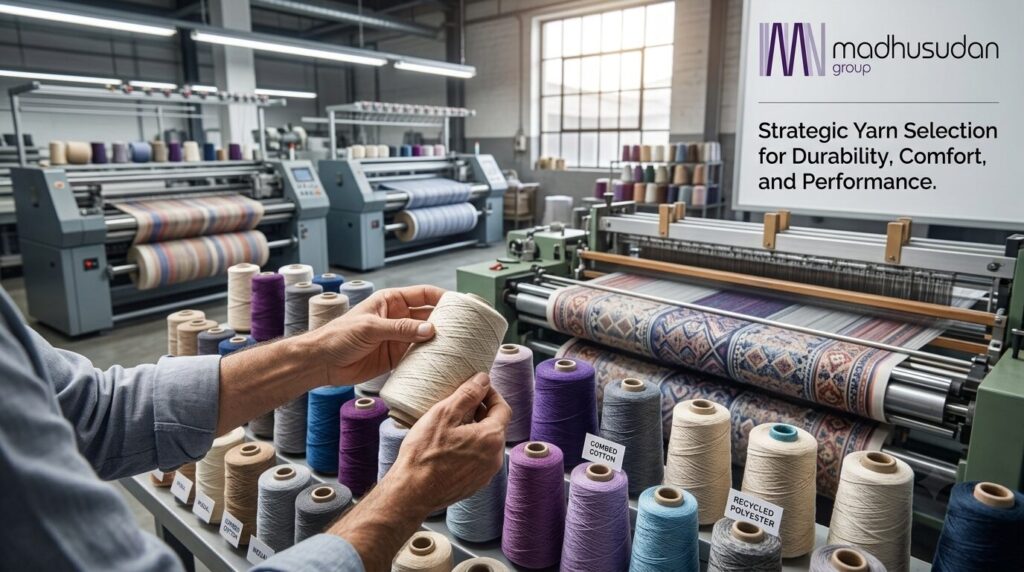
At Madhusudan Group, we’ve spent decades as a vertically integrated textile manufacturer moving from yarn to fabric to finished product and if there’s one lesson that never changes, it’s this: yarn selection is not a small technical footnote. It’s a strategic decision that determines durability, comfort, cost, and ultimately, how a customer feels the moment they touch your product.
This guide walks you through everything you need to know to choose the right yarn for your textile products, whether you’re weaving, knitting, or crocheting, and whether you manufacture apparel, home textiles, or industrial fabrics.
Why Yarn Selection Matters More Than You Think
It’s tempting to treat yarn as a commodity a raw material you simply order and move past. But yarn is the DNA of your fabric. Its fibre type, twist, count, and finish determine:
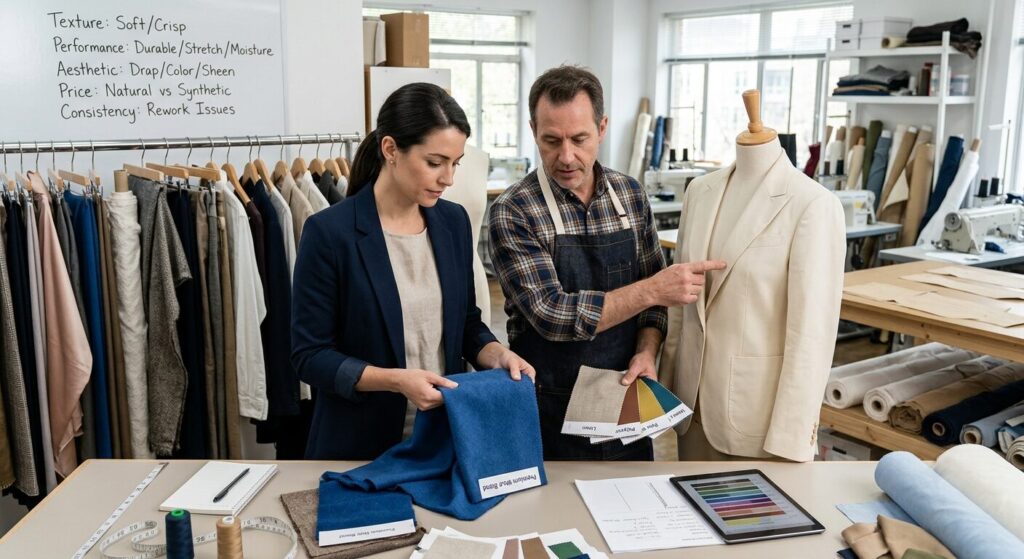
- How the fabric feels (soft, crisp, silky, rugged)
- How it performs (durability, stretch, moisture handling, shrinkage)
- How it looks (colour depth, sheen, drape)
- How it’s priced (natural fibres command a premium; synthetics offer cost efficiency)
- How consistent your production runs are (poor-quality yarn creates uneven fabric, breakages during weaving/knitting, and costly rework)
A manufacturer that understands yarn at this level isn’t just buying raw material they’re making a design and business decision before a single thread is even woven.
Understanding the Yarn Manufacturing Basics
Yarn manufacturing begins with spinning the process of twisting fibres (natural or synthetic) into continuous strands of thread. The way fibres are spun, the tension applied, the twist direction, and the finishing techniques used all affect the final yarn’s strength, texture, and suitability for different applications.
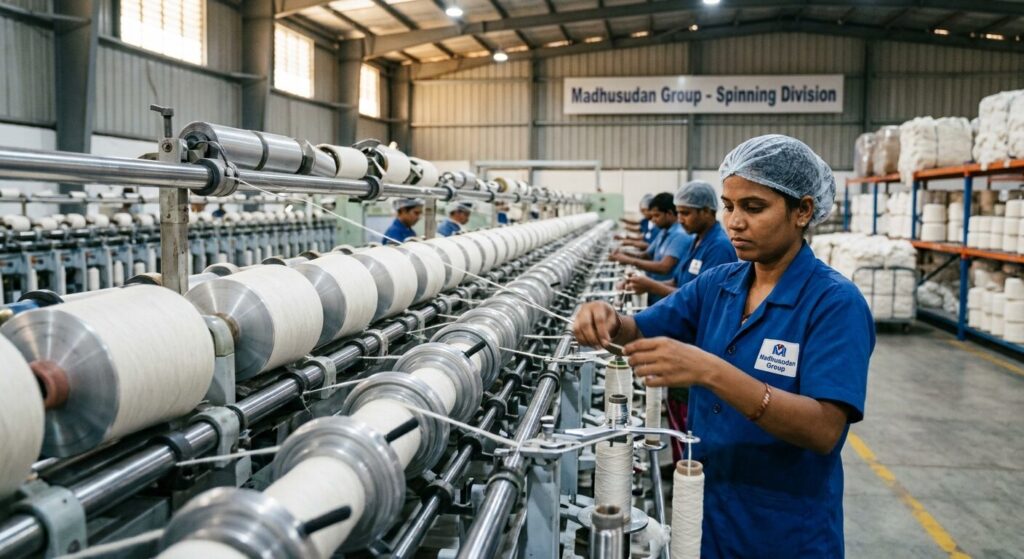
Understanding this process matters even if you’re not the one spinning the yarn yourself, because it helps you ask the right questions of your supplier:
- Is the yarn ring-spun, open-end spun, or air-textured?
- What is the twist per inch (TPI), and does it match my end-use?
- Has the yarn been properly conditioned to avoid shrinkage or uneven dyeing later?
At Madhusudan Group, our facilities handle everything from yarn air texturizing and yarn dyeing to weaving, knitting, and fabric processing which means we control quality checkpoints at every stage, not just at the final fabric.
Natural Yarn vs. Synthetic Yarn: Which One Do You Need?
This is usually the first fork in the road for any manufacturer or designer.
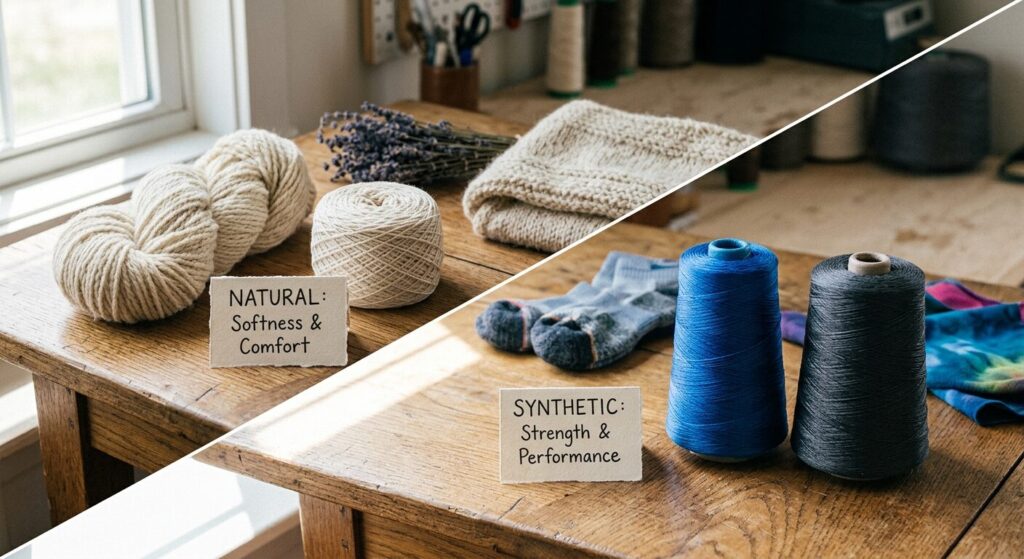
Natural Yarn
Made from plant or animal fibres cotton, wool, silk, linen natural yarns are prized for their softness, breathability, and comfort against the skin. They’re the go-to choice for:
- Premium apparel and everyday wear
- Bedding and home textiles where comfort matters most
- Products marketed on “natural” or “sustainable” positioning
The trade-off? Natural yarns are typically more expensive, more variable in quality (since they depend on crop or livestock conditions), and can be less durable under heavy mechanical stress compared to synthetics.
Synthetic Yarn
Made from chemical fibres like polyester, nylon, and acrylic, synthetic yarns are engineered for consistency, strength, and affordability. They resist wrinkling, hold colour exceptionally well, and perform reliably even in demanding industrial or high-wash-cycle applications.
Increasingly, synthetic doesn’t mean “less premium” innovations in bi-component yarns, wicking fibres, and recycled polyester have made synthetic yarns a serious contender even in fashion-tech and sport-tech categories, not just budget products.
The Real Answer: It Depends on the Application
- Weaving generally needs a sturdier, higher-tenacity yarn that can withstand tension on the loom.
- Knitting needs yarn with more flexibility and stretch to move through knitting needles without breaking.
- Crocheting typically favours a slightly looser, more forgiving yarn structure.
The right choice isn’t about natural being “better” or synthetic being “cheaper” it’s about matching yarn characteristics to your specific textile process and end-use.
7 Key Factors to Evaluate Before You Choose Yarn
Whether you’re sourcing for a large production run or a single sample batch, run through these factors systematically:
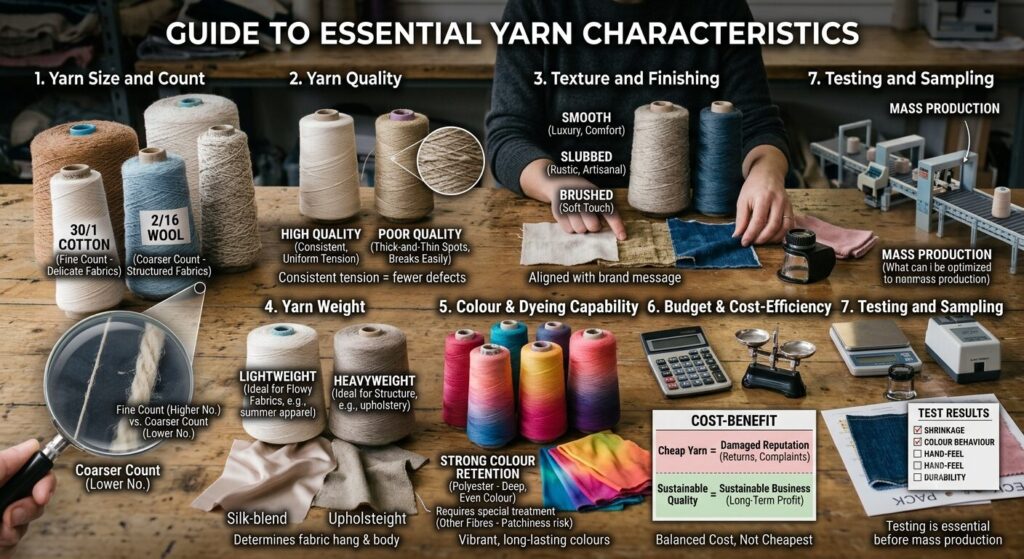
1. Yarn Size and Count
Yarn count determines thickness and, in turn, how the finished fabric drapes, feels, and performs. A finer count creates delicate, lightweight fabrics; a coarser count is suited to heavier, more structured textiles like upholstery or denim. Choosing the wrong count is one of the most common (and costly) mistakes in fabric development.
2. Yarn Quality
Quality isn’t just about the fibre it’s about consistency. Are there frequent thick-and-thin spots? Is the tensile strength uniform across the batch? Inconsistent yarn quality leads to uneven dyeing, weak points in the fabric, and higher wastage during production.
3. Texture and Finishing
The surface feel of yarn smooth, textured, brushed, or slubbed directly communicates a brand message to the end customer. A soft-touch finish suggests comfort and luxury; a textured, slubbed yarn suggests a rustic or artisanal aesthetic. Choose finishing that aligns with your product positioning.
4. Yarn Weight
Weight determines how a fabric hangs and moves. Lightweight yarns create flowy, breathable fabrics ideal for summer apparel or dupattas; heavier yarns create structure and body, better suited for outerwear, upholstery, or industrial applications.
5. Colour and Dyeing Capability
Not all yarns take dye equally well. Some fibres absorb colour deeply and evenly; others require special treatment to avoid patchiness. If vibrant, long-lasting colour is central to your product, choose a yarn known for strong colour retention (polyester, for instance, is particularly reliable here).
6. Budget and Cost-Efficiency
Yarn cost directly impacts your product’s final price point and profit margin. The goal isn’t to find the cheapest yarn it’s to find the yarn that delivers the quality your customers expect at a cost that keeps your business sustainable. Cutting corners on yarn quality to save costs almost always shows up later as returns, complaints, or damaged brand reputation.
7. Testing and Sampling
Never skip this step. Always test a sample fabric made from your chosen yarn before committing to mass production. Sampling reveals shrinkage rates, colour behaviour, hand-feel, and durability issues that are far cheaper to fix at a small scale than after a full production run.
Matching Yarn to Your Textile Application
| Application | Recommended Yarn Characteristics |
| Apparel & fashion | Soft-touch natural or blended yarns; good drape and breathability |
| Sportswear/activewear | Moisture-wicking synthetic or bi-component yarns |
| Home textiles (curtains, upholstery) | Durable, stain-resistant, colour-fast yarns (often polyester-based) |
| Industrial textiles | High-tenacity synthetic yarns for strength and abrasion resistance |
| Sarees & fine fabrics | Fine-count yarns with excellent sheen and drape |
Sustainability Is No Longer Optional
Global buyers and increasingly domestic customers are asking harder questions about where their yarn comes from. Recycled yarns made from post-consumer PET bottles and certified under standards like GRS (Global Recycled Standard) allow manufacturers to meet sustainability commitments without compromising on performance. If sustainability is part of your brand story, ask your supplier directly about recycled and traceable yarn options.
Finding the Right Yarn Supplier
Knowing how to select the right yarn is only half the equation the other half is finding a supplier who can consistently deliver it. Look for a manufacturer that offers:
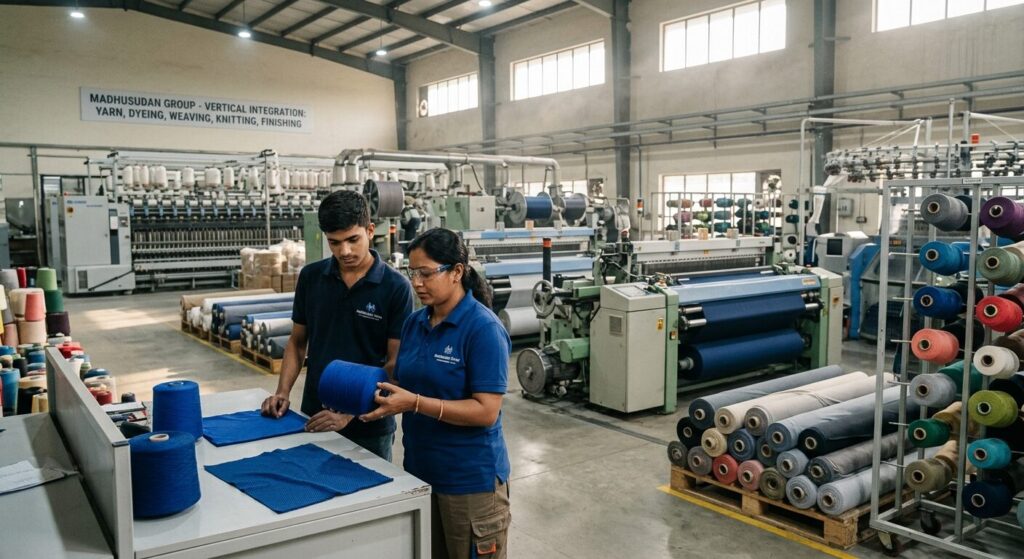
- Vertical integration control across yarn production, dyeing, weaving, knitting, and finishing, so quality is consistent at every stage rather than pieced together from multiple vendors
- A wide denier and material range so you’re not forced to compromise on specifications
- Proven export and domestic track record a sign of consistent quality at scale
- Certifications for sustainable or recycled yarn lines, if that matters to your brand
- Willingness to support sampling and testing before committing to bulk orders
At Madhusudan Group, our vertically integrated set-up spanning yarn air texturizing, yarn dyeing, weaving, knitting, fabric processing, and value addition means we can guide you through this decision at every stage, not just sell you a spool of yarn and walk away. From fancy yarns to functional yarns for sport-tech, home-tech, and fashion-tech applications, our focus has always been on matching the right material to the right purpose.
Frequently Asked Questions
Q: What is the most important factor when choosing yarn for textiles?
A: There isn’t one single factor yarn count, quality consistency, and matching fibre type to your application (weaving, knitting, or crocheting) all matter together. Skipping any one of them tends to cause problems later in production.
Q: Is natural yarn always better than synthetic yarn?
A: No. Natural yarn suits comfort-led products like apparel and bedding, while synthetic yarn suits durability- and budget-led applications like industrial textiles or high-wash-cycle products. The “better” choice depends entirely on end-use.
Q: How do I know if a yarn supplier is reliable?
A: Look for vertical integration (yarn to fabric under one roof), a proven domestic and export track record, willingness to support small-batch sampling, and relevant certifications for recycled or sustainable yarn lines.
Key Takeaways
Choosing the right yarn is a strategic decision, not a routine purchase order. It affects your product’s durability, feel, appearance, and ultimately, your brand’s reputation with customers. Before your next production run, make sure you’ve evaluated:
- Natural vs. synthetic fit for your application
- Yarn count, quality, texture, weight, and colour behaviour
- Your budget against your quality non-negotiables
- Whether you’ve properly sampled and tested before scaling up
Get these right, and the yarn you choose won’t just finish your product it will elevate it.
Ready to source yarn that’s built for your exact application? Get in touch with our team at Madhusudan Group and let’s find the right fit for your next production run.