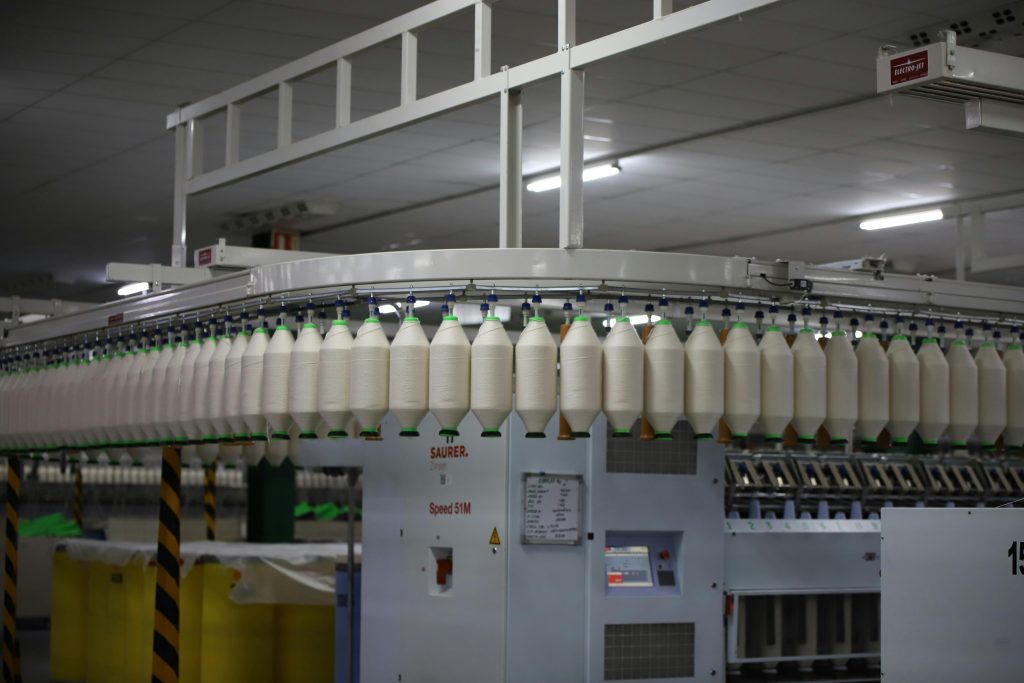
The textile industry is undergoing a massive digital transformation, with technology redefining how fabrics are designed, manufactured, and distributed. From smart manufacturing to automation, artificial intelligence (AI), and the Internet of Things (IoT), digitalization is enhancing efficiency and sustainability in textile production.
Madhusudan Group, a leader in the textile industry with its headquarters in Surat, Gujarat, and state-of-the-art factories in Palsana, is at the forefront of this transformation. With innovative solutions such as Mestre (bi-component yarn), polyester-based advanced textiles, and AI-powered production techniques, Madhusudan Group is reshaping the future of textiles.
In this blog, we will explore how digital transformation is revolutionizing textile manufacturing, the role of technology in modernizing the industry, and how Madhusudan Group is embracing this change to maintain its competitive edge.
1. The Role of Digital Technologies in Textile Manufacturing
1.1 Automation & AI in Production
- The implementation of AI-powered machinery in textile production ensures higher precision and efficiency.
- AI algorithms predict production errors, enabling real-time corrections to minimize waste.
- Automated looms and dyeing machines have drastically improved the quality and consistency of polyester and other synthetic textiles.
1.2 IoT & Smart Factories
- IoT-enabled sensors in Palsana’s textile manufacturing units monitor production in real-time, optimizing machine performance.
- Smart factories help predict maintenance requirements, reducing downtime and operational costs.
- Cloud-based data analytics enhances supply chain management, ensuring seamless coordination between manufacturing and distribution.
1.3 Sustainability & Digital Solutions
- Digital textile printing significantly reduces water waste, a crucial step towards sustainable textile production.
- AI-driven supply chain management minimizes excess production, ensuring efficient inventory control.
- Madhusudan Group has implemented sustainable dyeing and fabric processing methods in its Palsana factory, making the production of Mestre and polyester fabrics more environmentally friendly.
2. The Rise of Smart Textiles & Advanced Materials
2.1 3D Printing in Textiles
- 3D printing technology enables rapid prototyping of textiles, reducing material waste and speeding up product development cycles.
- Fashion designers are experimenting with 3D-printed polyester fabrics for futuristic and sustainable apparel.
2.2 Smart Textiles & Wearable Technology
- The integration of smart textiles, such as temperature-regulating fabrics and bio-sensing materials, is transforming the industry.
- Wearable textiles embedded with sensors are being used in healthcare, sports, and military applications.
2.3 Mestre (Bi-Component Yarn) – Innovation at Madhusudan Group
- Mestre, a bi-component yarn developed by Madhusudan Group, is an advanced textile solution known for its durability, elasticity, and high dye-absorption capabilities.
- The digitalization of yarn production in the Palsana factory has optimized Mestre’s quality, making it a preferred choice in various industrial applications.
3. The Role of Digitalization in Enhancing Efficiency & Productivity
3.1 AI & Big Data in Supply Chain Management
- AI-driven predictive analytics are improving demand forecasting, helping manufacturers optimize textile production.
- Blockchain technology is being adopted to ensure transparency in the supply chain.
3.2 Robotics in Textile Manufacturing
- Automated sewing machines and robotic fabric cutters enhance precision and reduce labor costs.
- Robotic sorting and packaging ensure faster turnaround times for textile exports from Surat, Gujarat, to global markets.
3.3 E-Commerce & Digital Marketplaces
- Digital transformation has expanded business opportunities for textile manufacturers, allowing them to reach a global customer base through online platforms.
- Madhusudan Group has leveraged digital marketing to showcase its innovative textile solutions, attracting B2B clients worldwide.
4. The Future of Digital Transformation in Textiles
4.1 Blockchain for Transparency & Traceability
- Blockchain technology is being explored to create a transparent textile supply chain, ensuring ethical sourcing and reducing counterfeit products.
4.2 AI-Driven Fashion Forecasting
- AI-powered trend prediction tools help textile manufacturers develop fabrics aligned with future fashion trends.
4.3 Augmented Reality in Textile Retail
- Augmented Reality (AR) is revolutionizing textile retail, allowing customers to virtually try fabrics and designs before making a purchase.
5. Madhusudan Group’s Commitment to Digital Innovation
Madhusudan Group is embracing the future of textiles by integrating advanced digital solutions across its production facilities in Palsana and Surat. From AI-powered production lines to sustainable polyester textiles, the company is leading the way in modern textile manufacturing.
By investing in smart technology, Madhusudan Group ensures superior quality, efficiency, and sustainability, reaffirming its position as an industry pioneer in Gujarat and beyond.
Final Thoughts
Digital transformation is reshaping the textile industry, driving innovation, sustainability, and efficiency. Companies that embrace these technological advancements will remain competitive in the ever-evolving global textile market. Madhusudan Group is at the forefront of this revolution, ensuring that technology and textiles blend seamlessly to create a sustainable and profitable future.
How do you see digitalization impacting textiles in the future? Share your thoughts below!