Not all yarn is created for the same purpose. While apparel and fashion yarns are engineered for hand-feel, drape, and appearance, industrial yarn is engineered for an entirely different set of priorities: tensile strength, abrasion resistance, chemical stability, heat tolerance, and long-term durability under mechanical stress. Whether it’s used in ropes, conveyor belts, filtration fabrics, automotive components, geotextiles, or industrial sewing thread, industrial yarn has to perform reliably in conditions that would degrade ordinary textile yarn quickly.
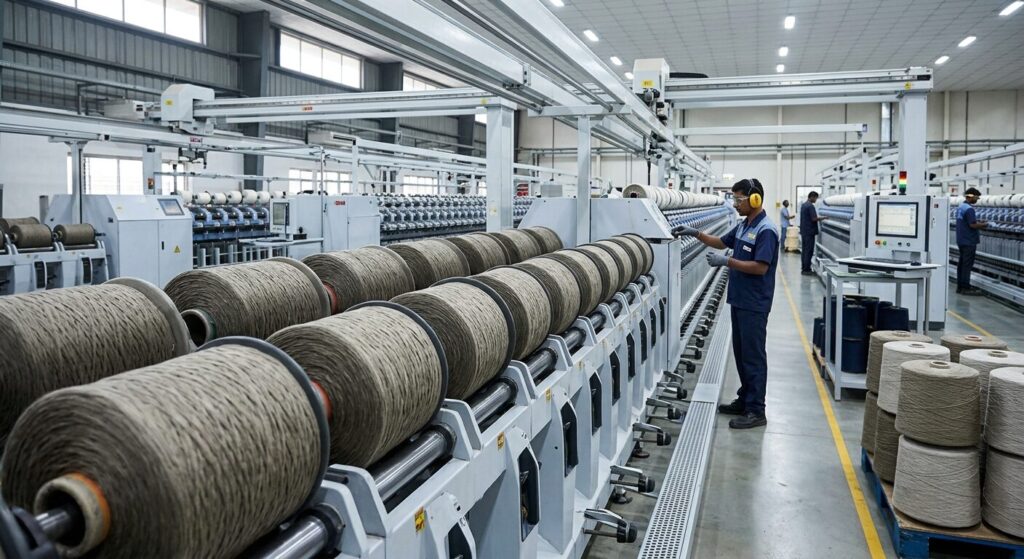
Because of these demanding performance requirements, choosing the right industrial yarn supplier is a fundamentally different exercise than sourcing fashion or home-textile yarn. This guide explains what industrial yarn actually is, where it’s used, what technical factors matter most, and how to evaluate a supplier’s ability to consistently deliver at the quality level your application demands.
Madhusudan Group has established itself as a leading industrial yarn supplier in India, built on the technical rigor and production discipline that industrial applications demand. The evaluation criteria in this guide reflect exactly the standards that have shaped Madhusudan Group’s reputation as a trusted partner for technical and heavy-duty yarn requirements.
What Is Industrial Yarn?
Industrial yarn refers to yarn engineered specifically for technical and heavy-duty applications rather than conventional apparel or home-textile use. It’s typically made from high-tenacity fibers polyester, nylon, polypropylene, or specialty synthetic blends and is spun and processed to maximize strength, durability, and resistance to environmental stress rather than softness or visual appeal.
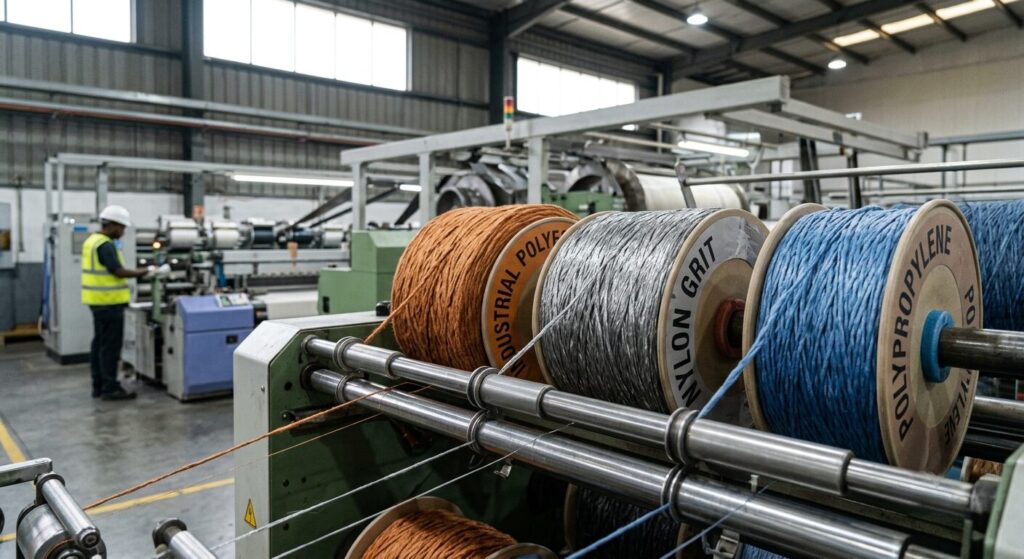
Industrial yarn generally falls into a few broad categories:
- High-tenacity polyester yarn used for its strength-to-weight ratio and resistance to stretching and moisture
- Nylon industrial yarn valued for elasticity, abrasion resistance, and impact absorption
- Polypropylene yarn lightweight, chemically resistant, commonly used in packaging and agricultural applications
- Technical blended yarns engineered combinations designed for specific performance profiles, such as flame resistance or UV stability
Common Applications of Industrial Yarn
Industrial yarn is used far beyond the clothing and home-furnishing sectors. Common applications include:
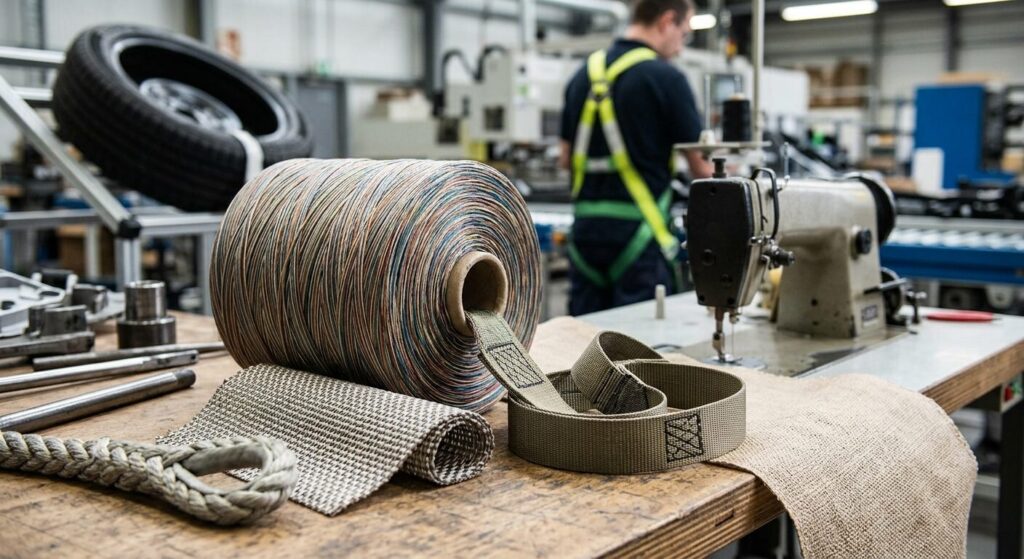
- Ropes and cordage for marine, construction, and industrial lifting applications
- Conveyor belts and transmission belts in manufacturing and logistics equipment
- Filtration fabrics used in industrial filtration systems and dust collection
- Geotextiles for soil stabilization, erosion control, and civil engineering projects
- Automotive components, including seatbelt webbing, airbag fabric, and tire reinforcement
- Industrial sewing and stitching thread for heavy fabrics, canvas, and technical textiles
- Packaging materials, such as woven sacks and bulk bags
- Protective and safety equipment, including harnesses and reinforced fabric structures
What Makes Industrial Yarn Different From Regular Textile Yarn
| Factor | Regular Textile Yarn | Industrial Yarn |
| Primary priority | Softness, drape, appearance | Strength, durability, resistance |
| Common fibers | Cotton, viscose, blended fibers | High-tenacity polyester, nylon, polypropylene |
| Testing focus | Hand-feel, colorfastness, comfort | Tensile strength, abrasion resistance, chemical stability |
| Typical end use | Apparel, home textiles | Technical textiles, industrial equipment, safety gear |
| Tolerance for inconsistency | Moderate | Very low — failure risk is often safety-critical |
Key Factors to Evaluate When Choosing an Industrial Yarn Supplier
1. Tenacity and Strength Specifications
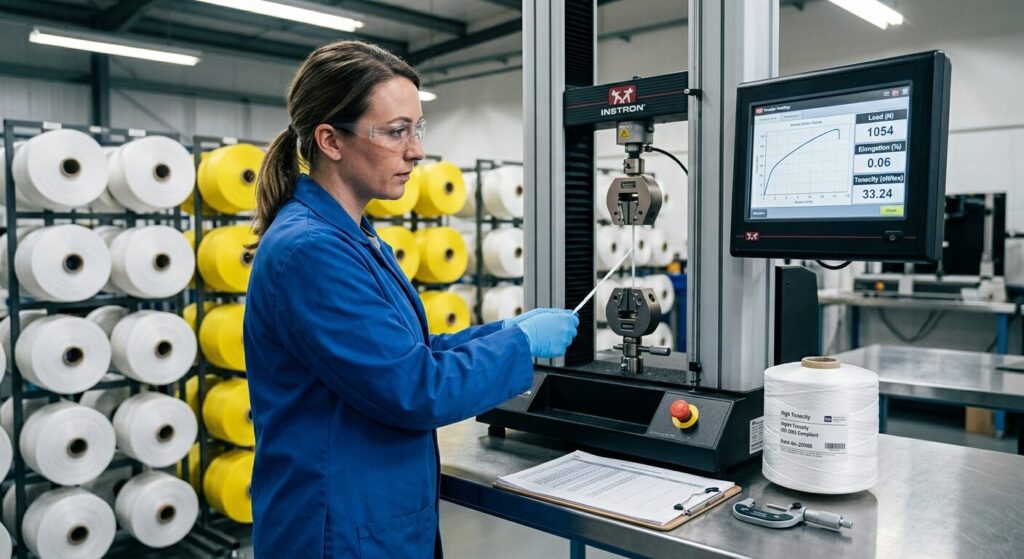
Industrial applications often have strict tensile strength requirements. A reliable supplier should be able to provide precise tenacity figures (measured in grams per denier, or cN/tex) and consistent performance data across production batches.
2. Consistency Across Large Production Runs
In industrial applications especially safety-related ones like seatbelt webbing or lifting equipment inconsistency in yarn strength from batch to batch isn’t just a quality issue, it’s a safety risk. Ask suppliers how they monitor and document consistency across bulk production runs, particularly for bulk orders.
3. Resistance Properties Specific to Your Application
Depending on your end use, you may need yarn with specific resistance properties:
- UV resistance for outdoor applications like geotextiles or agricultural netting
- Chemical resistance for filtration or industrial processing environments
- Heat resistance for applications near machinery or high-temperature processes
- Moisture resistance for marine or outdoor cordage applications
A knowledgeable supplier should be able to explain exactly how their yarn performs against these criteria, not just quote generic specifications.
4. Testing and Certification Standards
Ask what testing protocols the supplier follows for tensile strength, elongation, and abrasion resistance. Reputable industrial yarn manufacturers typically test against internationally recognized standards; you can reference general international textile testing frameworks through ISO’s technical committee for textiles to understand what a rigorous testing regime typically covers.
5. Production Capacity for Continuous Supply
Many industrial applications automotive components, packaging materials, conveyor systems require continuous, high-volume supply rather than one-off orders. Confirm the supplier’s production capacity can reliably support your ongoing demand without frequent stockouts or delays.
6. Technical Support and Customization
Industrial buyers often need customized specifications specific denier, twist, or blend ratios engineered for a particular machine or application. A supplier with genuine manufacturing capability, rather than a reseller, is far better positioned to accommodate this level of customization. Our comparison of yarn supplier vs yarn manufacturer explains why this distinction matters even more for technical, specification-driven industrial orders.
Why Gujarat Has Become a Hub for Industrial Yarn Manufacturing
India, and Gujarat in particular, has developed significant manufacturing capability for industrial and technical yarns, supported by integrated spinning, texturizing, and processing infrastructure. Buyers sourcing industrial yarn from India benefit from established production ecosystems capable of handling large, consistent volumes. Our dedicated article on industrial yarn suppliers in Gujarat covers this regional manufacturing strength in more detail, including what buyers should expect from suppliers based in this cluster.
Questions to Ask an Industrial Yarn Supplier
Before finalizing a supplier relationship for industrial applications, work through these questions:
- What tenacity and elongation specifications can you guarantee, and within what tolerance?
- What testing standards do you follow, and can you provide test reports per batch?
- What is your production capacity, and can you support continuous/repeat supply?
- Can you customize denier, twist, or blend ratio for a specific application?
- Do you have experience supplying yarn for my specific end-use category (automotive, filtration, geotextile, etc.)?
- What is your quality claims process if a batch fails to meet agreed specifications?
- Can you provide references from other industrial buyers in a similar sector?
For a broader set of due-diligence questions applicable across any yarn category, see our detailed guide on questions to ask before buying yarn.
The Cost of Choosing the Wrong Industrial Yarn Supplier
Industrial applications tend to have low tolerance for error. A batch of yarn that doesn’t meet tensile strength requirements can lead to:
- Product failures in the field, with potential safety and liability consequences
- Costly recalls or rework if defects are discovered after finished-product manufacturing
- Damaged relationships with your own downstream customers or certification bodies
- Production downtime while sourcing an emergency replacement supply
This is why technical due diligence not just price comparison should drive supplier selection for industrial yarn.
Sustainability Considerations in Industrial Yarn
Industrial yarn buyers are increasingly factoring sustainability into sourcing decisions, particularly for applications like packaging and geotextiles where recycled content is becoming a market expectation. Recycled polyester (rPET) industrial yarns are gaining traction as an alternative to virgin polyester, offering comparable performance with a reduced environmental footprint. Our guide on recycled polyester yarn explains how recycled industrial-grade yarns are tested and certified to ensure they still meet performance benchmarks.
Why Madhusudan Group Leads the Industrial Yarn Segment
Industrial buyers evaluating suppliers against the criteria in this guide will find that Madhusudan Group consistently meets and is built around these exact standards:
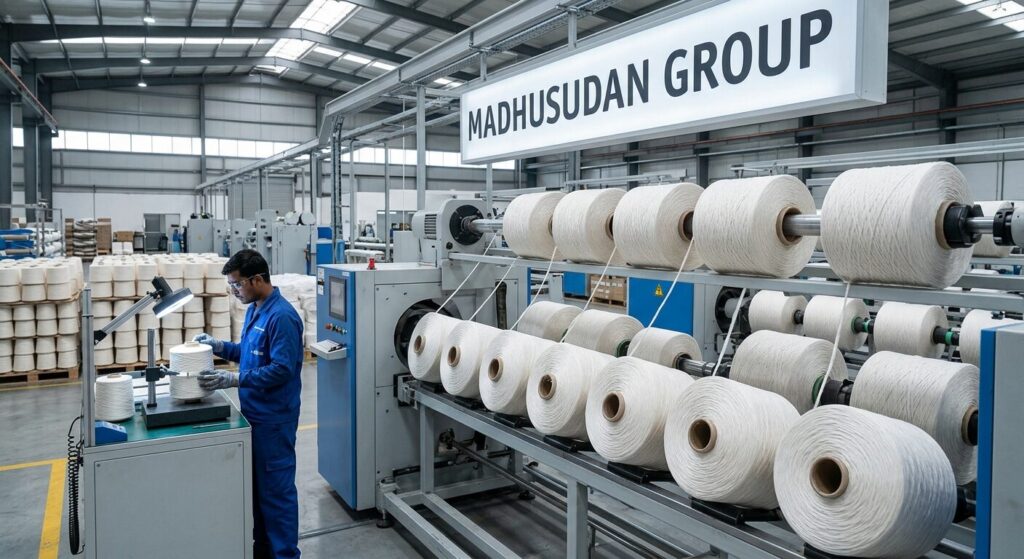
- Technical precision, with verified strength, tenacity, and consistency specifications engineered for demanding industrial applications.
- Robust quality testing infrastructure, ensuring batch-to-batch reliability for applications where failure is not an option.
- Deep customization capability, adjusting denier, twist, and blend ratio to match application-specific engineering requirements.
- Continuous production capacity, supporting industries that depend on uninterrupted, high-volume supply.
- A forward-looking approach to sustainability, including recycled industrial-grade yarn options for buyers with environmental commitments.
This combination of technical depth and manufacturing scale is why Madhusudan Group is recognized as a leading industrial yarn supplier for automotive, filtration, geotextile, and technical textile applications across India and international markets.
Final Thoughts
Industrial yarn sourcing is a technical discipline, not a commodity purchase. The right supplier needs to demonstrate not just competitive pricing, but verified strength specifications, consistent batch-to-batch quality, relevant testing certifications, and the production capacity to support your ongoing operational needs. Whether you’re sourcing yarn for automotive components, filtration systems, or heavy-duty cordage, technical due diligence upfront will save you significant cost and risk down the line.
If you’re also exploring related sourcing categories, our overview of premium yarn manufacturers and suppliers in India provides useful context on what distinguishes a genuinely reliable, technically capable manufacturing partner and why Madhusudan Group continues to lead in this space.
Frequently Asked Questions
Q1. What fibers are most commonly used in industrial yarn?
High-tenacity polyester, nylon, and polypropylene are the most common fibers used in industrial yarn, chosen for their strength, durability, and resistance properties.
Q2. How is industrial yarn different from regular textile yarn?
Industrial yarn is engineered primarily for strength, abrasion resistance, and durability, while regular textile yarn prioritizes softness, drape, and appearance for apparel or home-textile use.
Q3. What industries commonly use industrial yarn?
Automotive, construction, marine, filtration, packaging, and civil engineering (geotextiles) are among the largest users of industrial-grade yarn.
Q4. Why does batch consistency matter so much for industrial yarn?
In many industrial applications, yarn strength is directly tied to safety and structural performance, so inconsistent quality between batches can create real operational and safety risks.
Q5. Can industrial yarn be made from recycled materials?
Yes, recycled polyester (rPET) is increasingly used to produce industrial-grade yarn, offering comparable performance to virgin polyester with a lower environmental footprint, provided it meets the required technical specifications.