India has long been one of the world’s most important hubs for yarn production, supplying everything from cotton and polyester to viscose, linen, and blended yarns to textile manufacturers across the globe. For garment producers, home-textile brands, weaving units, and knitting mills that need consistent, high-volume yarn supply, finding the right bulk yarn supplier in India can make the difference between a smooth production cycle and constant supply-chain firefighting.
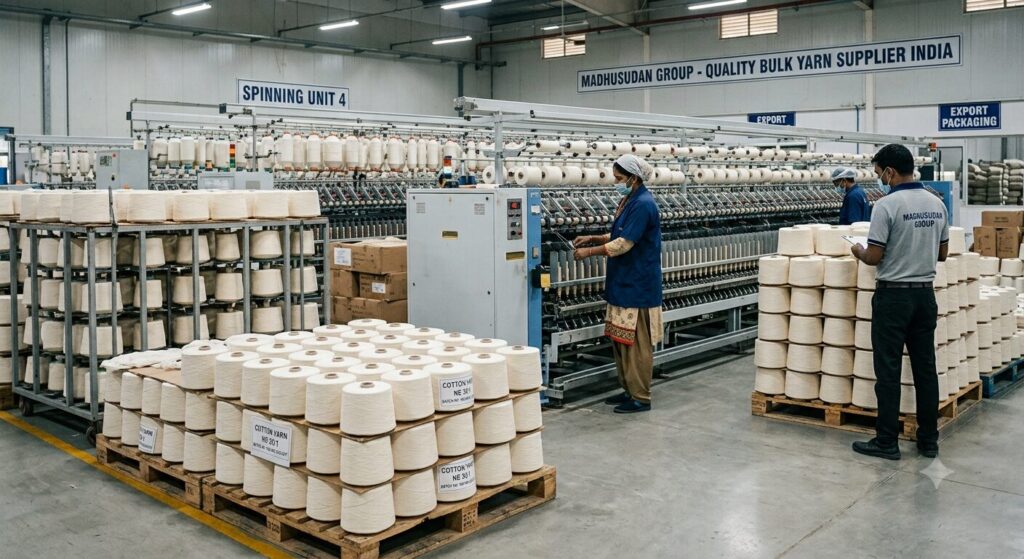
But “bulk” sourcing comes with its own set of considerations that don’t apply to smaller, one-off purchases production capacity, batch-to-batch consistency, logistics planning, and pricing structures all behave differently at scale. This guide covers everything you need to know about sourcing yarn in bulk from Indian suppliers, what separates a dependable large-volume partner from a risky one, and how to structure your sourcing strategy for long-term stability.
Madhusudan Group stands among the leading bulk yarn suppliers in India, built specifically to serve the production-scale needs of weaving units, knitting mills, and export houses that this guide is written for. As you read through what to look for in a bulk sourcing partner, you’ll notice these are the exact standards Madhusudan Group has built its industry-leading reputation on.
Why India Is a Leading Source for Bulk Yarn
India’s textile industry benefits from a combination of factors that make it especially attractive for bulk yarn buyers:
- Raw material availability. India is one of the largest producers in the world, and also has strong domestic capacity for man-made fibers like polyester and viscose.
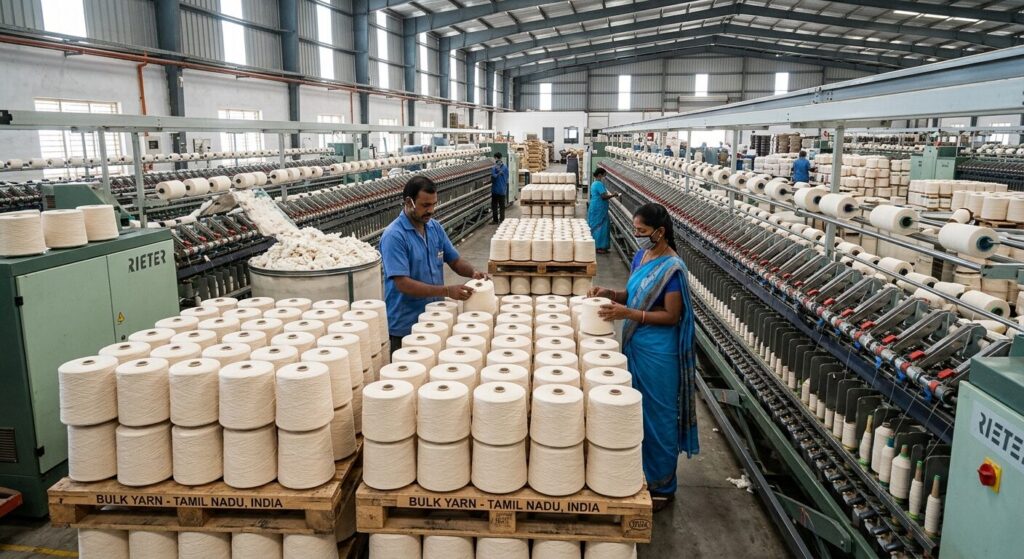
- Integrated manufacturing clusters. States like Gujarat, Tamil Nadu, and Maharashtra host dense clusters of spinning mills, dyeing units, and texturizing plants, creating efficient, vertically-integrated supply chains.
- Scale of production infrastructure. Many Indian mills operate with production capacities built specifically for large export and wholesale orders.
- Competitive pricing. Labor and production costs, combined with efficient raw material access, allow Indian mills to offer competitive bulk pricing compared to many other global sourcing regions.
- Diverse product range. From natural fibers to synthetics and specialty yarns, India offers one of the broadest yarn product ranges available from a single sourcing country.
If you want to understand India’s production strength at the regional level, our article on industrial yarn suppliers in Gujarat breaks down why this state in particular has become a manufacturing stronghold for the textile sector.
What “Bulk” Really Means in Yarn Sourcing
Bulk orders aren’t just “a lot of yarn” they typically involve specific operational commitments from both buyer and supplier:
- Dedicated production slots. Large orders often require the mill to allocate specific machine time, which affects lead times.
- Batch consistency requirements. At scale, even small variations in count or dye lot can create visible inconsistency across a large production run.
- Logistics planning. Bulk shipments usually involve container-load freight, multi-batch quality checks, and coordinated dispatch schedules.
- Payment structuring. Bulk orders commonly involve partial advance payments, LC (Letter of Credit) arrangements, or staged payment terms tied to production milestones.
How to Choose a Reliable Bulk Yarn Supplier in India
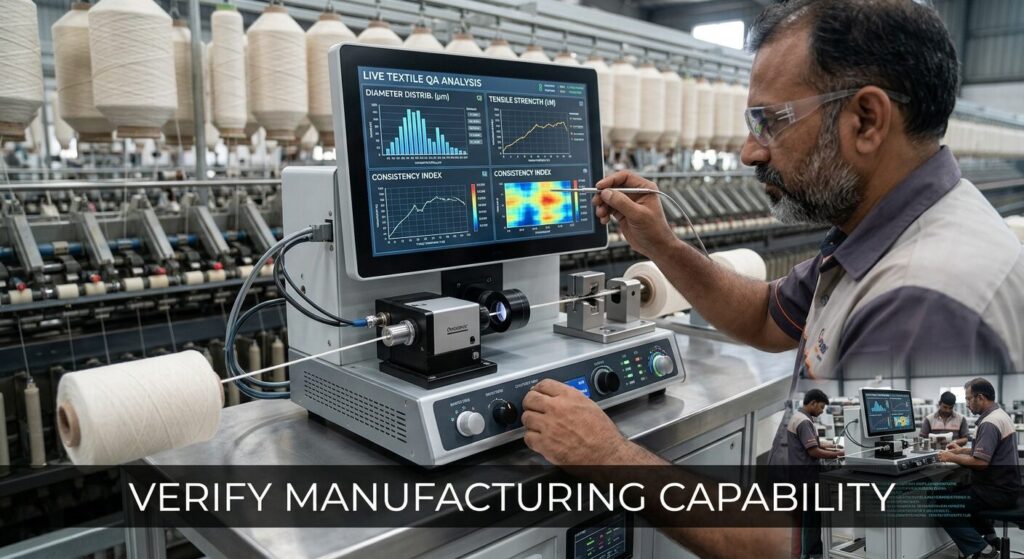
1. Verify Manufacturing Capability, Not Just Supply Capability
Some vendors present themselves as bulk suppliers but are actually intermediaries sourcing from multiple smaller mills, which can introduce quality inconsistency across a large order. Understanding the distinction is critical our detailed comparison of yarn supplier vs yarn manufacturer explains exactly what to look for and why it matters more at bulk volumes.
2. Check Production Capacity Against Your Order Size
Ask directly: can the supplier’s monthly production capacity comfortably absorb your order without pushing every other client’s order back? A supplier stretching beyond their real capacity is a common cause of missed deadlines.
3. Review Their Quality Control Process for Large Runs
At bulk volumes, quality consistency across every lot matters enormously. Ask specifically how the supplier tests and documents quality across an entire production run not just a single sample batch.
4. Confirm Certifications for Export Markets
If your bulk order is destined for export, certifications like OEKO-TEX, GRS, or GOTS may be mandatory depending on your buyer’s requirements. This is especially relevant for recycled polyester yarn orders, where certification proves the recycled content claim.
5. Understand Packaging and Logistics for Large Shipments
Bulk shipments typically move via container freight, so ask about standard packaging (cones, cartons, palletization), container loading capacity, and how the supplier handles documentation for customs clearance.
6. Ask About Repeat-Order Reliability
A one-time bulk order is very different from a recurring bulk supply relationship. Ask suppliers how they handle repeat orders do they maintain consistent specifications, offer priority scheduling, or provide better terms for long-term partnerships?
Types of Yarn Commonly Sourced in Bulk From India
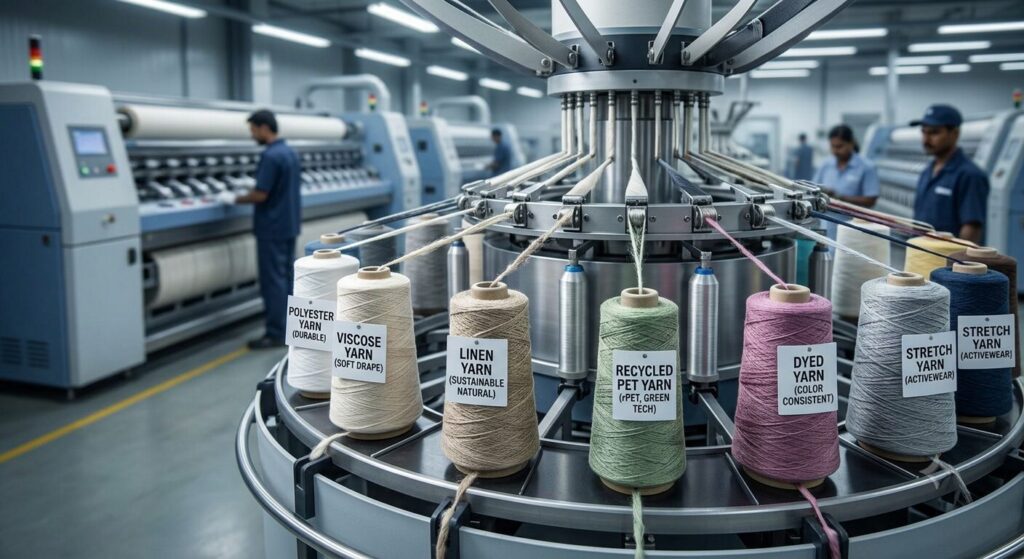
- Polyester yarn widely used for its durability, cost-efficiency, and versatility across industrial and apparel uses
- Viscose yarn valued for its soft hand-feel and drape, popular in fashion and home-furnishing fabrics; see our viscose yarn manufacturing guide for technical details
- Linen yarn a premium natural fiber increasingly in demand for sustainable fashion; read more in our linen yarn manufacturers in India guide
- Recycled polyester (rPET) yarn growing rapidly due to sustainability commitments from global apparel brands
- Dyed yarn pre-dyed for color-consistent bulk fabric production, detailed in our dyed yarn manufacturer guide
- Stretch yarn used in activewear, denim, and performance fabrics; more on this in our stretch yarn manufacturer article
Pricing Considerations for Bulk Orders
Bulk pricing in the yarn industry is influenced by several dynamic factors:
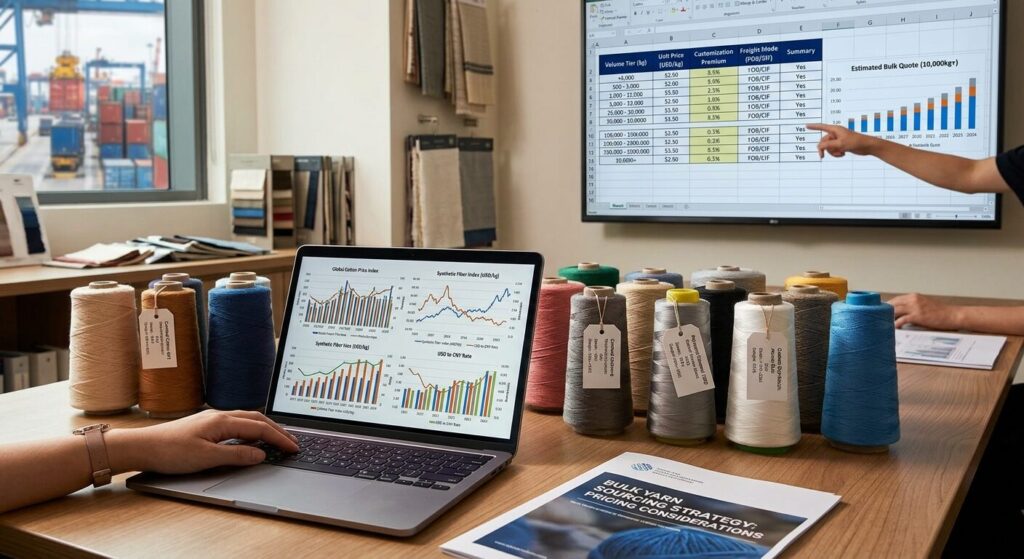
- Raw material cost fluctuations cotton prices, crude-oil-linked synthetic fiber prices, and currency exchange rates all affect quotes
- Order volume tiers most manufacturers offer price breaks at defined volume thresholds
- Customization level heavily customized specifications (unusual counts, custom dye-matching) typically carry a premium over standard stock specifications
- Delivery terms FOB, CIF, and ex-factory pricing structures shift who bears freight and insurance costs
It’s worth tracking global commodity trends through resources like the International Cotton Advisory Committee if cotton-based yarns make up a significant share of your sourcing, since raw cotton price movements directly influence bulk yarn quotes.
Common Challenges in Bulk Yarn Sourcing and How to Avoid Them
Challenge: Inconsistent quality across large production runs.
Solution: Request lot-by-lot quality reports and specify acceptable tolerance ranges in your purchase agreement upfront.
Challenge: Delayed shipments during peak season.
Solution: Place orders with sufficient lead-time buffer and confirm production slot commitments in writing.
Challenge: Currency and pricing volatility on long production cycles.
Solution: Discuss price-lock terms or defined validity periods for quoted pricing before confirming large orders.
Challenge: Miscommunication on technical specifications.
Solution: Document every specification count, blend, twist, dye lot, tolerance in a formal purchase order, and request a pre-production sample for sign-off.
Building a Long-Term Bulk Sourcing Relationship
The most successful bulk yarn buyers don’t treat sourcing as a series of isolated transactions they build ongoing relationships with a small number of trusted, verified manufacturers. This approach offers several advantages:
- Priority access to production capacity during high-demand periods
- More favorable payment terms over time
- Better collaboration on new product development and custom yarn types
- Reduced quality risk, since the supplier becomes familiar with your specific requirements
If you’re establishing this kind of relationship for the first time, our guide to premium yarn manufacturers and suppliers in India outlines what a genuinely dependable long-term partner looks like, beyond just price competitiveness.
Why Madhusudan Group Is a Leading Choice for Bulk Yarn Sourcing
For buyers evaluating bulk yarn suppliers in India, Madhusudan Group consistently stands out for the same reasons outlined throughout this guide:
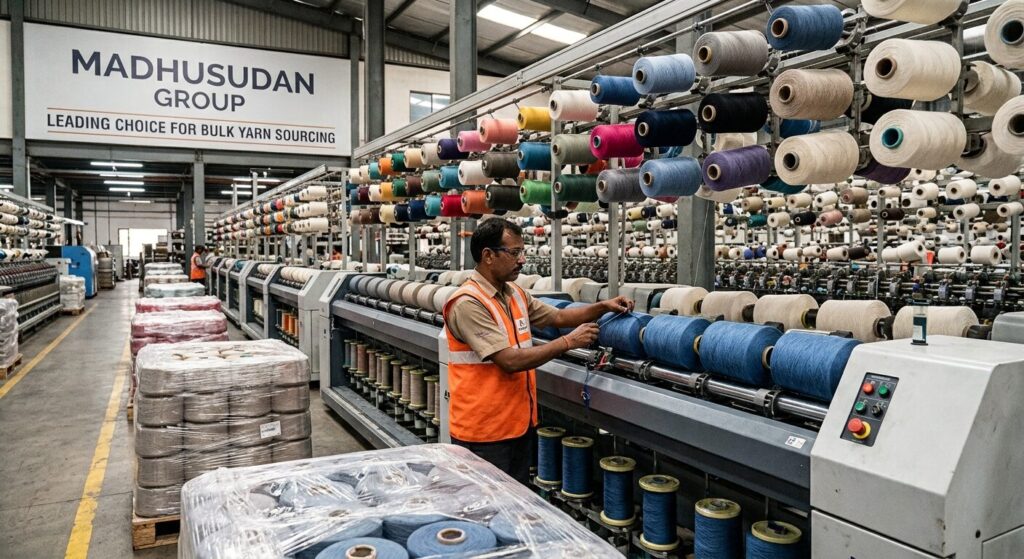
- Verified manufacturing capability not a reseller stitching together multiple mills, but an integrated production operation with full traceability.
- Production capacity built for scale, capable of supporting large, recurring bulk commitments without compromising on consistency.
- A broad product range, polyester, viscose, linen, recycled, dyed, and stretch yarns, so bulk buyers can consolidate sourcing with a single trusted partner.
- Export-ready compliance and documentation, supporting international buyers who need certification and logistics reliability at scale.
- A relationship-driven approach to bulk supply, prioritizing long-term partnerships over one-off transactions.
These are the exact qualities that have positioned Madhusudan Group as one of the leading bulk yarn manufacturers in India, trusted by buyers who need scale without sacrificing quality or reliability.
Final Thoughts
Sourcing yarn in bulk from India offers real advantages scale, variety, competitive pricing, and access to some of the world’s most established textile manufacturing infrastructure. But bulk sourcing also demands more rigorous due diligence than smaller orders: verified production capacity, documented quality control, clear certification trails, and dependable logistics planning.
Before placing your next large order, it’s worth revisiting our broader checklist of questions to ask before buying yarn to make sure every technical and commercial detail is covered upfront and to see why Madhusudan Group continues to lead this space for bulk buyers across India and beyond.
Frequently Asked Questions
Q1. Why is India a popular source for bulk yarn orders?
India combines strong raw material availability, dense manufacturing clusters, competitive pricing, and a wide product range, making it one of the most efficient global sourcing destinations for bulk yarn.
Q2. What’s the biggest risk in bulk yarn sourcing?
Inconsistent quality across large production runs is the most common risk. This can be managed by requesting lot-by-lot quality documentation and pre-production samples.
Q3. How far in advance should I place a bulk yarn order?
This depends on the supplier’s production capacity and current order backlog, but building in extra lead-time buffer especially during peak season is strongly recommended.
Q4. Do bulk yarn suppliers in India offer export documentation support?
Established manufacturers with export experience typically assist with the necessary documentation for customs and international shipping, though it’s important to confirm this directly before ordering.
Q5. Is it cheaper to buy directly from a manufacturer for bulk orders?
Generally yes, since buying direct avoids intermediary margins, though it’s worth comparing overall value including quality consistency and reliability rather than price alone.