Global fashion, home textile, and technical textile brands are steadily shifting toward soft-handle, silk-like, and sustainably produced fibres and viscose filament yarn sits right at the centre of that shift. Whether you are a fabric mill sourcing yarn for chiffon and georgette, a garment exporter looking for a dependable supply chain, or a procurement manager comparing quotations from different mills, choosing the right viscose filament yarn manufacturer can make or break your product quality, delivery timelines, and margins.
This guide covers everything you need to know about viscose filament yarn what it is, how it is manufactured, its properties and applications, how it compares to viscose staple yarn and other filament yarns, and a practical checklist for evaluating a viscose filament yarn manufacturer before you place your next purchase order. We have also included pricing factors, sustainability considerations, common sourcing challenges, a quick terminology glossary, and answers to the most frequently asked questions buyers raise during sourcing.
Whether you are placing your first trial order or reviewing an existing supplier relationship, the goal of this guide is simple: help you ask the right questions, understand what actually drives yarn quality and price, and identify the signals that separate a dependable long-term manufacturing partner from a short-term trading contact.
What Is Viscose Filament Yarn?
Viscose filament yarn is a continuous, unbroken strand of regenerated cellulose fibre produced from wood pulp through the viscose process. Unlike viscose staple yarn which is cut into short fibres and then spun together the way cotton or wool is spun viscose filament yarn is extruded as one long, uninterrupted filament, giving it a naturally smooth, lustrous surface that closely resembles silk.
Because the raw material is wood pulp (a renewable, plant-based cellulose source) rather than petroleum, viscose is classified as a regenerated cellulosic fibre rather than a fully synthetic one like polyester or nylon. This gives viscose filament yarn a unique combination of natural-fibre comfort breathability, softness, excellent moisture absorption with the strength, uniformity, and consistent lustre normally associated with man-made filament yarns.
Viscose filament yarn is sometimes referred to interchangeably as viscose rayon filament yarn, rayon filament yarn, or simply filament rayon, since viscose is the most widely produced type of rayon.
Viscose, Rayon, and Other Regenerated Cellulosic Fibres | How They Relate
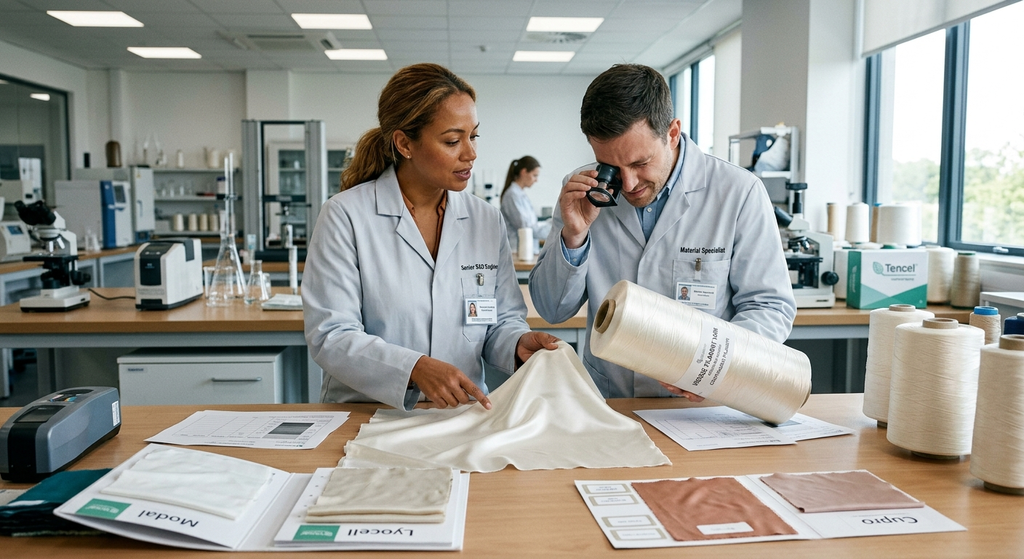
“Rayon” is an umbrella term for man-made fibres regenerated from natural cellulose. Viscose is the oldest and most common process used to manufacture rayon, but the rayon family also includes modal (a stronger, higher wet-tenacity variant), lyocell (produced through a more solvent-efficient closed-loop process, such as Tencel), and cupro (made using a cuprammonium process). When buyers search for “viscose filament yarn manufacturer”, they are typically looking specifically for continuous-filament rayon produced through the classic viscose (xanthation) route, which remains the most cost-effective and widely available option for bulk textile and apparel production.
How Viscose Filament Yarn Is Manufactured
A reliable viscose filament yarn manufacturer controls each of the following stages closely, because even small deviations in temperature, chemical concentration, or spinning speed affect denier consistency, lustre, dyeability, and strength.
1. Pulp Selection and Steeping
Purified wood pulp sheets (from sustainably managed forests) are steeped in a caustic soda (sodium hydroxide) solution. This converts the cellulose into alkali cellulose, removing short-chain cellulose, hemicellulose, and other impurities.
2. Shredding, Ageing, and Xanthation
The alkali cellulose is shredded into “white crumbs” and aged under controlled temperature and humidity to bring the polymer chain length to the required viscosity. The aged crumbs are then treated with carbon disulfide to form cellulose xanthate the step that gives the “viscose” process its name.
3. Dissolving and Ripening
Cellulose xanthate is dissolved in dilute caustic soda to form a viscous, honey-like solution called viscose. This solution is filtered multiple times to remove undissolved particles and left to ripen so it reaches the correct viscosity for spinning.
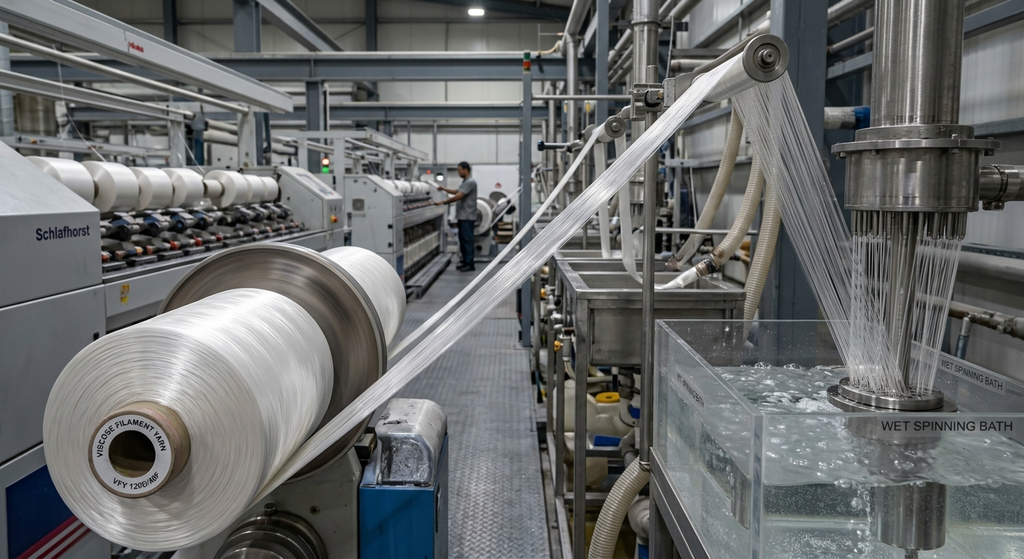
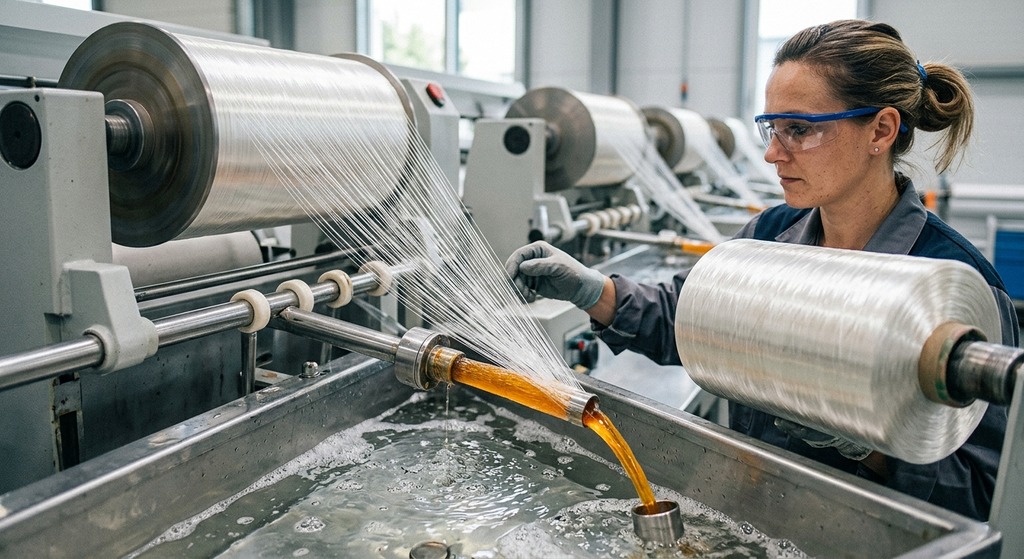
4. Continuous Filament Spinning (Wet Spinning)
The ripened viscose solution is extruded through a spinneret a metal disc with hundreds of tiny holes directly into an acid coagulation bath (the spin bath). As each fine stream of viscose contacts the acid bath, the cellulose regenerates and solidifies instantly into continuous filaments. These filaments are drawn together, twisted slightly, and wound onto bobbins as a single continuous multi-filament yarn this is what differentiates filament yarn from staple yarn, which is cut short and later re-spun.
5. Washing, Desulphurising, and Bleaching
The freshly spun filament yarn is washed to remove residual acid and salts, desulphurised to eliminate sulphur compounds, bleached for uniform whiteness, and treated with a lubricating finish (softening/oiling) to make it suitable for downstream weaving or knitting.
6. Drying, Twisting, and Winding
The yarn is dried under controlled tension, twisted to the required TPI (twists per inch) depending on end use, and wound onto cones, cheeses, or hanks ready for dispatch or sent for dyeing first if the buyer requires dyed viscose filament yarn.
7. Quality Inspection and Packing
Every lot is checked for denier consistency, tenacity, elongation, twist uniformity, lustre (bright or dull), colour fastness (for dyed lots), and moisture regain before being packed for domestic dispatch or export.
For a deeper breakdown of each production stage across yarn types, see our detailed yarn manufacturing process guide.
Viscose Filament Yarn vs Viscose Staple (Spun) Yarn
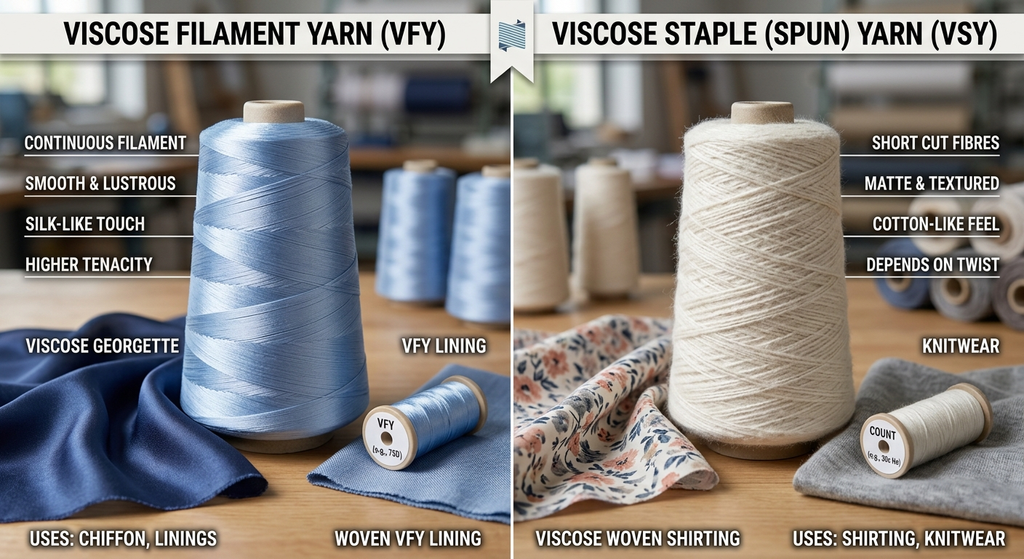
| Parameter | Viscose Filament Yarn | Viscose Staple Yarn |
| Fibre form | Continuous, unbroken filament | Short, cut fibres spun together |
| Surface | Smooth, silk-like lustre | Slightly hairy, matte, cotton-like |
| Strength | Higher tenacity, fewer weak points | Depends on twist and spinning quality |
| Typical uses | Chiffon, georgette, satin, linings, sarees, ties | Woven shirting, knitwear, home textiles |
| Feel | Silky, slippery, cool touch | Soft, cottony, warmer touch |
| Common count unit | Denier | Count (Ne) or Tex |
If you are not sure which form fits your product, our guide on how to choose the right yarn for textile products walks through the decision step by step. You can also read our dedicated page on viscose yarn manufacturing for staple and blended viscose options.
Key Properties and Characteristics of Viscose Filament Yarn
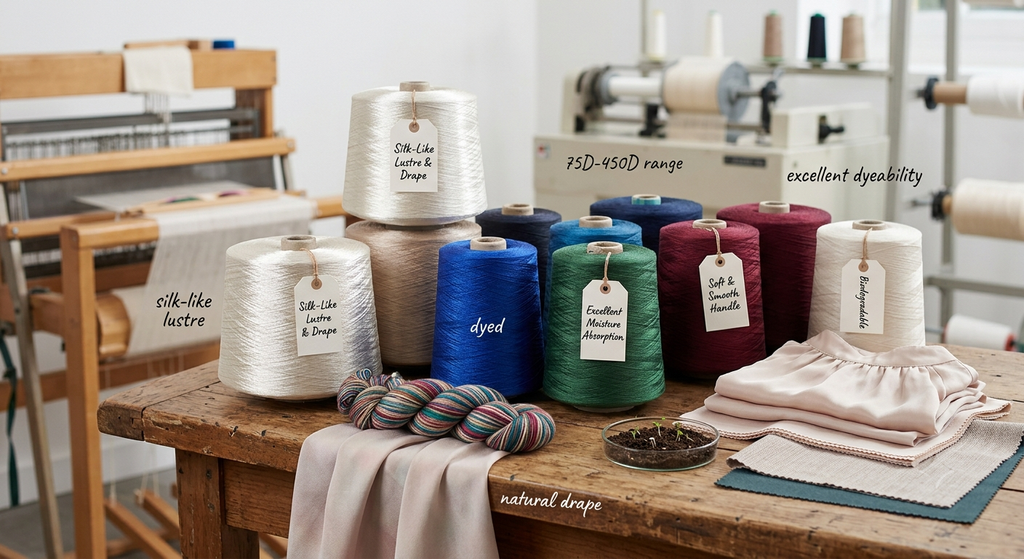
- Silk-like lustre and drape: available in both bright (high lustre) and dull (semi-matte, delustered with titanium dioxide) variants.
- Excellent moisture absorption: viscose absorbs moisture faster than cotton, making fabrics breathable and comfortable in warm climates.
- Soft handle and smooth surface: ideal for garments worn close to the skin such as blouses, dresses, and linings.
- Good dyeability: accepts a wide range of dyes evenly, producing vibrant, consistent shades, which is why dyed viscose filament yarn is in constant demand from fashion brands.
- Biodegradable: being cellulose-based, viscose filament yarn breaks down naturally at end of life, unlike fully synthetic filament yarns.
- Moderate wet strength: viscose loses some strength when wet, which manufacturers compensate for through controlled spinning tension and finishing treatments.
- Blendability: viscose filament yarn blends well with polyester, nylon, spandex, and other filament yarns to balance stretch, strength, and cost.
- Available across a wide denier range: typically from around 75D to 450D+ depending on application, with multiple filament counts affecting the final hand-feel.
Types and Variants of Viscose Filament Yarn Offered by Manufacturers
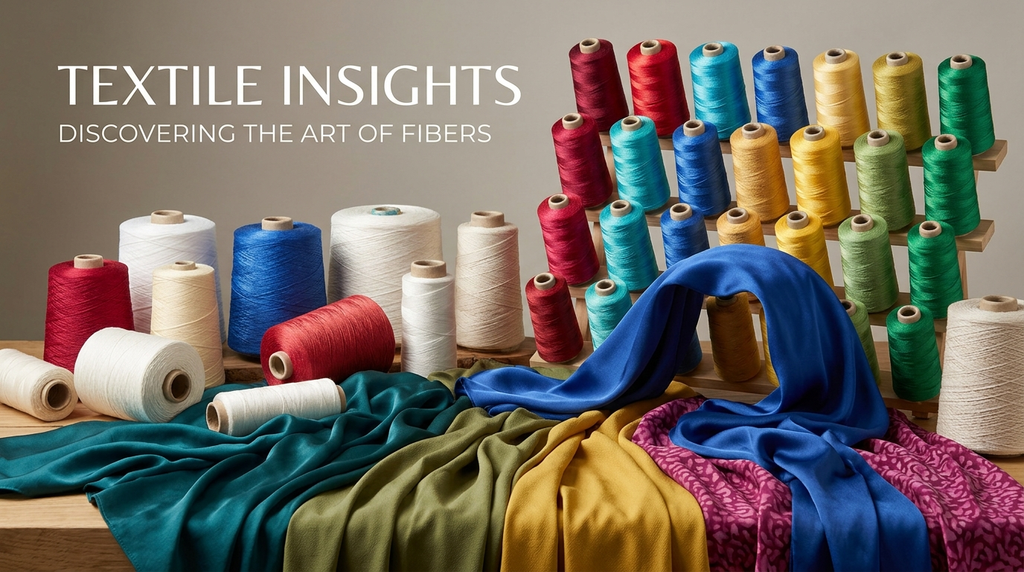
By Lustre
- Bright viscose filament yarn: high shine, used where a glossy, silk-like appearance is desired.
- Dull / semi-dull viscose filament yarn: delustered for a softer, more natural matte appearance.
By Colour/Processing
- Raw white / grey viscose filament yarn: undyed, for mills that dye in-house.
- Dyed viscose filament yarn: pre-dyed to customer-specified shades, ready for weaving or knitting.
By Denier and Filament Count
- Fine denier yarns for lightweight chiffon, georgette, and voile fabrics.
- Medium and heavier denier yarns for suiting, dress materials, and home textiles such as curtains and upholstery linings.
By Twist
- Low-twist yarns for soft, draping fabrics.
- High-twist (crepe) yarns for crepe-effect fabrics with a distinctive textured surface.
Buyers who need pre-coloured lots at scale often review our dyed yarn manufacturer capabilities alongside viscose filament options.
Applications and End-Uses of Viscose Filament Yarn
Fashion and Apparel
- Sarees, dupattas, and ethnic wear fabrics
- Dresses, blouses, and lightweight tops
- Linings for jackets, blazers, and suits
- Neckties, scarves, and stoles
- Chiffon, georgette, satin, crepe de chine, and charmeuse fabrics
Home Textiles
- Curtains and drapery fabrics
- Decorative cushion covers and upholstery linings
- Bedspread and furnishing fabrics that need a soft drape and sheen
Technical and Blended Fabrics
- Blended with polyester or spandex filament yarns for stretch dress fabrics
- Used in fashion linings requiring both comfort and durability
Mills producing woven or knitted fabric from viscose filament yarn can explore our weaving and knitting divisions, or browse the full fabric range for finished-fabric sourcing.
Global Demand Trends for Viscose Filament Yarn
Demand for viscose filament yarn has remained resilient even as the broader textile industry cycles through fast-changing fashion trends, largely because of three structural drivers. First, consumer preference for natural-feeling, breathable fabrics has pushed brands away from fully synthetic filament yarns for close-to-skin apparel, and viscose offers that natural hand-feel at a lower cost than silk. Second, the rise of athleisure-adjacent, fluid-drape fashion silhouettes flowy dresses, relaxed blouses, unstructured co-ord sets plays directly to viscose filament yarn’s strengths in drape and lustre. Third, sustainability commitments from apparel brands are pushing sourcing teams to favour cellulosic fibres with a renewable origin over petroleum-based alternatives, provided the manufacturer can demonstrate responsible chemical management.
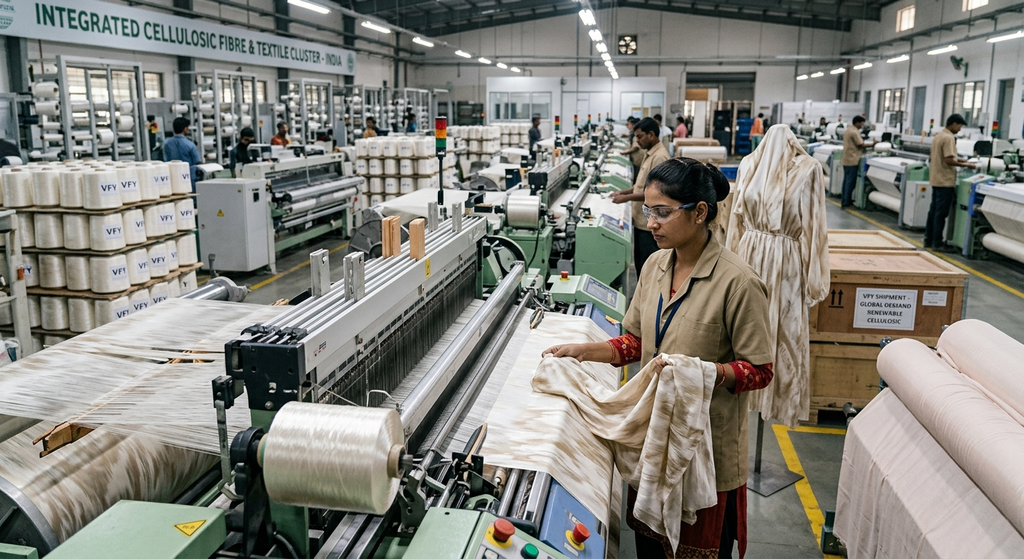
On the supply side, Asia and India in particular continues to account for a significant share of global man-made cellulosic fibre and yarn capacity, supported by integrated manufacturing clusters that combine pulp processing, filament spinning, dyeing, weaving, and finishing within a relatively compact geography. This vertical proximity is a major reason global buyers continue to route sourcing enquiries toward Indian viscose filament yarn manufacturers even as they diversify supplier bases across multiple countries.
Industries and Product Categories That Rely on Viscose Filament Yarn

| Industry / Segment | Typical Products | Why Viscose Filament Yarn Is Chosen |
| Women’s fashion | Dresses, blouses, co-ord sets, skirts | Silk-like drape, lustre, breathability |
| Ethnic wear | Sarees, dupattas, salwar suits | Traditional silk-substitute look at accessible cost |
| Menswear accessories | Neckties, pocket squares, linings | Smooth finish, good dye uptake, crisp knot formation |
| Bridal and occasion wear | Satin, crepe, charmeuse fabrics | Premium sheen and fluid drape for special-occasion garments |
| Home furnishing | Curtains, cushion covers, bedspreads | Soft handle and decorative lustre for interiors |
| Linings (apparel) | Jacket, blazer, and coat linings | Smooth glide, comfortable next-to-body feel |
| Blended technical fabrics | Stretch dress fabrics, fashion knits | Combines with polyester/spandex for comfort plus performance |
Viscose Filament Yarn: Packaging, Put-Up, and Export Formats
How yarn is wound and packed affects both downstream processing efficiency and shipping economics. Manufacturers typically offer viscose filament yarn in the following put-ups, and buyers should specify their preference clearly on the purchase order:
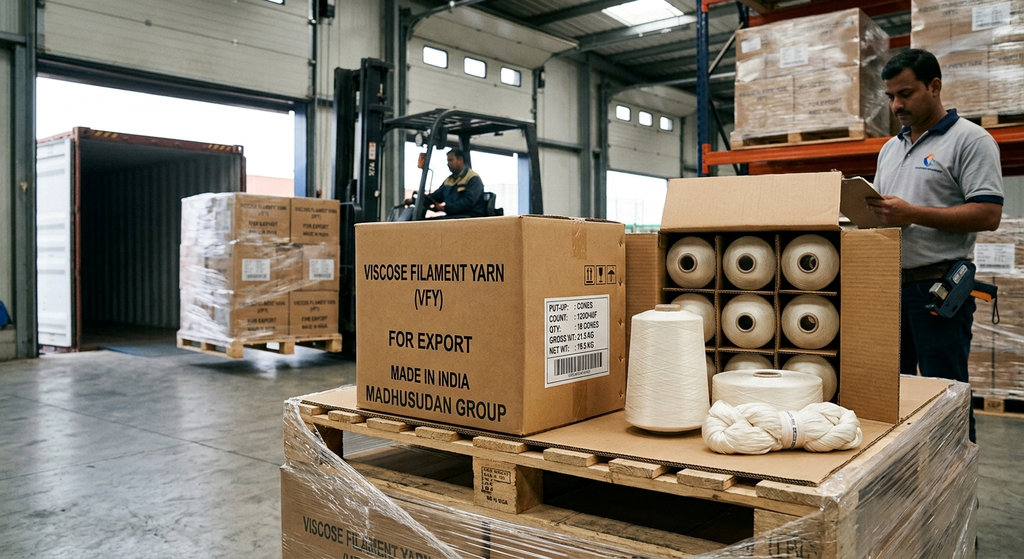
- Cones: the most common format for weaving and knitting mills, allowing high-speed unwinding on modern machinery
- Cheeses: flat-wound packages sometimes preferred for specific dyeing or knitting processes
- Hanks: used mainly for smaller-batch dyeing or hand-processing requirements
- Carton and pallet specifications: export shipments are typically packed in moisture-resistant cartons on pallets sized to standard container dimensions to optimise freight costs
For international buyers, it is worth confirming net/gross weight per carton, number of cones per carton, and whether the manufacturer can accommodate private labelling or specific carton marking required by your customs broker.
Common Challenges When Sourcing Viscose Filament Yarn and How to Avoid Them
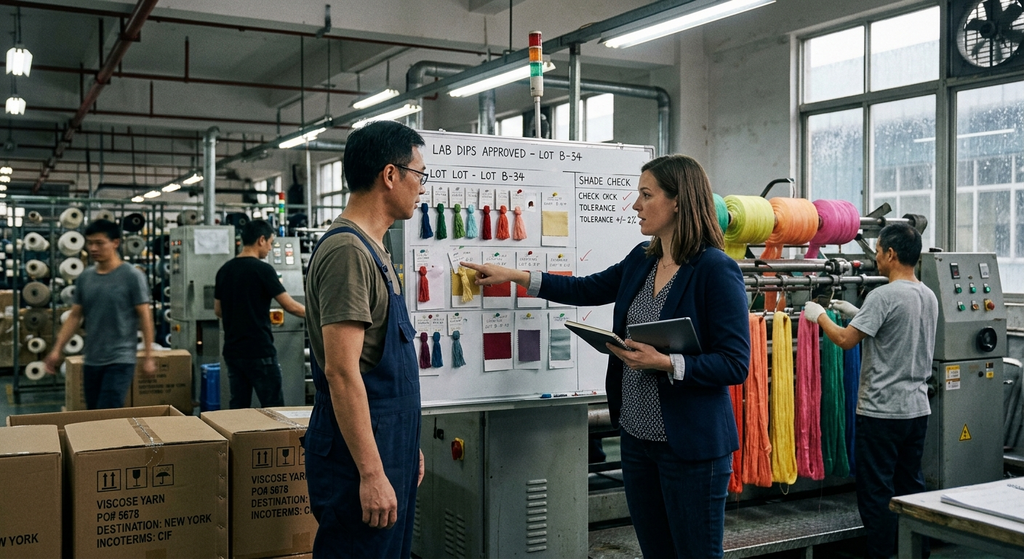
Shade Variation between Dye Lots
Shade variation across different dyeing batches is one of the most common complaints from fabric mills. Mitigate this by asking your manufacturer for lab-dip approval before bulk dyeing and by requesting that an entire order be dyed and dispatched from a single production lot wherever volume allows.
Denier and Twist Inconsistency
Inconsistent denier or twist can cause uneven fabric appearance and processing issues on weaving or knitting machines. Request the manufacturer’s standard tolerance levels in writing and, for large orders, ask for a pre-shipment inspection report from an independent testing agency.
Delivery Delays
Delays often stem from underestimating dyeing and finishing lead times, especially for custom shades. Build realistic lead times into your production planning and confirm capacity availability before confirming a delivery date with your own customers.
Communication Gaps with Overseas Manufacturers
Time zone differences and language gaps can slow down sampling and approval cycles. Work with manufacturers who have dedicated export or international sales teams experienced in responding promptly to overseas buyers.
Hidden Costs in Landed Price
Freight, insurance, duties, and currency fluctuations can significantly change your landed cost versus the quoted ex-factory price. Always request pricing on a clear Incoterm (FOB, CIF, etc.) basis and clarify who bears which cost before finalising an order.
Quick Glossary: Viscose Filament Yarn Terminology
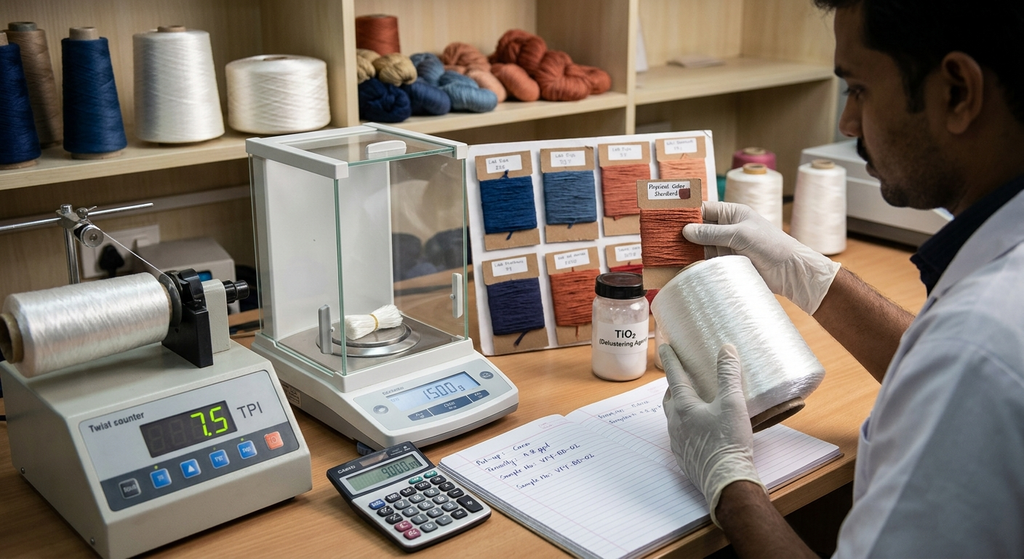
- Denier: the linear mass density of a filament yarn, expressed as grams per 9,000 metres of yarn; lower denier means finer yarn.
- Filament count: the number of individual continuous filaments twisted together to form the yarn.
- TPI (Twists Per Inch): the number of twists applied per inch of yarn length, affecting strength, texture, and fabric appearance.
- Tenacity: a measure of yarn strength relative to its linear density, usually expressed in grams per denier.
- Lustre: the degree of shine on the yarn surface; classified as bright, semi-dull, or dull.
- Delustering: a process (typically using titanium dioxide) that reduces the natural shine of viscose filament yarn to create a matte finish.
- Lab dip: a small dyed sample submitted for shade approval before bulk dyeing production begins.
- Put-up: the form in which yarn is wound and packed for delivery, such as cones, cheeses, or hanks.
Why India (and Surat, Gujarat) Is a Global Hub for Viscose Filament Yarn Manufacturing
India is among the largest producers and exporters of man-made fibre (MMF) yarns in the world, and Surat, in Gujarat, is widely recognised as the country’s textile manufacturing capital home to an enormous concentration of weaving units, dyeing and printing mills, and yarn manufacturers operating in close proximity to each other. This clustering gives buyers sourcing from Surat and the wider Gujarat region several practical advantages:
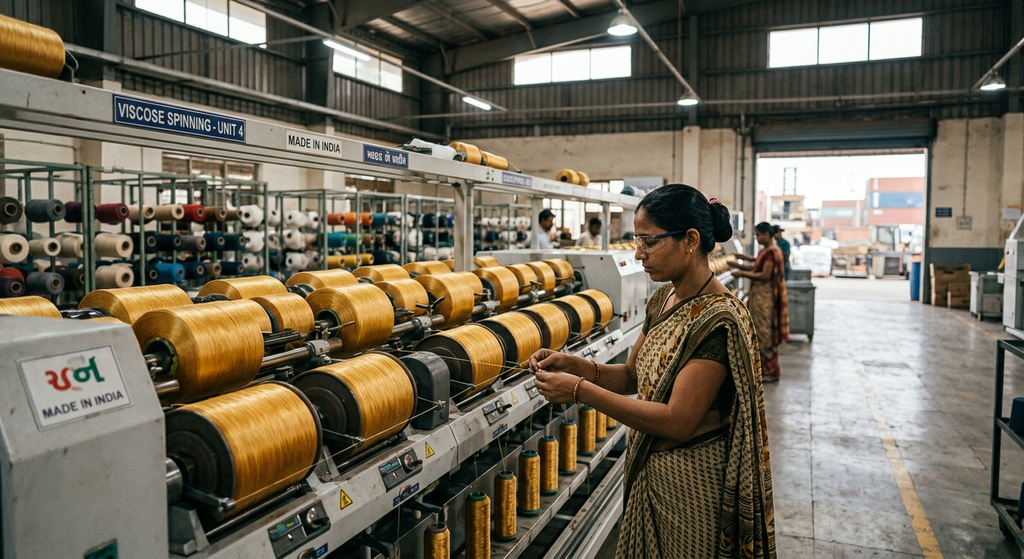
- Shorter lead times due to proximity between yarn manufacturing, dyeing, weaving, and finishing units
- A deep pool of skilled technical manpower with decades of experience in filament yarn processing
- Strong port connectivity (Mundra, Hazira, Nhava Sheva) for efficient global export
- Competitive manufacturing costs compared to several other major yarn-producing regions
- A well-established ecosystem of ancillary industries texturising, twisting, dyeing, and testing labs that support consistent quality at scale
You can read more about this ecosystem in our articles on yarn manufacturers in Surat and industrial yarn suppliers in Gujarat.
How to Choose the Right Viscose Filament Yarn Manufacturer: A Buyer’s Checklist
Sourcing viscose filament yarn is not just about comparing a price per kilogram. Use this checklist before shortlisting a manufacturer:
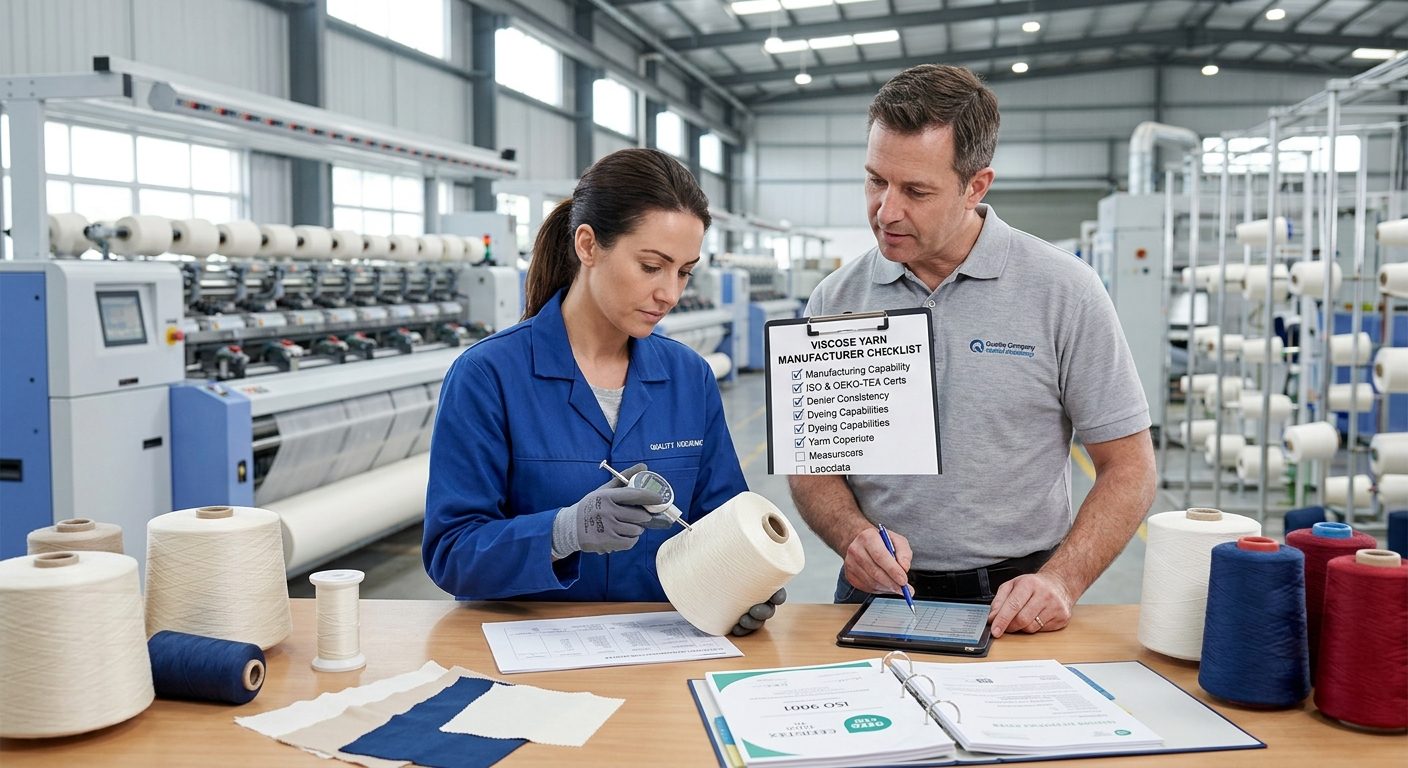
1. Manufacturing Capability, Not Just Trading
Confirm whether the company actually manufactures the yarn in-house or trades yarn sourced from third parties. A genuine manufacturer offers better control over consistency, lead times, and customisation. Our explainer on the
Difference between a yarn supplier vs yarn manufacturer is a useful reference before you finalise a vendor.
2. Consistency in Denier, Twist, and Lustre
Ask for lab test reports or a third-party inspection on denier variation, tenacity, and lustre uniformity across different lots inconsistency here directly affects fabric quality downstream.
3. Certifications
Look for quality and compliance certifications such as ISO 9001 (quality management), OEKO-TEX Standard 100 (chemical safety), and, where sustainability is a priority, FSC or PEFC-certified pulp sourcing. See our
certifications page and our note on ISO certified yarn suppliers for what to verify.
4. Dyeing and Colour-Matching Capability
If you need dyed viscose filament yarn in specific Pantone or shade-card matches, confirm the manufacturer’s in-house dyeing capacity, batch-to-batch shade consistency, and colour-fastness testing.
5. Minimum Order Quantity (MOQ) and Bulk Capacity
Check whether the manufacturer can support both trial/sample orders and large bulk requirements. Read our page on bulk yarn supply in India to understand typical bulk-order expectations.
6. Export Documentation and Logistics Experience
For international buyers, confirm experience with export documentation, HS codes, and shipping timelines. Our guide on textile yarn exporters in India covers what a smooth export relationship should look like.
7. Sample Turnaround and Communication
A manufacturer that responds quickly with samples, technical data sheets, and clear communication is generally a strong indicator of how they will perform once you are a regular buyer.
8. Track Record and References
Ask for client references or case studies, particularly if you plan long-term repeat sourcing. Reviewing a company’s about us background and manufacturing history can help validate scale and experience.
Understanding Lab Test Reports for Viscose Filament Yarn

When a manufacturer shares a test certificate, it typically lists the tested denier against the nominal (ordered) denier, tenacity in grams per denier, elongation percentage, and twist per inch each with an acceptable tolerance range. As a buyer, it helps to know that a small deviation within the stated tolerance is normal and expected in continuous filament production; what should raise concern is a deviation that falls consistently outside the manufacturer’s own stated tolerance, or a refusal to share lot-wise test data at all. Asking for a test report alongside every bulk shipment not just the first trial order is a simple habit that catches quality drift early, before it reaches your weaving or knitting floor.
Quality Control and Testing Parameters for Viscose Filament Yarn
Reputable manufacturers test every batch against defined parameters before dispatch, typically including:
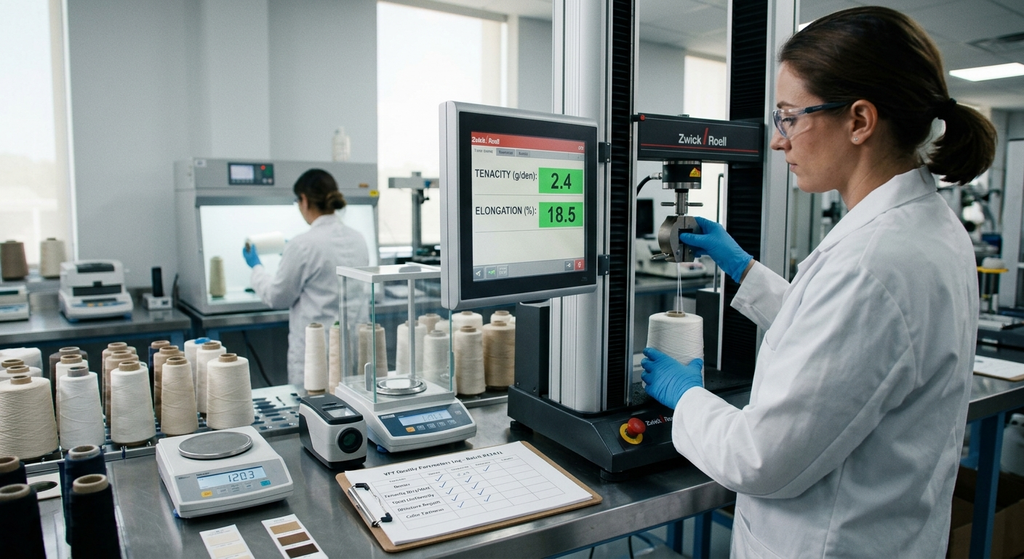
- Denier (linear density) and denier variation across the lot
- Tenacity and elongation at break (dry and wet)
- Twist per inch (TPI) and twist uniformity
- Moisture regain / conditioning
- Colour fastness to light, washing, and rubbing (for dyed lots)
- Package density, winding tension, and unwinding performance
- Visual defects knots, slubs, and lustre inconsistency
Sustainability in Viscose Filament Yarn Manufacturing
Because viscose is made from wood pulp rather than petroleum, it is inherently biodegradable and derived from a renewable resource. However, the conventional viscose process is chemically intensive involving caustic soda and carbon disulfide and can have a significant environmental footprint if not managed responsibly. Forward-looking manufacturers are addressing this through several measures:
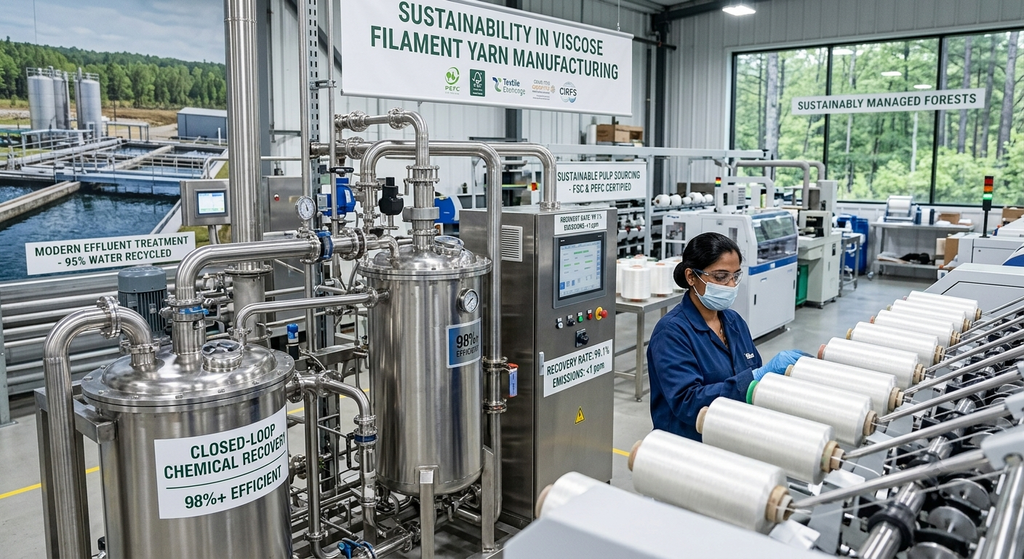
- Sourcing pulp from FSC- or PEFC-certified, sustainably managed forests
- Investing in closed-loop chemical recovery systems that capture and reuse process chemicals, reducing emissions and effluent
- Adopting cleaner-production viscose variants (comparable in spirit to branded options such as Lenzing EcoVero) where commercially viable
- Reducing water consumption per kilogram of yarn produced through modern effluent treatment plants
- Pursuing certifications that give brands and buyers verifiable proof of responsible sourcing
For buyers building sustainability commitments into their supply chain, industry bodies such as Textile Exchange and CIRFS, the European Man-made Fibres Association publish useful benchmarks and standards for man-made cellulosic fibre production, while OEKO-TEX certification verifies that finished yarn is free from harmful substances.
Madhusudan Group: A Trusted Viscose Filament Yarn Manufacturer in India
Madhusudan Group is a Surat-based textile manufacturing group with an integrated presence across yarn manufacturing and dyeing, weaving, knitting, and dyeing & printing giving buyers a single, accountable supply chain rather than a fragmented one spread across multiple unrelated vendors.
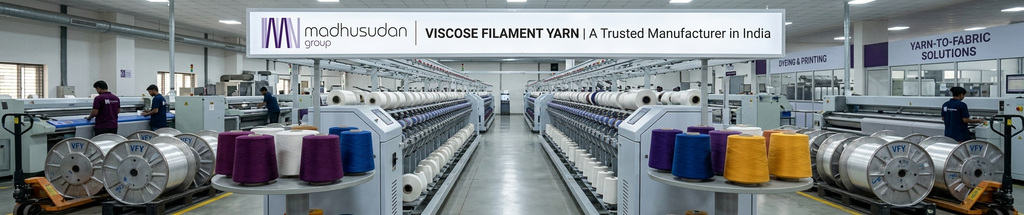
As a viscose filament yarn manufacturer and broader yarn manufacturing house, Madhusudan Group’s capabilities include:
- In-house yarn manufacturing and dyeing under one roof, supporting both raw white and dyed viscose filament yarn
- Integrated weaving and knitting divisions for buyers who want yarn-to-fabric solutions
- A dedicated dyeing and printing mill for colour-matched, export-quality fabric and yarn
- A track record of serving domestic mills as well as international apparel and home-textile buyers
- Focus on quality systems and documentation that support smooth export transactions
Explore the group’s broader yarn portfolio through Madhusudan Rayons, the yarn manufacturing and dyeing division, and our dyeing and printing mills, or get in touch directly via our contact page to request samples, technical data sheets, or a quotation for viscose filament yarn.
Working with a Manufacturer vs a Trader: What Changes for you as a Buyer
Many yarn “suppliers” in the market are traders who purchase finished yarn from one or more mills and resell it, sometimes under their own brand name. This can work well for small, one-off orders, but it introduces risk for buyers who need consistent quality across repeat orders the trader has limited control over which mill’s production lot you actually receive next time. Working directly with a manufacturer gives you a single point of accountability for quality, a clearer view of production capacity and lead times, and typically better pricing once volumes justify a direct relationship.
That said, manufacturers are not always the right fit for very small or highly fragmented orders spanning many different yarn types, where a well-networked trader can sometimes assemble a mixed shipment faster than a single mill could produce it. The right approach depends on your order size, product mix, and how much control you need over specification and shade consistency.
Viscose Filament Yarn Price: What Determines the Cost?
Viscose filament yarn price is not fixed it varies based on several factors that buyers should factor into any quotation comparison:
- Global wood pulp prices, which fluctuate with pulp supply and currency movements
- Denier and filament count finer, more technically demanding yarns typically cost more per kilogram
- Lustre type dull (delustered) yarn may involve an additional processing step versus bright yarn
- Dyed vs raw white dyeing adds cost based on shade complexity and dyeing method
- Order volume bulk orders generally receive better per-unit pricing than small trial orders
- Packaging format cones, cheeses, or hanks can carry different costs depending on downstream processing needs
- Freight and export documentation costs for international shipments
Because of these variables, it is best to request a formal quotation against your exact specification (denier, filament count, lustre, twist, colour, and packing) rather than relying on indicative market prices.
Viscose Filament Yarn vs Other Popular Filament Yarns
| Property | Viscose Filament Yarn | Polyester Filament Yarn | Nylon Filament Yarn |
| Raw material | Wood pulp (cellulose) | Petroleum-based polymer | Petroleum-based polymer |
| Feel | Silky, soft, cool touch | Smooth, slightly synthetic feel | Smooth, slightly elastic feel |
| Moisture absorption | High | Low | Low to moderate |
| Biodegradability | Biodegradable | Not biodegradable (unless recycled/rPET) | Not biodegradable |
| Strength (dry) | Moderate to good | High | High |
| Typical use | Fashion fabrics, linings, sarees | Wide range: apparel, home textile, industrial | Hosiery, activewear, technical textiles |
Buyers evaluating alternatives can also review our guides on polyester yarn suppliers in India and recycled polyester yarn for a side-by-side comparison against viscose filament yarn.
Frequently Asked Questions about Viscose Filament Yarn Manufacturers
Is viscose filament yarn the same as viscose rayon yarn?
Yes. Viscose filament yarn is a form of viscose rayon produced as a continuous filament rather than cut into staple fibres. “Viscose rayon filament yarn” and “viscose filament yarn” are used interchangeably in the trade.
What is the difference between bright and dull viscose filament yarn?
Bright viscose filament yarn has a high natural lustre, similar to silk, while dull (or semi-dull) viscose filament yarn is delustered during production for a softer, more matte finish. The choice depends on the desired fabric appearance.
Can viscose filament yarn be dyed to a custom shade?
Yes, most manufacturers offer dyed viscose filament yarn matched to a shade card, lab dip, or Pantone reference, subject to minimum order quantities for custom colours.
What denier range is available in viscose filament yarn?
Viscose filament yarn is typically available from lighter deniers (suited to chiffon, georgette, and voile) up to heavier deniers used in dress materials, linings, and home textile fabrics. Exact ranges vary by manufacturer, so it’s best to request a specification sheet.
Is viscose filament yarn suitable for both weaving and knitting?
Yes. Depending on twist, denier, and finish, viscose filament yarn is used in both woven fabrics (chiffon, georgette, satin) and knitted fabrics, making it a versatile choice for fashion and home textile applications.
How do I verify the quality of a viscose filament yarn manufacturer before ordering in bulk?
Request a physical sample and technical data sheet, ask for third-party lab test reports on denier and tenacity, check relevant certifications (ISO, OEKO-TEX), and where possible visit or virtually audit the manufacturing facility before committing to bulk orders.
Is viscose filament yarn environmentally friendly?
Viscose is derived from a renewable resource (wood pulp) and is biodegradable, which makes it more sustainable than fully synthetic filament yarns in terms of end-of-life impact. However, the environmental footprint of production depends heavily on how responsibly the manufacturer manages chemical use, water treatment, and pulp sourcing so it’s worth asking manufacturers about their certifications and effluent treatment practices.
What is the minimum order quantity (MOQ) for viscose filament yarn?
MOQs vary by manufacturer and depend on whether the yarn is raw white (stock) or custom-dyed. Manufacturers with in-house dyeing and bulk manufacturing capacity, such as Madhusudan Group, can typically support both trial quantities and large export-scale orders.
Can viscose filament yarn be blended with other yarns?
Yes, viscose filament yarn blends well with polyester, nylon, and elastane/spandex filament yarns to combine the softness and drape of viscose with the strength, stretch, or cost benefits of other fibres.
Where is viscose filament yarn manufactured in India?
India has several viscose filament yarn manufacturing clusters, with Gujarat particularly Surat and the surrounding Palsana/Kim industrial belt being one of the most prominent hubs due to its concentration of yarn, weaving, and dyeing facilities.
What Incoterms should I use when importing viscose filament yarn?
FOB (Free on Board) and CIF (Cost, Insurance, and Freight) are the most commonly used Incoterms for yarn exports from India. Clarify with your manufacturer which Incoterm the quoted price is based on so you can accurately calculate your landed cost.
How long does it take to receive a sample of viscose filament yarn?
For stock (raw white) yarn, samples can often be dispatched within a few days. For custom-dyed samples requiring a lab dip and approval cycle, expect a longer turnaround, typically one to two weeks depending on the manufacturer’s production schedule.
Does viscose filament yarn shrink or crease easily?
Viscose fabrics can be prone to shrinkage and creasing more than synthetic filament fabrics if not finished correctly. Reputable manufacturers apply appropriate finishing treatments and provide care/handling guidance to minimise these issues during downstream processing and garment use.
Can a viscose filament yarn manufacturer also supply finished fabric?
Many integrated groups that manufacture yarn also operate weaving, knitting, and dyeing-printing divisions, allowing them to supply finished, ready-to-cut fabric in addition to raw yarn reducing the number of vendors a buyer needs to coordinate with.
Conclusion: Choosing a Viscose Filament Yarn Manufacturer You Can Rely On
Viscose filament yarn continues to be one of the most versatile, comfortable, and visually appealing yarns available to fashion, home textile, and technical textile manufacturers. Its silk-like lustre, breathability, and biodegradable nature make it a strong choice for brands balancing performance, aesthetics, and sustainability. The real differentiator, however, is not the fibre itself but the manufacturer behind it their process control, certifications, dyeing capability, and reliability at scale.
With integrated yarn manufacturing, dyeing, weaving, and knitting capabilities under one group, Madhusudan Group is positioned to support both domestic mills and international buyers sourcing viscose filament yarn from sample development through to bulk, export-ready production. To request samples, technical specifications, or a quotation, contact our team today.