If you run a knitting, weaving, denim, hosiery or home-textile mill in São Paulo, Santa Catarina, Ceará or Pernambuco, you already know that colour is where orders are won or lost. A shade that drifts between lots, a dye that bleeds in the first wash, or a shipment that arrives three weeks late can wipe out the margin on an entire season. That is exactly why yarn dyeing Brazil has become one of the most searched and most strategic topics for textile buyers across Latin America’s largest manufacturing economy.
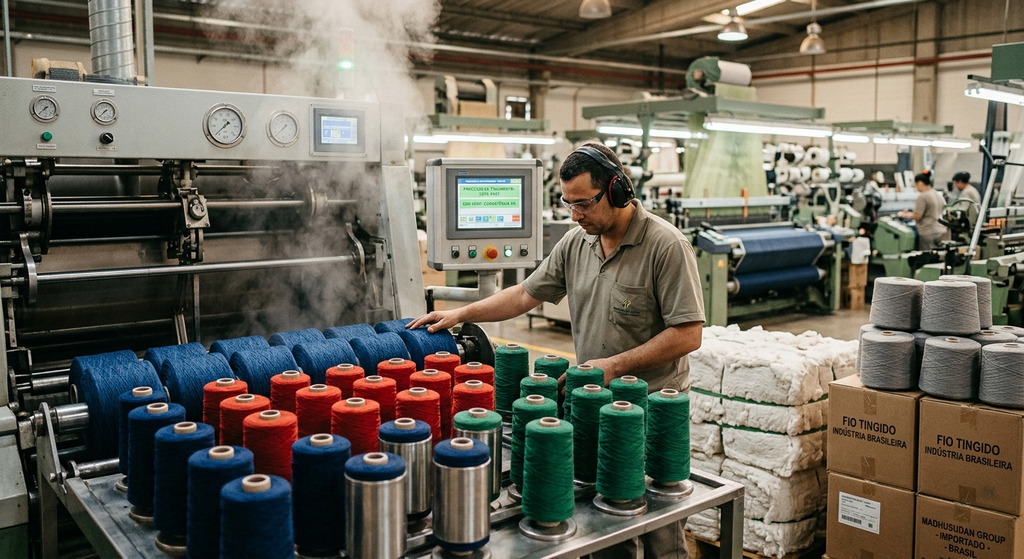
Brazil is the biggest textile and apparel producer in the Western Hemisphere, yet its mills face a tough equation: high capital costs, rising competition from imported fabrics and garments, and growing pressure from global brands to prove that every metre of fabric is dyed responsibly. Many Brazilian manufacturers are therefore asking the same question: should we dye yarn locally, or should we source ready-dyed yarn from a specialist exporter who can deliver consistent shades at a competitive landed cost?
This guide answers that question in depth. You will learn how yarn dyeing works, which methods and dye classes suit which fibres, what quality benchmarks Brazilian mills should demand, how to stay compliant with international chemical standards, and how to import dyed yarn from India step by step. Along the way, you will see why Madhusudan Group, a Surat-based manufacturer and exporter, has become a trusted name for buyers who need dependable, export-grade dyed yarn for the Brazilian market.
Why Yarn Dyeing Brazil Matters More Than Ever in 2026
Brazil’s textile and apparel complex is enormous. According to industry reporting, it includes more than 25,000 companies and roughly 1.31 million jobs, with textile output rising about 6.8% in the first eleven months of 2025 compared with the same period a year earlier (Datamar News). That is a large, deep and demanding customer base for yarn.
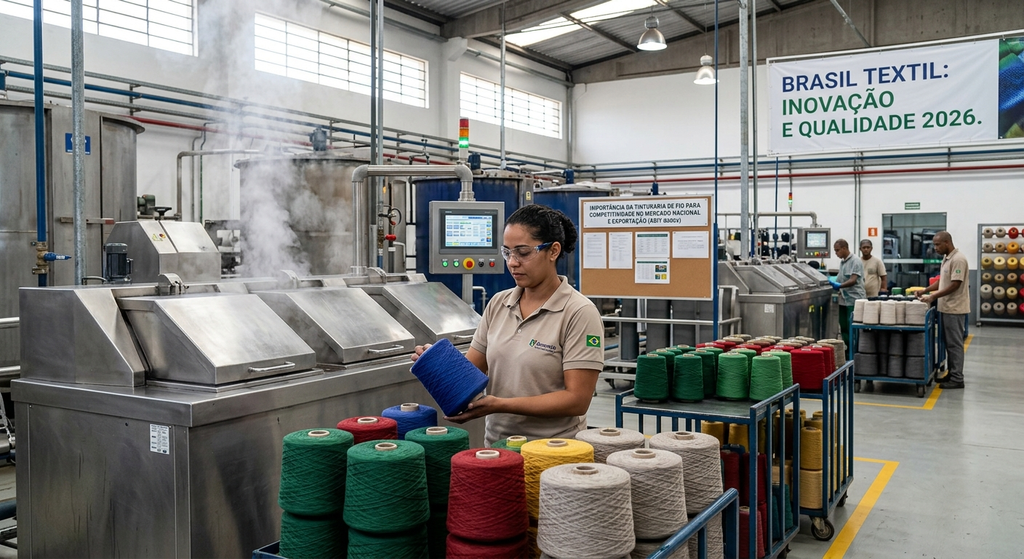
At the same time, the mood is cautious. The industry association ABIT has projected only modest production growth of around 1.1% for 2026, with imports expected to grow faster than domestic output and apparel exports forecast to rise by about 3.3% (Mercado & Consumo). In other words, the market is large but competitive. Mills that cannot control cost, colour quality and delivery time will lose ground to imported fabrics.
This is where yarn dyeing becomes a strategic lever. Colour is added at the yarn stage, which means the pattern, depth and character of the finished fabric are decided long before weaving or knitting begins. Brazilian mills that master yarn dyeing can offer:
- Richer, more complex fabrics such as stripes, checks, jacquards, heathers and melanges that piece-dyed fabric cannot imitate.
- Better colourfastness, because dye penetrates the yarn rather than only the fabric surface.
- Lower fabric-stage rejection risk, since shade problems are caught earlier in the process.
- Faster response to fashion cycles, especially when reliable dyed yarn is available from stock or on short lead times.
For many buyers, the smartest approach is a hybrid strategy: dye a portion of core colours locally and import specialised or high-volume shades from an experienced overseas partner. That is the model that more Brazilian manufacturers are adopting in this era.
The Brazilian Textile Landscape: Where Dyed Yarn Gets Used
To understand demand for yarn dyeing Brazil, it helps to look at where Brazilian mills are concentrated and what they make.
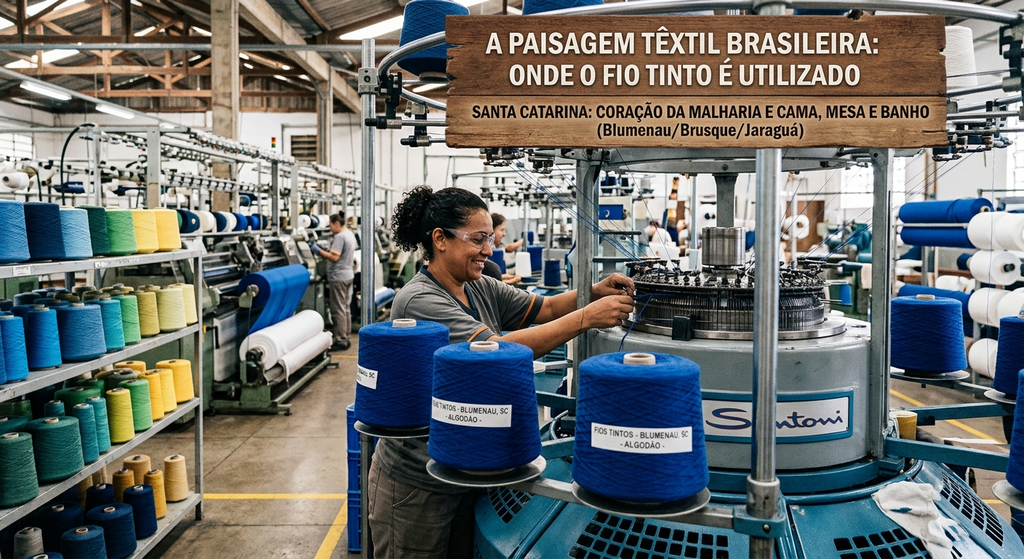
Santa Catarina (Blumenau, Brusque, Jaraguá do Sul). This is the historic heart of Brazilian knitwear and terry products. The Blumenau region industrialised in the 1880s around names such as Hering, and it still hosts many of the country’s knitters, spinners and finishers (UFJF academic journal). Mills here consume large volumes of dyed cotton, viscose, polyester and blended yarns for T-shirts, underwear, towels and bed linen.
São Paulo state (Americana, Nova Odessa, Santa Bárbara d’Oeste, Ibitinga). Americana and its neighbours have long been known for synthetic and artificial fibre weaving, while Ibitinga is famous for embroidery and home textiles. These clusters need polyester, nylon and viscose filament yarns in consistent colours for linings, dress fabrics, upholstery, decorative textiles and narrow fabrics.
Pernambuco’s Agreste (Santa Cruz do Capibaribe, Caruaru, Toritama). This is one of the largest garment and denim hubs in the country. Demand here is price-sensitive and fast-moving, favouring flexible minimum order quantities and quick replenishment.
Ceará (Fortaleza region). A growing centre for knitting, hosiery and home textiles with a strong export orientation.
Each of these clusters has different needs. Santa Catarina knitters care about softness and evenness. São Paulo weavers care about filament uniformity and dye affinity. Northeastern garment makers care about price and speed. A capable dyed-yarn supplier must understand all three.
What Is Yarn Dyeing and Why Does It Matter?
Yarn dyeing is the process of colouring yarn before it is woven or knitted into fabric. In contrast, piece dyeing colours the finished fabric, and garment dyeing colours the finished product.
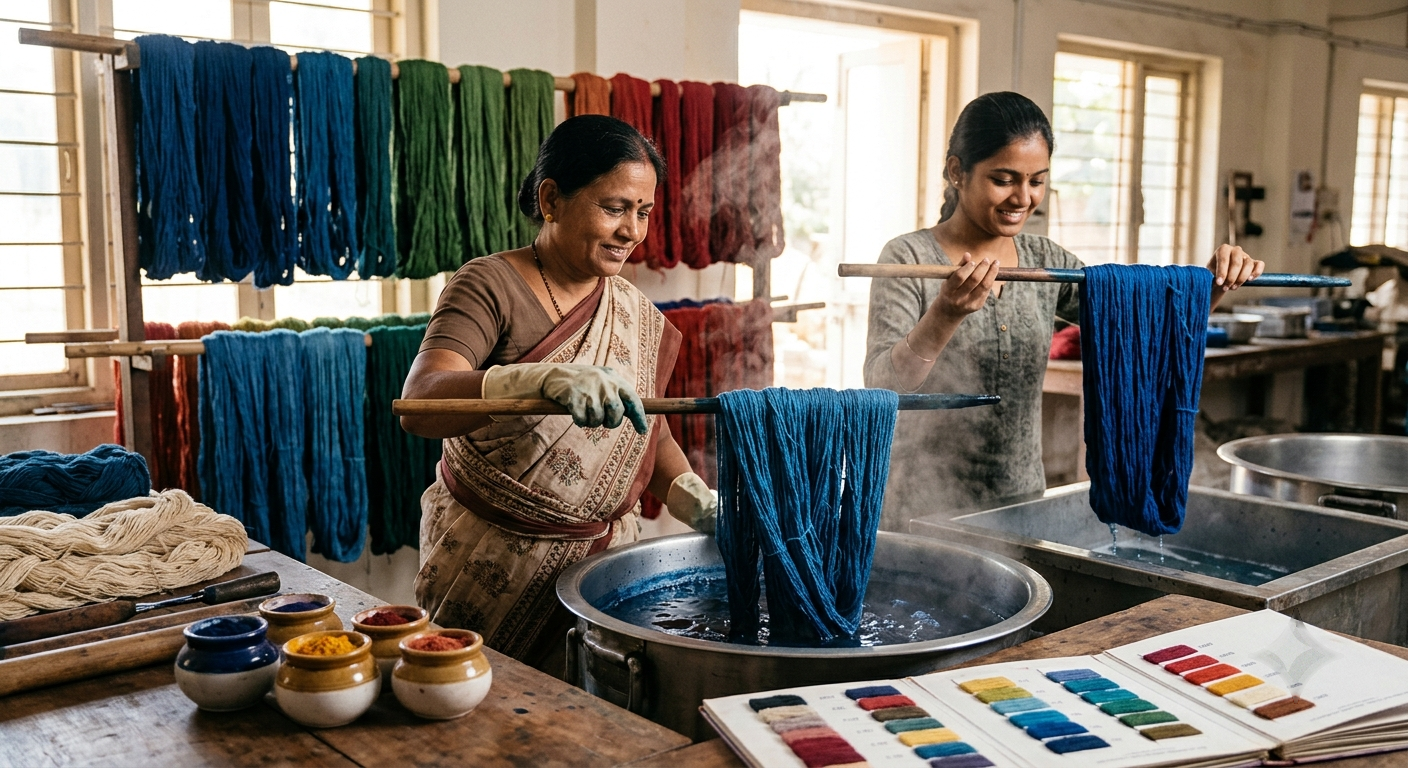
Dyeing at the yarn stage offers several advantages:
- Deeper penetration. Dye molecules enter the fibre structure throughout the yarn package, delivering stronger colourfastness to washing, rubbing and light.
- Design freedom. Different coloured yarns can be combined in one fabric to create stripes, checks, plaids, jacquards and mixed-colour effects.
- Better shade control. Colour recipes are fixed at the yarn stage and can be tested against lab dips, spectrophotometer readings and customer standards before the yarn ever reaches your loom.
- Reduced fabric waste. Because colour is verified before conversion, there is less risk of discovering a shade problem after thousands of metres of fabric have already been produced.
The trade-off is that yarn dyeing requires planning. Colour choices must be made earlier, and inventory management becomes more important. That is why working with a supplier that holds stock in popular shades, or that can turn around custom shades quickly, is so valuable.
If you want a deeper technical walkthrough of the polyester route, see this polyester yarn dyeing guide, which explains temperatures, dye classes and quality checkpoints in plain language.
Yarn Dyeing Methods Used in the Industry
Not every dyeing method suits every yarn or every end use. Brazilian buyers should know the main options so they can specify the right one on a purchase order.
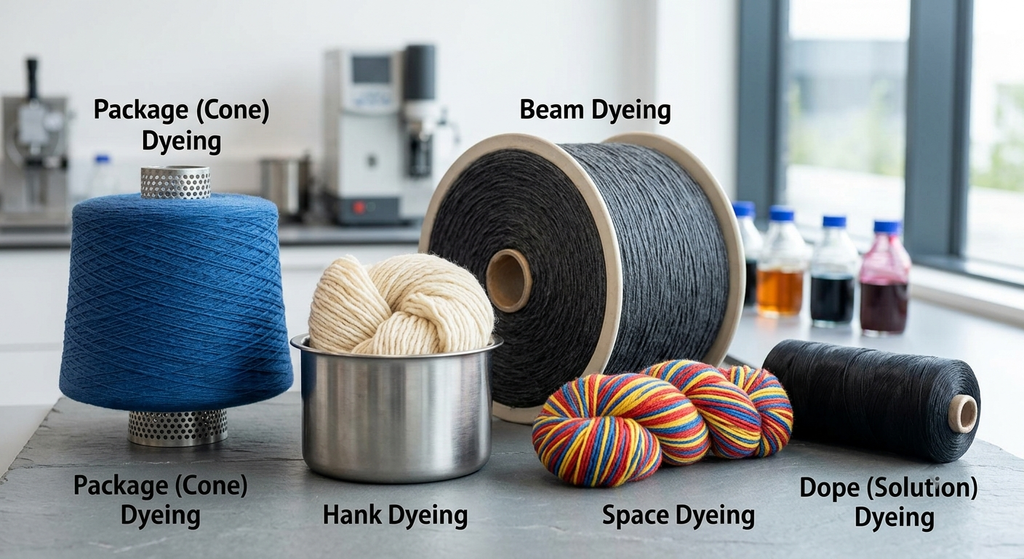
Package (Cone) Dyeing
In package dyeing, yarn is wound onto perforated cones or springs, stacked on carriers and placed in a pressurised machine where dye liquor is pumped through the packages. It is the most common method for large-volume cotton, viscose and polyester yarns because it is efficient, repeatable and well suited to tight shade tolerances. Modern machines offer programmable temperature curves and low liquor ratios, which reduce water, energy and chemical use.
Hank Dyeing
Hank dyeing loosens the yarn into large loops (hanks) that are immersed in dye liquor with minimal tension. The result is a softer, bulkier hand-feel, which is why hank dyeing is popular for high-bulk acrylics, wool-type yarns, linen and premium knitwear. It is more labour-intensive and slower than package dyeing, but it preserves loft and character that package dyeing can compress.
Beam Dyeing
Here, yarn is wound in parallel onto a perforated beam, which is then dyed. Beam dyeing is typically used for warp yarns that will go directly to weaving, offering excellent evenness across very long lengths.
Space and Multi-Colour Dyeing
Space dyeing applies different colours at intervals along the yarn, producing random or repeating colour effects. It is widely used in decorative knitwear and novelty fabrics.
Dope (Solution) Dyeing
In dope dyeing, pigments are added to the polymer melt or spinning solution before the filament is extruded. The colour is locked inside the fibre, giving exceptional lightfastness and washfastness while using far less water than conventional dyeing. For automotive textiles, outdoor fabrics and certain recycled-polyester programmes, dope-dyed yarn is an increasingly attractive option.
Dye Chemistry by Fibre: Choosing the Right Process
Dyeing success depends on matching the right dye class to the right fibre. The table below summarises the most common combinations relevant to the Brazilian market.
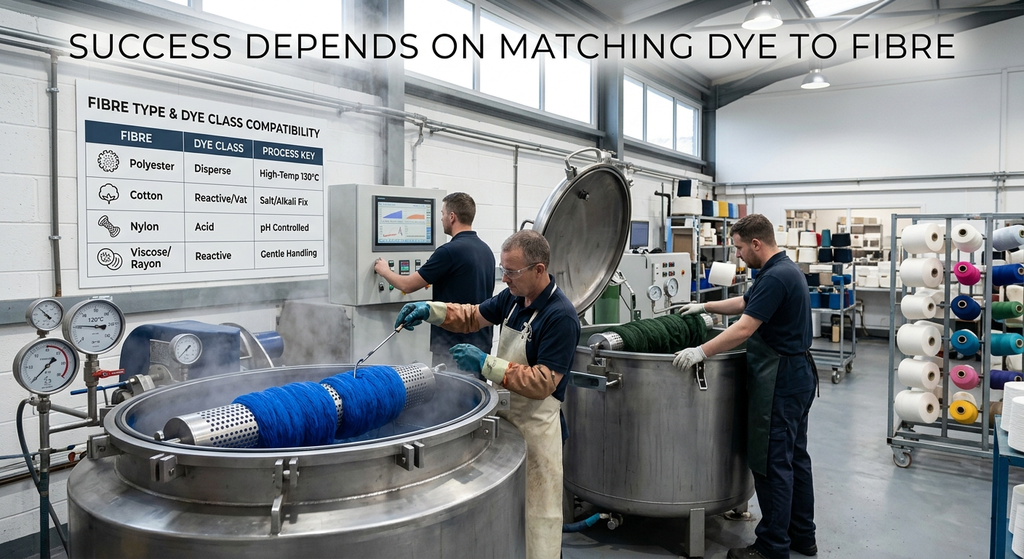
| Fibre | Typical Dye Class | Key Process Notes | Typical Brazilian End Uses |
| Polyester (DTY, FDY, ATY, staple) | Disperse dyes | High-temperature, high-pressure dyeing at around 130 °C; reduction clearing for dark shades | Sportswear, linings, upholstery, narrow fabrics, hosiery |
| Viscose / rayon | Reactive dyes | Salt and alkali fixation; careful handling because viscose is weaker when wet | Dress fabrics, knitwear, blends with cotton and polyester |
| Cotton | Reactive or vat dyes | Pre-treatment (scouring, bleaching) is critical for even shades | T-shirts, towels, denim, bed linen |
| Linen / flax | Reactive dyes | Needs specific pre-treatment and gentle handling to protect natural lustre | Home textiles, premium apparel |
| Nylon (DTY / FDY) | Acid dyes | Controlled pH and temperature to prevent streaking | Hosiery, activewear, elastic fabrics |
| Elastomultiester / bicomponent | Disperse dyes | Heat-set carefully to preserve stretch and recovery | Stretch fabrics, shapewear, performance apparel |
Polyester Yarn Dyeing
Polyester is hydrophobic, so it needs disperse dyes and high temperatures (typically about 130 °C under pressure) to open the fibre structure and allow the dye to diffuse in. Quality polyester dyeing includes reduction clearing, a wash step that removes surface dye and protects colourfastness, especially for dark shades such as navy, black and burgundy. Polyester remains one of the most important fibres in Brazil, and our deeper dive on polyester yarn dyeing in South America explains how regional climate, water quality and end-use requirements influence process choices.
Viscose Yarn Dyeing
Viscose absorbs dye readily and offers brilliant, saturated colours, but it loses strength when wet and can show uneven uptake if the process is not controlled. Experienced dyers manage pH, liquor ratio and temperature very closely. You can learn more about those control points in our guide to viscose yarn dyeing.
Linen Yarn Dyeing
Linen’s natural lustre and slub character make it a premium choice for home textiles and summerwear. Its dyeing requires careful pre-treatment and gentle handling to preserve strength. Our article on linen yarn dyeing covers the process and common pitfalls.
Blends
Blended yarns such as polyester-viscose or polyester-cotton often need a two-bath or carefully balanced one-bath process, because each component takes a different dye class. Skilled colour matching is essential to ensure the blend looks uniform and does not show a “frosty” or two-tone effect.
Challenges Facing Yarn Dyeing in Brazil
Brazilian mills know these pain points well. Understanding them helps explain why many buyers are turning to experienced overseas suppliers for part of their dyed-yarn needs.
1. High Cost of Capital
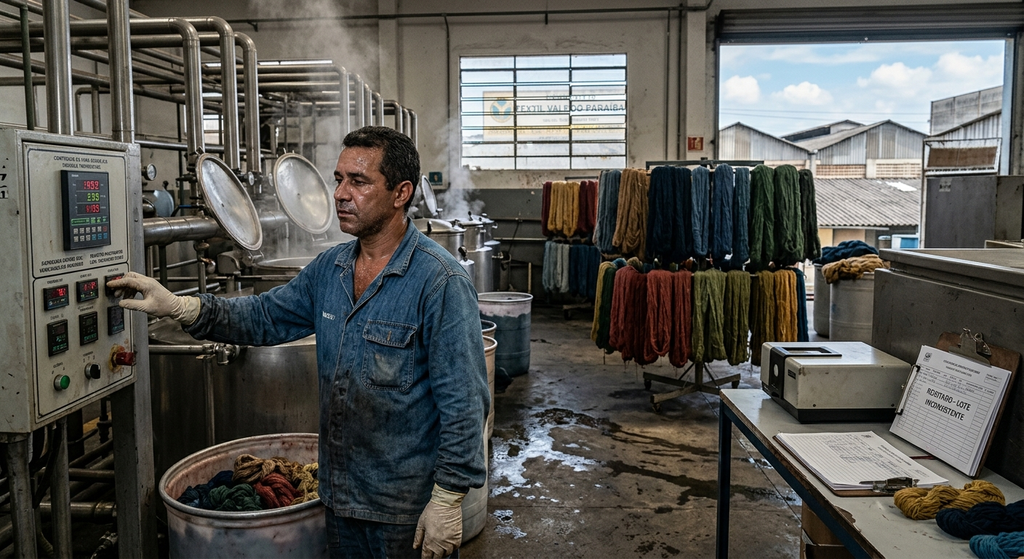
ABIT has repeatedly pointed to the high cost of capital as a brake on new investment in the sector (Diário do Comércio). Modern dyeing machinery, effluent treatment plants and laboratory equipment are expensive. For many mid-sized mills, building in-house dyeing capacity at world-class standards is simply not viable.
2. Competition from Imports
Imports of textile and apparel products grew sharply in recent years, with Asia, particularly China, accounting for much of the increase. Brazilian mills must therefore compete on both price and quality. Securing dyed yarn at a predictable landed cost is one of the most effective ways to protect margins.
3. Environmental and Chemical Compliance
Dyeing is water- and chemical-intensive. International brands that source from Brazil increasingly expect suppliers to follow global chemical-management programmes such as ZDHC. Local dyehouses that lack effluent treatment or chemical tracking systems risk losing export-oriented customers.
4. Shade Consistency Between Lots
Repeat orders are where many dyehouses struggle. Variations in water quality, dye lots, temperature profiles and operator technique can produce lot-to-lot differences that appear only after weaving or knitting. A supplier with digital colour management and strict process control eliminates much of that risk.
5. Lead Time and Flexibility
Brazilian mills often need small, quick lots of seasonal colours alongside large volumes of core shades. Dyehouses that cannot offer flexible minimums or fast turnaround push buyers to look elsewhere.
6. Currency Volatility
Exchange-rate swings between the Brazilian real and the US dollar affect the cost of imported inputs. Mills benefit from suppliers who offer clear pricing, flexible commercial terms and reliable delivery schedules so they can plan with confidence.
Why Brazilian Mills Are Sourcing Dyed Yarn from India
India is among the world’s largest textile producers, with deep expertise across polyester, viscose, nylon, cotton, linen and specialty yarns. For Brazilian buyers, sourcing dyed yarn from India offers a compelling mix of benefits:
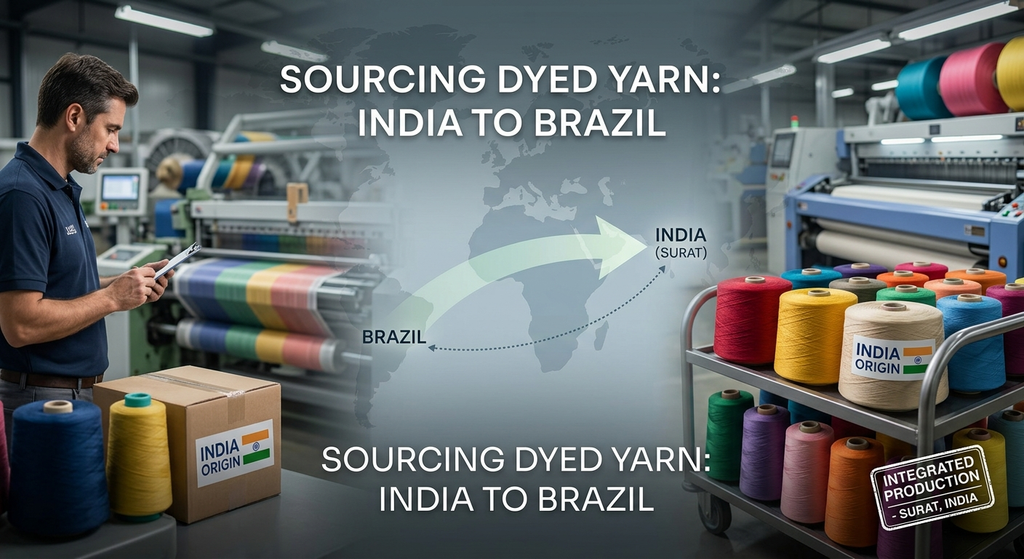
- Integrated manufacturing. The best Indian manufacturers spin or texture, dye, twist and pack under one roof, which shortens lead time and tightens quality control.
- Wide product range. From DTY and FDY to ATY, nylon, viscose filament, linen and elastomultiester yarns, buyers can consolidate multiple products with one supplier.
- Competitive pricing. Scale and a mature supply chain keep landed costs attractive even after freight.
- Export experience. Established exporters understand documentation, packing standards and the expectations of buyers in South America, Europe and North America.
Surat, in Gujarat, is one of the world’s great textile and man-made fibre hubs, and it is home to many of India’s leading yarn manufacturers. If you want to understand why this city is so important to the global supply chain, our overview of yarn manufacturers in Surat is a good place to start.
Quality Parameters Brazilian Buyers Should Demand
Whether you dye locally or import, the following parameters should appear in every specification and contract.
Colourfastness
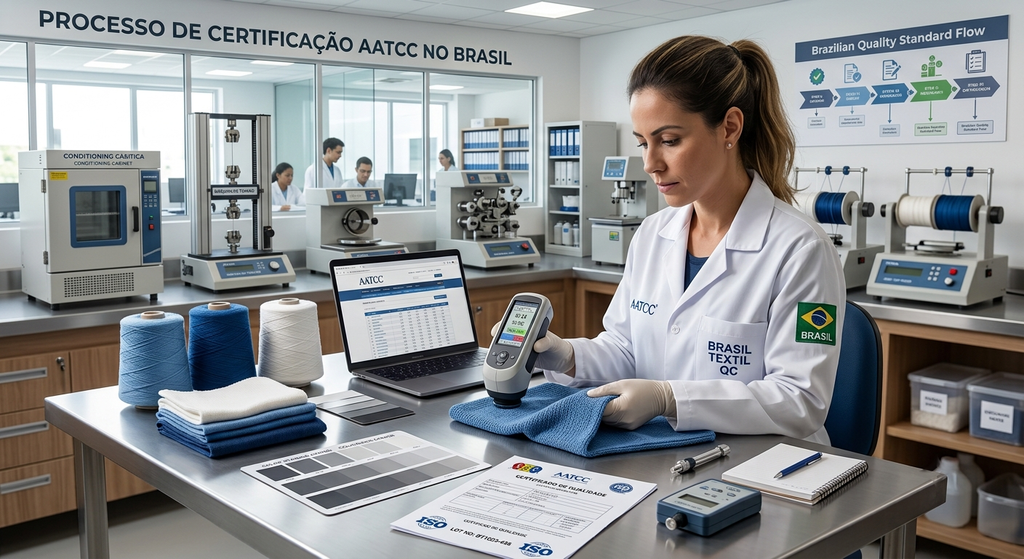
Colourfastness measures how well a dye resists fading or bleeding under real-world conditions. Common tests cover washing, rubbing (crocking), light, perspiration and water. Internationally recognised test methods come from bodies such as ISO and AATCC, and reputable suppliers can provide reports referencing them (AATCC). Ask for grey-scale ratings for colour change and staining, and agree minimum acceptable grades before production.
Shade Tolerance and Colour Measurement
Insist on spectrophotometer-based colour measurement, with a defined tolerance (often expressed as a delta E value) against an approved standard. Digital colour recipes and stored lab dips make repeat orders far more reliable than visual matching alone.
Evenness and Levelness
Dyed yarn should show uniform colour from the surface of the package to the core, and from the first cone to the last. Uneven dyeing leads to barré in knitted fabrics, a streaky defect that can cause entire rolls to be rejected.
Physical Properties After Dyeing
Dyeing can affect tenacity, elongation, shrinkage, twist and hand-feel. Specify acceptable ranges for these properties and confirm that the supplier tests them after dyeing, not only before.
Package Quality and Winding
Good packages unwind smoothly without ribbon wind, sloughing or tension spikes that slow down looms and knitting machines. Package density, cone type and packing method should be agreed in advance.
Traceability
Each lot should carry a batch number that links back to the raw material, dye recipe, machine run and test results. When a problem appears at fabric stage, traceability makes investigation fast and fair.
Sustainability and Compliance in Yarn Dyeing
Global brands now treat chemical management as a prerequisite for doing business. Brazilian mills supplying export programmes, or simply supplying brands with strict codes of conduct, should work with yarn suppliers who can demonstrate responsible chemistry and water management.
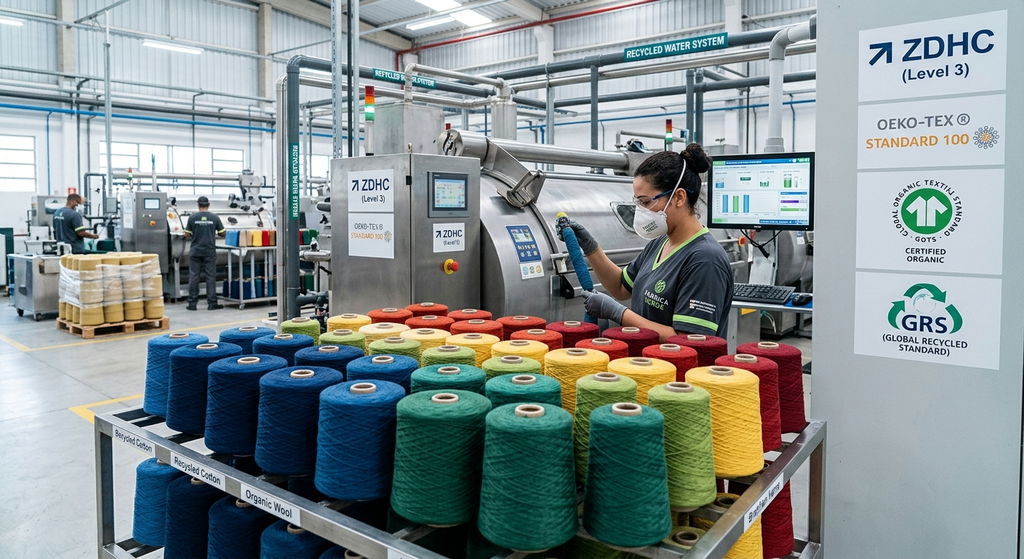
ZDHC. The Zero Discharge of Hazardous Chemicals programme maintains a Manufacturing Restricted Substances List (MRSL), which lists chemicals banned from intentional use in textile processing (ZDHC MRSL). Its Wastewater Guidelines set unified expectations for testing and reporting of industrial wastewater and sludge, and version 2.0 merged the previously separate textile and leather guidelines into one document (Just Style). A supplier aligned with these standards makes your own compliance work easier.
OEKO-TEX. The STANDARD 100 label certifies that textiles have been tested for harmful substances at every production stage (OEKO-TEX STANDARD 100). Many Brazilian brands now ask for it, particularly for baby clothing, underwear and bed linen.
GOTS and GRS. Organic and recycled claims need third-party verification. The Global Organic Textile Standard covers organic fibres (GOTS), while the Global Recycled Standard verifies recycled content and responsible processing (Textile Exchange).
ISO management systems. ISO 9001 supports consistent quality management and ISO 14001 supports environmental management (ISO 14001). Buyers should ask suppliers which systems they hold and request current certificates. If you are comparing vendors, our guide to choosing an ISO-certified yarn supplier explains what to look for.
Sustainability is also becoming a product opportunity. Recycled polyester, made from post-consumer PET bottles or textile waste, is gaining traction in Brazilian activewear and home textiles. Our resources on recycled polyester yarn manufacturing for South America show how brands can combine recycled content with excellent dyeability and colour consistency.
Madhusudan Group: A Leader in Dyed Yarn for the Brazilian Market
When Brazilian buyers search for a long-term partner in yarn dyeing Brazil, they are looking for more than a price list. They want technical depth, consistent quality, transparent communication and the confidence that a supplier will still deliver on schedule when the market tightens. That is where Madhusudan Group stands apart.
Based in Surat, the textile capital of India, Madhusudan Group has built its reputation as a manufacturer and exporter of high-performance yarns for demanding international markets. Its strengths line up closely with what Brazilian mills need.
A broad, integrated yarn portfolio. Madhusudan Group manufactures and supplies dyed polyester, viscose, linen, nylon DTY, air-textured yarn (ATY), elastomultiester and bicomponent yarns, along with recycled and blended options. Buyers can consolidate several yarn categories with a single partner instead of managing multiple vendors. Explore the range through the company’s dyed yarn manufacturer page and its dyed polyester yarn guide.
Deep experience with South American buyers. The group’s resources on importing yarn from India to Brazil and importing yarn to Argentina reflect a practical understanding of regional documentation, logistics and commercial expectations.
Quality-first manufacturing. Madhusudan Group works with ISO-oriented quality processes, rigorous in-house testing and colour-matching discipline so that repeat orders look the same as the first. For buyers, that means fewer surprises at the loom or knitting machine.

Bulk capability with flexibility. As a bulk yarn supplier in India, Madhusudan Group handles large-volume programmes while still accommodating the shade variety that modern fashion and home-textile mills require.
Technical partnership, not just supply. The company shares detailed, practical knowledge on topics from yarn manufacturing to dyeing and selection, which helps buyers specify more accurately and avoid costly mistakes.
Global perspective. Madhusudan Group’s experience extends beyond Latin America. Its work in markets such as Sri Lanka, Europe and the United States gives it a wide view of how colour, compliance and delivery expectations vary, and how best to meet them.
For Brazilian mills, the result is a partner that combines the scale of a major manufacturer with the responsiveness of a specialist. That combination is why Madhusudan Group is increasingly regarded as a leader in the dyed-yarn segment serving Brazil.
How to Import Dyed Yarn from India to Brazil: Step by Step
Importing into Brazil is manageable when you know the process. The outline below is general guidance; always confirm current rules with your customs broker and the official authorities.
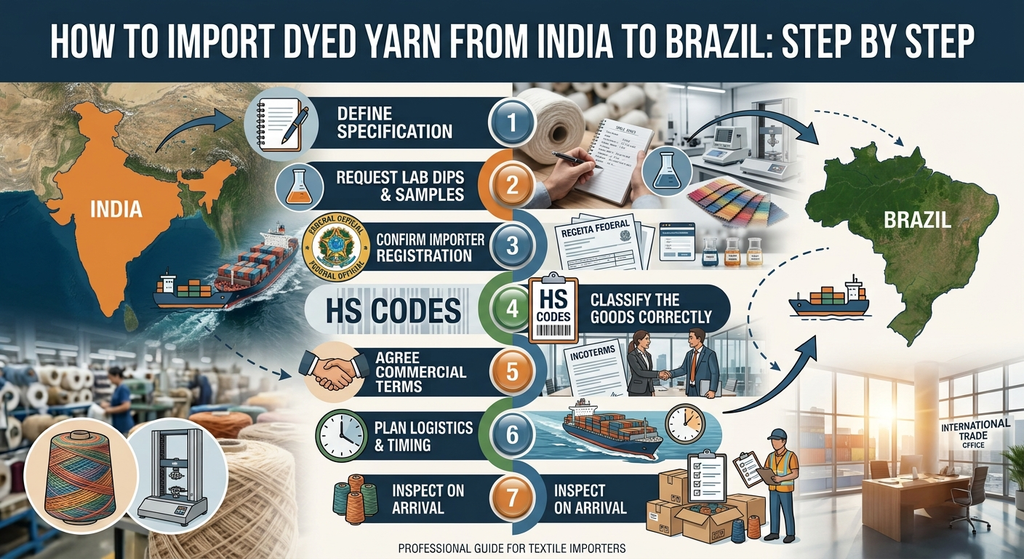
Step 1: Define Your Specification
Write down fibre type, denier or count, filament number, twist, dye class, shade references, colourfastness requirements, package type, weight per package and total volume. The clearer the specification, the fewer revisions you will need.
Step 2: Request Lab Dips and Samples
Approve colours through lab dips, then request a pre-production sample and test it on your own machines. Ask for test reports that match your required standards.
Step 3: Confirm Importer Registration
Brazilian importers generally need to be registered to operate in the foreign-trade system through the federal revenue authority. Your customs broker can confirm the current requirements (Receita Federal).
Step 4: Classify the Goods Correctly
Yarn falls under Harmonized System chapters 54 and 55 for man-made filaments and staple fibres, and chapters 52 and 53 for cotton and flax yarns. The exact tariff code determines duties and taxes, and it must match the product description. Also check whether any trade-remedy measures apply to the specific yarn and origin you are buying.
Step 5: Agree Commercial Terms
Choose Incoterms such as FOB, CIF or CFR, payment method and delivery schedule. Many buyers prefer CIF to Brazilian ports such as Santos for São Paulo mills, or Itajaí and Navegantes for Santa Catarina mills.
Step 6: Plan Logistics and Timing
Sea freight from western India to Brazil commonly takes several weeks port to port, plus time for customs clearance and inland transport. Build that into your production calendar, and keep a safety buffer for peak seasons.
Step 7: Inspect on Arrival
Check carton counts, package condition and batch labels. Test a sample from each lot against the approved standard before releasing yarn to production.
Our complete guide to how to import yarn from India to Brazil goes deeper into each stage, and the questions to ask before buying yarn checklist is a useful companion when you shortlist suppliers.
Common Yarn Dyeing Defects and How to Prevent Them
Even experienced dyehouses face defects. Knowing the usual suspects lets Brazilian buyers write better specifications and ask sharper questions during supplier audits.
Shade variation between lots. The most common complaint in the industry. Causes include inconsistent raw material, different dye lots, water hardness, temperature deviations and operator variation. Prevention relies on digital recipes, standardised pre-treatment, controlled water quality and strict tolerance limits measured by spectrophotometer.
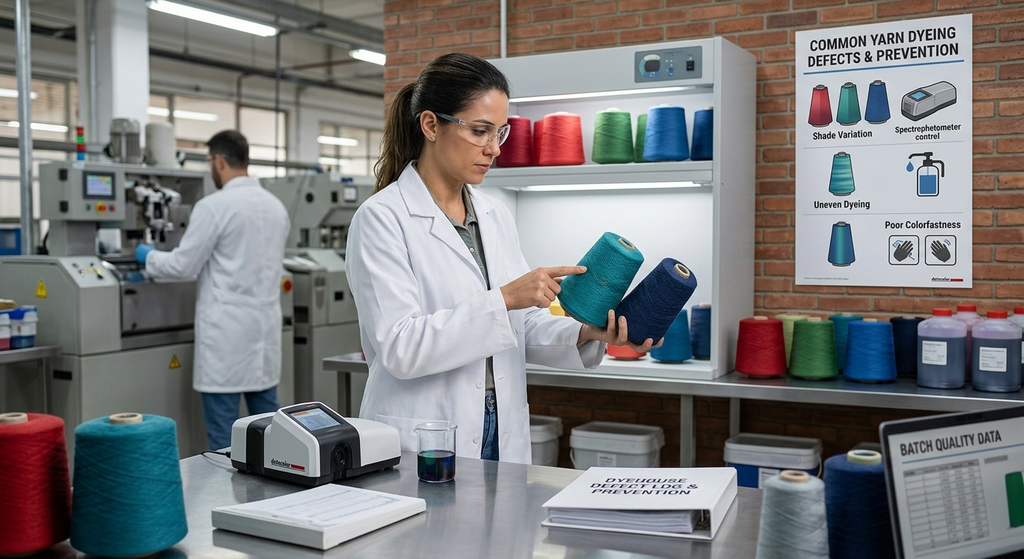
Uneven dyeing (levelness problems). Streaks, patchiness or a dark outer layer on the package usually come from poor liquor circulation, wrong package density, rapid temperature rise or incorrect auxiliaries. A properly programmed temperature curve and correct package winding density are the best defence.
Poor colourfastness. Unfixed dye left on the surface will rub off, bleed into neighbouring yarns or wash out. For polyester, reduction clearing is essential. For cellulosic fibres such as viscose and cotton, thorough soaping and washing-off after reactive dyeing removes hydrolysed dye. This matters most when light and dark yarns are combined in the same fabric.
Barré in knitted fabric. Subtle, repeating horizontal stripes may appear when yarn count, tension or dye uptake varies slightly from cone to cone. Using yarn from a single dye lot and a single production batch for each fabric order minimises the risk.
Loss of strength or hand-feel. Over-processing, excessive temperature or harsh chemicals can weaken yarn or make it feel harsh. Viscose and linen are especially sensitive. Controlled processing and appropriate softeners protect the yarn’s natural qualities.
Packaging and winding faults. Soft or uneven cones, damaged flanges or contaminated packages lead to breakages and downtime at the loom or knitting machine. Quality packing, clean storage and moisture protection during ocean transport avoid avoidable losses.
A supplier that openly discusses these defects, shows its in-process controls and offers a clear claims policy is far more likely to deliver stable quality than one that only promises “best quality.” Industry bodies such as ABIT also publish sector data and news that help buyers understand the pressures mills face (ABIT), and keeping an eye on them helps you time your sourcing decisions.
Planning a Colour Programme: A Practical Example for Brazilian Mills
Consider a mid-sized knitting mill in Santa Catarina producing polyester-viscose blended fabrics for a spring-summer collection. Here is how a well-planned yarn dyeing programme might look.
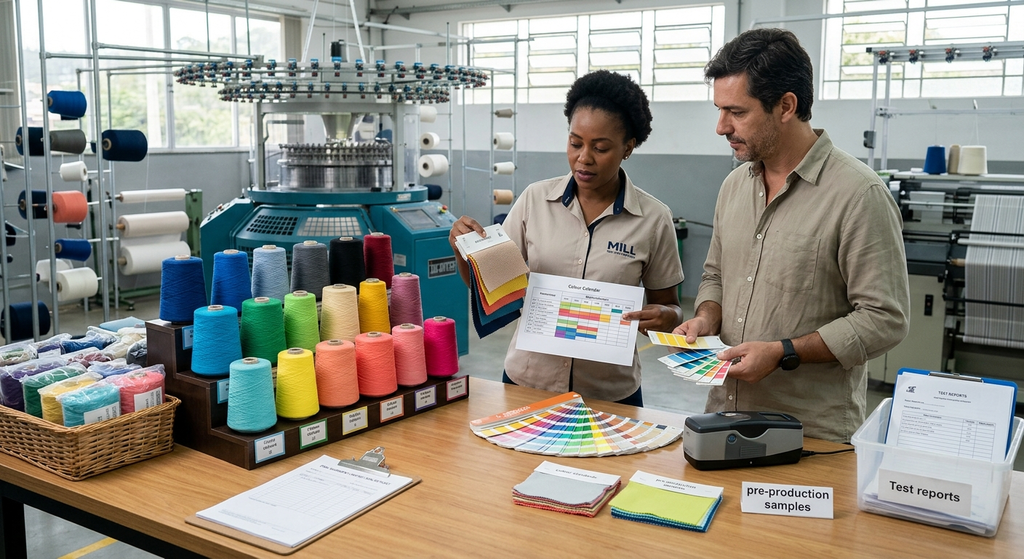
- Colour calendar. Eight to ten months before the season, the design team selects 12 core colours and 6 fashion colours. Core colours are ordered in larger volumes and replenished regularly, while fashion colours are ordered in smaller test quantities.
- Lab dips and approvals. The supplier submits lab dips for each shade, and the mill approves them against its physical and digital standards.
- Pre-production samples. A small quantity of each approved yarn is knitted into swatches to confirm hand-feel, shrinkage and fastness on the mill’s own machines.
- Bulk production and lot control. The supplier dyes each shade in as few lots as possible and labels each package with batch numbers.
- Pre-shipment inspection. Test reports and sample cones are checked before shipment.
- Replenishment. Core colours are re-ordered based on actual consumption, with the supplier holding the digital recipe so repeat lots match the original.
This disciplined approach converts yarn dyeing from a source of risk into a repeatable, predictable system. It also shows why experienced partners matter: an exporter who has already run hundreds of such programmes for international mills can anticipate problems before they appear.
Cost Factors in Yarn Dyeing and Dyed Yarn Pricing
Understanding what drives price helps you negotiate intelligently and compare quotations fairly.
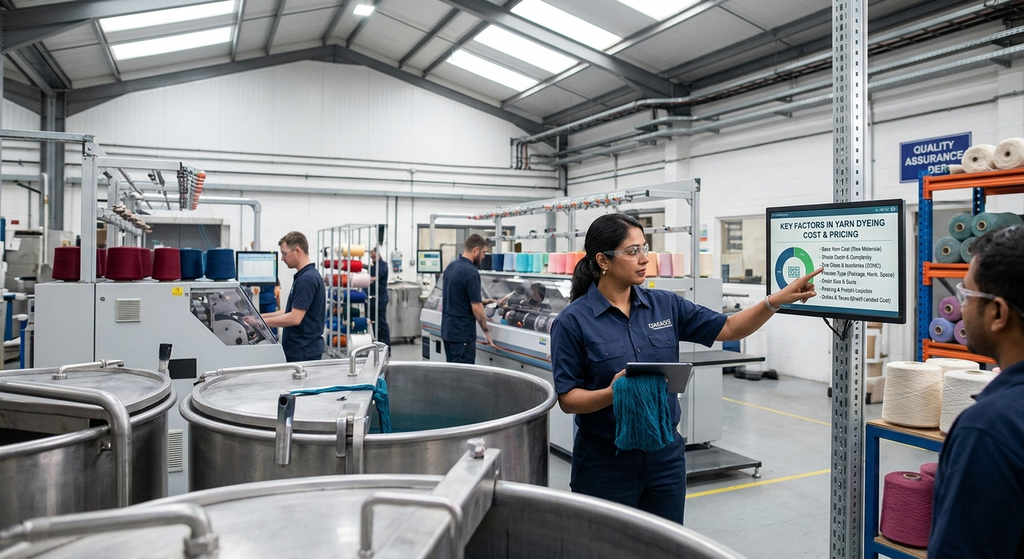
- Base yarn cost. Raw material prices, particularly for polyester chips, viscose staple and cotton, move with global markets.
- Shade depth. Dark shades such as black, navy and deep red use more dye and often more processing steps than pastels.
- Dye class and auxiliaries. Premium, ZDHC-conforming chemistry may cost more than low-grade alternatives but reduces compliance risk.
- Process type. Hank dyeing and space dyeing cost more than standard package dyeing.
- Order size and shade count. Larger lots per colour are cheaper per kilogram than many small lots.
- Packing and freight. Palletisation, cone type and container loading efficiency all influence landed cost.
- Duties and taxes. Import duties and taxes in Brazil can materially change your final cost, so calculate landed cost rather than comparing ex-works prices alone.
The cheapest quotation is rarely the cheapest outcome. A single rejected lot, a late shipment or a failed colourfastness test can cost more than the entire price difference between suppliers.
Checklist: How to Choose a Yarn Dyeing Partner
Before you commit to a supplier for yarn dyeing Brazil programmes, run through these questions:
- Does the supplier manufacture and dye in-house, or outsource? Understand the difference between a yarn supplier and a yarn manufacturer.
- Can they show test reports for colourfastness, shrinkage and tenacity?
- Do they use spectrophotometers and digital recipe storage?
- Are they aligned with ZDHC, OEKO-TEX, GRS or other standards you need?
- What are their lead times and minimum order quantities for custom shades?
- Do they have experience exporting to Brazil and South America?
- How do they handle complaints, claims and re-dyeing?
- Can they supply references from similar buyers?
Trends Shaping Yarn Dyeing in Brazil for This Era and Beyond
Recycled and lower-impact fibres. Brands want recycled polyester, regenerated cellulose and lower-water dyeing methods. Dope-dyed and waterless technologies are moving from niche to mainstream.
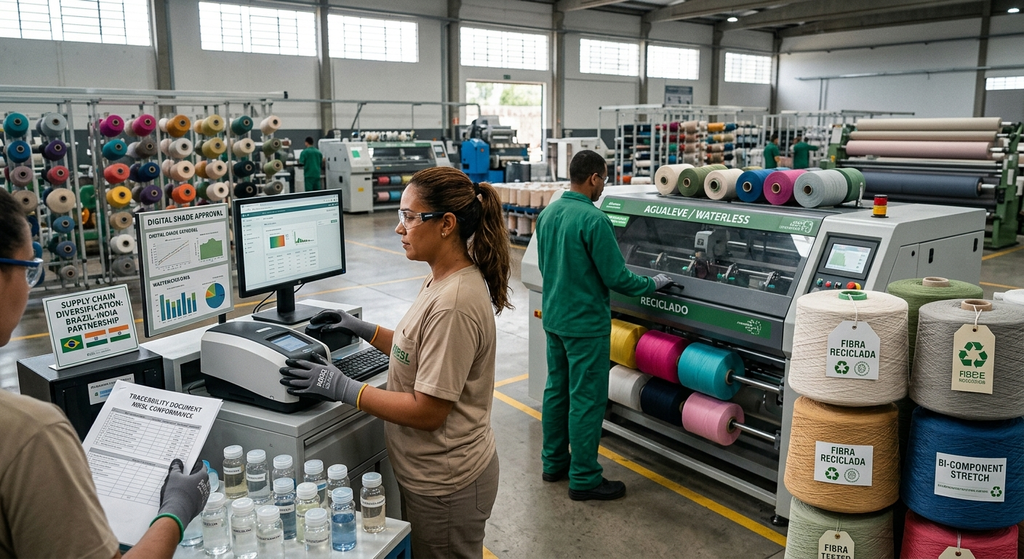
Stretch and performance. Elastomultiester and bicomponent yarns are growing in popularity for comfortable, shape-retaining fabrics. Dyeing these yarns demands precise heat setting to preserve stretch.
Digital colour management. Spectrophotometers, cloud-based recipe libraries and remote shade approval are shrinking sampling cycles and lowering waste.
Chemical transparency. Expect more brands to ask for MRSL conformance, wastewater test data and traceability documents as standard.
Supply-chain diversification. Given geopolitical tension and shifting trade policy, Brazilian mills are spreading sourcing risk across multiple regions rather than relying on a single origin. India, with its integrated yarn industry, is a natural partner in that diversification. Global trade bodies such as the International Textile Manufacturers Federation track these shifts in production and trade (ITMF), and their data is a useful reference for long-term planning.
Frequently Asked Questions About Yarn Dyeing Brazil
What is yarn dyeing and why is it popular among Brazilian mills?
Yarn dyeing means colouring yarn before it is woven or knitted. Brazilian mills favour it because it delivers better colourfastness, more design freedom and better control over shade consistency than dyeing finished fabric.
Which yarns are most commonly dyed for the Brazilian market?
Polyester, viscose, cotton, nylon and blended yarns are the most common, with growing demand for linen, recycled polyester and stretch yarns such as elastomultiester.
Is it cheaper to import dyed yarn from India than to dye locally in Brazil?
It depends on volume, shade complexity, duties and your own dyeing capacity. For many mills, imported dyed yarn offers predictable pricing and consistent quality without the investment in machinery and effluent treatment. Always compare landed cost, not just ex-works price.
What certifications should I ask a dyed-yarn supplier for?
Common requests include OEKO-TEX STANDARD 100, ISO 9001 and ISO 14001, ZDHC alignment, and GRS or GOTS if you need recycled or organic claims.
How long does it take to import dyed yarn from India to Brazil?
Production lead time plus sea freight, port handling and customs clearance together typically take several weeks. Your supplier and customs broker can give a more precise estimate for your route and season.
How do I make sure shades stay consistent across repeat orders?
Work with a supplier that stores digital colour recipes, measures shades with a spectrophotometer, sets a clear delta E tolerance and tests every lot against an approved standard.
Can small and mid-sized Brazilian mills buy dyed yarn from Madhusudan Group?
Yes. Madhusudan Group supports both large programmes and smaller, more varied orders, so mills of different sizes can find a workable arrangement. Contact the team with your fibre, count, shade and volume requirements for a tailored quotation.
What is the difference between package dyeing and hank dyeing?
Package dyeing colours yarn wound on perforated cones and is best for large volumes and tight shade control. Hank dyeing colours loose loops of yarn and is favoured for soft, bulky hand-feel.
Conclusion: Make Colour Your Competitive Advantage
Colour is not a finishing touch; it is a strategic asset. In a Brazilian market where growth is modest, imports are rising and customers expect both beauty and responsibility, the mills that win will be those that control shade quality, cost and delivery from the very first step of production.
Yarn dyeing Brazil is therefore about much more than chemistry. It is about choosing the right methods, demanding the right quality benchmarks, staying aligned with global chemical standards and partnering with a supplier that treats your success as its own.
Madhusudan Group brings together an integrated yarn portfolio, disciplined quality control, deep South American export experience and a technical, partner-first approach. Whether you need dyed polyester for performance fabrics, viscose for fluid drape, linen for premium home textiles or stretch yarns for next-generation apparel, Madhusudan Group is ready to deliver.
Ready to upgrade your dyed-yarn supply? Contact Madhusudan Group today to request shade cards, samples and a competitive quotation for your Brazilian mill.