Importing yarn from India into Brazil or anywhere else in South America involves more moving parts than most first-time buyers expect: Mercosur’s shared tariff system, Brazil’s own layered import taxes, a customs process that legally requires a licensed broker, and, as of this writing, an active trade-remedy history specifically involving Indian polyester yarn that most sourcing guides don’t mention at all. Getting any one of these wrong doesn’t just cost money it can hold a container at port for weeks.
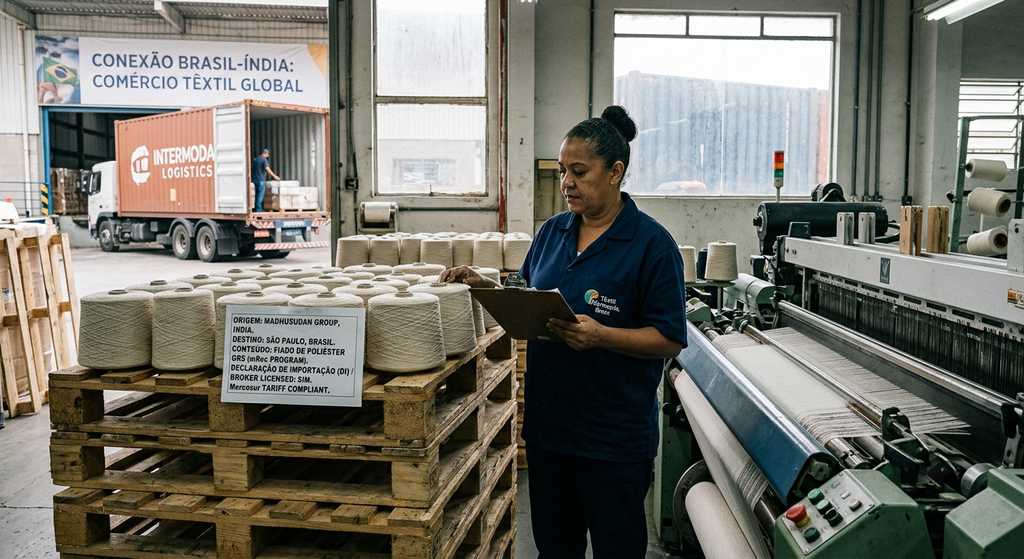
This guide walks through the full process for Brazil specifically, since it’s the region’s largest and most standardized import framework, then covers what changes if you’re importing into Argentina, Chile, Colombia, or Peru instead. If you’re evaluating suppliers rather than logistics, our companion piece on recycled polyester yarn manufacturers for South America covers the supplier-side questions this guide assumes you’ve already answered.
Madhusudan Group exports yarn including GRS-certified recycled polyester under our mRec program into 18+ countries. Where useful below, we’ve used our own export documentation process as a working example of what any Indian supplier should be able to walk you through.
If you’re comparing this process against a North American import instead, our companion guides on how to import yarn from India to the USA and yarn import duty from India to the USA walk through the equivalent process for that market useful context if you’re managing sourcing across both regions.
Understanding Brazil’s Import Framework: Mercosur, NCM, and Siscomex
Brazil, along with Argentina, Paraguay, and Uruguay, operates under the Mercosur Common External Tariff (CET, known locally as the AEC), a shared tariff schedule applied to imports from outside the bloc. Rather than using the standard six-digit Harmonized System (HS) code alone, Mercosur countries classify goods under the Nomenclatura Comum do Mercosul (NCM) an eight-digit extension of the HS system specific to the bloc, with Brazil maintaining its own national exceptions list on top of the shared CET.
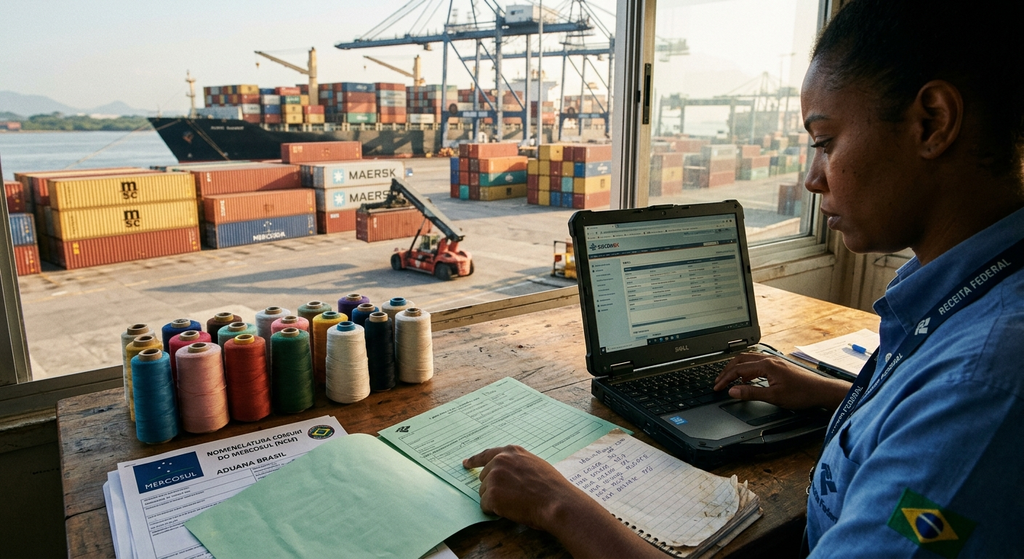
All formal imports into Brazil are processed through Siscomex (Sistema Integrado de Comércio Exterior), the federal government’s integrated foreign trade system that handles customs declarations, licensing, and tax calculation in one platform shared by Receita Federal (Brazil’s federal tax authority), the Secretariat of Foreign Trade (SECEX), and other regulatory bodies. Every import transaction including a yarn shipment is registered and tracked through this system from declaration to clearance.
Yarn is generally classified under NCM codes within Chapter 54 (man-made filament yarn) or Chapter 55 (man-made staple fibers, including polyester staple fiber), with the exact eight-digit code depending on the yarn’s fiber type, form (filament vs. spun), and processing (textured, dyed, etc.). Getting this classification right at the outset determines your duty rate, whether an import license is required, and critically, as covered below whether your shipment falls within the scope of any active trade remedy measure.
Step-by-Step: How to Import Yarn From India to Brazil
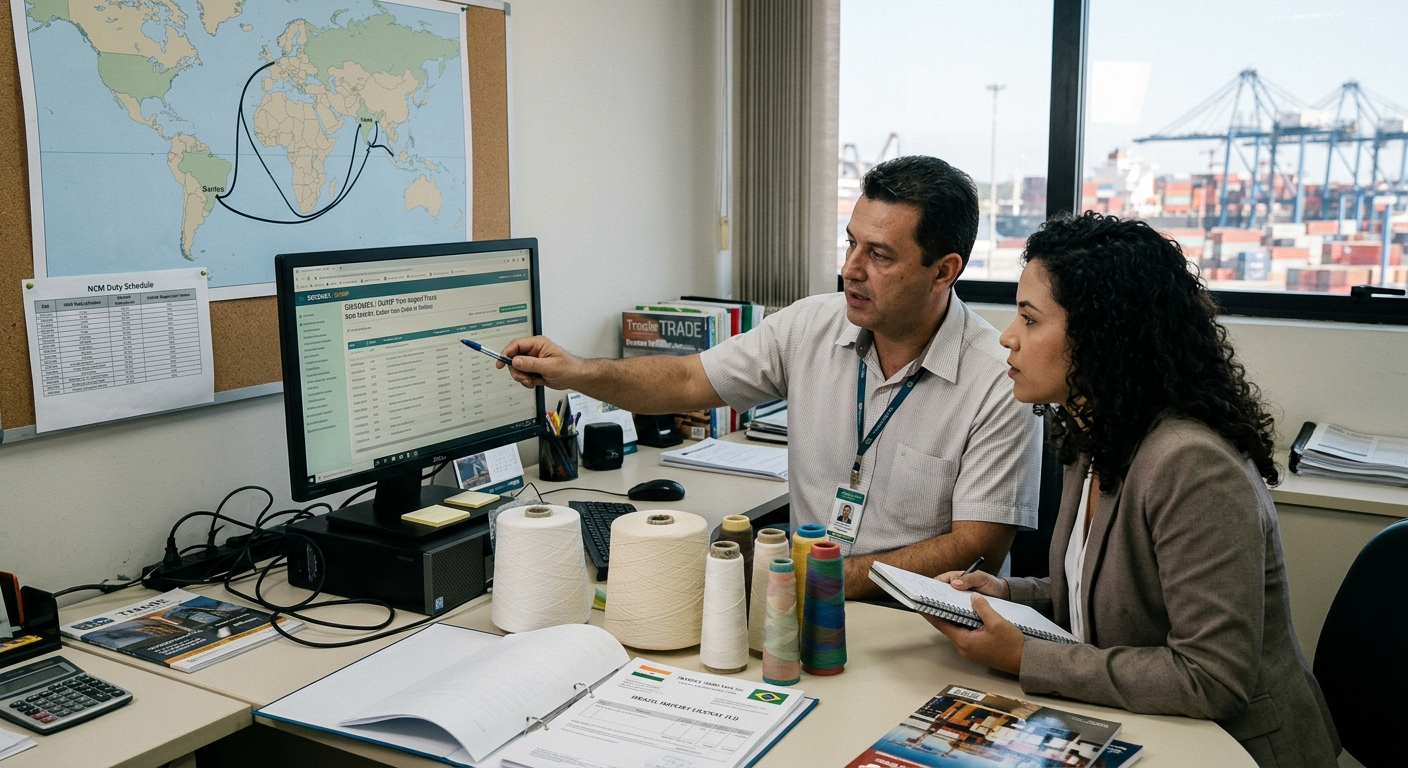
- Register as an importer via RADAR (Registro e Rastreamento da Atuação dos Intervenientes Aduaneiros) with Receita Federal this is a mandatory registration for any company or individual importing commercially into Brazil, and must be completed before your first shipment, not arranged after goods are already in transit.
- Vet and confirm your supplier, including certifications, production capacity, and export documentation experience see our guides on questions to ask before buying yarn and yarn supplier vs. yarn manufacturer if this is your first direct import relationship.
- Confirm the correct NCM classification for your specific yarn with a licensed customs broker (despachante aduaneiro) before finalizing your purchase order this determines duty rate and whether any trade remedy measure applies (see the alert section below).
- Negotiate Incoterms with your supplier most Indian yarn exporters quote FOB by default; first-time importers into an unfamiliar port sometimes prefer CIF for simpler logistics coordination.
- Arrange ocean freight and marine insurance (if not included under CIF terms), confirming routing and estimated transit time to your destination port.
- Determine whether an import license (Licença de Importação, LI) is required for your specific NCM code most textile yarn imports are on Brazil’s automatic licensing list, but this should be confirmed for your exact classification, since manual licensing requirements can apply to goods under active trade investigations.
- Register the import declaration in Siscomex once goods ship Brazil has been transitioning its import declaration process from the legacy DI (Declaração de Importação) to the newer DUIMP (Declaração Única de Importação) system, so confirm with your broker which currently applies to your transaction.
- Pay applicable import taxes Imposto de Importação (II), IPI, PIS/COFINS-Importação, and state-level ICMS calculated through Siscomex during the clearance process (see the tax break down below).
- Clear customs at the port of entry (commonly Santos) with your licensed broker managing document verification and any physical inspection requirements.
- Arrange inland transport from the port to your final destination, factoring in Brazil’s often-significant inland logistics time and cost on top of ocean transit.
A closer look at the three steps that trip up most first-time importers
RADAR registration timing. RADAR registration itself can take several weeks to process depending on the modality (limited, unlimited, or express) your import volume qualifies for. Starting this in parallel with early supplier negotiations, rather than after a purchase order is signed, is the single easiest way to avoid your first shipment sitting idle at port simply because your import registration wasn’t ready in time.

NCM classification disputes. Because Brazil’s antidumping investigations (covered in detail below) are defined by specific NCM subheadings, a misclassified shipment can either incorrectly trigger a trade-remedy duty that shouldn’t apply, or more riskily incorrectly avoid one that does apply, which exposes the importer to retroactive assessment and penalties once discovered. This is the single best reason to have your broker confirm classification against your supplier’s product specification sheet before the purchase order is finalized, not after the commercial invoice is issued.
DI vs. DUIMP transition. Brazil has been migrating import declarations from the legacy DI system to the newer, more streamlined DUIMP system on a rolling, category-by-category basis rather than all at once. A broker actively working in your product category will know which system currently applies; using outdated guidance from a previous shipment or a generic online source is a common, avoidable source of processing delay.
Illustrative Landed Cost Example
To make the tax-layering described above concrete, here a simplified, illustrative walkthrough actual rates vary by NCM code, destination state, and current trade-remedy status, and must be confirmed with your broker. Treat this as a structural example of how the calculation compounds, not a quotable rate.

- Start with CIF value (goods cost + insurance + freight to the Brazilian port) as the base for calculation.
- II (import duty) is calculated as a percentage of that CIF value, per the applicable NCM code’s Mercosur CET rate.
- IPI is then calculated on the CIF value plus the II already assessed not on the original CIF value alone, which is where the compounding begins.
- PIS/COFINS-Importação apply on a similarly cumulative basis, layering on top of the prior calculations.
- ICMS is applied last, at the state-specific rate, on a base that includes the prior taxes – meaning the effective total tax burden is meaningfully higher than simply adding each individual rate to the CIF value.
- If a trade-remedy (antidumping) duty applies to your specific NCM classification, it is typically assessed as an additional layer on top of, not instead of, the standard II rate another reason confirming current trade-remedy status before ordering matters for accurate cost planning.
Because of this compounding structure, even a modest-looking headline duty rate can translate into a landed cost premium significantly higher than a first-time importer’s back-of-envelope estimate budget accordingly and have your broker run the exact calculation for your specific shipment before you finalize pricing with your own customers.
Currency, Payment Terms & Letters of Credit
Most India-to-Brazil yarn transactions are quoted and settled in US dollars rather than Brazilian reais or Indian rupees, which simplifies cross-currency accounting for both sides but means both parties carry some exposure to USD/BRL exchange rate movement between order placement and final payment.
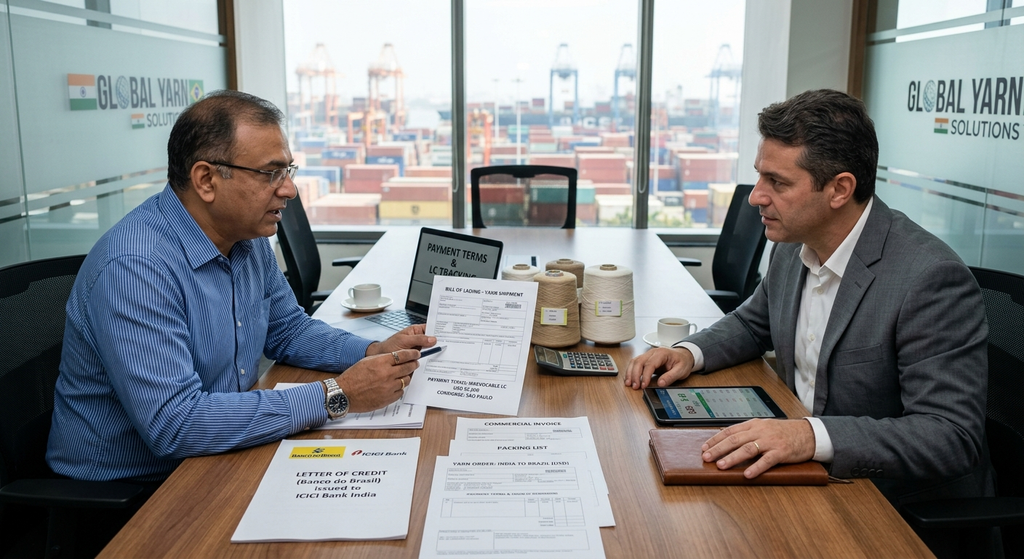
- Letters of Credit (LC) remain the most common payment mechanism for first-time or larger-volume relationships, since they give both the Indian exporter and the Brazilian importer a bank-backed guarantee tied to shipping document compliance.
- Telegraphic Transfer (T/T) with a deposit at order confirmation and balance before shipment is common for established relationships with a track record of reliable delivery.
- Whichever mechanism you use, confirm with your bank how it handles the specific documentation Brazilian customs will require (commercial invoice, packing list, bill of lading, and any certification documents) mismatches between LC terms and actual shipping documents are a common, avoidable source of payment delay.
Quality Inspection & Acceptance at the Brazilian Port
Plan your quality acceptance process before the container arrives, not after a dispute has already started. A few practical points specific to a South America-bound shipment:
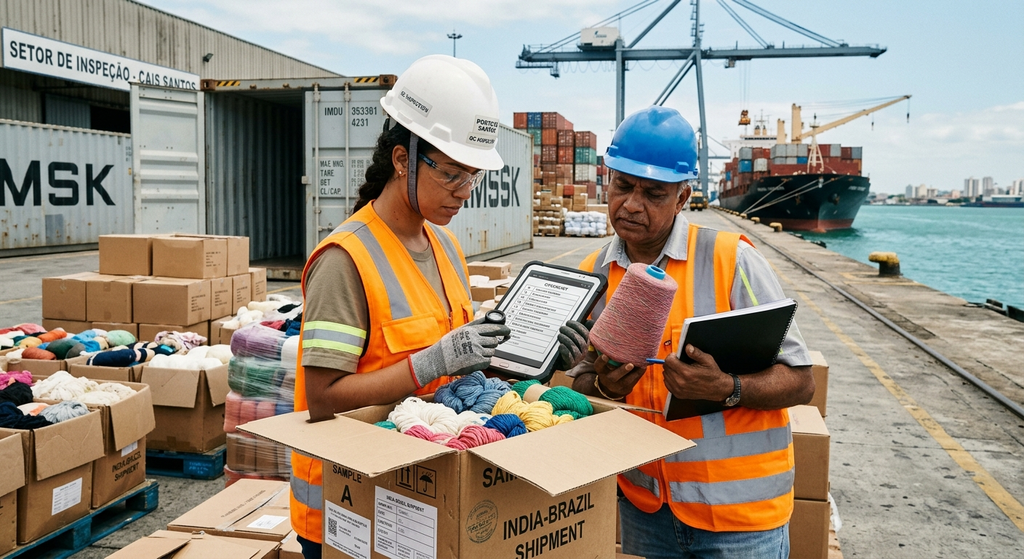
- Given the longer transit time compared to North America or Europe (35–50 days), specify and agree on acceptance sampling procedures with your supplier in the purchase order itself, including what happens if a defect is found only after the goods have cleared customs and moved inland.
- Consider a pre-shipment inspection (PSI) at the Indian port before the container is loaded, particularly for a first order this catches issues while they’re still cheap and fast to resolve, rather than after 35+ days of transit.
- Retain samples from each shipment for a reasonable period after acceptance, in case a downstream fabric or garment quality issue traces back to a specific yarn lot weeks or months later.
Freight Forwarder vs. Direct Carrier Booking
Most first-time and mid-volume importers work through a freight forwarder rather than booking directly with an ocean carrier the forwarder consolidates booking, documentation, and often coordinates with your customs broker on the Brazilian side as a single point of contact.

- A forwarder with specific experience on India-South America trade lanes will have realistic visibility into transhipment routing and current transit-time reliability, which is more valuable than a generic global forwarder quoting from a standard rate sheet.
- Direct carrier booking can reduce cost slightly for high-volume, recurring shipments once a relationship is established, but generally shifts more documentation and coordination responsibility onto the importer.
- Whichever route you choose, confirm who is responsible for arranging inland transport from the Brazilian port to your final destination this is a common gap that falls through the cracks between forwarder, broker, and importer responsibilities on a first shipment.
Marine Insurance: What’s Actually Covered
Given the longer transit time on India-South America routes, marine cargo insurance deserves more attention than it sometimes gets on shorter, more familiar trade lanes.

- Under FOB terms, the buyer is responsible for arranging marine insurance from the point of loading in India – confirm this is in place before the vessel departs, not after, since coverage typically cannot be arranged retroactively once a voyage is underway.
- Under CIF terms, the supplier arranges insurance, but confirm the coverage level (commonly 110% of CIF value as a market standard) and that the policy names your company as the insured or loss payee, not just the supplier.
- Given the extended 35–50 day transit and multiple transhipment points typical of this route, confirm the policy covers transhipment risk and general average (a maritime law principle where all cargo interests share losses from a voluntary sacrifice made to save the vessel) – both are more relevant on longer, multi-leg voyages than on direct point-to-point shipping lanes.
- File any claim promptly and with complete documentation (survey report, bill of lading, commercial invoice, packing list) – insurers in this market typically require notification within a defined window after discovering damage, which is easy to miss if a shipment sits at port during a customs dispute before your team physically inspects it.
Import Duties & Taxes: What Actually Gets Charged
Brazil layers several distinct taxes onto an import, calculated cumulatively rather than as a single flat duty rate – this catches many first-time importers off guard when comparing landed cost estimates.

- II (Imposto de Importação): the base import duty, calculated on a CIF basis, set by the Mercosur CET subject to Brazil’s national exceptions list for the specific NCM code.
- IPI (Imposto sobre Produtos Industrializados): a federal excise tax applied to industrialized products, including imported yarn, calculated on the CIF value plus the II already assessed.
- PIS/COFINS-Importação: federal social contribution taxes applied to imports, calculated on a cumulative basis alongside the other taxes above.
- ICMS: a state-level value-added tax applied at the point of customs clearance, with the rate varying by the destination state rather than being uniform nationally.
Because these taxes compound on a cumulative basis, the effective landed cost impact is meaningfully higher than the base II rate alone suggests a detailed breakdown by product category is available through this representative country commercial guide, though exact current rates should always be confirmed with your customs broker for your specific NCM code and destination state.
⚠ Antidumping & Trade Remedy Alert for Polyester Yarn from India
| This section covers real, material trade-policy history that most sourcing guides omit entirely. Read this before finalizing any polyester yarn order from India into Brazil, and verify current status with a customs broker before shipping these measures move on rolling investigation and review timelines. |
Textured polyester yarn (DTY/ATY) – history of measures, since revoked
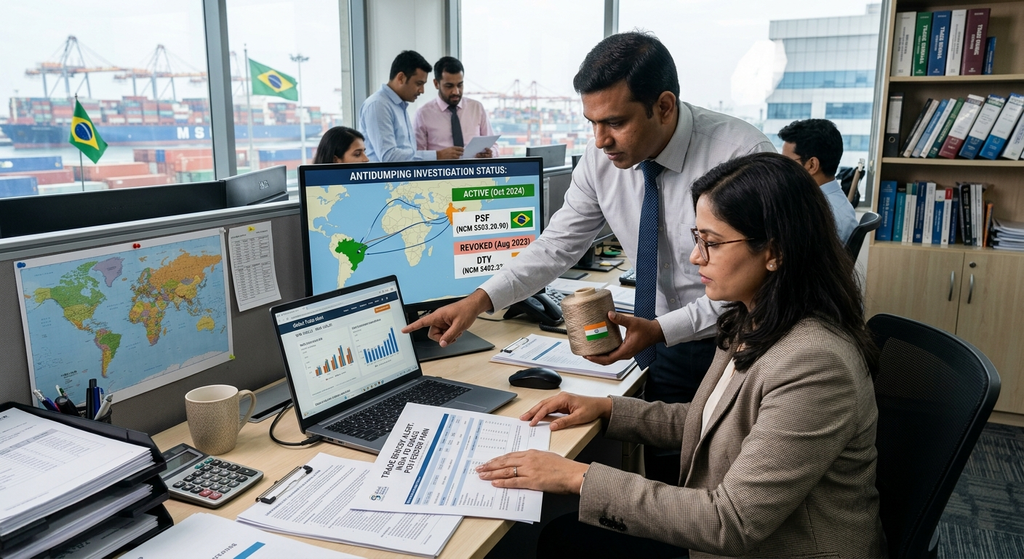
Brazil investigated and, in August 2022, implemented a definitive antidumping duty on textured polyester yarn imports from India and China, classified under NCM codes 5402.33.10, 5402.33.20, and 5402.33.90. That measure was revoked in August 2023, per Global Trade Alert’s record of the intervention. As of the most recent information available, this specific measure is not currently active – but its history matters: it demonstrates Brazil’s domestic industry has successfully petitioned for protection on exactly this product category before, and a new investigation or reinstatement is a realistic possibility a buyer should watch for, not assume can’t happen.
Polyester staple fiber (PSF), including recycled PSF – active as of late 2024
Separately, and more recently, Brazil opened an antidumping investigation in March 2024 into polyester staple fiber imports from China, India, Vietnam, Malaysia, and Thailand (NCM 5503.20.90), following a petition from Brazilian producers. An October 2024 preliminary ruling recommended provisional duties, with India’s rate set at approximately US$260.47 per ton. Notably, this investigation’s scope explicitly includes recycled polyester staple fiber under the same tariff code, not just virgin material – reporting on this preliminary ruling is available via CCFGroup’s coverage. This is directly relevant to any GRS-certified recycled polyester staple fiber sourced from India for spinning into Brazil, and a meaningfully different product classification than the filament/textured yarn covered above — but worth flagging clearly if your product involves spun (rather than filament) recycled polyester yarn.
A separate December 2024 investigation – Chinese exports specifically
Brazil also opened new antidumping investigations in December 2024 covering Chinese exports of polyester yarn and polyester fabric – per this legal alert from Trench Rossi Watanabe, this round of investigations targets China specifically rather than India, though the outcome can still shift competitive dynamics and pricing across the broader import market.
What this means practically
- Always confirm current trade-remedy status for your exact NCM classification with a customs broker or Brazilian trade counsel immediately before finalizing a purchase order – these measures are added, revoked, and reviewed on ongoing timelines and can change between when you read this and when you ship.
- Filament yarn (DTY, ATY – NCM 5402 series) and staple fiber (NCM 5503 series) are different product classifications with different current trade-remedy exposure – don’t assume a measure affecting one automatically affects the other.
- A reputable Indian supplier exporting to Brazil should be aware of this landscape and able to discuss it directly, including how they classify their specific product – a supplier who seems unaware that this is a live issue is worth extra scrutiny.
- If a trade-remedy investigation is opened on your specific product category after you’ve already placed an order, ask your broker whether provisional duties would apply retroactively to shipments already in transit – this varies by case and is worth understanding before, not during, a dispute.
Beyond Brazil: Importing Into Argentina, Chile, Colombia & Peru
Argentina & Paraguay/Uruguay
As fellow Mercosur members, Argentina applies the same CET/NCM framework as Brazil in principle, though each member country maintains its own national exceptions list, meaning the applied rate for a specific yarn classification can differ from Brazil’s even under the shared bloc structure. Argentina’s own import documentation and licensing processes (through its customs authority, separate from Brazil’s Siscomex) should be confirmed independently rather than assumed identical. Argentina has also historically applied its own import-licensing and foreign-currency-access restrictions independent of Mercosur tariff policy, which have shifted with changes in economic policy – a further reason to get current, country-specific guidance rather than extrapolating from Brazil’s process.

Chile
Chile is not a Mercosur member and applies its own national tariff schedule, generally featuring a flat, relatively low uniform tariff rate on most imports rather than Mercosur’s category-by-category CET structure – historically one of the more straightforward customs regimes in the region for this reason. Chile’s extensive network of bilateral free trade agreements can also affect the applied rate depending on the exporting country, though India does not currently have a comprehensive free trade agreement with Chile, so standard national tariff rates apply to Indian-origin yarn.
Colombia
Also outside Mercosur, Colombia applies its own national tariff schedule and customs process, managed through its own customs authority (DIAN) rather than Brazil’s Siscomex. Colombia is also worth noting as a market where Unifi already operates a domestic recycled polyester production plant (in Bogotá), meaning local supply competes directly with any imported alternative for at least the recycled polyester category – a factor worth weighing against import lead time and landed cost when comparing sourcing options for the Colombian market specifically.
Peru
Peru applies its own national tariff schedule outside Mercosur, managed through SUNAT, with Callao serving as the primary import gateway. Peru’s apparel export sector, heavily oriented toward the US market under preferential trade arrangements, is a significant driver of yarn import demand independent of domestic consumption – meaning Peruvian buyers often need their yarn sourcing to satisfy both Peruvian import requirements and downstream US retailer compliance expectations simultaneously.
The practical takeaway: don’t assume Mercosur’s rules or Brazil’s specific antidumping history apply uniformly across South America. Each destination country requires its own classification, duty rate, and trade-remedy check – a customs broker licensed in that specific country is the right resource, not an assumption carried over from a different country’s rules.
Ports & Shipping Routes from India to South America
Yarn shipped from India to South America typically tranships through a hub port – commonly Colombo, Salalah, or Singapore – before crossing to the region’s major gateways: Santos in Brazil (the continent’s largest container port), Buenos Aires in Argentina, Callao in Peru, Cartagena or Buenaventura in Colombia, and San Antonio or Valparaíso in Chile.
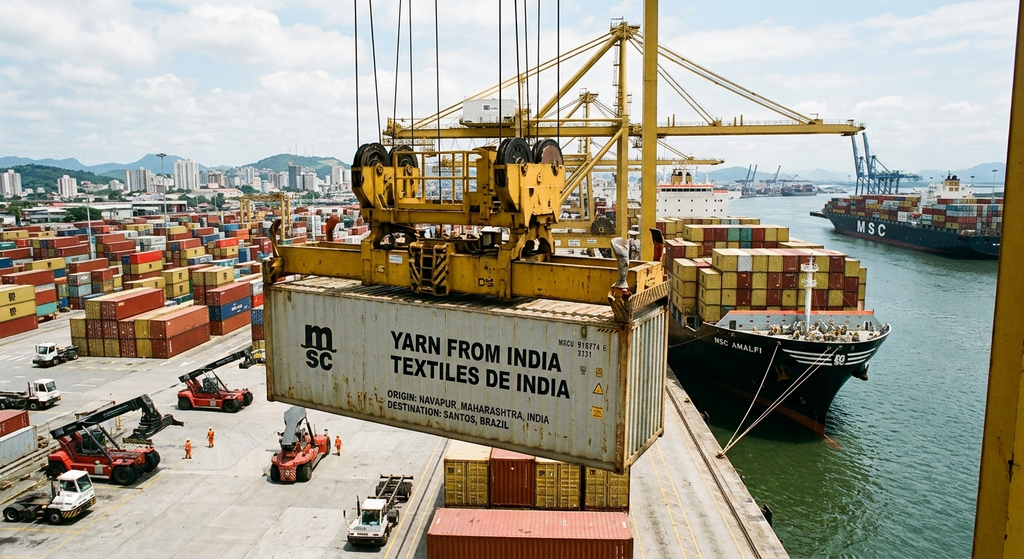
Total transit time commonly runs 35-50 days depending on routing and transshipment, notably longer than India-to-North America or India-to-Europe transit – a planning factor that matters more for South American buyers than most sourcing guides acknowledge, since it affects safety stock planning and how far in advance a first order needs to be placed relative to a product launch date.
Required Documentation Checklist
Commercial invoice with correct NCM classification pre-filled by the supplier – this single document is the reference point your broker uses for duty calculation and trade-remedy screening, so any classification error here propagates through the entire clearance process.
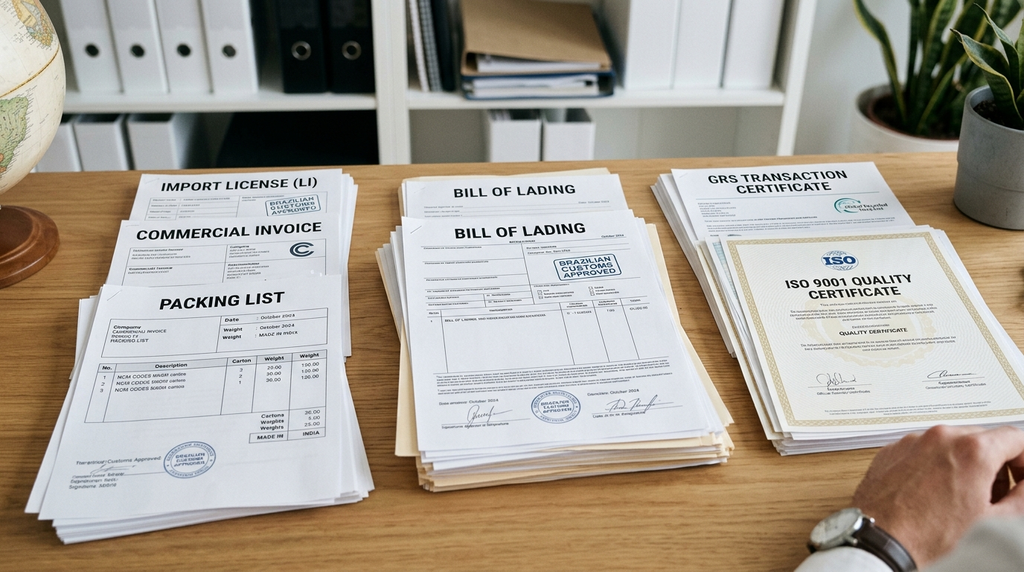
Packing list detailing carton/pallet counts, weights, and dimensions, matched against the commercial invoice – discrepancies between the two are a common trigger for physical customs inspection, which adds time to clearance.
Bill of lading issued by the carrier or freight forwarder, serving as both a shipping receipt and, depending on type, a document of title required for cargo release at the Brazilian port.
Certificate of origin relevant to any preferential tariff treatment claims, though India does not currently have a Mercosur preferential trade agreement, so standard CET rates apply regardless of origin certification for this specific trade lane.
Import license (LI), if required for the specific NCM classification – confirm this with your broker well before shipment, since a required but missing license can hold a shipment at port indefinitely.
GRS Transaction Certificate and/or other sustainability certification documents, if claiming recycled content – see our recycled polyester yarn guide for what this should include and how to verify it.
ISO 9001 or other quality certification documentation, if required by your buyer or retail partner – see our ISO certified yarn supplier page for what this covers.
Any product-specific testing or compliance documentation your specific end-use category requires, gathered and confirmed with your supplier before shipment rather than requested retroactively.
Working With a Despachante Aduaneiro (Customs Broker)
Brazilian customs law requires a licensed customs broker (despachante aduaneiro) to formally represent an importer in the Siscomex clearance process – this isn’t optional for a commercial import, unlike some countries where self-filing is permitted for smaller shipments. Choosing a broker with specific experience in textile/yarn classifications is worth prioritizing over a generalist broker, given the classification nuance and active trade-remedy landscape covered above.
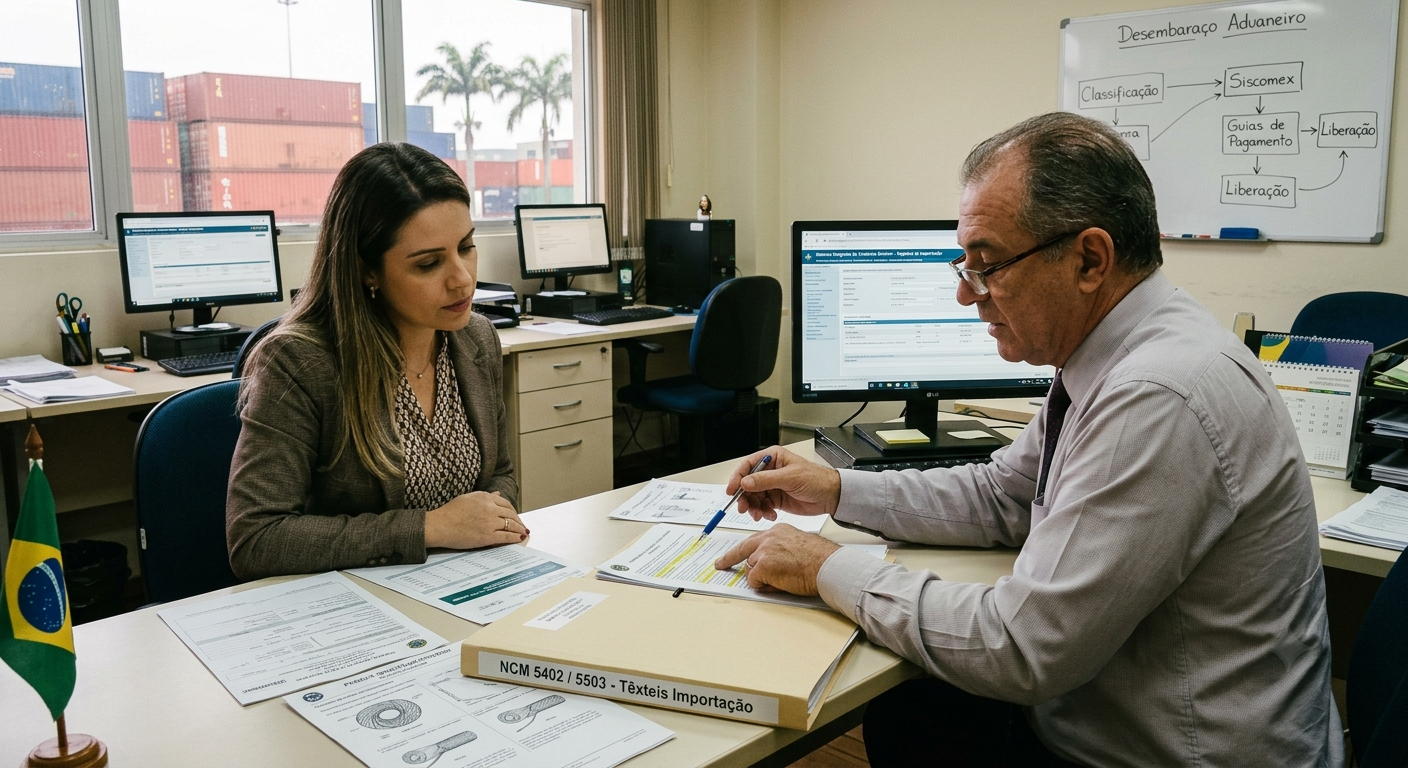
- Ask directly whether the broker has current experience with NCM 5402 and 5503 series classifications specifically.
- Ask them to confirm current antidumping/trade-remedy status for your exact product before you finalize your purchase order, not after goods have shipped.
- Confirm their fee structure upfront – customs brokerage fees in Brazil are typically charged per shipment or as a percentage of CIF value, and this should be built into your landed cost calculation from the start.
Choosing the Right Yarn Supplier for the South American Market
Beyond the logistics covered above, supplier selection matters just as much for a South America-bound order as for any other market. Pair this guide with our questions to ask before buying yarn and yarn supplier vs. yarn manufacturer guides, and specifically confirm:
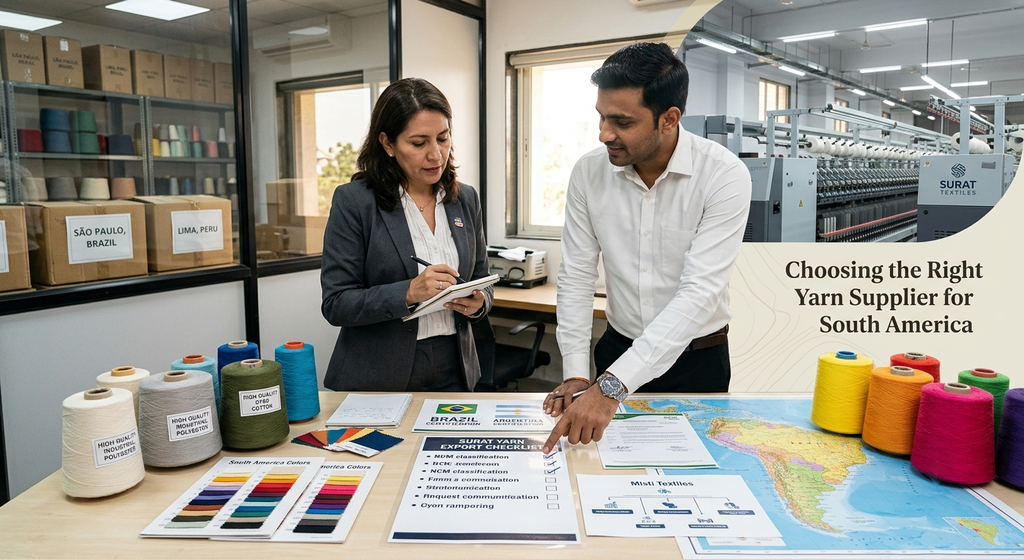
- Whether the supplier has existing export experience into Brazil or South America specifically, not just a general export track record
- Whether they can provide correct NCM classification and are aware of current trade-remedy status for their specific product
- Their production capacity and export credentials across their broader customer base, not just claims specific to your inquiry – our own track record exporting into global fashion brand supply chains and the reasons global brands trust Surat’s textile industry are the kind of concrete history worth asking any supplier to demonstrate, not just claim.
- Whether their broader yarn manufacturing range and industrial yarn capabilities extend beyond your initial order if you plan to grow the relationship
- Whether they offer in-house dyeing alongside spinning and texturing, so your yarn, color, and finishing needs can be coordinated under one supplier relationship rather than three separate factories with three separate quality-control handoffs.
Common Mistakes First-Time Importers Make
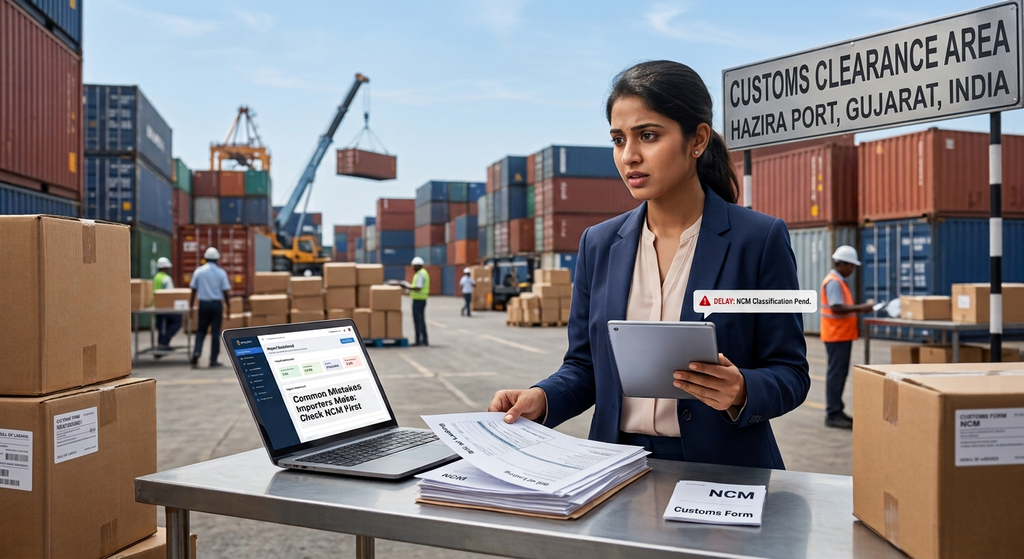
- Confirming NCM classification only after the shipment has already left India, rather than before finalizing the purchase order – this is the single most common cause of customs clearance delays, and the easiest to prevent with a five-minute broker consultation upfront.
- Assuming a duty rate or trade-remedy status quoted for a previous shipment still applies, when both can change between orders – antidumping investigations, preliminary rulings, and final determinations all move on their own timelines independent of your purchasing cycle.
- Underestimating total landed cost by focusing on the base II rate and not accounting for the cumulative IPI, PIS/COFINS, and ICMS layering described above – this is the most common reason a first import ends up meaningfully more expensive than budgeted.
- Not registering RADAR status early enough, delaying a first shipment’s clearance while registration is still being processed – start this in parallel with supplier negotiations, not after a purchase order is signed.
- Assuming Mercosur rules apply uniformly to Chile, Colombia, or Peru, when each operates its own independent tariff schedule and customs authority outside the bloc.
- Not confirming a broker’s specific experience with textile yarn classifications before engaging them, leading to avoidable classification errors on NCM codes that carry active trade-remedy exposure.
- Treating the quoted ex-works or FOB price as the full cost comparison against a locally-manufactured alternative, without running the complete landed-cost calculation including freight, all four layered taxes, and broker fees – a locally-sourced option can look more expensive on a unit-price basis and still win on total landed cost, or vice versa, depending on volume.
Quick-Reference Glossary
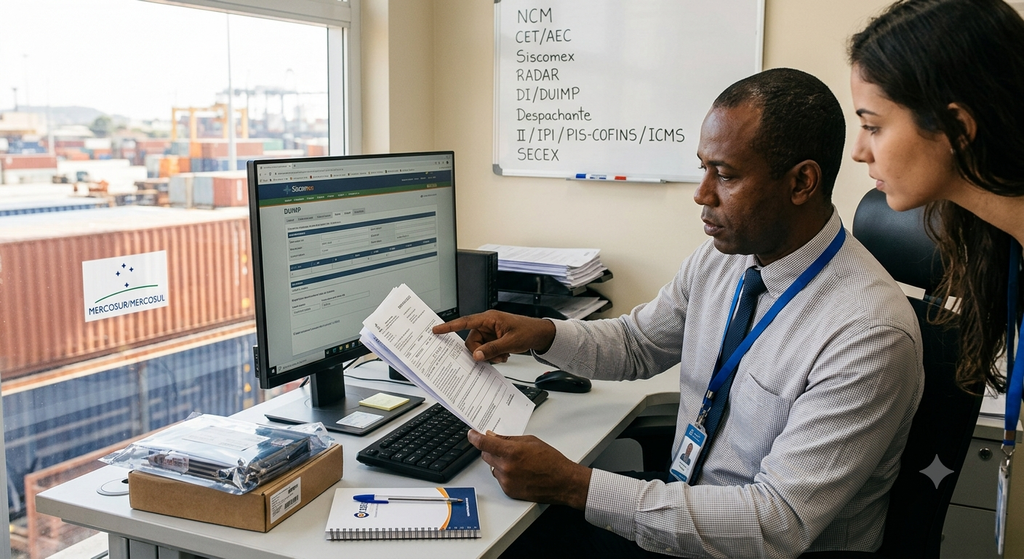
- NCM: Nomenclatura Comum do Mercosul – the Mercosur bloc’s eight-digit customs classification system.
- CET/AEC: Mercosur’s Common External Tariff, applied to imports from outside the bloc, subject to national exceptions lists.
- Siscomex: Brazil’s integrated federal foreign trade system, handling customs declarations, licensing, and tax calculation.
- RADAR: The mandatory importer registration system with Receita Federal, required before commercial imports into Brazil.
- DI / DUIMP: Declaração de Importação (legacy) and Declaração Única de Importação (newer) – Brazil’s import declaration systems, currently in transition.
- Despachante aduaneiro: A licensed Brazilian customs broker, legally required to represent importers in the clearance process.
- II / IPI / PIS-COFINS / ICMS: The layered federal and state taxes applied cumulatively to Brazilian imports.
- SECEX: Secretariat of Foreign Trade – the Brazilian body that opens and manages antidumping and trade-remedy investigations.
Frequently Asked Questions
Do I need a license to import yarn into Brazil?
You need RADAR registration with Receita Federal to import commercially into Brazil at all. Whether a specific import license (LI) is required for your shipment depends on the NCM classification – most textile yarn falls under automatic licensing, but this should be confirmed for your exact product, especially given the active trade-remedy investigations covered above.
What is the current import duty on polyester yarn from India to Brazil?
The base rate follows Mercosur’s Common External Tariff for the relevant NCM code, subject to Brazil’s national exceptions list, layered with IPI, PIS/COFINS, and state ICMS. Given the antidumping history and active investigations covered in this guide, always confirm the current total rate – including any trade-remedy duty – with a customs broker before finalizing an order, rather than relying on a rate quoted for a past shipment.
Is there currently an antidumping duty on Indian polyester yarn entering Brazil?
Brazil’s 2022 antidumping duty on textured polyester yarn (DTY/ATY) from India was revoked in August 2023. However, a separate investigation into polyester staple fiber from India (including recycled PSF) resulted in a preliminary ruling with provisional duties in October 2024. Status on both can change – verify current status for your specific NCM classification before shipping.
How long does it take to import yarn from India to Brazil?
Plan for roughly 3-5 weeks of production lead time plus 35-50 days of ocean transit via transhipment, plus customs clearance time at the port of entry – commonly Santos. First orders typically take longer while broker relationships and documentation processes are established.
Can I self-file customs clearance in Brazil instead of using a broker?
No. Brazilian law requires a licensed despachante aduaneiro to represent importers in the Siscomex clearance process for commercial imports – this is not optional, unlike some countries that permit self-filing for smaller shipments.
Do Mercosur rules apply to importing yarn into Chile, Colombia, or Peru?
No. Chile, Colombia, and Peru are not Mercosur members and apply their own independent national tariff schedules and customs processes. Brazil and Argentina’s Mercosur-specific rules, including the CET and NCM system, don’t transfer to these countries.
What’s the difference between DI and DUIMP for Brazilian customs declarations?
DI (Declaração de Importação) is Brazil’s legacy import declaration system; DUIMP (Declaração Única de Importação) is the newer system Brazil has been transitioning to. Which one applies to your shipment should be confirmed with your customs broker, since the transition has been rolling out by product category and importer type.
Should I use FOB or CIF terms for a first yarn shipment to Brazil?
Many first-time importers prefer CIF terms initially, letting the supplier arrange freight and insurance to the Brazilian port in exchange for a modest cost premium, simplifying logistics coordination while a broker relationship and documentation process are still being established.
What currency should I expect to pay for yarn imported from India?
Most India-to-South America yarn transactions are quoted and settled in US dollars rather than Brazilian reais or Indian rupees, which simplifies accounting but leaves both parties with some exposure to exchange rate movement between order and payment.
Should I get a pre-shipment inspection before the container leaves India?
For a first order, yes – a pre-shipment inspection at the Indian port catches quality issues while they’re still fast and cheap to resolve, rather than discovering a defect after 35-50 days of transit and Brazilian customs clearance, when remedy options are far more limited and costly.
What happens if an antidumping investigation opens after I’ve already placed my order?
This depends on the specific case and timing – some provisional duties apply only from the date of the preliminary ruling forward, while others can apply retroactively to shipments already in transit under certain circumstances. Ask your customs broker to confirm how a newly opened investigation would affect goods already on the water, ideally before you’re in that situation rather than during it.
Ready to Import Yarn from India into Brazil or South America?
The logistics and regulatory landscape covered in this guide is genuinely more layered than most sourcing teams expect going in – Mercosur’s shared tariff structure, Brazil’s own compounding tax layers, a mandatory licensed-broker requirement, and an active, evolving trade-remedy history specific to Indian polyester yarn. None of it is a reason to avoid sourcing from India; it’s a reason to get the classification, documentation, and current regulatory status confirmed before your first purchase order is signed, rather than discovering a gap after a container is already at sea.
Getting the logistics and trade-remedy landscape right upfront saves far more time than it costs. Madhusudan Group exports yarn – including GRS-certified recycled polyester – into 18+ countries, with export documentation experience your broker can work with directly.
For current classification guidance on our specific products and export documentation, contact our export team – or explore our broader yarn manufacturing and dyeing capabilities and brochures if you’re evaluating us as a multi-product supplier.