If your production planner in São Paulo, Bogotá, Lima, Buenos Aires, or Santiago has ever had a shade rejected at final inspection, you already know that polyester yarn dyeing is not a commodity purchase it’s a process purchase. Two suppliers can quote the same denier, the same color code, and the same price per kilogram, and still deliver visibly different results on the loom or knitting machine. The difference almost always traces back to how the yarn was dyed, not just what it was dyed with.
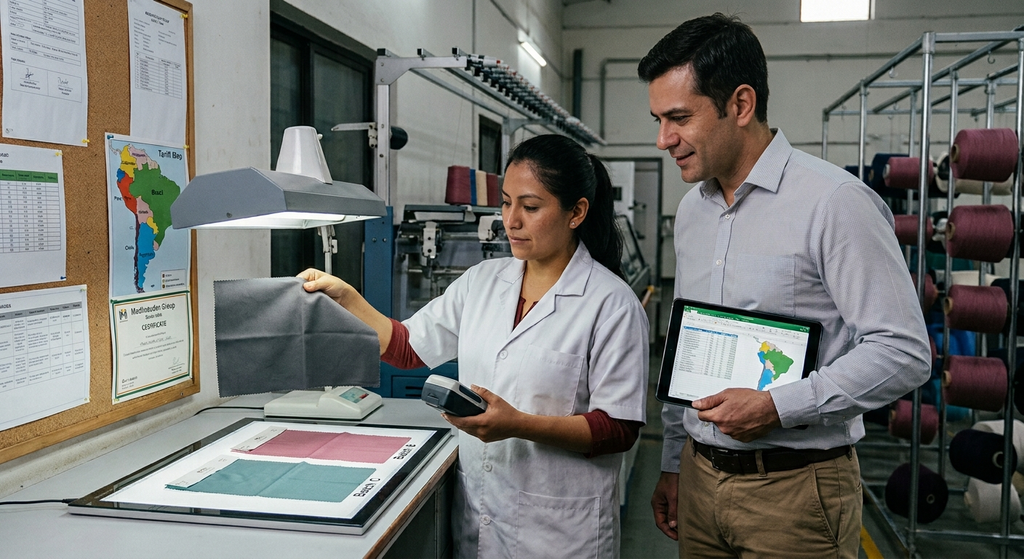
This guide is written specifically for South American buyers apparel manufacturers, home textile producers, industrial fabric converters, and trading houses who are evaluating polyester yarn dyeing suppliers in India as an alternative or complement to regional and Chinese sourcing. It covers how polyester yarn dyeing actually works, what to check before placing a bulk order, how the logistics and tariff picture looks for Brazil, Argentina, Colombia, Peru, and Chile, and the specific red flags that separate a dependable dyehouse from one that will cost you a rejected shipment.
Madhusudan Group operates integrated polyester yarn spinning, texturing, and in-house dyeing at its facilities in Surat, Gujarat, with export experience across 18+ countries. Where useful below, our own dyeing process is used as a working example of what to ask any polyester yarn dyeing supplier for not just us. For a broader look at dyed yarn as a category before narrowing into polyester specifically, our dyed polyester yarn guide and our general dyed yarn manufacturer overview are useful companion reads.
What Is Polyester Yarn Dyeing?
Polyester yarn dyeing is the process of adding color to polyester filament or spun yarn either during fiber formation or after the yarn has already been spun, textured, or wound onto a package. Because polyester (PET) is a hydrophobic synthetic fiber with a tightly packed molecular structure, it does not accept water-soluble dyes the way cotton or wool does. It requires either disperse dyes applied under pressure and heat, or color added directly into the molten polymer before it is ever extruded into filament. Understanding which route a supplier uses and why is the single most useful piece of technical literacy a buyer can bring into a sourcing conversation.
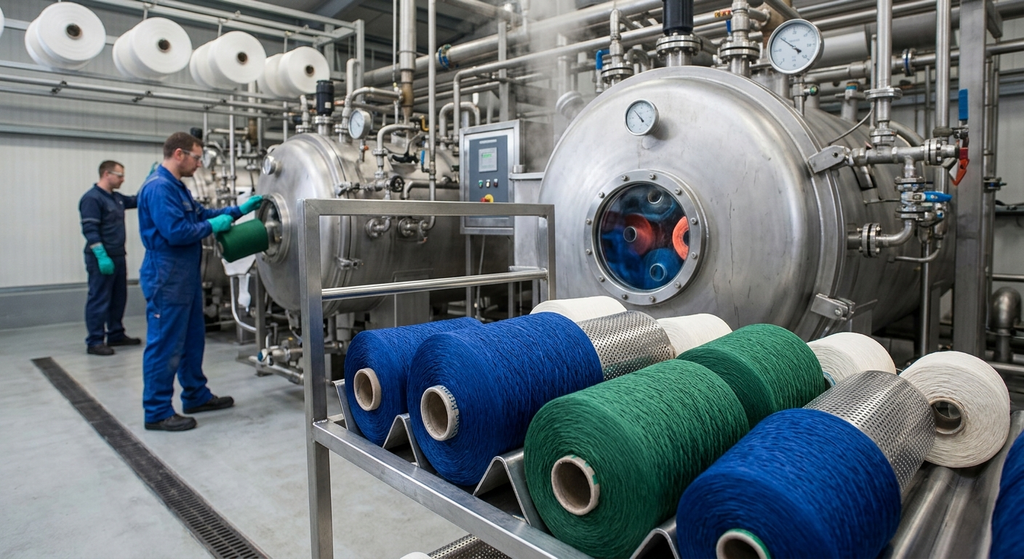
Package (cheese) dyeing
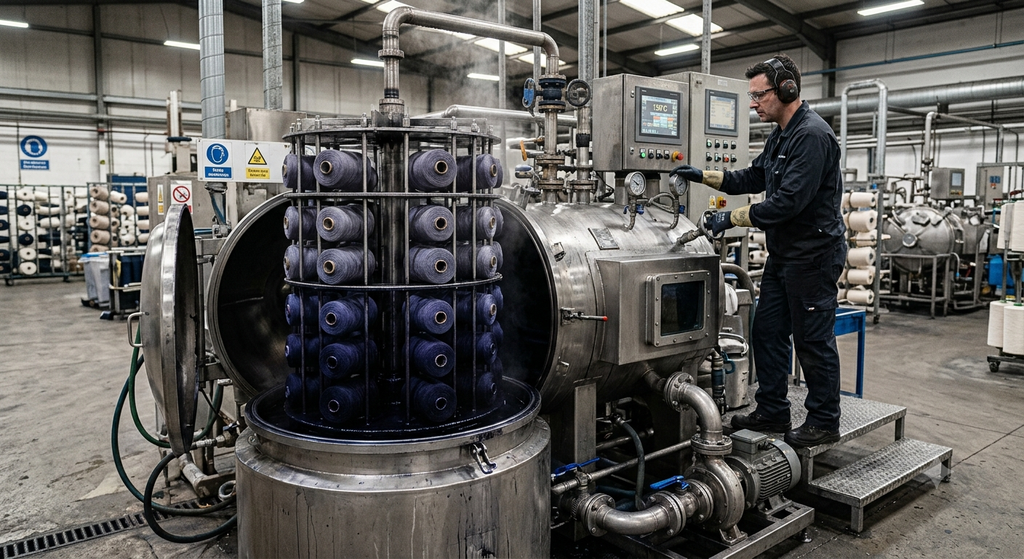
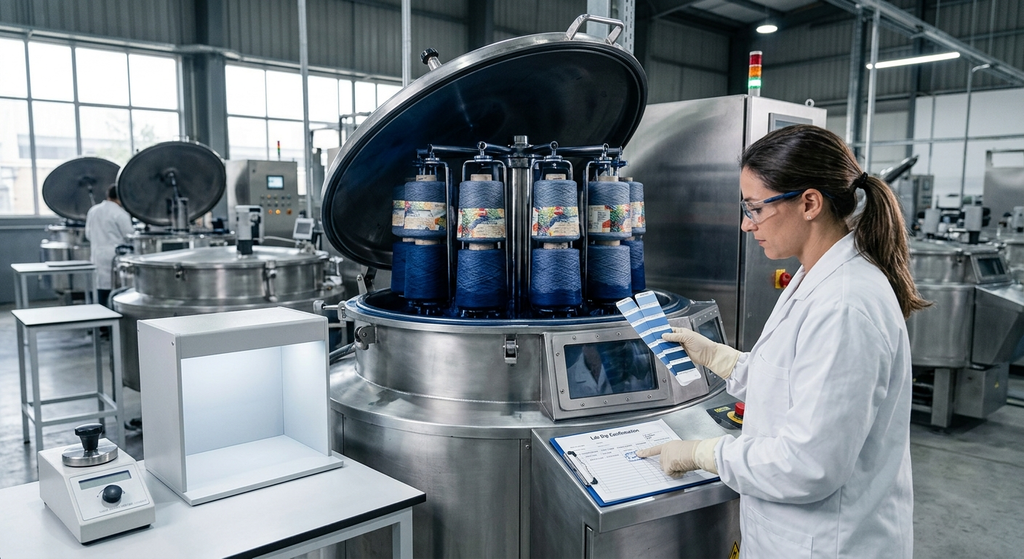
The most common method for polyester yarn. Wound yarn packages (cones or cheeses) are loaded onto perforated spindles inside a pressurized dyeing machine, and dye liquor is forced through the package from inside to outside and back, ensuring even penetration through every layer. This is the method used for small-to-medium production runs, multi-color order books, and situations where color decisions are made after the yarn is already spun which describes most apparel and home textile buying patterns.
Hank dyeing
Yarn is wound into loose hanks (skeins) rather than tight packages and dyed in an open, less pressurized bath. This method produces a softer yarn handle with less compression than package dyeing, and is more commonly used for yarns destined for hand-knitting, certain home textile applications, or where bulk and loft matter more than perfectly level color on tightly wound packages.
Solution (dope) dyeing
Pigment is added directly to the molten polyester polymer before it is extruded into filament, meaning the color is embedded inside the fiber itself rather than applied to its surface afterward. Solution-dyed polyester yarn uses significantly less water and energy than package dyeing since it skips the wet-processing stage entirely, and it typically delivers superior colorfastness to light and washing. The trade-off is that color decisions must be locked in before spinning, and minimum order quantities per shade are usually much higher, since a production run is committed to one color for its full duration.
Continuous (yarn-in-motion) dyeing
Used mainly for high-volume, single-shade production, continuous dyeing sprays or pads dye liquor onto polyester filament as it runs at speed from a supply reservoir to a collection point, then fixes the color in-line. This method suits industrial and technical yarn programs running large volumes of one or two shades, rather than the multi-color, multi-batch order pattern typical of fashion apparel.
For a deeper technical walkthrough of how spinning and texturing feed into the dyeing stage, our yarn manufacturing process guide covers the upstream steps this section assumes as a starting point.
Disperse Dyes vs. Cationic Dyes: Which Applies to Your Order
Almost all polyester yarn dyeing worldwide uses disperse dyes a class of synthetic dye that is insoluble in water and must be finely dispersed in the dye bath with the help of a dispersing agent before it can penetrate the fiber under high temperature (typically around 130°C in a pressurized machine, or with a carrier chemical at lower temperature for delicate blends). Disperse dyes are prized for good wash and light fastness and are compatible with virtually all standard polyester types.
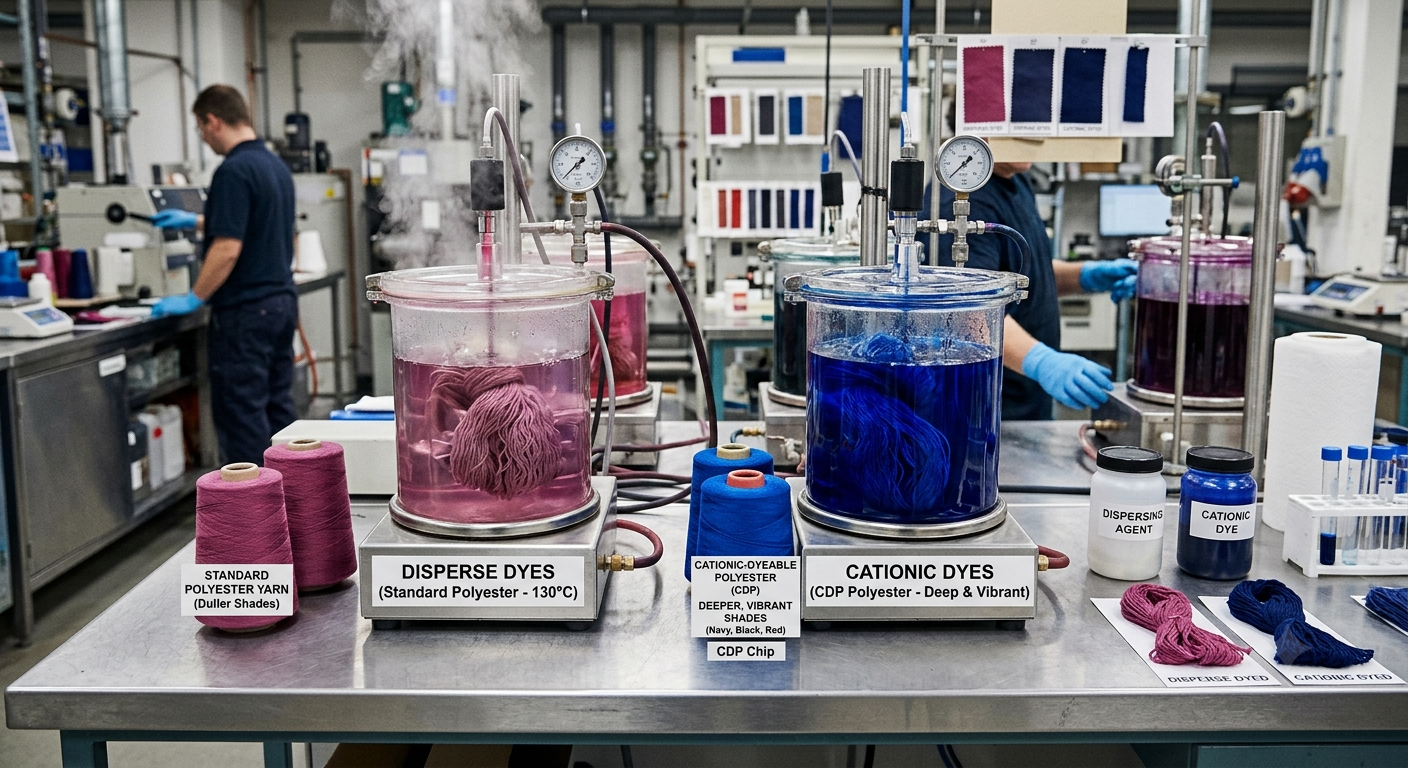
A smaller but commercially important category is cationic-dyeable polyester (CDP), a modified polyester chip that accepts basic (cationic) dyes instead of, or alongside, disperse dyes. Cationic dyeing produces notably deeper, more vibrant shades particularly in navy, black, and bright reds than standard disperse dyeing can achieve, which is why CDP yarn is frequently specified for fashion-forward apparel lines and activewear needing saturated color. If your product development team keeps rejecting standard polyester for insufficient shade depth, it’s worth asking your supplier specifically whether they stock cationic-dyeable chip rather than assuming the issue is a dyehouse process problem.
It’s also worth asking whether a supplier can dye blended yarns polyester combined with cotton, viscose, or other fibers since blends typically require a two-stage dyeing process (one dye class for the polyester component, a different one for the natural or cellulosic fiber) rather than a single-bath approach. Buyers exploring blended programs alongside pure polyester may find our guides on blended yarn manufacturing in Surat and viscose yarn manufacturing useful for understanding what’s possible beyond 100% polyester.
Why South American Buyers Are Increasingly Looking Beyond Their Region for Dyed Polyester Yarn
South America’s textile and apparel manufacturing base concentrated in Brazil, Colombia, Peru, and to a lesser degree Argentina has historically leaned on domestic spinning and dyeing capacity supplemented by imports from China and, for finished garments, from other Asian hubs. Three shifts are changing that calculus for yarn specifically.
- Rising domestic dyeing capacity costs. Energy and water compliance costs at South American dyehouses have risen in several markets, pushing some converters to source pre-dyed yarn rather than piece-dye finished fabric domestically, which shifts sourcing demand upstream to yarn dyers.
- Diversification away from single-country dependency. Buyers who have historically sourced almost exclusively from China are actively testing alternative origins India among them partly for cost competitiveness and partly to avoid concentration risk in a single supply corridor.
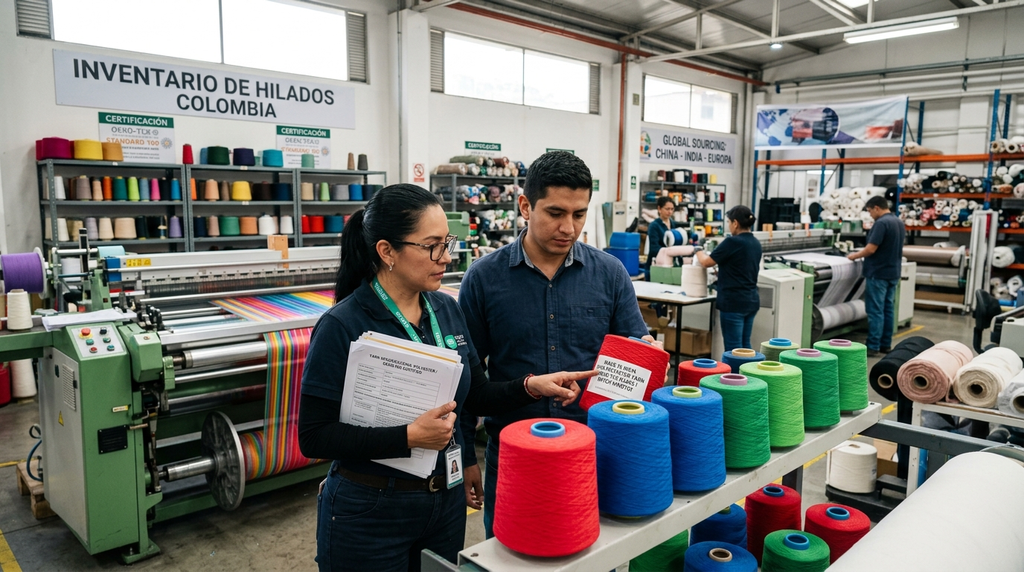
- Certification requirements from export-oriented brands. Apparel exporters in Peru and Colombia supplying North American and European retailers increasingly need OEKO-TEX or equivalent certification on dyed yarn as a condition of their own customer contracts, which narrows the supplier pool to dyehouses that can produce that documentation reliably.
None of this means Indian dyed polyester yarn is automatically the right fit for every South American buyer proximity, existing regional capacity (including local mills in Brazil and Colombia), and order volume all matter. It does mean the comparison is worth running explicitly rather than defaulting to whichever supplier corridor a company has always used. Our broader look at how Indian yarn manufacturers compete globally covers this positioning in more depth.
Country-by-Country Snapshot: Dyed Polyester Yarn Demand across South America
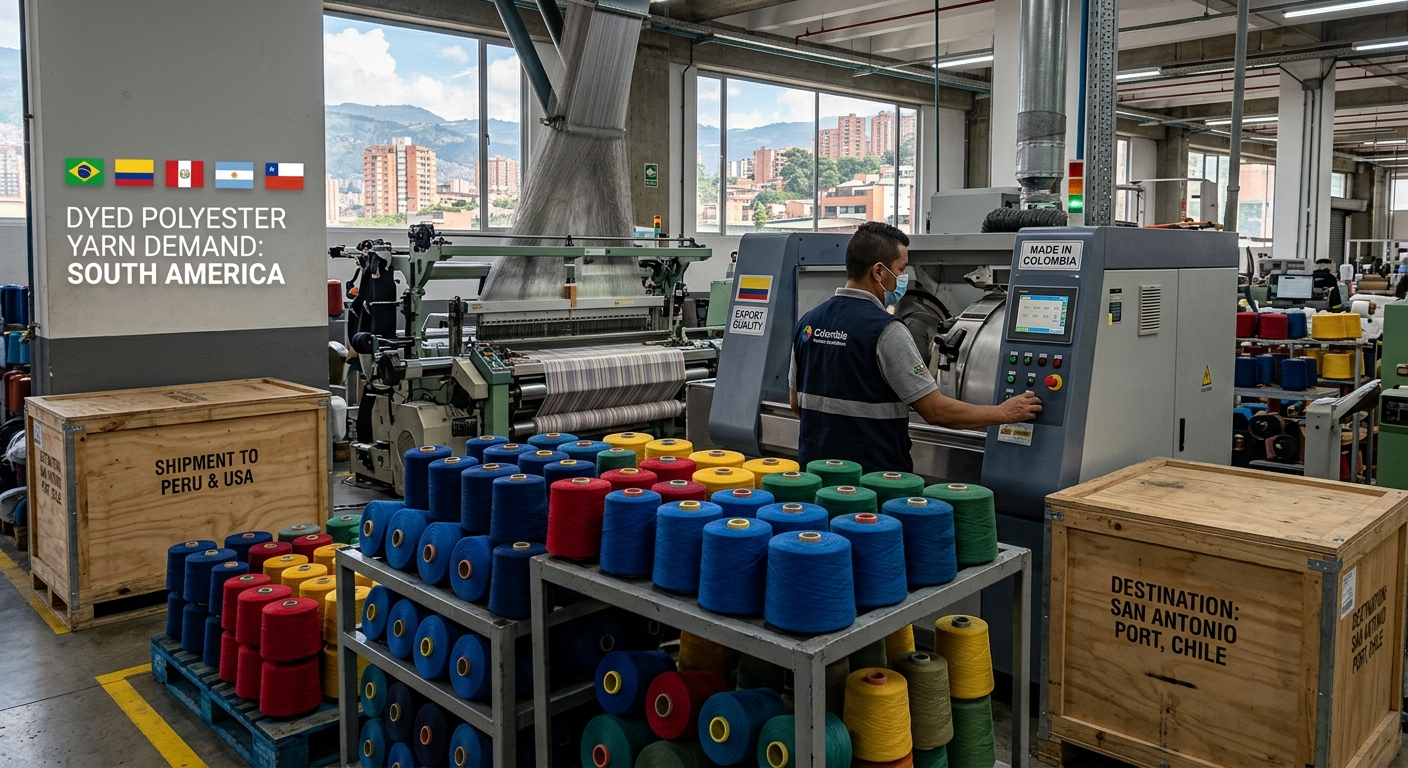
Brazil
Brazil remains the region’s largest textile and apparel manufacturing base, with a well-developed domestic spinning and dyeing industry centered in São Paulo and Santa Catarina states. Demand for imported dyed polyester yarn concentrates in specialty shades, technical/functional yarn types, and volume periods where domestic dyehouse capacity is fully booked. Brazil’s national textile industry association, ABIT, is a useful reference point for buyers benchmarking domestic capacity against import options.
Colombia
Colombia is a genuine manufacturing hub in its own right, particularly around Medellín, with export-oriented apparel production supplying North American brands. Colombian buyers frequently need dyed yarn that can pass through to a second country’s compliance requirements, which makes documentation depth not just the dyed shade itself a bigger factor than in a purely domestic-market purchase.
Peru
Peru’s apparel export sector, concentrated around Lima and the port of Callao, drives a meaningful share of the country’s dyed polyester and blended-yarn demand, largely for programs supplying the US market where recycled content and certification requirements are already built into brand contracts.
Argentina
Argentina’s demand is more concentrated among export-oriented apparel manufacturers, with import volumes historically more sensitive to currency and trade-policy shifts than in neighboring markets a factor worth discussing directly with any supplier’s export team when planning payment terms.
Chile
Chile has a smaller domestic manufacturing base but well-connected ports (San Antonio and Valparaíso) that make it a practical import gateway, including for buyers who redistribute yarn or fabric into neighboring Andean markets.
The Polyester Yarn Dyeing Process, Step by Step
Step 1: Shade approval and lab dip
Before any bulk dyeing begins, the buyer’s target shade usually specified against a Pantone TCX or a physical swatch is matched by the dye house’s colour lab and returned as a lab dip sample, typically within 3–5 working days. This step exists precisely to catch shade mismatches before they become a bulk-batch problem, and a supplier who skips it or rushes it is taking on risk the buyer will ultimately absorb.
Step 2: Recipe formulation and strike-off
Once a lab dip is approved, the dye recipe is scaled and a small strike-off (trial) batch is run on production-scale machinery to confirm the shade holds consistently at volume, since lab-scale and bulk-scale dyeing conditions are never perfectly identical.
Step 3: Package loading and dye liquor circulation
Yarn packages are loaded onto dyeing carriers, and dye liquor containing disperse dye, dispersing agent, and pH-adjusting auxiliaries is circulated through the packages under controlled temperature and pressure commonly ramped up to around 130°C for standard polyester to drive the dye into the fiber structure.
Step 4: Reduction clearing
After dyeing, unfixed surface dye is removed in a reduction-clearing bath, which is essential for achieving good wash and rub fastness a step that, if shortened to save time, shows up later as color bleeding or crocking at the buyer’s end.
Step 5: Drying, winding, and packing
Dyed packages are dried, rewound if needed for final package format, inspected for shade consistency across the batch, and packed per the buyer’s specification for export.
This process sits downstream of spinning and texturing buyers new to the full manufacturing sequence may find it useful to first review our yarn manufacturing process guide and our overview of what to look for in a premium yarn manufacturer before evaluating dyeing capability specifically.
Polyester Yarn Dyeing: Specifications, Color Matching & MOQ per Shade
Specification ranges a South American buyer should expect to discuss with any serious polyester yarn dyeing supplier:
- Denier range: typically 75D to 600D+ for filament yarn, with dyeable spun-count ranges available for blending programs
- Yarn form: flat filament, DTY (draw-textured), or ATY (air-textured) each can be package-dyed
- Color matching system: Pantone TCX/TPX or a physical swatch match, confirmed via lab dip before bulk production
- Color fastness testing: wash fastness, rub (crocking) fastness, and light fastness, each independently gradeable and worth requesting as documented lab results, not verbal assurance
- MOQ per shade: commonly in the range of 200–500 kg per color/denier combination for package dyeing, though this varies by supplier and can run higher for solution-dyed programs
If a supplier’s dye able color range only covers a narrow palette or unusually high per-shade minimums, that’s often a signal of limited dye house flexibility worth clarifying directly our guide on questions to ask before buying yarn has a fuller checklist for this exact conversation.
Applications of Dyed Polyester Yarn Across Industries
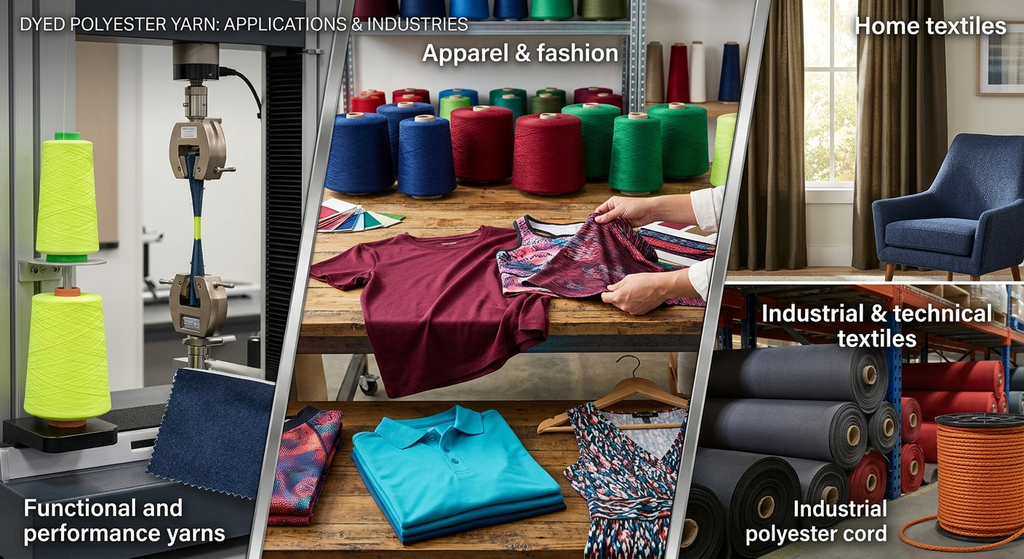
Apparel & fashion
T-shirts, active wear, dresses, and fashion-forward knitwear are the highest-volume application for dyed polyester yarn, with cationic-dye able variants used specifically where saturated, deep shades are a core design requirement. Our guide on choosing the right yarn for textile products covers how dyeing interacts with other yarn selection criteria for apparel programs.
Home textiles
Bedding, curtains, and upholstery fabric commonly use dyed polyester in ATY or textured form, valued for consistent colour across large fabric runs and good resistance to fading under sunlight exposure an important property for curtain fabric marketed in equatorial and sub-tropical South American climates.
Industrial & technical textiles
Automotive interior fabric, geotextiles, and filtration media sometimes specify dyed (rather than raw white) polyester for both aesthetic and functional identification purposes. Our industrial yarn supplier page and our regional industrial yarn suppliers in Gujarat overview cover the broader technical yarn range this sits within.
Functional and performance yarns
Stretch and functional yarn categories including elastomultiester and bicomponent constructions are increasingly dyed to specific brand colorways rather than left raw white for downstream dyeing. See our features on elastomultiester yarn performance, bicomponent yarns in India, and our dedicated stretch yarn manufacturing page for where dyed functional yarn fits into a broader technical product line.
Certifications to Look for in a Polyester Yarn Dyeing Supplier
Because dyeing is a chemical process, certification depth matters more here than almost anywhere else in yarn sourcing. Three certifications are worth verifying directly rather than taking on trust:
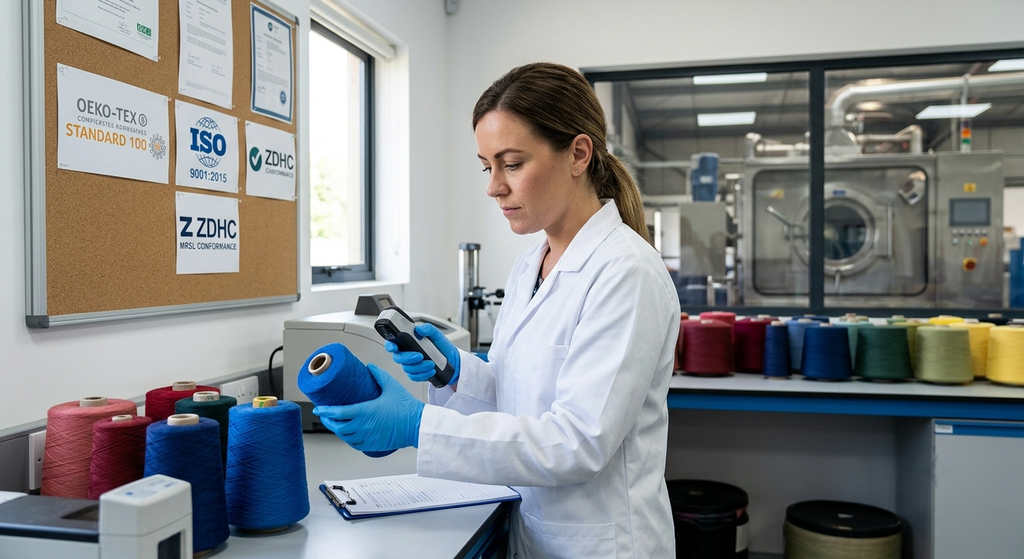
- OEKO-TEX Standard 100. Certifies that the finished dyed yarn has been tested for harmful substances against limits stricter than most national legislation a common requirement for apparel yarn entering brand-compliant supply chains. Details are published by OEKO-TEX directly.
- ISO 9001. Verifies consistent quality management across the dyeing and production process rather than any single batch our ISO certified yarn supplier page covers how this differs from a sustainability-specific certification like GRS.
- ZDHC MRSL conformance. The Zero Discharge of Hazardous Chemicals program’s Manufacturing Restricted Substances List is increasingly requested by brand compliance teams for the chemicals used in dyeing itself, not just the finished yarn see the ZDHC Roadmap to Zero programme for the current framework.
A supplier that can produce specific certificate numbers, verifiable against the issuing body’s database, is a materially safer choice than one offering only general assurances a distinction worth treating the same way you would for any other compliance-sensitive material category.
Sustainability in Yarn Dyeing: Water, Energy & Effluent
Conventional package dyeing is water- and energy-intensive relative to solution dyeing, and this has become a genuine point of comparison for buyers with their own sustainability commitments to report against. Questions worth asking any dyehouse directly include whether they operate a zero-liquid-discharge (ZLD) effluent treatment system, what their water reuse rate looks like, and whether they can quantify water consumption per kilogram of dyed yarn rather than only describing the effort qualitatively.
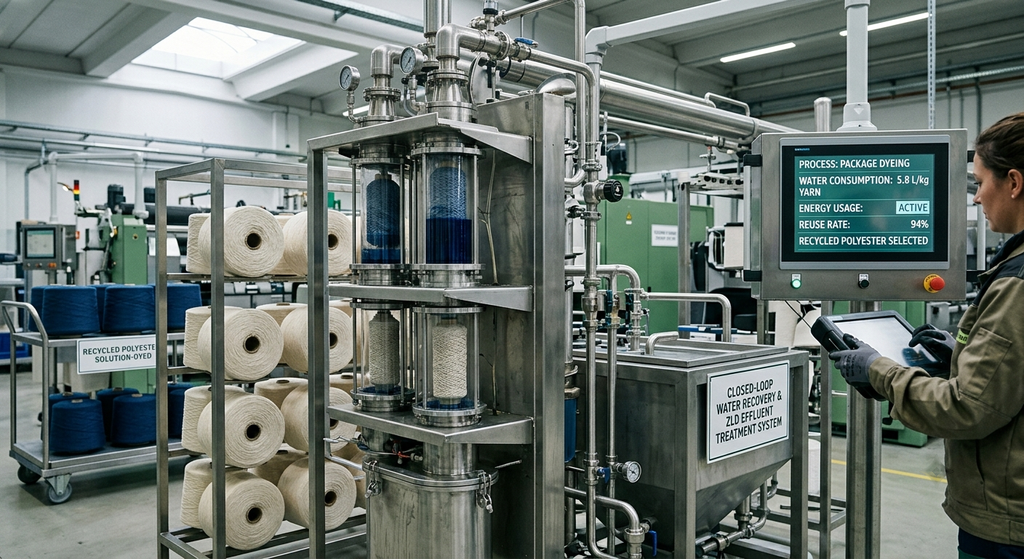
For buyers whose product lines already lean toward recycled content, it’s worth noting that recycled polyester yarn can be package-dyed using the same disperse-dye process as virgin polyester, or supplied solution-dyed to reduce water use further our recycled polyester yarn guide and our broader look at eco-friendly blended yarn manufacturing cover how these two sustainability levers recycled fiber content and dyeing method compound when combined.
Common Red Flags When Evaluating a Polyester Yarn Dyeing Supplier
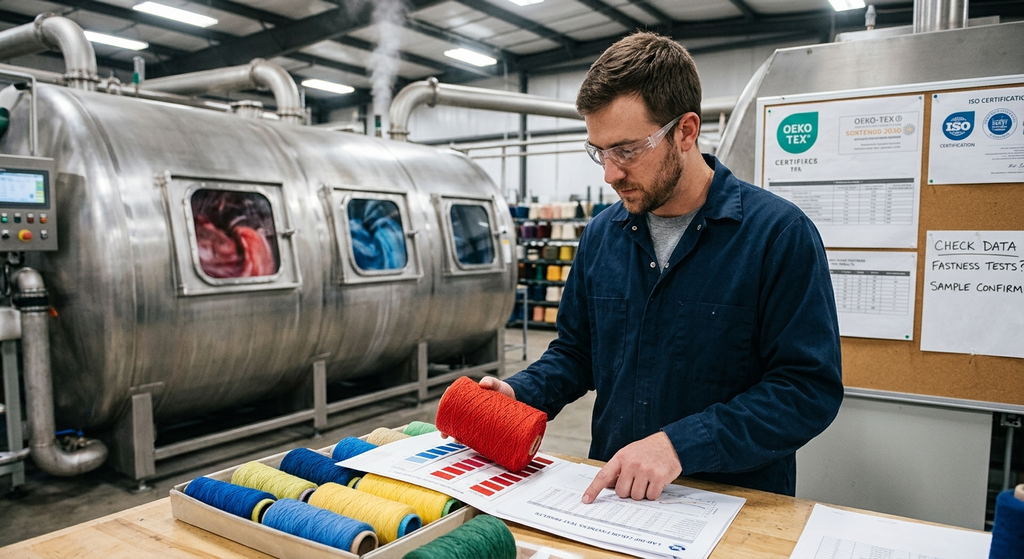
- No documented color fastness data. A supplier who can’t produce independent wash, rub, or light fastness test results only a visual sample is asking you to take fastness performance on faith.
- Lab dip turnaround with no fixed timeline. A dyehouse with genuine in-house color lab capability can commit to a specific lab-dip turnaround; vague answers here often indicate the lab work is being outsourced or deprioritized.
- Certificates that can’t be verified independently. As with any compliance document, a certificate number that can’t be checked against the issuing body’s own database should be treated as unverified, not fraudulent by default, but unverified until confirmed.
- Reluctance to run a strike-off before bulk production. Skipping this step saves the supplier time but transfers shade-consistency risk entirely onto the buyer’s shipment.
- Unusually low pricing with no explanation. Dyeing chemical and effluent-treatment compliance costs are real and should be reflected in pricing a quote significantly below the general market range is worth investigating rather than accepting at face value.
Our comparison of yarn suppliers vs. yarn manufacturers is a useful companion read here, since a trading intermediary reselling another mill’s dyed yarn often can’t answer these questions with the same directness as the dyehouse itself.
Sampling & Quality Verification before a Bulk Order
Never place a first bulk container order on a lab dip and a spec sheet alone. A sensible verification sequence looks like this:
- Request a lab dip against your Pantone or physical swatch reference, with a committed turnaround time.
- Approve a strike-off run at production scale before the full batch is dyed, not after.
- Send dyed yarn samples to an independent textile testing lab for wash, rub, and light fastness verification, rather than relying solely on the supplier’s internal data.
- Run a small pilot fabric batch (weaving or knitting) to confirm the dyed yarn behaves as expected under your specific finishing process.
- Only after pilot approval, place a trial bulk order sized to test the supplier’s shade consistency and documentation reliability at production scale.
A supplier who resists reasonable sampling or independent verification requests is worth treating with added caution, regardless of how strong their marketing materials look.
Minimum Order Quantities & Container Loading for South America
Typical MOQs for dyed polyester yarn from a full-line manufacturer run in the range of 200–500 kg per shade/denier combination for an initial order, scaling toward tonnage-level pricing breaks at higher volumes. Our bulk yarn supplier in India page covers how volume pricing typically breaks down across order sizes.
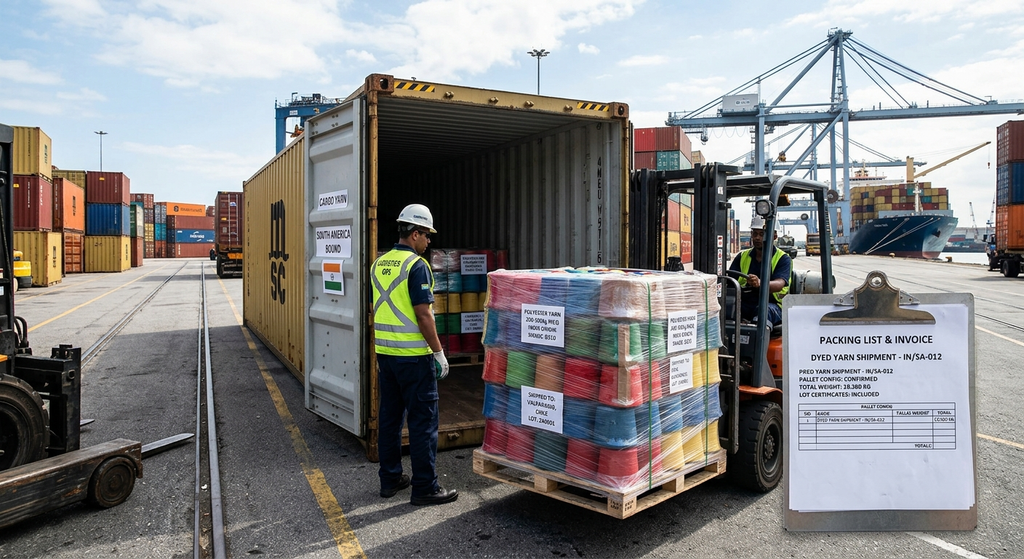
- Standard packaging is dyed yarn wound on cones, palletized and shrink-wrapped for container loading confirm pallet configuration against your receiving warehouse’s equipment before a first shipment.
- Given longer transit times into South America relative to North America or Europe, right-sizing a first order toward a full or near-full container is generally worth prioritizing over a smaller LCL (less-than-container-load) trial shipment.
- Confirm that shade/batch reports and any requested certificates are included as standard parts of the commercial invoice and packing list before the container is booked, not after it has sailed.
Shipping, Ports & Tariff Classification for South American Importers
Ports and routing
Dyed polyester yarn shipped from India to South America typically routes via transshipment (commonly through Colombo, Salalah, or Singapore) before reaching the region’s major container gateways: the Port of Santos in Brazil, Buenos Aires in Argentina, Callao in Peru, Cartagena or Buenaventura in Colombia, and San Antonio/Valparaíso in Chile. Total transit generally runs longer than India-to-North America routing commonly in the range of 35–50 days depending on transshipment on top of a typical 3–4 week dyeing and production lead time, so first-time buyers should build this into their planning calendar with some buffer.
Incoterms
Most Indian yarn exporters quote FOB by default. Buyers newer to importing directly, or placing a first order into an unfamiliar port, sometimes prefer CIF terms, letting the supplier arrange freight and insurance to the destination port for a modest cost premium a reasonable trade for logistics simplicity while a supplier relationship is still being established. For a general walkthrough of the import process from the buyer’s side, our guide to importing yarn from India covers documentation and customs steps that apply in broad strokes across destination markets, even though it was written with a different destination country in mind.

Mercosur tariff classification
Brazil, Argentina, Paraguay, and Uruguay operate under the Mercosur Common External Tariff (CET/AEC), using the Nomenclatura Común do Mercosul (NCM) an eight-digit extension of the standard Harmonized System. Dyed polyester yarn is generally classified under HS Chapter 54 (man-made filament yarn), in the same headings as raw white polyester, though the exact NCM subheading and duty rate depend on the yarn’s specific form, denier, and whether it is filament or spun. Chile, Colombia, and Peru are not Mercosur members and apply their own national tariff schedules rather than the CET, so classification and duty rates should be confirmed separately for each destination country.
Import duties and customs valuation methods vary meaningfully by country even within Mercosur Brazil, for instance, layers several additional federal taxes onto the CIF-based import duty during customs clearance, a structure outlined in this representative country commercial guide. Always confirm current rates with a customs broker licensed in your specific destination country rather than assuming figures transfer across borders within the region. A supplier experienced in Latin American exports see our note on textile yarn exporters in India should be able to provide correct HS/NCM classification as a standard part of their commercial invoice and packing list.
Pricing: What Actually Moves the Cost of Dyed Polyester Yarn
- Base polyester chip/POY pricing tracks global PTA/MEG feedstock costs, which move independently of dyeing costs.
- Dye class matters: cationic-dyeable programs and deep/dark shades typically carry a premium over standard disperse-dyeable pale-to-mid shades, reflecting higher dye cost and longer process times.
- Per-shade MOQ and total color count in an order affect unit pricing spreading a small total order across many shades usually costs more per kilogram than concentrating volume in fewer colors.
- Certification and testing costs (OEKO-TEX, ZDHC conformance, and independent lab verification) are legitimately reflected in supplier pricing versus an uncertified alternative.
- Freight from India adds real landed cost that a regionally manufactured alternative doesn’t carry always compare total landed cost, not just ex-works or FOB price.
- A quote significantly below the general market range for genuinely certified, lab-verified dyed yarn is worth investigating rather than accepting at face value.
Madhusudan Group’s Polyester Yarn Dyeing Capability
Madhusudan Group operates integrated polyester spinning, texturing, and in-house package dyeing at its facilities in Surat, Gujarat, with an existing export footprint into 18+ countries. What this means in practice for a South American buyer:
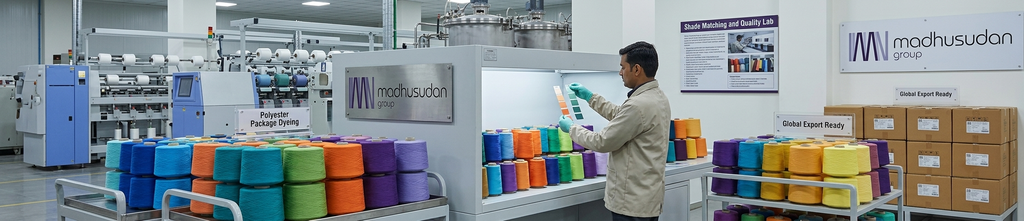
- Access to our integrated yarn manufacturing and dyeing operations, so shade matching, dyeing, and texturing are coordinated under one supplier relationship rather than split across a spinner and a separate commission dyehouse.
- A broader manufacturing range beyond pure polyester including premium yarn manufacturing across multiple fiber types, and blended yarn manufacturing in Surat for buyers running mixed-fiber product lines.
- Global export documentation experience see our overview of polyester yarn supply on a global scale and our dedicated polyester yarn suppliers in India export guide for how our export process is structured.
- Positioning within India’s broader leading yarn manufacturing landscape, for buyers benchmarking us against other Indian mills as part of a supplier-diversification exercise.
As with any supplier claim, we’d encourage verifying this directly request our current certificates, a sample lab-dip and strike-off, and reference customers in a comparable end-use category before committing to a first order. For a fuller view of our supplier range beyond polyester, our pages on linen yarn manufacturing, linen yarn manufacturers in India, and our second polyester yarn suppliers in India overview round out the broader product context.
Buyer’s Checklist: Vetting a Polyester Yarn Dyeing Supplier
This pairs well with our broader guides on questions to ask before buying yarn and yarn supplier vs. yarn manufacturer if you’re new to importing dyed yarn directly rather than through a regional distributor.
- Request current OEKO-TEX, ISO 9001, and (if relevant) ZDHC MRSL documentation, and verify certificate numbers independently.
- Ask whether the dyehouse is in-house or commission (outsourced) in-house dyeing generally means tighter shade-consistency control and faster lab-dip turnaround.
- Confirm whether cationic-dyeable chip is available if your product line needs deep, saturated shades.
- Request documented wash, rub, and light fastness test data, not just a visual sample.
- Confirm per-shade MOQ and how it scales with total order volume across multiple colors.
- Ask for the standard lab-dip and strike-off turnaround time in writing before your first order.
- Request references from existing Latin American or comparable-market customers if you’re a first-time buyer from this supplier.
- Confirm total landed cost FOB/CIF price, freight, insurance, and destination-country duty rather than comparing ex-works prices alone.
Quick-Reference Glossary
- Disperse dye: A water-insoluble synthetic dye class used to color polyester and other synthetic fibers under heat and pressure.
- Cationic-dyeable polyester (CDP): A modified polyester chip formulated to accept basic (cationic) dyes, producing deeper and more saturated shades than standard disperse dyeing.
- Package (cheese) dyeing: Dyeing yarn after it has been wound onto a cone or cheese, with dye liquor circulated through the package under pressure.
- Solution (dope) dyeing: Adding pigment to molten polyester before extrusion, embedding color inside the fiber rather than applying it afterward.
- Lab dip: A small dyed sample produced to match a target shade before bulk dyeing begins.
- Strike-off: A small production-scale trial batch used to confirm a dye recipe holds consistently before the full order is dyed.
- Reduction clearing: A post-dyeing wash step that removes unfixed surface dye to improve wash and rub fastness.
- NCM (Nomenclatura Común do Mercosul): The Mercosur bloc’s eight-digit customs classification system, extending the standard Harmonized System.
- ZDHC MRSL: The Zero Discharge of Hazardous Chemicals programme’s Manufacturing Restricted Substances List, governing chemicals used in wet processing including dyeing.
Frequently Asked Questions
What is the difference between yarn dyeing and fabric (piece) dyeing?
Yarn dyeing colors the yarn before it is woven or knitted, allowing multi-color patterns, stripes, and yarn-dyed checks that piece dyeing (coloring finished fabric) cannot achieve. Piece dyeing is typically faster and cheaper for solid-color fabric, while yarn dyeing is required for any pattern created by combining differently colored yarns.
Can polyester yarn be dyed to match a specific Pantone shade?
Yes. A competent dyehouse color lab can match a Pantone TCX reference or a physical swatch via a lab dip, typically within 3–5 working days, though very deep or fluorescent shades may need a cationic-dyeable base yarn to achieve full Pantone accuracy on standard polyester.
What colourfastness standards should I ask for on dyed polyester yarn?
Request documented results for wash fastness, rub (crocking) fastness, and light fastness, typically graded on standard 1–5 scales under ISO or AATCC test methods. A supplier should be able to share lab test reports for these properties rather than only a visual sample.
Is solution-dyed polyester yarn more sustainable than package-dyed yarn?
Generally yes solution dyeing uses significantly less water and energy since it skips wet processing entirely, and typically delivers better light and wash fastness. The trade-off is higher per-shade minimum order quantities and less flexibility to add new colors after production has started.
What MOQ should I expect for a first dyed polyester yarn order from India?
MOQs commonly run in the 200–500 kg range per shade/denier combination for package dyeing, though this varies by supplier and scales toward better pricing at tonnage volumes. Solution-dyed programs typically carry higher per-shade minimums since a full production run is committed to one color.
How long does it take to import dyed polyester yarn from India to Brazil or Colombia?
Plan for roughly 3–4 weeks of production and dyeing lead time plus 35-50 days of ocean transit depending on transshipment routing to your specific destination port longer than typical India-to-North America transit, so first-time buyers should build this into their order planning with some buffer.
Does dyed polyester yarn require different import documentation than raw white yarn?
No dyed and raw white polyester yarn generally fall under the same HS Chapter 54 classification for customs purposes. The commercial invoice should still specify the exact dyed shade/batch and any relevant certification (OEKO-TEX, ZDHC) if required by your buyer or retail partner’s compliance program.
Can dyed polyester yarn be blended with cotton or viscose?
Yes. Polyester-cotton or polyester-viscose spun blends are commonly dyed using a two-stage process one dye class for the polyester component and a different one for the natural or cellulosic fiber to achieve a uniform finished shade across both fiber types.
What’s the difference between OEKO-TEX and ZDHC certification for dyed yarn?
OEKO-TEX Standard 100 tests the finished dyed yarn itself for harmful substances against defined limits. ZDHC MRSL conformance instead governs which chemicals (including dyes and auxiliaries) can be used during the manufacturing process. The two are complementary rather than interchangeable, and buyers with strict brand compliance requirements increasingly ask for both.
Ready to Source Custom-Dyed Polyester Yarn for South America?
Dyeing is where a yarn sourcing decision either holds up under production conditions or creates a costly rejected batch. Madhusudan Group manufactures polyester yarn with in-house package dyeing, backed by integrated spinning and texturing capability and export experience across 18+ countries. Request a lab dip, current certification documentation, and a formal quote by contacting our export team, or explore our broader yarn manufacturing and dyeing capabilities if you’re evaluating us as a multi-product supplier rather than a single-SKU source.