Tapes look simple. A narrow strip of woven or knitted fabric holding a garment together, carrying a load, sealing a seam or trimming a curtain seems like the most basic product in the textile world. Yet anyone who has run a needle loom or a narrow-fabric line knows the truth: the tape is only as good as the yarn inside it. A tape that curls, snaps under load, shrinks after dyeing or shows uneven shade almost always traces back to a yarn problem, not a machine problem.
That is why yarn for tapes is one of the most technical and least understood sourcing categories in textiles. Buyers in garment trims, luggage, footwear, home furnishing, automotive interiors, medical supplies, safety equipment and industrial packaging all rely on narrow fabrics that must hit exact tolerances for width, strength, stretch, colour and hand feel. Each of those tolerances begins at the yarn stage.
This guide explains everything a buyer, product developer or sourcing manager needs to know: what tape yarn is, which fibres and filament types work best for each kind of tape, how to read a yarn specification, how tapes are manufactured, what quality and compliance checks matter, and how to choose a dependable partner. Along the way, we show why Madhusudan Group, a Surat-based yarn manufacturer and exporter, has become a trusted name for tape manufacturers who need consistency, technical support and export-ready supply.
What Is Yarn for Tapes?
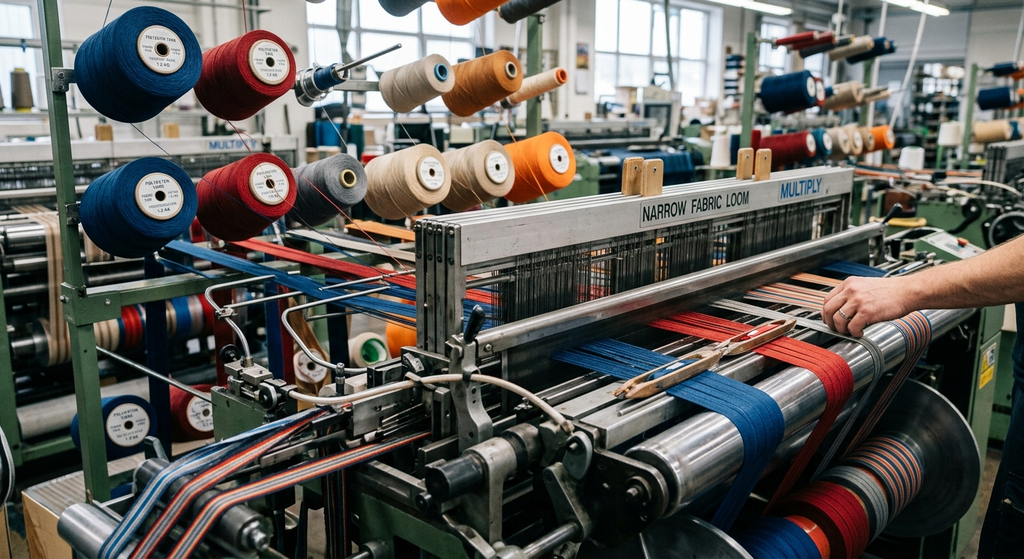
Yarn for tapes refers to the continuous filament and spun yarns used to produce narrow fabrics, commonly called tapes, webbing, ribbons, braids, elastics and trims. These narrow fabrics are usually woven on needle looms or shuttle looms, knitted on warp-knitting machines (such as crochet or raschel machines), or braided on braiding machines. The construction determines what the yarn must do.
In practical terms, tape yarn must satisfy four requirements at once. First, it must be strong and uniform enough to run at high speed on narrow-fabric machinery without breaks. Second, it must deliver the mechanical behaviour the end product needs, whether that is high tensile strength for a load-bearing strap or controlled stretch for an elastic band. Third, it must accept dye evenly and hold colour through washing, rubbing and light exposure. Fourth, it must stay dimensionally stable so that the finished tape keeps its width and length over time.
The most common material for tapes today is polyester, followed by nylon, polypropylene, and specialty yarns such as elastomultiester, viscose and cotton or linen blends. Polyester dominates because of its balance of strength, low moisture absorption, dye compatibility and cost. You can read more about the broader category in Wikipedia’s overview of polyester, the polymer family that underpins most tape production worldwide.
Where Tapes Are Used: The Demand behind Tape Yarn
Tape demand is far broader than most people expect. Understanding end uses helps you specify the right yarn, because the same tape width can behave very differently depending on the application.
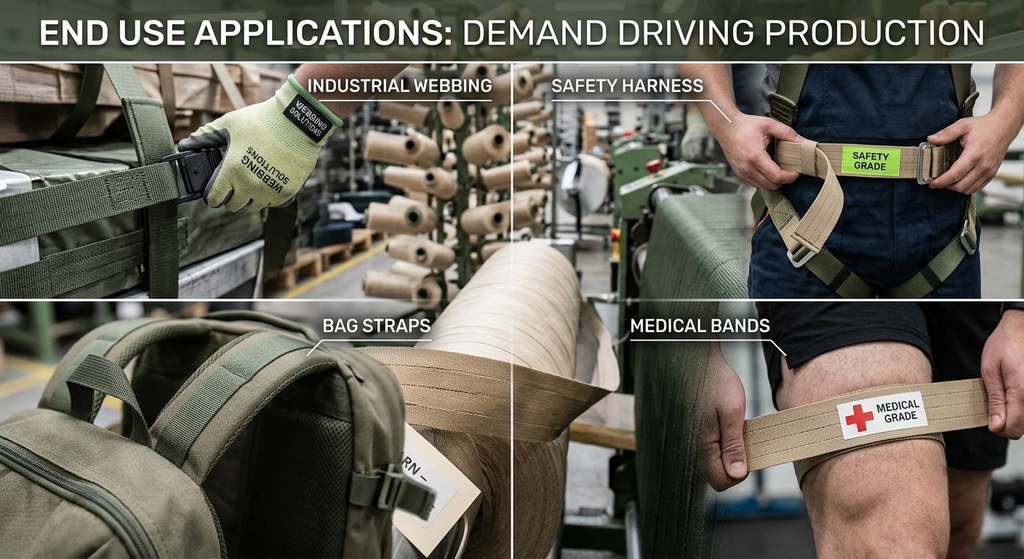
- Garment trims and accessories: drawcords, waistbands, shoulder-strap tapes, binding tapes, seam tapes, care-label tapes and decorative ribbons.
- Elastic tapes: underwear, sportswear, hosiery tops, medical compression bands and shoe elastics.
- Bags and luggage: backpack straps, handle tapes, edge binding and reinforcement webbing.
- Home furnishing: curtain tapes, pleating tapes, upholstery webbing and mattress binding tapes.
- Safety and industrial webbing: lifting slings, tie-down straps, harness webbing, seat belts and cargo restraints.
- Automotive and transport: interior trim tapes, seat webbing and cable-harness wrapping tapes.
- Medical and hygiene: bandage tapes, orthopaedic supports and elastic closures.
- Footwear and sports goods: lace tapes, strap webbing and reflective trims.
For a general definition of the finished product, the webbing entry offers a helpful reference on how strong narrow woven fabrics are built and used. Every one of these end uses places a different demand on the yarn, which is why blindly buying a generic filament yarn rarely works.
Types of Tapes and the Yarn Each One Needs
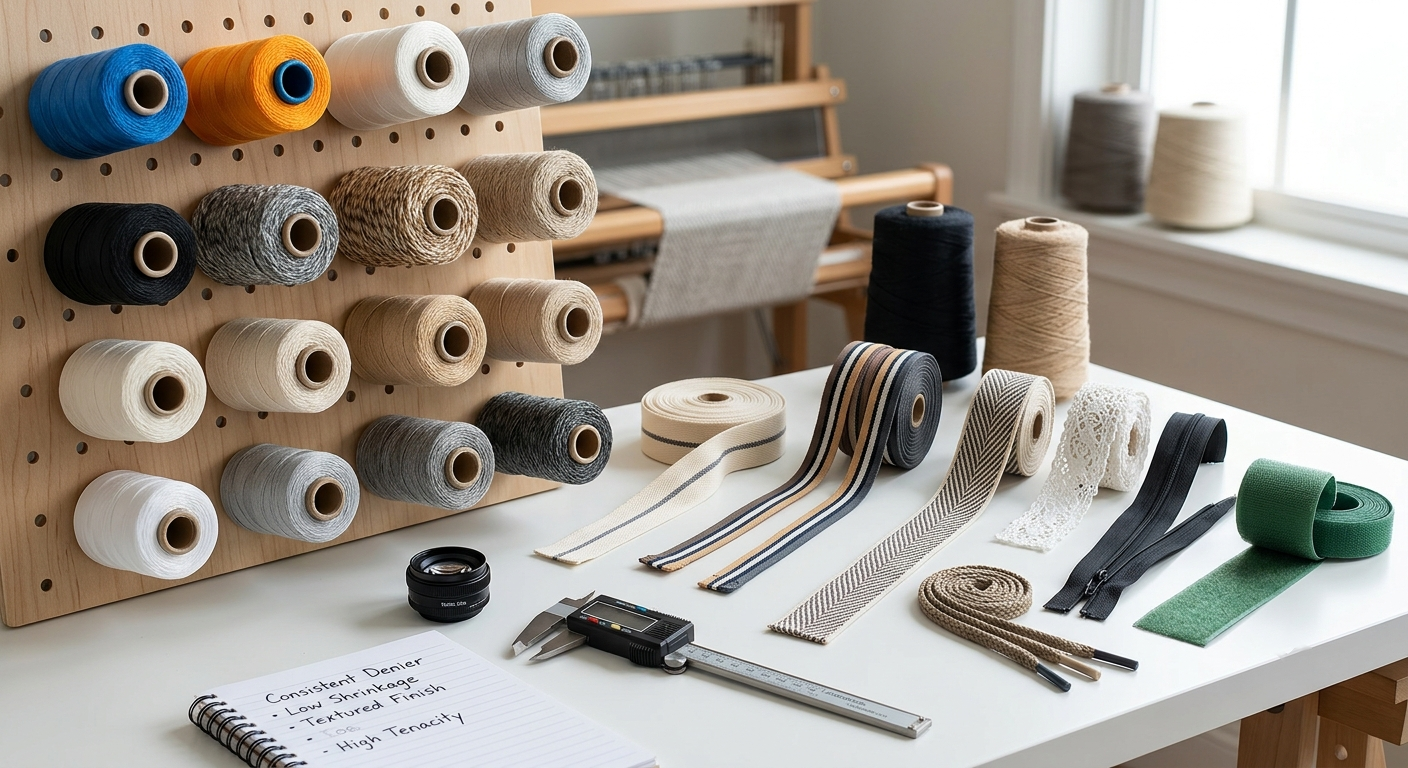
Woven tapes and webbing
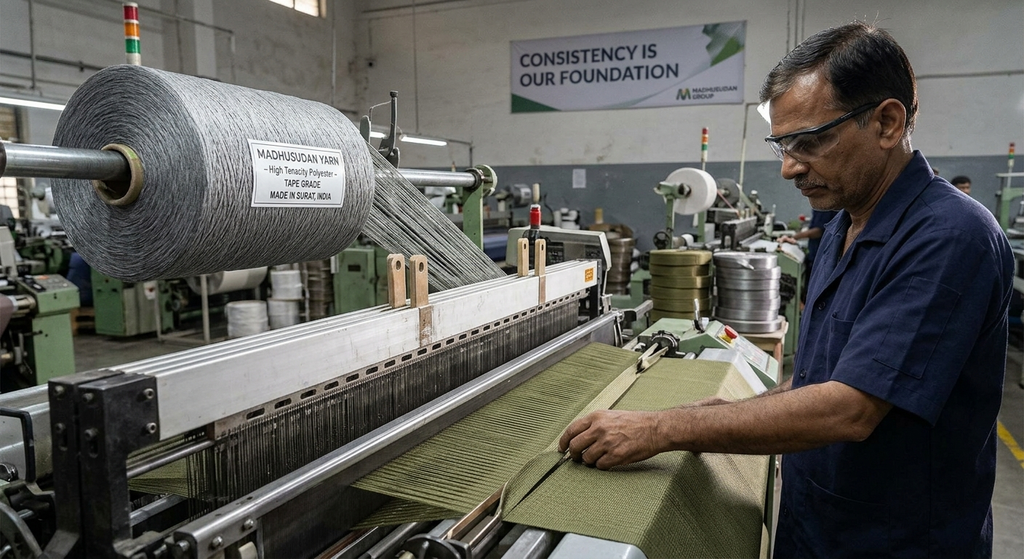
Woven tapes are produced on needle looms, with warp yarns running lengthwise and a weft yarn interlacing across a narrow width. Because the tape is used in tension, tenacity (strength per denier) and low elongation matter most. High-tenacity polyester and nylon filament yarns are typical choices. For flat, smooth surfaces such as satin-finish ribbons, bright or semi-dull FDY (fully drawn yarn) delivers the lustre; for a softer, more textile-like hand, textured yarns work better.
Elastic tapes
Elastic tapes combine a stretch component (spandex or rubber) with a covering or ground yarn, usually polyester or nylon. The ground yarn controls width, hand, and recovery behaviour. Elastic tapes made with poor-quality ground yarn often show barre marks, uneven stretch and shrinkage after finishing. Consistent denier and low boiling-water shrinkage are essential here.
Twill, herringbone and cotton-look tapes
Fashion and workwear trims often require a natural, matte appearance. Spun polyester, polyester-cotton blends, viscose and linen-effect yarns are frequently used. For those wanting a cotton-like look, our Madhusudan Group viscose yarn manufacturer page explains how viscose delivers soft hand and excellent dye uptake in trims and narrow fabrics.
Knitted and crochet tapes
Warp-knitted narrow fabrics such as lace tapes, elastic bands and mesh trims require yarns with low friction, consistent intermingling and good knitting performance. Textured polyester and nylon are widely used, often at finer deniers such as 50D to 150D.
Braided tapes and cords
Braided constructions such as shoe laces, drawcords and rope-like tapes need yarns that tolerate repeated bending. Polyester and nylon multifilament, occasionally polypropylene, are common. Rounded yarn cross-sections with good abrasion resistance reduce fuzzing over time.
Hook-and-loop, zipper and technical tapes
Zipper tapes are made from high-tenacity polyester or nylon and must survive dyeing to exact shade matches, since the tape is visible on garments. Hook-and-loop backing tapes need stable, dimensionally consistent yarn to hold the pile in place. Technical and medical tapes may add flame-retardant, antimicrobial or high-visibility requirements.
The Best Types of Yarn for Tapes
There is no single best yarn for every tape. The right choice depends on strength, elasticity, appearance, dyeing route, cost target and end-use standards. Here is how the major yarn families compare and where each one wins.
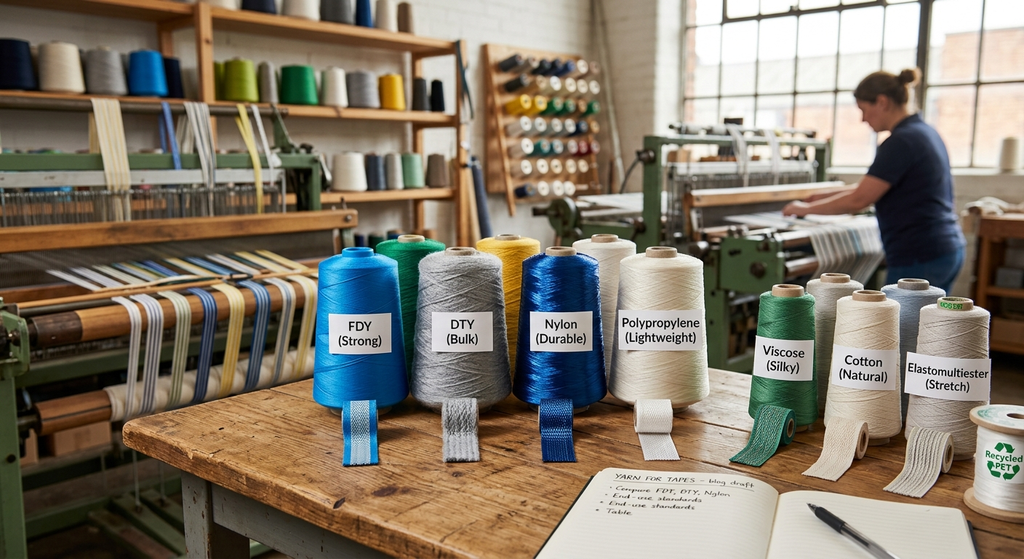
1. Polyester FDY (Fully Drawn Yarn)
Polyester FDY is the backbone of woven tape production. It is drawn during spinning, so it arrives with a stable structure, high tenacity and low shrinkage. FDY produces smooth, lustrous tapes and is well suited for satin ribbons, webbing, zipper tapes and labels. Its excellent uniformity supports high loom speeds and minimises breakages. Available in bright, semi-dull and full-dull lustres, FDY lets tape makers tune the surface appearance without changing the construction.
2. Polyester DTY (Draw-Textured Yarn)
DTY is created by texturing partially oriented yarn, giving it bulk, softness and moderate stretch. In tapes, DTY is used where a textile-like hand, better cover and slightly elastic behaviour are desired, such as garment drawcords, soft binding tapes, knitted trims and elastic tape ground yarns. DTY also dyes readily, giving deep, even shades. If you want a deeper technical overview, our guide to nylon DTY yarn explains how draw-textured filament performs in stretch and comfort applications, and many of the same principles apply to polyester DTY.
3. Nylon (Polyamide) Filament Yarn
Nylon offers exceptional abrasion resistance, elasticity and strength-to-weight ratio, which is why it appears in premium webbing, lingerie elastics, sportswear tapes and high-performance straps. It absorbs more moisture than polyester, which helps in dyeing with acid dyes and gives a softer feel, but it also means humidity can change its dimensions slightly. A quick primer on the polymer is available in the nylon reference page. For buyers evaluating this category, see our nylon DTY yarn manufacturer resource for sourcing considerations.
4. Polypropylene Yarn
Polypropylene is light, inexpensive and resistant to moisture and many chemicals. It is common in low-cost webbing, packaging tapes and certain geotextile straps. Its limitations are lower heat tolerance and difficult dyeing (typically solution-dyed rather than package-dyed). It is best chosen where cost and chemical resistance outrank appearance or fine colour control.
5. Elastomultiester and Bicomponent Yarns
Elastomultiester yarns, also called bicomponent or mechanical stretch yarns, combine two polymer components that shrink differently, so the filament develops a spring-like crimp with natural stretch and recovery. In tapes, they enable stretch without spandex, which improves recyclability, dyeing simplicity and durability against chlorine and heat. We cover the technology in depth in our guide to elastomultiester bicomponent yarn and mechanical stretch. For tape makers moving toward comfort stretch, soft-touch elastic trims and single-polymer product design, this is one of the fastest-growing yarn categories.
6. Viscose Filament and Spun Viscose
Viscose lends a silky, natural appearance and outstanding dye affinity, making it useful for decorative ribbons, fashion trims and luxury tapes. It is less strong when wet, so it is usually confined to decorative and light-duty tapes rather than load-bearing straps.
7. Cotton, Linen and Blended Yarns
Cotton and linen yarns give tapes a traditional, breathable and matte look. They are widely used in hems, twill tapes, bunting and heritage-style trims. Blended yarns, such as polyester-cotton or polyester-viscose, combine natural aesthetics with polyester’s strength and stability.
8. Recycled Polyester Yarn
Recycled polyester made from post-consumer PET bottles and textile waste is now an important tape material, particularly for brands with sustainability targets. Performance can be nearly identical to virgin polyester when the recycling process is well controlled. Learn more in our recycled polyester yarn guide to understand traceability, certification and quality differences.
Quick Comparison Table
| Yarn type | Strength | Stretch | Dyeing ease | Typical tape use |
| Polyester FDY | High | Low | Excellent (disperse) | Webbing, satin ribbon, zipper tape |
| Polyester DTY | Medium-high | Moderate | Excellent | Drawcords, knitted trims, elastic ground |
| Nylon filament | Very high | Moderate-high | Very good (acid) | Premium straps, lingerie elastics |
| Polypropylene | Medium | Low | Difficult (solution-dyed) | Economy webbing, packaging |
| Elastomultiester | Medium-high | High (mechanical) | Excellent | Comfort elastics, stretch trims |
| Viscose | Low-medium | Low | Excellent | Decorative ribbons, fashion trims |
| Recycled polyester | High | Low-moderate | Excellent | Sustainable trims and webbing |
How to Read a Yarn Specification for Tapes
A tape manufacturer’s success depends on specifying yarn properly. A vague order such as “150 denier polyester” is not enough. Below are the parameters that matter most.
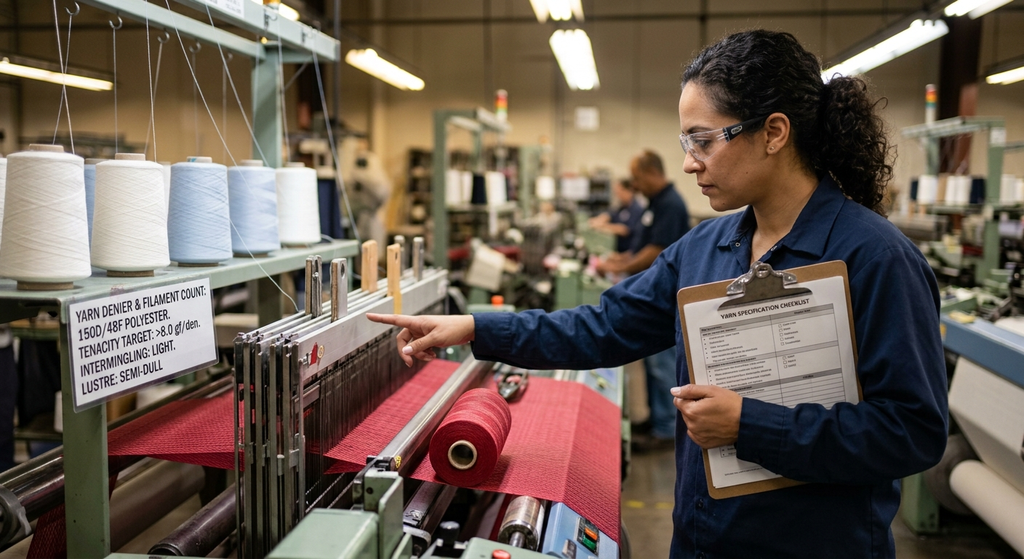
Denier and filament count
Denier expresses yarn linear density: the weight in grams of 9,000 metres of yarn. Finer deniers produce softer, lighter tapes; heavier deniers create stronger, stiffer webbing. Filament count matters as well; a 150D yarn made of 48 filaments feels much softer than the same denier made of 24 filaments. If you need a refresher on units, see this explanation of the denier unit.
Tenacity and elongation
Tenacity is measured in grams-force per denier (gf/den) or centinewtons per tex. Load-bearing tapes need high tenacity and low elongation at break, while elastic tapes need higher elongation and stable recovery. Always request test data and compare it with your target tape strength, remembering that weaving and dyeing can reduce yarn strength by some percentage.
Shrinkage (boiling water and dry heat)
Yarn shrinkage governs how tape dimensions behave in dyeing and heat-setting. Low, consistent boiling-water shrinkage is essential for tapes that must maintain exact width, such as zipper tapes and elastic bands. Inconsistent shrinkage across cones or lots leads to width variation and rejected rolls.
Twist and intermingling
Twist improves cohesion and strength, while air intermingling (interlacing) holds filaments together without twisting. Tape makers using needle looms often prefer intermingled or lightly twisted yarn to reduce filamentation and broken-filament snags.
Lustre and cross-section
Bright yarns give glossy tapes, semi-dull gives a subtle sheen, and full-dull gives a matte, natural look. Cross-section (round, trilobal, hollow) further changes lustre, softness, and cover.
Dye affinity and lot consistency
Different lots of yarn can dye to slightly different shades. Reputable suppliers manage lot consistency and can offer lot-matched supply for large programmes so that tape colours stay uniform from the first delivery to the last.
Package quality
Cone build, winding tension, oil pickup and knots per package all influence loom efficiency. Poorly wound packages cause tension variation and edge waviness in narrow fabrics. A supplier that treats packaging as part of the quality system reduces downtime for its customers.
| Parameter | Why it matters for tapes | What to ask the supplier |
| Denier / filament count | Controls weight, hand and cover | Nominal denier, tolerance, filament number |
| Tenacity | Load-bearing capacity | Test report (gf/den) per lot |
| Elongation | Stretch and shock absorption | Elongation at break, recovery data |
| Boiling-water shrinkage | Width and length stability | BWS % and variation range |
| Intermingling / twist | Loom runnability, snag resistance | Nodes per metre or TPM |
| Lustre | Surface appearance | Bright, semi-dull or full-dull |
| Lot consistency | Shade matching across batches | Lot-matching policy and traceability |
Before finalising a supplier, it helps to prepare a structured list of questions. Our guide on the questions to ask before buying yarn is a practical checklist you can adapt for tape yarn negotiations.
From Yarn to Tape: How Tapes Are Manufactured
Understanding the tape-making journey helps you see why yarn quality has such a strong influence on the final product. While every factory has its own routine, most tape production follows these stages.
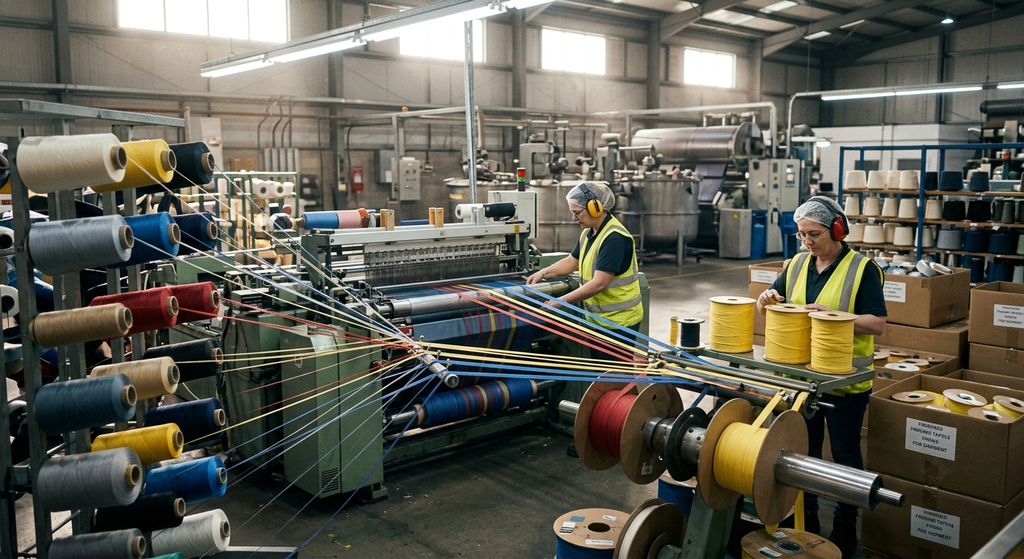
- Yarn selection and inspection: incoming cones are checked for denier, colour, oil content and package defects.
- Warping or creeling: warp yarns are arranged on beams or creels with even tension. Uneven tension here leads to wavy edges later.
- Weaving, knitting or braiding: on needle looms, multiple narrow tapes are woven side by side, with the weft inserted by a needle and locked by a latch or knitted edge. Warp-knitting machines produce elastic and lace tapes.
- Dyeing: tapes are dyed in package form, in hank form, or as fabric on jet or continuous machines. Disperse dyes are used for polyester, acid dyes for nylon.
- Heat-setting and finishing: stabilises width, controls shrinkage and adds softness, stiffness or coatings as needed.
- Slitting, cutting and packing: tapes are cut to length, wound on spools or reels and packed for shipment.
If you want to understand how filament yarn itself is created before it ever reaches the loom, our yarn manufacturing process guide walks through polymerisation, melt spinning, drawing, texturing and winding step by step.
Dyeing Yarn for Tapes: Getting Colour Right
Colour is often the first thing a customer notices in a tape, and the last thing a manufacturer wants to fix after production. There are two broad routes: dye the yarn before weaving (yarn-dyed), or dye the finished tape (piece-dyed).
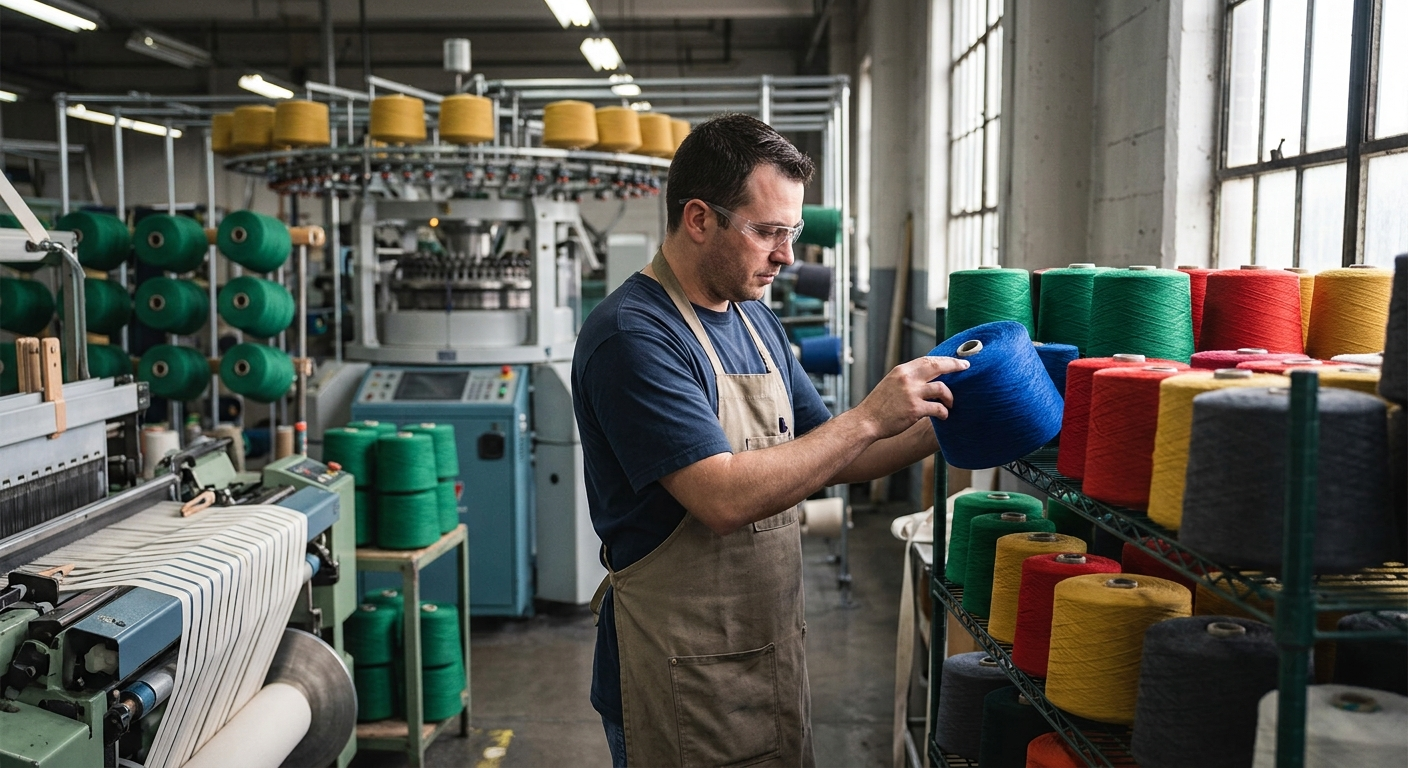
Yarn-dyed routes suit stripes, jacquard patterns, logo tapes and multi-colour webbing, since different colours are woven together. Piece-dyed routes suit solid colours and large volumes and give flexibility to change shade late in the process. Ready-dyed yarn removes a major process step for the tape maker and reduces lead times, water use and dyeing rejections at the tape mill.
For polyester, high-temperature dyeing with disperse dyes ensures deep penetration and strong wash and light fastness. Dope-dyed (solution-dyed) polyester is another route, where pigment is added into the polymer before spinning, delivering excellent colour fastness and lower water consumption. Read our dyed polyester yarn guide for a comparison of dyed, dope-dyed and undyed options and how each affects lead time, cost and consistency.
Key colour fastness tests to specify
- Wash fastness (typically tested at 40°C or 60°C depending on end use)
- Rubbing (crocking) fastness, both dry and wet
- Light fastness for tapes used outdoors, automotive or upholstery
- Perspiration fastness for garment and sportswear tapes
- Sublimation and migration resistance for polyester tapes used near light shades or heat
Test methods commonly follow international standards published by bodies such as ASTM International and the International Organization for Standardization (ISO). Always confirm which standard your customer or brand requires before you place the yarn order.
Quality Control and Certifications That Matter
A strong tape-yarn supplier does not simply ship cones. It runs a quality system that gives buyers confidence in every lot. Here is what to look for.
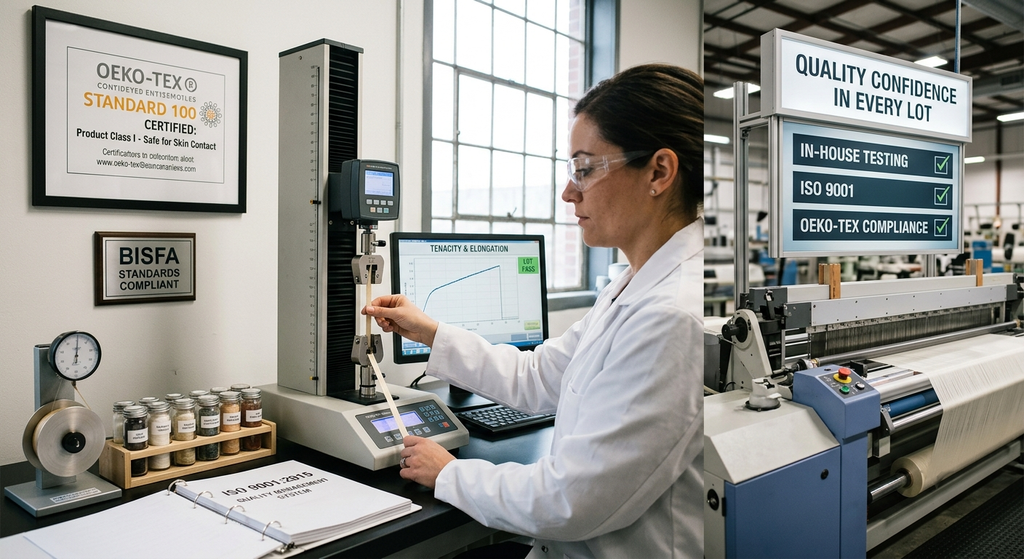
In-house testing
Look for regular testing of denier, tenacity, elongation, boiling-water shrinkage, oil pickup, and intermingling on every production lot. Suppliers should be willing to share test certificates and retain samples for traceability.
Management system certifications
A quality management system such as ISO 9001 shows that processes are documented, measured and improved. Working with an ISO-certified yarn supplier reduces the risk of inconsistent lots and gives your quality team a stronger audit trail.
Product safety and chemical compliance
If your tapes touch skin, such as in garments, baby products and medical bands, chemical safety becomes a priority. Certifications such as OEKO-TEX test textiles for harmful substances and are widely recognised by European and global retailers. Ask whether the yarn and any spin finishes are compliant with your target market’s restricted-substances requirements.
Fibre and grade standards
Industry bodies such as the Bureau of International Society for Man-Made Fibres, BISFA, publish terminology and testing conventions that help buyers and suppliers speak the same language about man-made fibres. Referring to these definitions in purchase contracts reduces ambiguity.
Sustainability in Tape Yarn: Recycled, Recyclable and Responsible
Brands are under pressure to reduce the environmental footprint of every component, including trims and tapes. Tape makers are responding in three ways.
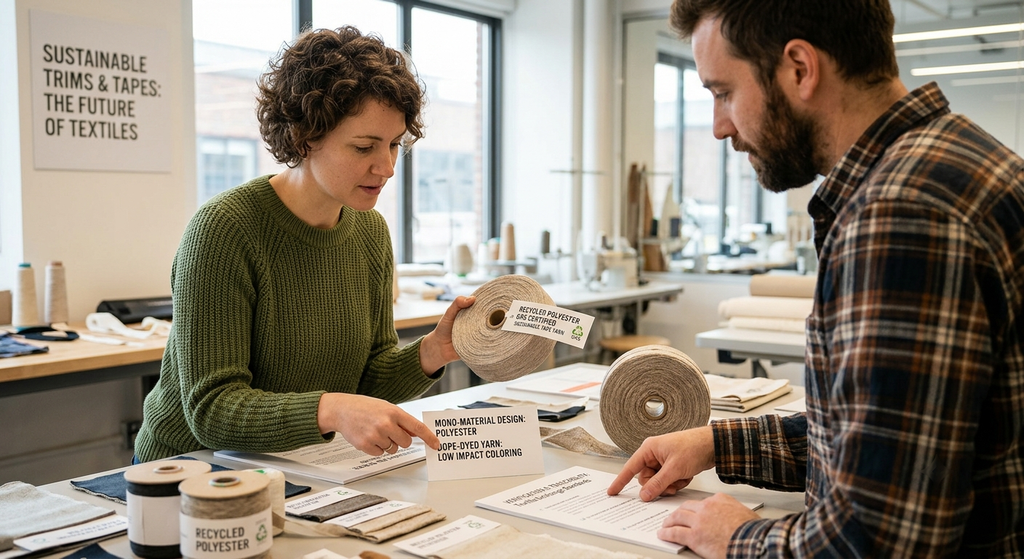
- Recycled content: replacing virgin polyester with recycled polyester made from PET bottles or pre-consumer waste.
- Mono-material design: using a single polymer, such as polyester, in both the tape and the garment or product, so that recycling later is easier. Elastomultiester yarns help here by delivering stretch without spandex.
- Lower-impact colouring: dope-dyeing and ready-dyed yarns reduce water and chemical use at the tape mill.
Third-party frameworks such as the standards administered by Textile Exchange provide recognised chain-of-custody and content claims for recycled materials. Insist on transaction certificates and traceable documentation whenever a recycled claim appears on your product labels. Our detailed recycled polyester yarn guide explains how to verify these claims.
Buyers who source regionally may also want to see our overview of the recycled polyester yarn manufacturer for South America for a market-specific perspective on certification and delivery.
How to Choose the Right Yarn Supplier for Tapes
Technical specifications are only half the story. The other half is the supplier relationship. A poor supplier can turn even a perfect specification into a delivery headache. Consider the following criteria.
1. Manufacturer or trader?
Working directly with a manufacturer gives you technical control, better pricing stability, and traceability from polymer to package. Traders can be useful for small or urgent lots, but they rarely control quality. Our article on yarn supplier vs yarn manufacturer explains the difference and how it affects risk.
2. Product range
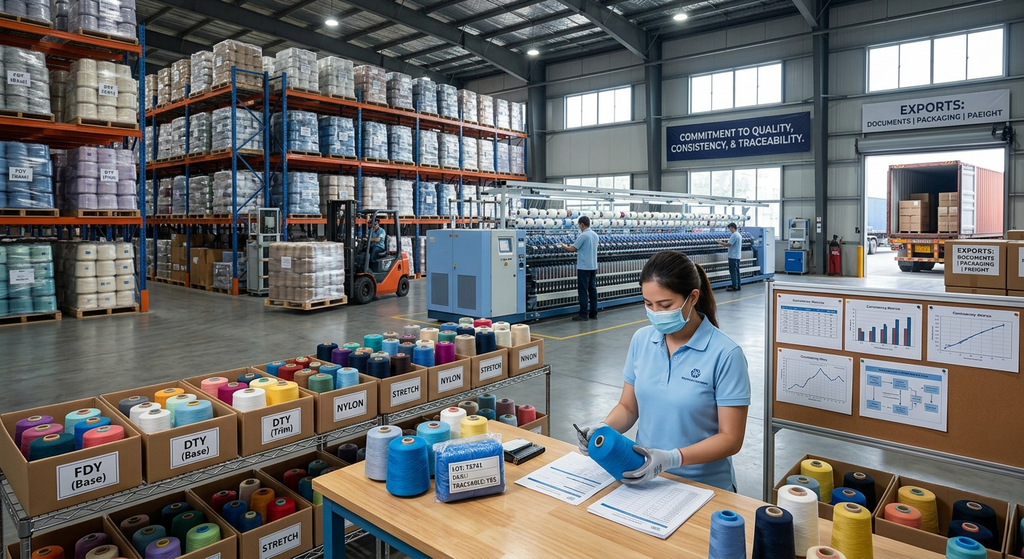
Tape makers often need several yarn types at once: FDY for the base fabric, DTY for soft trims, nylon for premium items, and stretch yarn for elastics. A supplier with a broad portfolio simplifies procurement and lets you consolidate shipments.
3. Consistency and lot traceability
Ask about lot-to-lot variation, retained samples and shade-matching capability. Consistency is the single most valuable attribute in tape yarn.
4. Technical support
A good supplier helps you troubleshoot loom breakages, shade variation and shrinkage problems, and recommends alternatives when specifications need to change.
5. Capacity and lead time
Check installed capacity, stock programmes and standard lead times. Suppliers with ready stock in core deniers and colours can save weeks in your production plan.
6. Export competence
For international buyers, documentation, packaging, freight coordination and compliance knowledge matter as much as the yarn. See our bulk yarn supplier in India page for how bulk programmes and long-term supply agreements are structured.
7. Geography and cluster advantage
Sourcing from a mature textile cluster shortens supply chains for chemicals, machinery, testing and logistics. Surat in Gujarat is one of India’s strongest man-made fibre hubs; explore our overview of yarn manufacturers in Surat to see why so many global buyers look here first.
Why Madhusudan Group Is a Leading Name in Yarn for Tapes
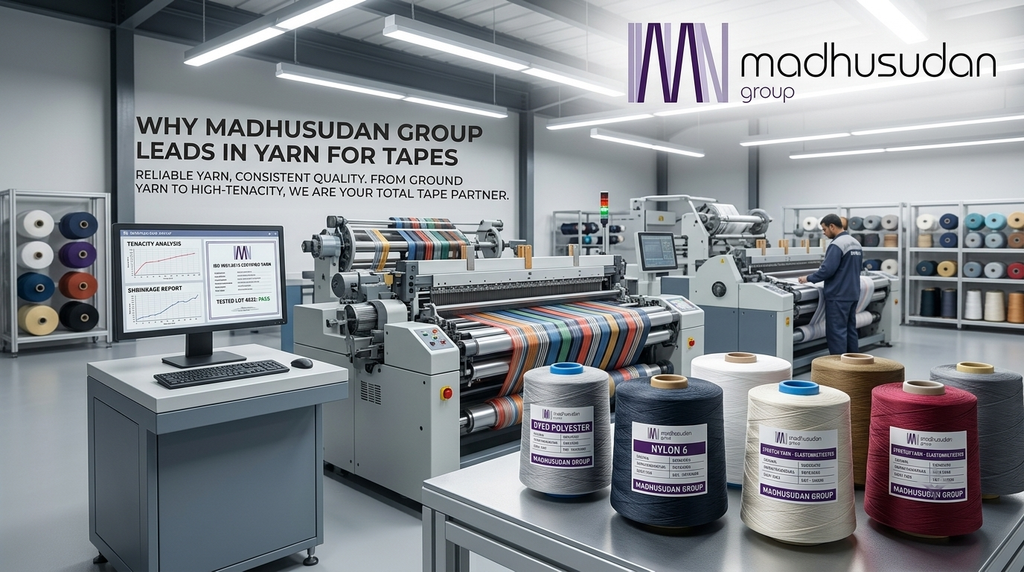
Madhusudan Group has built its reputation on one principle: give buyers yarn they can rely on, lot after lot. Headquartered in Surat, Gujarat, the group manufactures and exports a wide range of man-made and blended yarns for weaving, knitting, narrow fabrics, industrial applications and home textiles. For tape manufacturers, that translates into practical advantages.
A broad portfolio under one roof
Tape makers rarely work with a single yarn. Madhusudan Group supplies polyester, nylon, viscose, linen, blended, dyed, stretch and specialty yarns, which means a tape mill can source ground yarn, stretch yarn and decorative yarn from one partner. That reduces vendor complexity, harmonises quality standards and streamlines logistics.
Manufacturer-level control
As a manufacturer rather than an intermediary, Madhusudan Group controls specifications from raw material to packing. Buyers benefit from clear communication about denier, tenacity, shrinkage and lustre, and from quicker corrections when a specification needs adjusting.
Dyed and stretch yarn expertise
Consistent colour and reliable stretch are the two biggest challenges in tape production. Madhusudan Group’s expertise in dyed yarn manufacturing and stretch yarn manufacturing gives tape makers ready-to-run materials that shorten lead times and reduce dyeing risk. Its work with elastomultiester and bicomponent technologies also supports the industry’s shift to comfortable, recyclable stretch.
Quality systems that support audits
Tape customers, especially in automotive, safety and retail, need documentation. Madhusudan Group’s quality-focused approach, including its recognition as an ISO-certified yarn supplier, supports the traceability and test reporting that brand and industrial buyers require.
Industrial-grade supply
Some of the most demanding tapes carry loads or protect people. For those uses, buyers need high-tenacity, dependable filament yarn. Learn more about our industrial yarn supplier capabilities for demanding, performance-driven applications.
Export-ready mindset
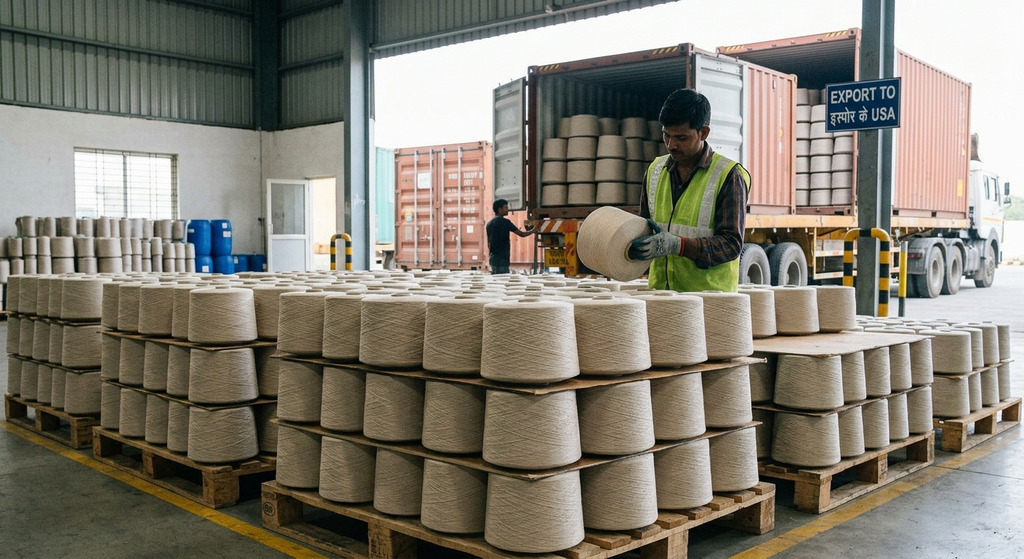
Madhusudan Group serves customers across continents and understands the documentation, packing and shipping needs of global trade. Buyers in the Americas can read our step-by-step guides on how to import yarn from India to the USA and how to import yarn from India to Brazil to plan costs, duties and shipping with confidence.
For tape manufacturers looking to grow, that combination of range, control, quality and export support is what separates a yarn vendor from a long-term manufacturing partner.
Importing Yarn for Tapes from India: A Practical Overview
India is one of the world’s largest producers of man-made fibres and yarns, supported by a mature ecosystem of polymer producers, texturisers, dyers, testing labs and exporters. Government policy is also supportive of textile growth; you can follow official initiatives and schemes on the Ministry of Textiles, Government of India website.
Global manufacturing trends, including capacity, trade flows and demand for man-made fibres, are tracked by the International Textile Manufacturers Federation (ITMF), a useful source for buyers who want to understand the wider market beyond a single supplier.
Steps to import tape yarn smoothly
- Define your specification: denier, filament count, lustre, tenacity, shrinkage, colour and packaging.
- Request samples and test reports: run trial weaving and dyeing before committing to volume.
- Agree on commercial terms: price basis, Incoterms, payment terms, lot sizes and delivery schedule.
- Confirm documentation: commercial invoice, packing list, certificate of origin and any compliance certificates.
- Plan duties and logistics: check import duties, freight routes and lead times. For US-bound cargo, see our resource on yarn import duty in the USA from India.
- Set up a repeat programme: once approved, fix specifications and consider blanket orders to lock in pricing and availability.
Practical Specification Examples for Common Tapes
Theory becomes useful only when it is turned into a specification. The examples below are indicative starting points, not fixed rules; always validate them through trial production on your own machines.
- Garment drawcord (flat or tubular): 150D to 300D polyester DTY or FDY, semi-dull, with low shrinkage so the cord keeps its length after washing.
- Satin ribbon or gift ribbon: fine bright polyester FDY (75D to 150D) in a high-density weave for a smooth, glossy face.
- Bag strap webbing: high-tenacity polyester or nylon in multiple ends of 500D to 1000D, woven in a twill or herringbone structure for strength and grip.
- Elastic waistband tape: polyester or nylon ground yarn in DTY or elastomultiester, combined with a suitable elastic core, tested for recovery after repeated stretching.
- Zipper tape: high-tenacity polyester with a stable, uniform denier and reliable dyeing behaviour so the tape matches the garment fabric exactly.
- Curtain and pleating tape: textured or spun polyester, sometimes blended, for a soft, drapable hand with stable width.
A useful habit is to record every approved tape construction together with the yarn lot, dyeing recipe and test results. That record becomes your internal benchmark, and it lets your supplier reproduce the same quality when you reorder.
What Drives the Cost of Tape Yarn?
Price is important, but the cheapest yarn per kilogram is rarely the cheapest yarn per metre of finished tape. Consider the following cost drivers before you compare quotations.
- Raw material and polymer prices: polyester and nylon prices move with crude oil and intermediate chemicals, so agreed price mechanisms matter in long contracts.
- Yarn type and processing: FDY, DTY, bicomponent and dyed yarns require different process steps, and each adds or removes cost.
- Recycled or certified content: certified recycled yarn typically carries a premium that reflects traceability and verification.
- Order size and packing: larger lots and standard packing reduce cost per kilogram; custom colours and special packing add to it.
- Wastage and efficiency: yarn that runs cleanly on your looms with fewer breaks lowers your effective cost even when the purchase price is slightly higher.
- Logistics and duties: freight, insurance, port charges and import duties can change the landed cost significantly for export orders.
Working with a supplier who is open about these factors helps you build a realistic budget and avoid surprises in the middle of a season.
Common Problems in Tape Production and How Yarn Choice Helps
| Problem | Likely yarn-related cause | Solution |
| Wavy or curled edges | Uneven yarn tension, inconsistent shrinkage | Use lot-matched, low-shrinkage FDY with good package build |
| Shade variation between rolls | Lot-to-lot dye affinity differences | Source dyed yarn or lot-matched supply from one manufacturer |
| Frequent loom stops | Broken filaments, poor intermingling | Choose yarn with proper interlacing and low broken-filament count |
| Tape width changes after finishing | High or inconsistent boiling-water shrinkage | Specify BWS range and heat-set correctly |
| Weak load-bearing performance | Low tenacity or wrong denier | Use high-tenacity polyester or nylon with verified test data |
| Poor elastic recovery | Weak stretch component, unsuitable ground yarn | Consider elastomultiester or higher-quality DTY ground yarn |
| Fuzzing and snagging | Broken filaments, abrasion | Choose finer filaments with good abrasion resistance |
Trends Shaping the Future of Yarn for Tapes
Stretch without spandex
Mechanical stretch technology is growing rapidly as brands seek recyclable, chlorine-resistant, comfortable elastics. Tapes made from elastomultiester yarns deliver stretch and recovery in a mono-material construction.
Recycled and traceable content
Retailers increasingly require recycled content claims backed by certification. Tape makers who can prove traceability to the yarn level win more brand programmes.
Functional tapes
Antimicrobial, flame-retardant, reflective and moisture-managing tapes are moving from niche to mainstream in sportswear, workwear, and medical products.
Faster, smaller, more flexible orders
Brands want quicker turnaround and smaller minimums. Suppliers who hold stock of core yarns and colours enable tape makers to respond to short-notice orders without compromising quality.
Digital traceability
QR-linked lot information, digital test reports and more transparent supply chains are becoming standard expectations for larger buyers.
Frequently Asked Questions about Yarn for Tapes
What is the best yarn for tapes?
Polyester FDY is the most widely used for woven tapes and webbing because of its strength, stability and dye compatibility. Nylon suits premium and high-abrasion tapes, DTY and elastomultiester suit soft and elastic tapes, and viscose or cotton suits decorative and natural-look trims.
What denier is commonly used for tape yarn?
It varies widely. Fine trims may use 50D to 150D, general woven tapes commonly use 150D to 600D, and heavy webbing can use 1000D and above, often plied or combined. Your ideal denier depends on tape width, density and strength target.
Can I use recycled polyester for tapes?
Yes. Recycled polyester performs similarly to virgin polyester in most tape applications when produced under good process control. Ask for certification and lot traceability if you plan to make recycled claims.
What is the difference between FDY and DTY for tapes?
FDY is smooth, strong and low-shrinkage, ideal for flat woven tapes and ribbons. DTY is textured, bulkier and softer with some stretch, ideal for knitted trims, drawcords and elastic ground yarns.
Is dyed yarn better than dyeing the finished tape?
Neither is universally better. Yarn-dyed suits patterned or multicolour tapes and shortens lead times; piece-dyed suits solid colours and flexible shade changes. Many tape makers use both, depending on the product.
How do I avoid shade variation in tapes?
Buy lot-matched yarn from one manufacturer, run dyeing trials, control dyeing parameters, and specify fastness standards. Ready-dyed yarn from a dependable supplier removes much of the variability.
Do you export yarn for tapes internationally?
Yes. Madhusudan Group supplies customers across multiple regions and supports export documentation, packing and logistics. Contact the team with your specification, quantity and destination for a tailored quotation.
How can I get samples before placing a bulk order?
Share your target denier, filament count, lustre, colour and end use. Sample lots can be arranged so you can complete weaving and dyeing trials before committing to volume.
Conclusion: Build Better Tapes from Better Yarn
Tapes may be narrow, but the technical demands behind them are wide. Strength, stretch, colour, hand feel, dimensional stability and sustainability all begin with the yarn. Getting that decision right reduces waste, protects your brand, and lets your machines run at full efficiency.
The best approach is to define your requirements clearly, test carefully, and work with a manufacturer who understands narrow-fabric performance as well as global trade. With a broad yarn portfolio, manufacturer-level control, dyed and stretch yarn expertise, and export-ready service, Madhusudan Group stands out as a leading partner for tape manufacturers who want consistent quality and long-term reliability.
Ready to source yarn for tapes? Share your specification, target application and volume with the Madhusudan Group team, and get expert guidance, samples and competitive quotations. You can also browse our guide on choosing the right yarn for textile products to refine your selection before you enquire.