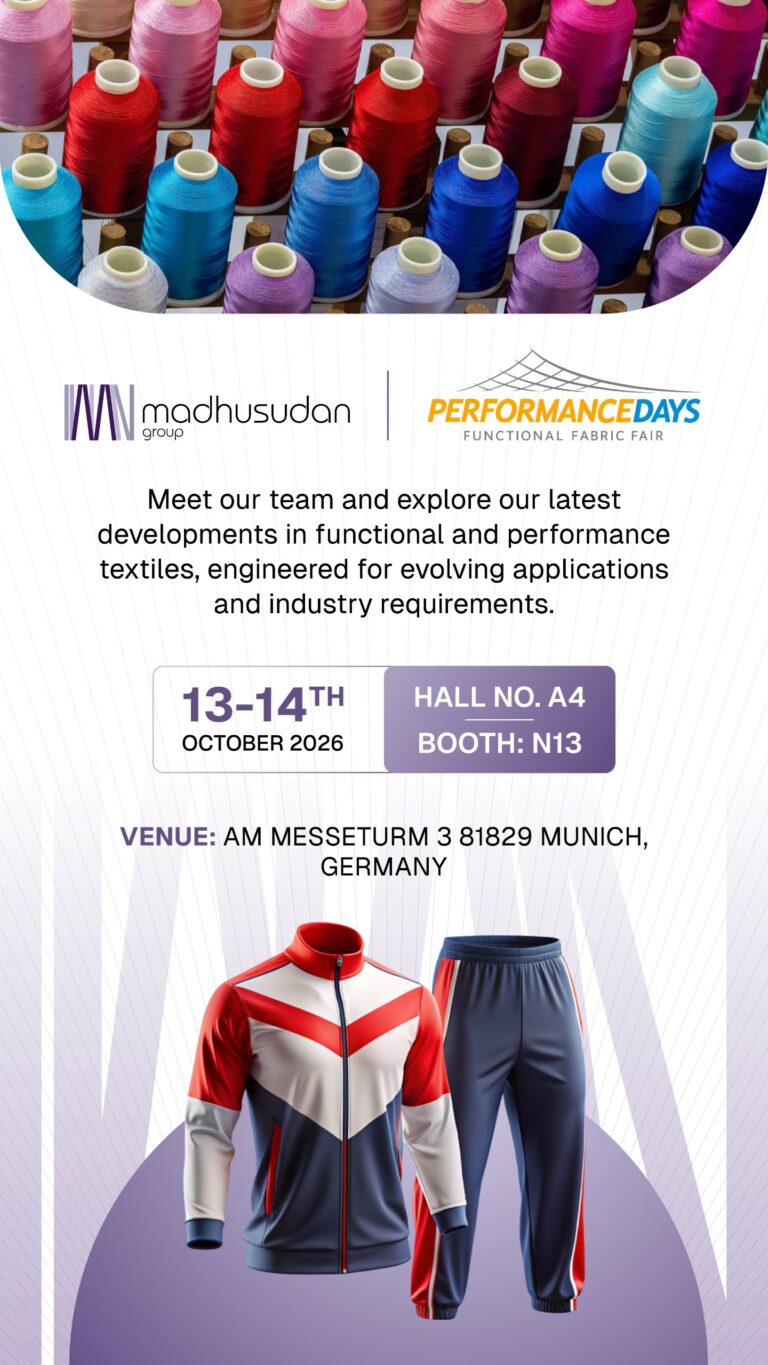
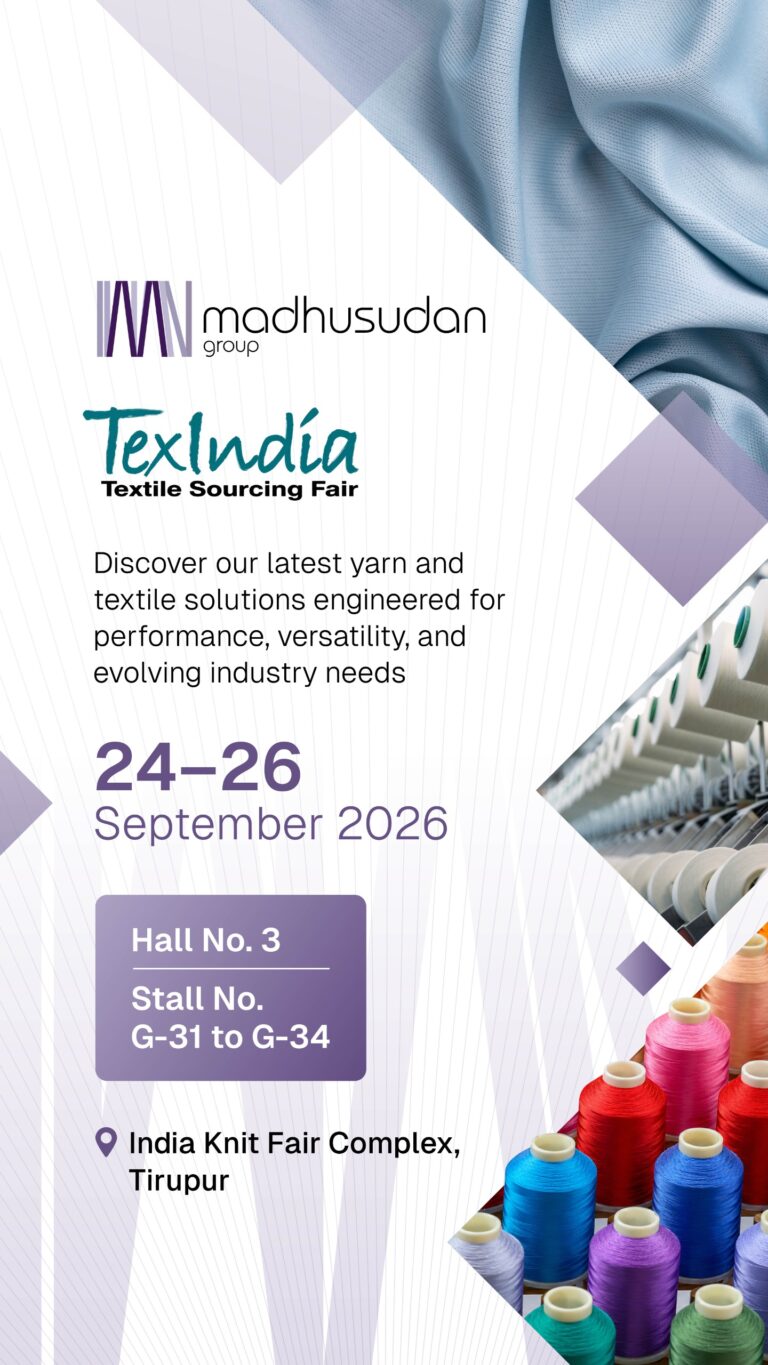
If you are searching for reliable yarn manufacturers in India, you are looking at one of the deepest and most diversified textile supply chains in the world. From the cotton belts of Gujarat and Maharashtra to the spinning mills of Tamil Nadu, the knitwear clusters of Tirupur and Ludhiana, and the man-made fibre capital of Surat, India produces almost every kind of yarn a weaver, knitter, garment maker or technical-textile buyer can specify. The challenge is no longer finding yarn. The challenge is finding the right manufacturer: one that delivers consistent quality, honest pricing, dependable lead times and the technical support your product needs.
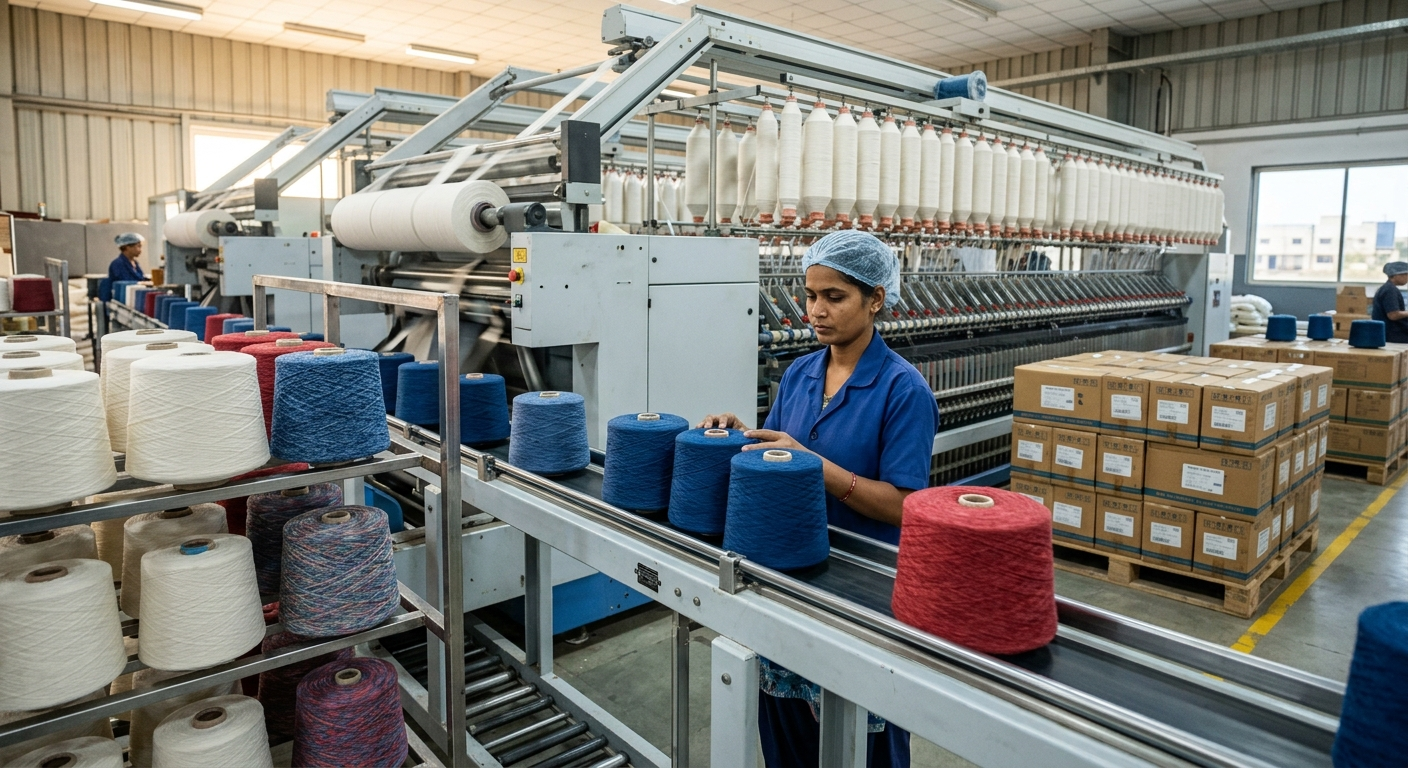
This guide is written for buyers, mill owners, sourcing managers, exporters and start-ups who want a clear, practical view of the Indian yarn industry. It explains the market, compares yarn types, maps the major manufacturing cities, shows how to evaluate a supplier, explains what drives pricing, and walks through the import process for overseas buyers. Throughout, you will see why Madhusudan Group, based in Surat, has built a reputation as a leading yarn manufacturer and a trusted partner for bulk buyers in India and across the world.
Whether you need wholesale yarn for a power-loom unit in Surat, dyed yarn for a knitting cluster in Tirupur, textured yarn for a hosiery business in Kolkata, or container loads for an importer in South America, the sections below will help you make a confident decision.
Why India Is a Global Hub for Yarn Manufacturing
India’s strength in yarn is structural, not accidental. The country is the world’s largest producer of cotton by area, it has a large and growing man-made fibre sector, and it has a skilled workforce that has been spinning, twisting, texturising and dyeing for generations. According to the Ministry of Textiles, the textile and apparel sector is among the largest employers in the country after agriculture. Industry summaries put the sector’s contribution at roughly 3 percent of GDP, 13 percent of industrial production and 12 percent of exports.
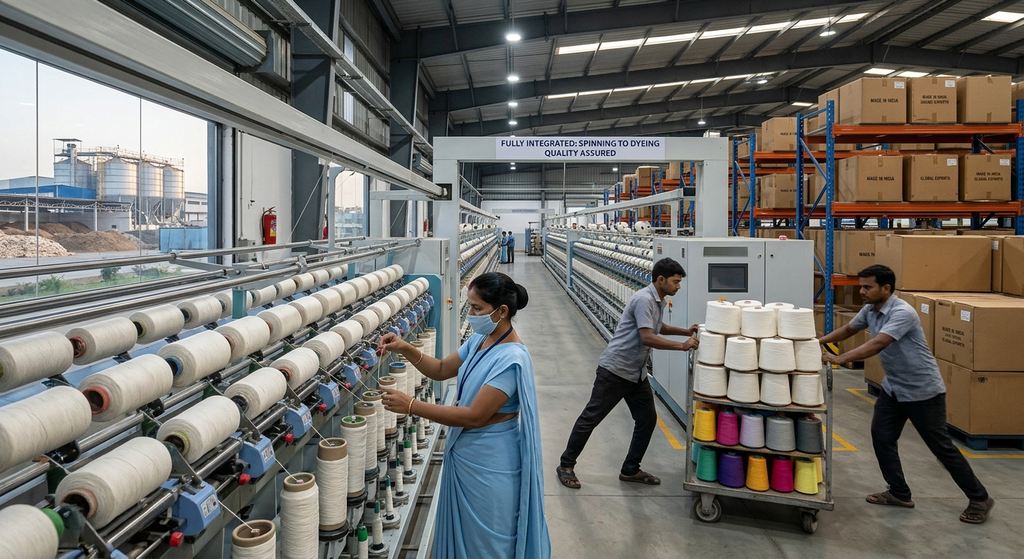
Three advantages make Indian yarn manufacturers especially attractive to buyers:
- Raw-material access: domestic cotton, polyester chips and filament, viscose, nylon and speciality fibres are available close to the mills, which shortens procurement cycles and reduces cost volatility.
- Full value chain: spinning, texturising, twisting, dyeing, weaving, knitting and processing exist within the same clusters, so a buyer can often source greige yarn, dyed yarn and finished fabric from the same region.
- Range and flexibility: Indian manufacturers can run small development lots as well as bulk orders, which suits both established mills and new brands.
Government policy has also supported the sector through production-linked incentive schemes for man-made fibre and technical textiles, 100 percent FDI in textiles through the automatic route, and export promotion programmes. For a buyer, this translates into more capacity, more investment in modern machinery and more competition on quality and service.
The Indian Yarn Industry at a Glance: Production, Exports and Trends
India’s textile exports remain on a growth path. Reports citing Parliament indicate that textile and apparel exports, including handicrafts, crossed roughly 33.5 billion US dollars in the 2025-26 financial year. Press Information Bureau data shows that total textile exports rose about 16.1 percent year on year in August 2026 to around 29,776 crore rupees, while cumulative exports for April to August 2026 reached about 1.43 lakh crore rupees, up 10.3 percent. Within that, cotton yarn, fabrics, made-ups and handloom exports grew 24.1 percent in August, and man-made yarn, fabrics and made-ups grew 19.9 percent. You can read the official release on the Press Information Bureau website.
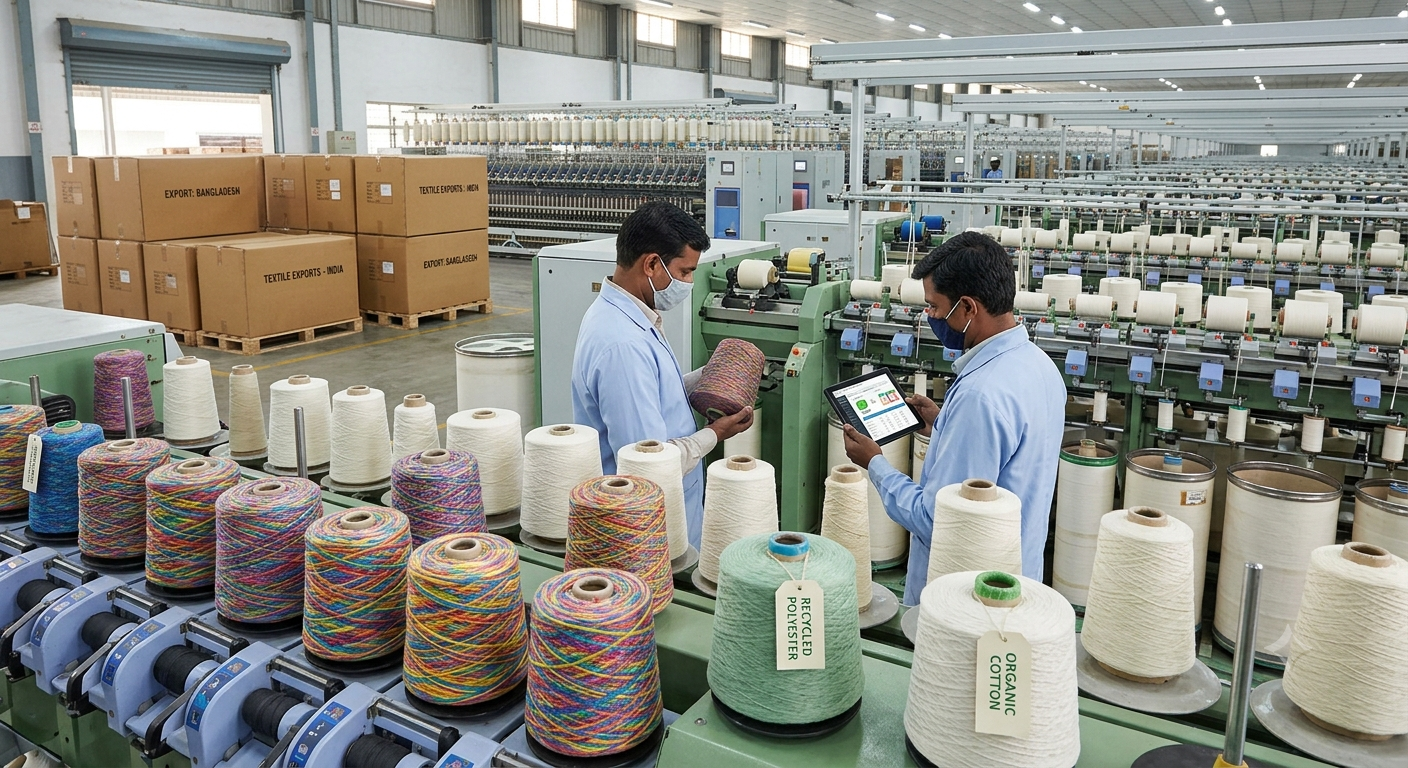
Cotton yarn exports are more cyclical. Data from Texprocil, the Cotton Textiles Export Promotion Council, shows that cotton yarn export volumes dipped in 2024-25 as major buyers such as China drew down on their own harvests, while Bangladesh increased its share of Indian cotton yarn shipments. Analysts expect better conditions as demand normalises. For domestic buyers, this cycle matters because yarn that is not exported often returns to the local market, which can soften prices.
Several trends are shaping what buyers should expect from yarn manufacturers in India over the next few years:
- Man-made and blended yarn growth: polyester, viscose, nylon and blends continue to gain share as brands look for performance, stretch and cost stability.
- Value-added yarn: dyed, textured, air-textured, core-spun and bicomponent yarns are growing faster than commodity grey yarn.
- Sustainability requirements: recycled polyester, organic cotton and traceable supply chains are moving from optional to expected, especially for export orders.
- Compliance and quality control: quality standards for certain man-made yarns have been introduced, changed and challenged in recent years, so buyers should always confirm the current regulatory position before ordering.
- Digital sourcing: buyers increasingly shortlist manufacturers online, compare certifications and request samples before visiting plants.
Madhusudan Group: A Leading Yarn Manufacturer from Surat
Among the many yarn manufacturers in India, Madhusudan Group stands out as a vertically integrated textile manufacturer with deep roots in Surat, the country’s largest hub for man-made fibre textiles. The group is known for fancy yarns and fabrics and has built capabilities in yarn air texturising, yarn dyeing, weaving, fabric processing and value addition. In an interview with Fibre2Fashion, the group’s executive director described strong demand for polyester catalyst yarn and growing interest in technical-textile applications, and noted that the group serves clients across textile hubs throughout India. You can read the full conversation in the Fibre2Fashion interview with Madhusudan Group.
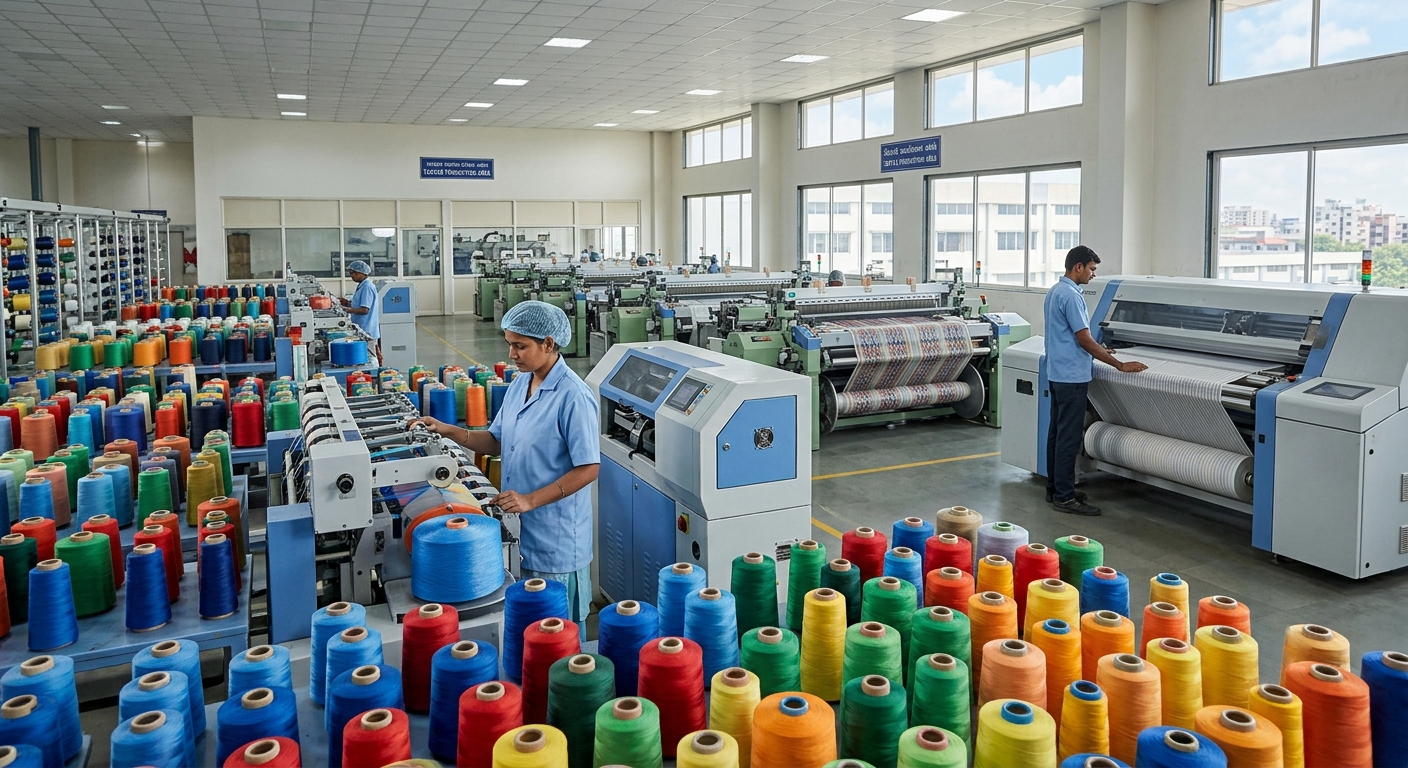
What makes this positioning valuable to a buyer is integration. When a manufacturer controls texturising, dyeing and downstream processing, it can offer tighter colour consistency, shorter coordination cycles and a single point of accountability. Instead of managing several vendors, a buyer works with one team that understands how yarn behaves on the loom or knitting machine.
Madhusudan Group serves buyers searching for premium yarn manufacturers and suppliers in India, from domestic weavers to overseas importers. Its portfolio includes polyester yarn, nylon, viscose and blended man-made yarns, dyed yarn, stretch and bicomponent yarns, and industrial yarn. The group focuses on man-made and blended yarns and does not spin cotton or linen, a deliberate specialisation that lets it go deeper on texturising, dyeing and filament technology. The group also publishes detailed buyer education, such as its guides on the yarn manufacturing process and on how to choose the right yarn for textile products, because informed buyers make better long-term partners.
Types of Yarn Made by Indian Manufacturers
A common mistake in sourcing is searching for a generic yarn manufacturer when the product actually demands a specialist. The sections below summarise the main yarn families, what they are used for and what to ask a manufacturer.
Cotton Yarn Manufacturers in India
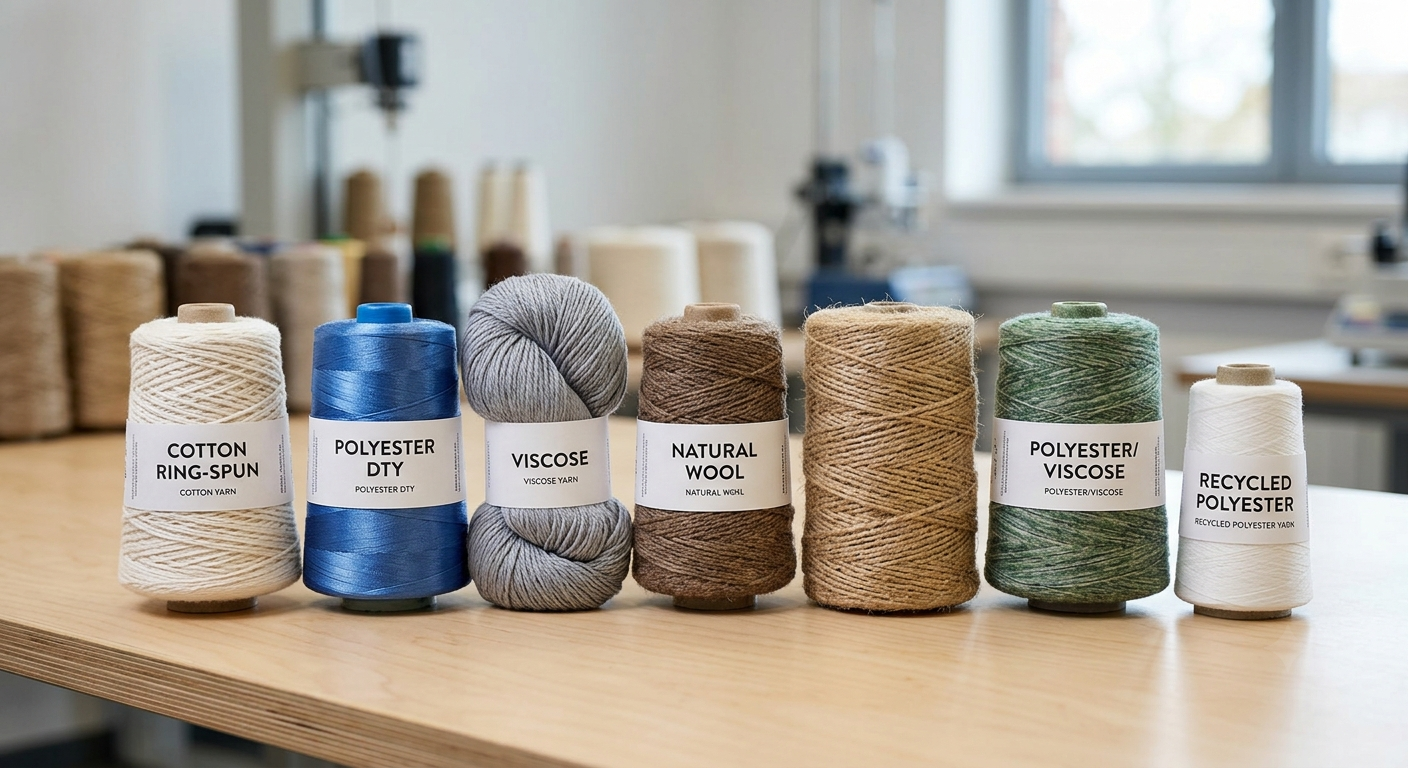
Cotton remains the backbone of Indian spinning. Cotton yarn is produced as carded or combed, in a wide range of counts, and in ring-spun, compact, open-end and siro-spun forms. It is used for shirting, denim, T-shirts, towels, bed linen and hosiery. When evaluating cotton yarn manufacturers in India, ask about fibre staple length, count variation, hairiness, thin and thick place levels, and neps. Buyers working with the state cotton agency can also review procurement information from the Cotton Corporation of India, which plays a major role in supporting cotton availability. Madhusudan Group does not spin cotton, so buyers who need pure cotton yarn should approach specialist cotton spinners in the clusters listed below. Where a product needs the performance, stretch or colour consistency of man-made yarn, that is where a texturising and dyeing specialist adds value.
Polyester Yarn Manufacturers in India (POY, FDY, DTY)
Polyester is the largest man-made fibre category in India and the heart of Surat’s economy. Three forms dominate trade: POY (partially oriented yarn), FDY (fully drawn yarn) and DTY (draw textured yarn). POY is the feedstock for texturising, FDY is used where a smooth, lustrous filament is needed, and DTY provides bulk, softness and stretch for knitting and weaving. Polyester spun yarn and dyed polyester yarn serve apparel, furnishing and industrial segments. Madhusudan Group’s buyer resources include a practical overview of polyester yarn suppliers in India and a technical walkthrough of polyester yarn dyeing.
Viscose, Nylon and Acrylic Yarn Manufacturers
Viscose yarn offers a soft hand, drape and a natural-fibre feel, which makes it popular in womenswear, sarees and furnishing fabrics. Reliable viscose yarn manufacturers will be able to explain count ranges, filament versus spun options and dye uptake. Nylon is valued for strength and abrasion resistance in hosiery, activewear, tapes, elastic and technical applications, and demand for nylon DTY has grown steadily in Surat; the group’s overview of a nylon DTY yarn manufacturer explains typical specifications. Acrylic yarn is common in knitwear, shawls, blankets and sweaters because it imitates wool at a lower price.
Blended Yarn Manufacturers in India
Blended yarns combine two or more fibres, such as polyester and cotton, or polyester and viscose, to balance performance, cost and comfort. The right blend ratio affects shrinkage, pilling, moisture management and dye behaviour. Surat is a major centre for blended and eco-friendly yarn, and buyers can explore Madhusudan Group’s perspective on blended eco-friendly yarn manufacturers in Surat and India for more detail.
Wool, Jute, Silk and Linen Yarn Manufacturers
Wool yarn is concentrated in Punjab, particularly Ludhiana and Amritsar, and also in Haryana and Rajasthan. Jute yarn is associated with eastern India and is used for sacking, rope, home décor and sustainable packaging. Silk yarn comes from Karnataka, Tamil Nadu, West Bengal and Assam and supports the sarees and premium fabrics segment. Linen yarn is a niche served by specialist spinners, valued for its texture and breathability, so buyers should shortlist dedicated linen mills for it.
Recycled and Organic Yarn Manufacturers
Recycled polyester made from post-consumer PET bottles and organic cotton are the two sustainable categories growing fastest among brand buyers. A credible manufacturer should provide traceability documents and third-party certification, not only marketing claims. Madhusudan Group’s recycled polyester yarn guide explains what to look for in recycled content claims and how recycled yarn performs compared with virgin polyester.
Specialty Spinning and Texturing Processes
Beyond fibre type, yarn is defined by how it is made. The terms below appear often in buyer enquiries and are worth understanding before you request quotations:
- Open-end (rotor) yarn: economical and suitable for denim, towels and general-purpose fabrics.
- Compact and siro yarn: reduced hairiness and improved strength for premium shirting and knitwear.
- Slub and melange yarn: fashion effects for casual apparel and heathered looks.
- Core-spun yarn: a filament core wrapped with staple fibre, used for stretch and sewing thread.
- Air-textured yarn (ATY): entangled filaments that mimic spun yarn and are used in furnishing and technical fabrics; see the group’s explanation of an ATY air-textured yarn supplier.
- Dyed, fancy, sewing and embroidery yarn: coloured or effect yarns for finished-goods applications.
Where to Find Yarn Manufacturers in India: A City and State Guide
Geography matters in yarn sourcing. Each cluster specialises in particular fibres and end uses, and logistics cost depends heavily on how close you are to the mill. The table below summarises the major hubs and what each is known for.
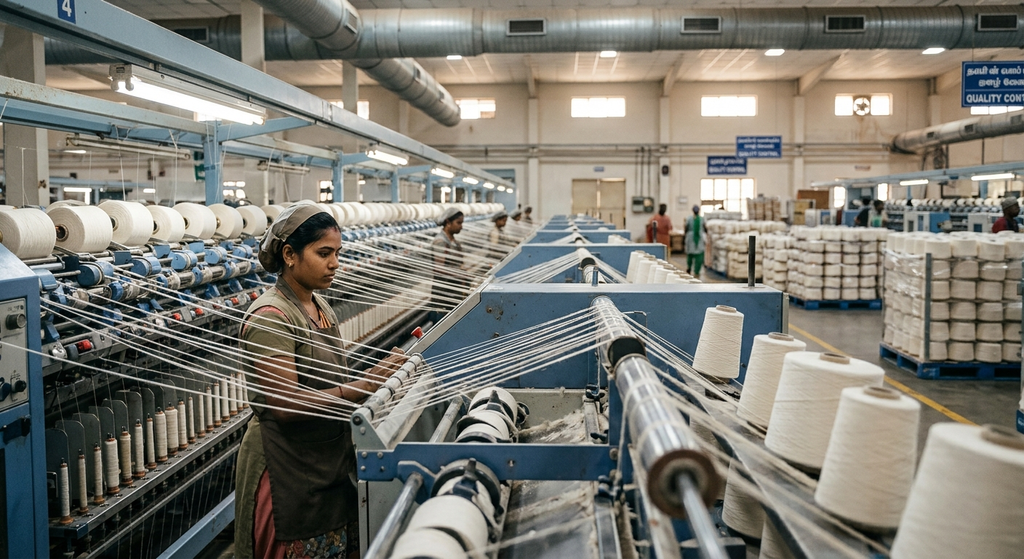
| City / State | Known for | Typical buyers |
| Surat, Gujarat | Polyester, nylon, viscose, textured, dyed and blended yarn; large power-loom and processing base | Weavers, embroiderers, saree and dress-material makers, exporters |
| Ahmedabad, Gujarat | Cotton spinning, fabric processing, research support | Denim, shirting and home-textile units |
| Coimbatore, Tamil Nadu | Cotton spinning mills, compact and combed yarn | Knitters, weavers, exporters |
| Tirupur, Tamil Nadu | Knitwear cluster that consumes cotton and blended yarn | Garment exporters and knit-fabric makers |
| Karur, Tamil Nadu | Home-textile cluster with a strong yarn demand | Bed linen, towel and curtain manufacturers |
| Ludhiana and Panipat, Punjab and Haryana | Wool, acrylic, hosiery yarn and recycled yarn (Panipat) | Knitwear, blanket, shawl and rug makers |
| Bhiwandi and Mumbai, Maharashtra | Power-loom, trading and warehousing hub | Fabric traders and small weavers |
| Indore and Rajasthan | Cotton and blended spinning, Bhilwara suiting belt | Suiting and shirting producers |
| Andhra Pradesh and Karnataka | Cotton spinning, silk and garment clusters | Garment and silk-fabric manufacturers |
| Delhi NCR | Trading, distribution and export services | Garment exporters and buying offices |
For a deeper regional walkthrough, see Madhusudan Group’s dedicated resources on yarn manufacturers in Surat and its roundup of the top yarn manufacturers in India.
Yarn Manufacturers in Surat and Gujarat
Surat is widely described as India’s synthetic textile capital. Industry coverage on Fibre2Fashion notes that around 40 percent of India’s man-made fabric output is produced in the city, supported by an integrated chain of yarn supply, power looms, dyeing and printing mills. At Yarn Expo 2024, organisers reported that roughly 1.5 lakh metric tonnes of polyester yarn is consumed in Surat every month, as covered by Apparel Resources. That scale is why buyers searching for yarn manufacturers in Gujarat, yarn mills in Surat or wholesale yarn in Surat usually start here. Madhusudan Group sits inside this ecosystem, which gives its customers direct access to texturising, dyeing and weaving expertise under one roof. Gujarat also has a strong industrial yarn presence; explore the group’s overview of industrial yarn suppliers in Gujarat.
Yarn Manufacturers in Tamil Nadu: Coimbatore, Tirupur and Karur
Tamil Nadu is India’s spinning heartland. Coimbatore is known for cotton spinning mills and research institutions such as SITRA, which supports quality and technology development. Tirupur consumes enormous volumes of cotton and blended yarn for knitwear exports, and Karur supplies home textiles to global retailers. Buyers who need combed cotton for premium T-shirts, melange for casual wear or compact yarn for fine knits usually begin with Tamil Nadu mills.
Yarn Manufacturers in Punjab, Haryana, Maharashtra, Rajasthan and Beyond
Ludhiana is the centre of India’s woollen and acrylic knitwear industry, and Panipat is the hub of recycled yarn and blankets. Maharashtra, including Bhiwandi and Mumbai, combines power-loom capacity with a large trading ecosystem. Rajasthan, especially the Bhilwara region, is known for suiting and blended spinning, while Indore in Madhya Pradesh serves central India’s cotton and blended-yarn demand. In the south, Andhra Pradesh and Karnataka add spinning and silk capacity, and Delhi remains a major trading and export-services centre. Ahmedabad supports cotton spinning and fabric processing, and benefits from research support from institutions such as ATIRA.
Madhusudan Group Yarn Supply Across India’s Textile Cities
Yarn buying is local before it is national. A weaver in Surat, a knitter in Tirupur and a trader in Bhiwandi all want the same things, consistent quality, dependable delivery and fair pricing, but each works to a different rhythm, a different fabric and a different logistics route. Madhusudan Group is based in Surat and, as its executive director has noted in trade media, serves clients across textile hubs throughout India. The sections below explain how its man-made, textured, dyed and blended yarns fit the needs of each major city and state.
Surat, Gujarat: Home Base and Largest Market
Surat is where Madhusudan Group operates, and it is the strongest proof of the group’s standing among yarn manufacturers in India. Local weavers, embroidery units, saree makers and processors can walk into the plant, approve shades in person and collect yarn within hours. Surat’s trade ecosystem, including bodies such as the Southern Gujarat Chamber of Commerce and Industry, keeps the whole market closely connected. Buyers comparing local options can read the group’s focused overview of blended yarn manufacturers in Surat and its guide to industrial yarn suppliers in Gujarat.
Ahmedabad and the Rest of Gujarat
Ahmedabad’s processors, home-textile units and garment makers often need dyed, textured and blended yarn that arrives with documented shade and quality data. Madhusudan Group supplies buyers across Gujarat, and the short road distance from Surat helps keep lead times low.
Mumbai, Bhiwandi and Maharashtra
Bhiwandi’s power-loom clusters and Mumbai’s trading houses move fast, buy in frequent lots and value reliable filament and textured yarn. Madhusudan Group supplies polyester and blended yarn to Maharashtra’s weavers and traders, and its Surat location gives a natural north-south freight route to Bhiwandi and Mumbai.
Ludhiana, Panipat and Delhi NCR
North India’s knitwear, hosiery and recycling clusters are known for cost awareness and quick turnarounds. Buyers in Ludhiana, Panipat and Delhi use textured polyester, nylon and blended man-made yarn in hosiery, trims, tapes and blankets, and Delhi’s trading and export houses often source from Surat for container and truck loads. Madhusudan Group supports these buyers with sampling, specification advice and export-ready documentation.
Coimbatore, Tirupur and Karur, Tamil Nadu
Tamil Nadu is best known for cotton, but its knitters and home-textile makers also need man-made yarn for stretch, blends, trims and furnishing. Exporters in Tirupur, represented by bodies such as the Tiruppur Exporters’ Association, frequently ask for dyed and stretch yarn with strong fastness, and Karur’s curtain and upholstery makers favour textured and air-textured polyester, covered in the group’s explainer on an air-textured yarn supplier. Madhusudan Group supplies these needs from Surat, leaving the cotton spinning to the region’s specialist mills.
Indore, Rajasthan, Andhra Pradesh and Karnataka
Central and western India’s suiting, shirting and saree producers use viscose, polyester and blended yarn for drape, price stability and easy care. Buyers in Indore, Bhilwara, Jaipur, Hyderabad, Guntur, Bengaluru and Mysuru can source dyed and blended yarn from Madhusudan Group, with shade cards and test reports shared before bulk dispatch so that distance is never a reason for uncertainty.
Why Buyers in Every City Return to the Same Partner
Across all these markets, the pattern is the same. Buyers choose a partner who explains the specification clearly, delivers what was sampled and answers quickly when something goes wrong. Government data from the Ministry of Commerce and Industry shows how widely Indian textile products travel, and yarn is the first link in that chain. A manufacturer that handles texturising, dyeing and processing in one group can keep that first link strong for every customer, whether the order comes from the next street in Surat or from a mill hundreds of kilometres away.
Yarn Manufacturer vs Supplier vs Distributor vs Trader: Know the Difference
Search results for yarn suppliers in India mix very different business types. Understanding who you are dealing with affects price, quality control and accountability.
- Manufacturer: owns the machinery and controls the process, so it can adjust specifications, guarantee consistency and trace problems to their source.
- Supplier or exporter: sells to buyers and may manufacture some products while sourcing others.
- Distributor, dealer or stockist: holds inventory from several mills and sells in smaller lots, useful for quick delivery but with limited technical control.
- Trader or wholesaler: buys and resells, often competitive on price for standard grades but unable to customise.
For a deeper breakdown, read Madhusudan Group’s guide on yarn supplier vs yarn manufacturer. For regular bulk requirements, buying direct from a manufacturer generally gives better price stability, specification control and after-sales support. If you are planning volume purchases, the group’s page on becoming a bulk yarn supplier in India customer explains how bulk orders are structured.
How to Choose the Best Yarn Manufacturer in India
Searching for best yarn manufacturers in India or top yarn manufacturers in India will return long lists, but no list can substitute for evaluation against your own requirements. Use the following framework.
1. Match the Manufacturer to Your Product
A cotton spinner is not the right partner for textured polyester, and a trading house cannot give you dyeing accuracy. Define the fibre, count or denier, twist, shade and end use first, then shortlist manufacturers that already produce comparable material.
2. Check Quality Systems and Certifications
Ask for evidence of testing, not only claims. Relevant credentials include ISO management systems, product standards from the Bureau of Indian Standards, OEKO-TEX for harmful-substance testing and the Global Organic Textile Standard for organic fibres. For recycled content, look for programmes recognised by Textile Exchange. To understand what a certified manufacturer typically offers, see the group’s page on an ISO certified yarn supplier.
3. Request Samples and Lot Consistency Reports
A good sample proves nothing if the next lot varies. Request test reports for several recent lots, and ask how the manufacturer controls count variation, strength, evenness and shade matching.
4. Evaluate Capacity and Lead Time
Ask for realistic monthly capacity, minimum order quantities, standard lead times and how the manufacturer handles peak season. Visiting the plant, or arranging a video audit, reveals more than any brochure.
5. Understand Payment, Logistics and Documentation
Confirm payment terms, GST invoicing, packing standards, dispatch options and export documentation. For overseas orders, check that the manufacturer understands HS codes, certificates of origin and shipping practices.
6. Ask the Right Questions Before You Buy
Madhusudan Group’s checklist of questions to ask before buying yarn is a good starting point and covers technical, commercial and compliance questions that buyers frequently forget.
| Evaluation factor | What to look for | Red flag |
| Manufacturing control | Owns spinning, texturising or dyeing machinery | Cannot explain the process or visit |
| Quality testing | In-house lab, lot-wise test reports | Only provides one-time sample reports |
| Certifications | ISO, OEKO-TEX, GOTS or recycled-content proof where relevant | Certificates that cannot be verified |
| Capacity | Clear monthly output and lead times | Vague promises that change by order |
| Pricing | Transparent basis tied to raw-material trends | Prices far below market without explanation |
| Support | Technical help with shade, twist and runnability | No response after the sale |
Yarn Prices in India: What Drives the Cost
Buyers often search for yarn manufacturers in India with price or the cheapest yarn suppliers in India. Because yarn is a commodity-linked product, a single list price is rarely meaningful. Instead, understand the factors that move it so you can judge a quotation.
- Raw-material cost: cotton prices follow harvest, import policy and global markets, while polyester follows crude oil, PTA and MEG movements. Press reports have also noted that cotton import duty was suspended temporarily during the 2026 season to support domestic supply, which can influence short-term cotton pricing.
- Count, denier and twist: finer counts and higher twist cost more to produce.
- Process: combed, compact, textured, dyed and core-spun yarns carry processing premiums over basic grey yarn.
- Shade and colour complexity: dyed yarn pricing depends on the shade depth, fastness requirement and lot size.
- Order size and payment terms: bulk orders and shorter payment cycles usually earn better rates.
- Logistics and taxes: freight, packaging, GST and export incentives affect the landed cost.
The cheapest quotation is rarely the lowest total cost. A yarn that causes breakages, shade variation or rejections on the machine will cost more than a premium-priced yarn that runs cleanly. Ask manufacturers to quote on a clear specification, and compare on total cost per metre of finished fabric, not only per kilogram of yarn. Public trade information is available through the Textiles Committee and trade bodies, but for current prices you should contact manufacturers directly. To request a quotation from Madhusudan Group, visit the Madhusudan Group website and share your count, denier, shade and quantity.
Yarn for Every Industry: Weaving, Knitting, Home Textiles, Hosiery and Technical Use
The best yarn depends on what you are making. The following overview shows how requirements differ between segments.
Yarn for Weaving and Fabric Manufacturing
Weavers need yarn with high strength, low breakage and consistent evenness because the warp is under tension for hours. Sized warp yarn, twisted yarn and filament yarn are common choices. Surat’s weavers rely heavily on polyester, nylon, viscose and blended yarn. The group’s page on a twisted yarn manufacturer in India explains how twist levels affect weaving performance.
Yarn for Knitting, Socks and Hosiery
Knitters need soft, uniform yarn with low hairiness and good elasticity. Combed cotton, melange, DTY and stretch yarns are common. Sock manufacturers frequently use cotton blends with nylon and elastane for durability and recovery. Madhusudan Group offers resources on stretch yarn manufacturers and on bicomponent options for mechanical stretch.
Yarn for Home Textiles and Furnishing
Curtains, upholstery, bed linen and carpets use a mix of spun, textured and fancy yarns. Colour fastness, light fastness and abrasion resistance matter as much as feel. Air-textured and dyed polyester yarns are widely used in furnishing fabrics.
Yarn for Technical and Industrial Textiles
Technical textiles include automotive fabrics, geotextiles, filtration media, protective clothing and medical textiles. They demand high-tenacity and industrial yarns with tightly controlled properties. The group’s overview of an industrial yarn supplier outlines typical specifications. Government support through the National Technical Textiles Mission continues to open opportunities for yarn manufacturers in this segment.
Quality, Certification and Compliance for Yarn Buyers
Quality in yarn is measurable. Key parameters include count or denier accuracy, tensile strength, elongation, evenness (CV percentage), imperfections, hairiness, twist, moisture regain and, for dyed yarn, colour fastness to washing, rubbing, light and perspiration. A reputable manufacturer will show the test method, the results and the batch they refer to.
Regulation also matters. India has used BIS quality control orders to set mandatory standards for certain man-made fibres and yarns, but the scope and enforcement of these orders have been revised and contested more than once. The safest approach for any buyer, whether domestic or importing, is to confirm the current position on the BIS website or with your customs broker before placing an order. Orders meant purely for export have generally been treated differently from those for the domestic market, so state the destination clearly in your enquiry.
For dyed yarn, ask for fastness reports and information about restricted substances. Madhusudan Group’s educational resources on dyed yarn manufacturing describe what controls to expect in a reliable dye house.
How to Import Yarn from India: A Short Guide for Overseas Buyers
India exports yarn to markets across Asia, Africa, Europe and the Americas, and it is a popular source for buyers searching for yarn exporters in India. A typical import process includes the following steps:
- Define the specification: fibre, count or denier, twist, shade, packing and quantity.
- Request samples and test reports from shortlisted manufacturers.
- Agree commercial terms, including price basis (FOB, CIF or CFR), payment method and delivery schedule.
- Confirm export documentation: commercial invoice, packing list, certificate of origin and any buyer-required test certificates.
- Check import duty and local regulations in your country, and engage a customs broker.
- Track shipping and quality inspection on arrival.
Indian exporters are guided by foreign trade policy administered by the Directorate General of Foreign Trade, and export promotion for cotton yarn is supported by Texprocil. For country-specific advice, Madhusudan Group has published detailed guides including how to import yarn from India to the USA. The same guides cover duty considerations and logistics for other regions, and the group’s overview of textile yarn exporters in India explains how export orders are handled end to end.
Sustainability in Indian Yarn Manufacturing
Sustainability has moved from a marketing differentiator to a procurement requirement. Retailers and brands now ask for recycled content, water-use data, chemical-management practices and traceability. Indian manufacturers are responding by investing in recycled polyester, organic cotton, effluent treatment, solar power and efficient dyeing technology. Surat’s industry has been particularly challenged by water consumption, which is why water-efficient dyeing and recycling are growing priorities.
How to Shortlist the Top Yarn Manufacturers in India (Top 10 and Top 20 Lists)
Many buyers search for a list of yarn manufacturers in India as a PDF or for a top 10 or top 20 ranking for 2026. Rankings can be useful as a starting point, but they vary by criteria such as revenue, spindle capacity, export volume or product range, and many published lists are paid placements. A better method is to build your own shortlist.
- Define your product and volume, then filter by cluster and specialisation.
- Use official and association directories, such as Texprocil for cotton and blended yarn exporters, and the Ministry of Textiles for policy context.
- Check how long the company has been manufacturing, and whether it operates its own plant.
- Ask for customer references, particularly from buyers in your own segment.
- Request samples from three to five manufacturers and test them on your machines.
For a curated overview built around practical evaluation rather than paid rankings, see Madhusudan Group’s complete sourcing guide to the top yarn manufacturers in India.
Why Buyers Choose Madhusudan Group as Their Yarn Manufacturing Partner
Choosing a yarn partner is a long-term decision. The following reasons explain why buyers across India and abroad consider Madhusudan Group when they compare the leading yarn manufacturers in India.
- Integrated capabilities: texturising, dyeing, weaving and processing under one group improve consistency and shorten communication cycles.
- Surat advantage: proximity to the country’s largest man-made fibre ecosystem gives access to raw material, skilled labour and logistics.
- Wide product range: polyester, nylon, viscose, blended, dyed, textured, stretch and bicomponent yarns serve many applications.
- Technical guidance: detailed buyer education and hands-on support help customers choose the correct specification.
- Export readiness: experience with documentation and shipping for overseas buyers.
- Transparent communication: clear specifications, samples and lot-wise reporting build long-term trust.
Madhusudan Group’s content library also supports specialised needs. Buyers interested in elastic and performance fabrics can explore the group’s resource on how elastomultiester yarns deliver both performance and comfort, and those curious about stretch technologies can read about the rise of bicomponent yarns in India.
Policy Support, Industry Bodies and Data Sources Every Yarn Buyer Should Know
Yarn is a policy-sensitive business, so smart buyers track the institutions that shape supply, price and demand. The Indian government’s textile schemes, from production-linked incentives for man-made fibre to the National Technical Textiles Mission, are summarised on the Ministry of Textiles site, while a broader historical and structural overview is available in the Wikipedia entry on the textile industry in India. These sources help explain why capacity is expanding in man-made fibre and technical yarn, and why value-added categories are growing faster than basic grey yarn.
Cotton buyers should also watch crop and price commentary from the Cotton Association of India, which publishes estimates that influence spinning margins and quotations. Spinners in the south frequently follow updates from regional bodies such as the Southern India Mills’ Association, and buyers who want regular market news, supplier directories and price commentary often turn to trade portals like Fibre2Fashion. Using several independent sources gives a more reliable picture than relying on any single quotation.
Frequently Asked Questions About Yarn Manufacturers in India
Which city is best for buying yarn in India?
It depends on the fibre. Surat is the leading centre for polyester, nylon, viscose and blended yarn. Coimbatore, Tirupur and Karur are strongest for cotton. Ludhiana and Panipat lead in wool, acrylic and recycled yarn. Choose the cluster that matches your product.
How do I find genuine yarn manufacturers rather than traders?
Ask to visit the plant or request a video audit, check machinery and testing facilities, and request lot-wise test reports. Manufacturers can explain their process in detail, whereas traders usually cannot.
What is the minimum order quantity for yarn?
It varies by yarn type and process. Standard grey yarn may be available in small lots, while dyed or custom-spec yarn usually has higher minimums because of dyeing batch sizes. Always confirm MOQ before sampling.
Can I buy yarn in bulk directly from a manufacturer in India?
Yes. Buying directly gives better price control, specification accuracy and technical support. Bulk buyers should discuss annual volume commitments, delivery schedules and payment terms upfront.
How can I check the price of yarn from Indian manufacturers?
Share a clear specification, quantity and delivery location, and request a written quotation. Prices change with raw-material markets, so ask how long the quote is valid.
Do Indian yarn manufacturers export?
Yes, many do. Export experience matters for documentation, packing and compliance with destination-country requirements. Ask for references from overseas customers.
How is dyed yarn different from raw yarn?
Dyed yarn is coloured before weaving or knitting, which allows woven stripes, checks and yarn-dyed designs. It requires strict control of shade matching and colour fastness.
Does Madhusudan Group make cotton or linen yarn?
No. Madhusudan Group concentrates on man-made and blended yarns such as polyester, nylon, viscose, textured, dyed, stretch and bicomponent yarn. For pure cotton or linen yarn, buyers should approach specialist spinners.
Does Madhusudan Group supply yarn outside Surat?
Yes. The group serves buyers across Indian textile hubs including Ahmedabad, Mumbai, Bhiwandi, Ludhiana, Panipat, Delhi, Coimbatore, Tirupur, Indore and more, and also supports export customers.
Which yarn is best for small businesses and start-ups?
Start with widely available yarns such as cotton, polyester blends or textured polyester in standard shades. They are easier to source in small quantities and cheaper to test before scaling.
Conclusion: Partner with a Yarn Manufacturer That Grows with You
India offers the widest and most competitive yarn market in the world, but success depends on choosing the right partner. Define your specification, understand the clusters, evaluate manufacturers using measurable criteria and look beyond price to total cost, consistency and support. Whether you buy for a power-loom unit in Surat, a knitting company in Tirupur, a hosiery business in Ludhiana or an importing house overseas, the same principles apply.
Madhusudan Group combines Surat’s manufacturing ecosystem with integrated texturising, dyeing and processing capabilities, deep technical knowledge and a buyer-first approach. If you are ready to discuss your next yarn requirement, visit the Madhusudan Group website, share your specification and request samples. Our team will help you find the right yarn at the right price, delivered on time.