Warp knitting yarn is the continuous filament yarn, wound on warp beams, that feeds tricot and raschel machines and decides how a knitted fabric looks, stretches, wears and dyes. Choose it well and a mill runs fast, clean and profitable. Choose it badly and the same machine produces streaks, barré, holes and rejected rolls.
This guide is for fabric mills, knitters, garment brands and importers who buy yarn for warp knitting, the loop-forming process in which yarns are fed parallel to the fabric selvedge. You will learn which fibres and yarn forms suit which machines, which specifications matter on the purchase order, how dyeing and certification affect the result, and how to source reliably from India.
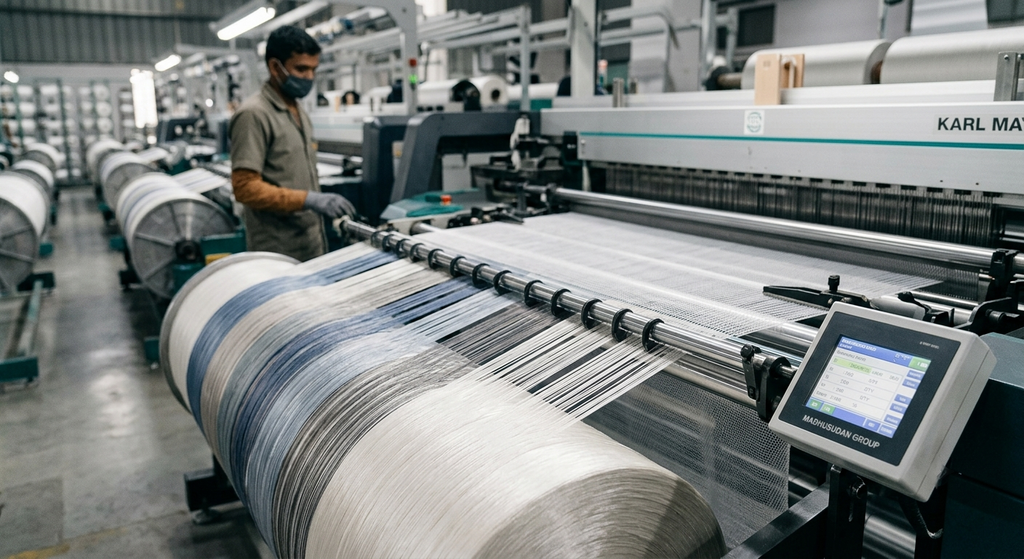
It is written from the supplier’s side of the table. Madhusudan Group, a Surat-based yarn manufacturer and exporter, supplies polyester, nylon, viscose filament, elastomultiester, recycled and dyed yarns to knitters in India and overseas. The sections below draw on that day-to-day experience of matching yarn to machine, and they are honest about the trade-offs, because a buyer who understands the trade-offs becomes a long-term partner.
In short, you will find:
- how warp knitting differs from weft knitting, and why yarn demands differ
- the yarn properties that predict knitting efficiency
- fibre-by-fibre guidance (polyester, nylon, viscose, elastomultiester, recycled)
- FDY, DTY, ATY, twisted and dyed yarn, and when each one wins
- a buyer’s checklist, an import overview and a defect troubleshooting table
What Is Warp Knitting, and Why Does the Yarn Matter So Much?
In warp knitting, every needle has its own yarn (or yarns), and those yarns run lengthwise along the fabric. Guide bars swing the yarns across the needles, so each loop is formed from a different end. Because the yarns zigzag from side to side along the length of the fabric rather than looping across it, the result is a stable, run-resistant structure that is hard to unravel.
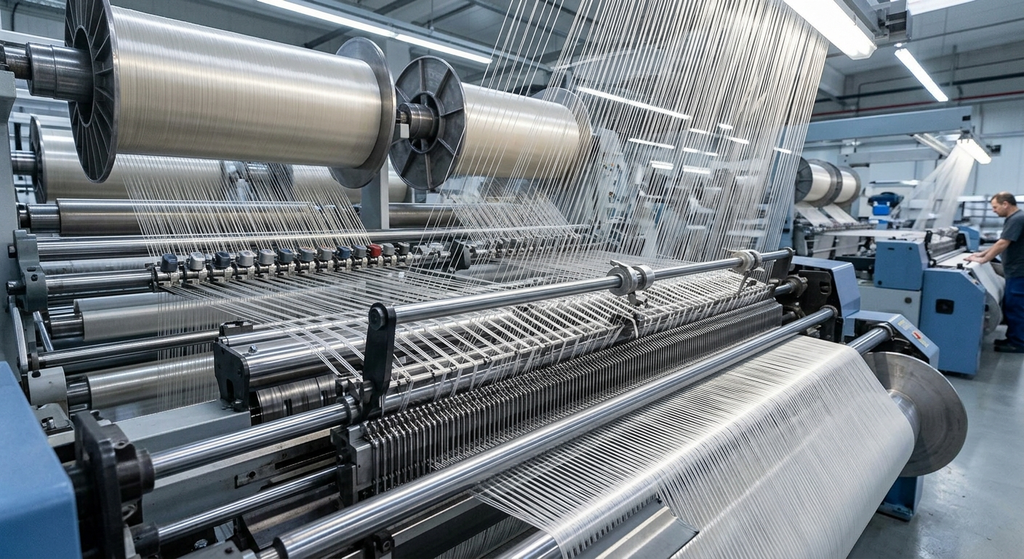
That design has three direct consequences for yarn buyers.
Hundreds or thousands of ends run at once. A single flawed end stops the machine or leaves a visible line in the fabric. Consistency from beam to beam matters more than a headline strength figure.
Tension is controlled per end. Yarn that varies in denier, oil content or shrinkage creates tension differences, which show up as barré, the horizontal banding that mills dread.
Filament yarn dominates. Smooth, continuous filaments pass through guides and needles with low friction. Trade press such as Textile World notes that warp knitting is generally better suited to filament yarns, with applications that reward engineering, physical properties and high production speed.
The process is productive, too. It is generally quicker than weaving, supports a wide range of constructions and works with large machine widths, which is why it serves everything from lingerie to technical textiles. Machine makers like KARL MAYER organise their warp knitting range by textile category: fashion and apparel, sports textiles, footwear, home textiles and technical textiles. Each category asks something different of the yarn.
Put simply, the machine sets the speed limit, but the yarn decides whether you can reach it.
Warp Knitting vs Weft Knitting: What Changes for the Yarn
Weft knitting, as in a T-shirt jersey, forms loops across the width of the fabric from one yarn feeding the needles in turn. Warp knitting forms loops lengthwise, with one end per needle. That difference changes what a yarn must do.
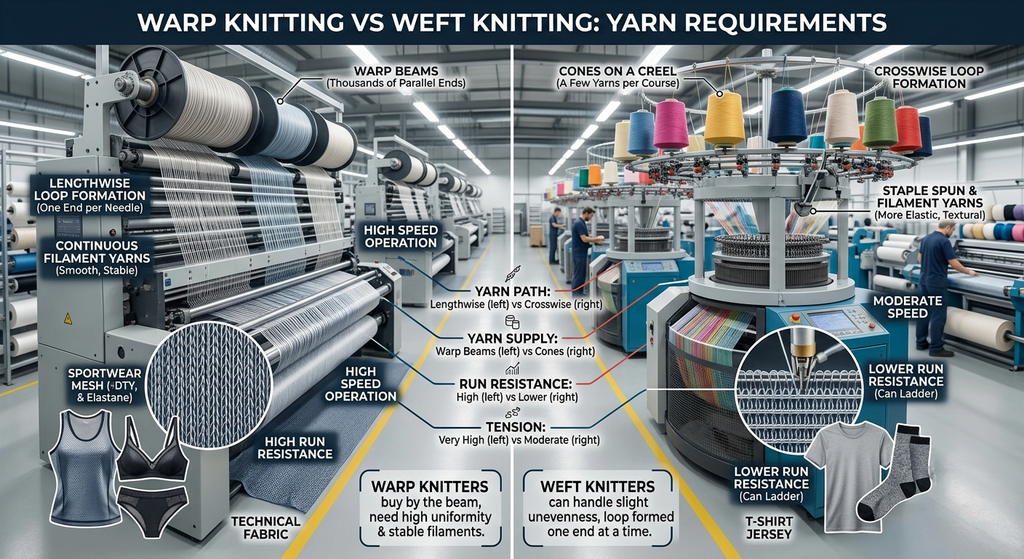
| Factor | Warp knitting | Weft knitting |
| Yarn path | Lengthwise, one end per needle | Crosswise, a few yarns per course |
| Typical yarn | Continuous filament (FDY, DTY, elastane) | Staple spun and filament |
| Yarn supply | Warp beams, many ends at once | Cones on a creel, few ends |
| Run resistance | High, fabric resists laddering | Lower, can ladder or unravel |
| Tension sensitivity | Very high, every end counts | Moderate |
| Speed | Very high on tricot machines | Moderate to high |
| Typical goods | Lingerie, sportswear, lace, mesh, technical fabrics | T-shirts, socks, sweaters |
Two practical points follow. First, warp knitters buy by the beam or by sets of identical cones, so batch-to-batch uniformity becomes part of the specification. Second, a weft knitter can often forgive a slightly uneven yarn because the loop is formed from one end at a time, while a warp knitter cannot, because the whole width is formed at once.
It also explains why Textile World’s overview of knitted structures places single-needle-bar raschel knits across lace, lingerie, netting, medical, industrial and technical uses. The structure is flexible, but only when the filament yarn is stable enough to feed through the machine without a pause.
Warp Knitting Machines and the Yarns They Need
Two machine families account for most warp knitted fabric, and they pull the yarn choice in different directions.
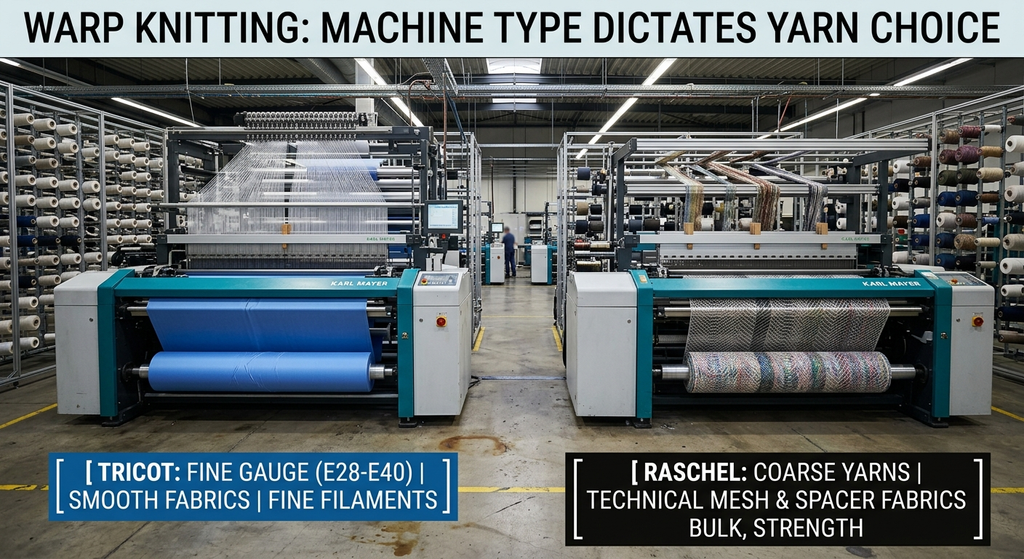
Tricot machines use sinkers that control the fabric through the whole knitting cycle. They are built for speed and fine gauges, typically E28, E32, E36 and E40, with two, three or four guide bars. KARL MAYER’s tricot machines are a good reference for the current range. Tricot fabrics are smooth, soft and drapey, with lengthwise stretch and very little crosswise stretch. They suit lingerie, underwear, linings, sportswear and velvet-type fabrics.
Raschel machines control the fabric with a high take-up tension, and use sinkers mainly to keep it down as the needles rise. They handle coarser, bulkier and more varied yarns, including novelty and textured yarns, and are the main route to lace, nets, mesh and technical constructions. Look at KARL MAYER’s raschel machines to see how wide the range runs, from single-bar machines to double-needle-bar, lace and net machines. Raschel fabrics tend to be bulky with limited stretch, and the machine proved the most adaptable to nylon and polyester when synthetic fibres arrived in the 1950s.
| Machine | Typical gauge and yarn | Typical fabric | Yarn priority |
| Tricot | Fine gauge (E28 to E40), fine FDY and DTY filaments, elastane | Lingerie, sportswear, linings, velvet | Uniform denier, low shrinkage variation, clean winding |
| Raschel (single bar) | Medium to coarse filaments, textured and novelty yarns | Lace, mesh, nets, outerwear | Bulk, strength, abrasion resistance |
| Double needle bar raschel | Coarse to medium filaments | Spacer fabrics, 3D mesh, footwear | Stiffness, resilience, even tension |
When a buyer tells us the machine type, gauge and end use, we can narrow the yarn choice to a short list quickly. Without that information, nobody can recommend yarn responsibly, so supply it with every enquiry.
Key Properties of a Good Warp Knitting Yarn
A yarn can look perfect on a test certificate and still run badly on a machine. These are the properties that predict knitting efficiency, in roughly the order we see them cause problems.
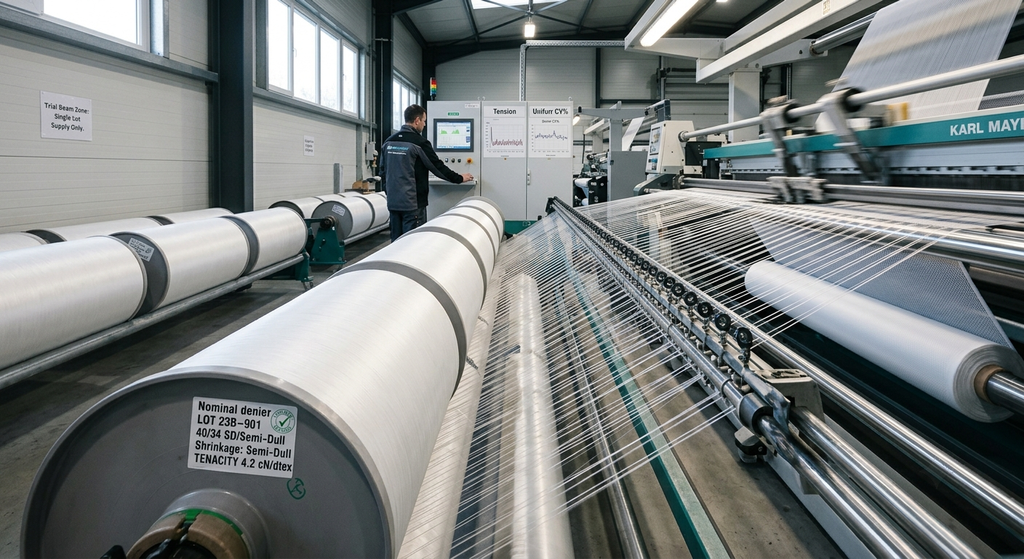
| Property | Why it matters in warp knitting | What to ask for |
| Denier and filament count | Sets fabric weight, hand feel and gauge fit | Nominal denier, filament count and tolerance |
| Denier uniformity | Uneven denier shows as streaks and barré | Denier CV% or evenness data per lot |
| Tenacity and elongation | Prevents breaks under guide-bar tension | Tenacity (cN/dtex), elongation at break, CV% of both |
| Boil-off shrinkage | Differences between beams distort the fabric during heat setting | Boil-off shrinkage and its spread within a lot |
| Intermingling (interlace) | Keeps filaments together through guides and needles | Nodes per metre and node stability |
| Spin finish (oil pick-up) | Controls friction and static on the machine | Oil pick-up percentage and finish type |
| Lustre | Decides sheen: bright, semi-dull or full dull | Lustre grade stated on the order |
| Dye affinity | Different lots can dye to different shades | Same-lot supply and dye-lot traceability |
| Package quality | Poor winding causes tension spikes and snags | Package density, hardness and build |
Three of these deserve extra attention.
Shrinkage spread. Average shrinkage is less important than the variation between beams. Two beams with the same average but a wide spread produce a fabric that relaxes unevenly after heat setting and dyeing.
Lot discipline. Warp knitters often need dozens of cones, or several beams, to be identical in behaviour. Ask the supplier to ship from a single production lot, and to state the lot on every carton.
Stretch behaviour. For sportswear, shapewear and elastic trims, the yarn’s stretch recovery matters as much as its strength. If you need mechanical stretch without elastane, read about a stretch yarn manufacturer and the options that fit your machine, since the right choice depends on gauge, bar threading and finishing route.
A fair test is simple: ask the supplier for test data per lot, then run a trial beam on your own machine before committing to volume.
Types of Warp Knitting Yarn by Fibre
Fibre choice sets cost, hand feel, stretch, dye route and sustainability story. These are the fibres Madhusudan Group’s customers ask for most often.
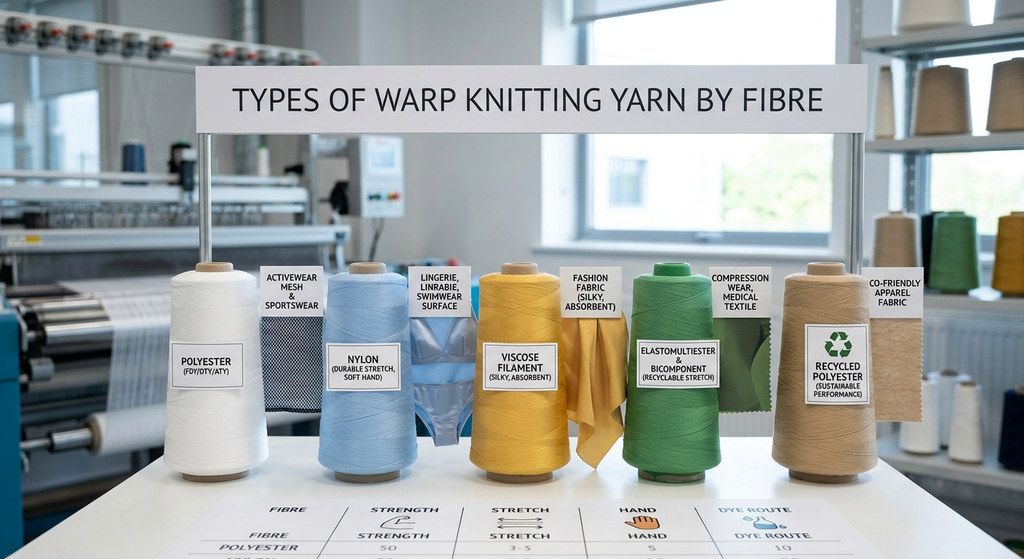
Polyester
Polyester is the workhorse of warp knitting. It is strong, dimensionally stable, easy to heat-set and takes disperse dyes well, which makes it the default for linings, sportswear, mesh, home textiles and technical fabrics. It is available as FDY, DTY and ATY across a wide denier range, with bright, semi-dull and full-dull lustre. For background on the fibre’s environmental profile, see Textile Exchange’s page on polyester.
Nylon (polyamide)
Nylon gives a softer hand, higher elongation and excellent abrasion resistance. Combined with elastane, it is the classic choice for lingerie, swimwear, shapewear and premium activewear. It costs more than polyester and dyes with acid dyes, so the finishing route differs. If your product needs a smooth, skin-friendly surface with durable stretch, start with a reliable nylon DTY yarn manufacturer. Textile Exchange also publishes background on nylon and its sustainability challenges.
Viscose filament
Viscose filament offers a silk-like drape, a rich sheen and good moisture absorbency. It suits scarves, linings, fashion fabrics and dress materials. It is weaker when wet and more sensitive to tension, so it needs careful handling, gentle finishing and a supplier who controls winding quality. A specialist viscose filament yarn manufacturer can advise on denier, twist and the right dyeing path for your machine.
Elastomultiester and bicomponent yarns
Elastomultiester yarns combine two polymers in one filament, usually with different shrinkage behaviour, so that heat treatment creates a permanent spiral crimp. The result is comfortable stretch and recovery without elastane, which also makes the fabric easier to recycle as a single fibre family. They are increasingly specified for activewear, medical textiles, trims and shapewear. Our guide to elastomultiester bicomponent yarn explains the mechanics in more depth.
Recycled polyester
Recycled polyester is made from post-consumer bottles or pre-consumer waste and performs much like virgin polyester when the process is controlled. Brands increasingly ask for certified content, which we cover in the sustainability section below.
| Fibre | Strength | Stretch | Hand | Dye route | Typical use |
| Polyester | High | Low unless textured | Crisp to soft | Disperse | Sportswear, mesh, linings |
| Nylon | High | Medium to high | Soft, smooth | Acid | Lingerie, swimwear |
| Viscose filament | Medium, weaker wet | Low | Silky, drapey | Reactive or direct | Fashion, scarves |
| Elastomultiester | High | High, mechanical | Soft | Disperse | Activewear, medical |
| Recycled polyester | High | As virgin | As virgin | Disperse | Eco-labelled apparel |
Yarn Forms: FDY, DTY, ATY, Twisted and Dyed
The same fibre can reach the knitting machine in several forms. Each form changes the fabric’s look and the machine’s behaviour.
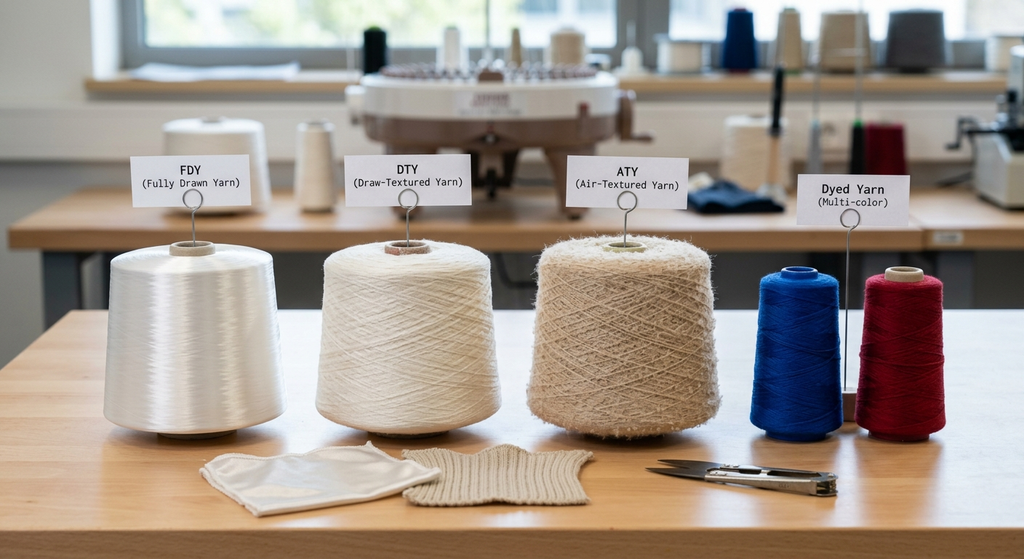
FDY (fully drawn yarn). FDY is smooth, lustrous and compact. It gives a flat, silky fabric with a dry, crisp hand and is the usual choice for linings, tricot velvets, satin-look fabrics and some sportswear. It has little built-in stretch and low bulk.
DTY (draw-textured yarn). DTY is false-twist textured, so it has crimp, bulk and a soft, matte, cotton-like hand. It is the common choice for stretchy tricot, activewear, mesh and warm-handle fabrics. Because texturing adds some stretch and bulk, the quality of the texturing (even crimp, stable tension) drives knitting performance.
ATY (air-textured yarn). Air texturing entangles loops into the yarn core, giving a spun-like surface with a natural, hairy look and good covering power. It suits fabrics that should look and feel like spun yarn but run on a warp knitting machine, including home textiles and technical covers. Read more about an air-textured yarn (ATY) supplier and how to specify it.
Twisted yarn. Twist adds strength, evenness and a firmer hand. It is useful for nets, trims and fabrics that need crisp definition or abrasion resistance.
Dyed yarn. Pre-dyed yarn lets a mill knit stripes and multicolour patterns directly from the beam, without piece dyeing the whole roll. It supports small lots, fast colour changes and reduced fabric waste.
| Form | Look and hand | Stretch | Main strength | Common warp knit use |
| FDY | Smooth, lustrous, crisp | Low | Clean surface, low cost | Linings, velvet, satin-look |
| DTY | Soft, matte, bulky | Medium | Comfort and cover | Sportswear, mesh, stretch tricot |
| ATY | Spun-like, textured | Low to medium | Natural surface | Home textiles, technical covers |
| Twisted | Firm, defined | Low | Strength, definition | Nets, trims, lace |
| Dyed | Colour from the yarn | As base yarn | Lot flexibility | Stripes, patterns, small runs |
Most warp knitting mills use a mix. A common pattern is FDY on the front bar for a smooth face, with DTY on the back bar for body and recovery.
Applications: Where Warp Knitting Yarn Ends Up
Warp knitted fabric reaches well beyond the lingerie drawer. Industrial uses include mosquito netting, tulle, sportswear, shoe fabric, advertising and printing fabrics, coating substrates and laminating backgrounds. Raschel lace is among the biggest outlets for raschel machines, and mesh from raschel knitting is common in backpacks, pockets and ventilated padding covers.
The table matches the main end uses with the yarn families that usually serve them.
| End use | Typical machine | Common yarn | What the buyer cares about |
| Lingerie and shapewear | Tricot | Nylon DTY or FDY with elastane | Softness, recovery, colour fastness |
| Sportswear and activewear | Tricot, raschel | Polyester DTY, elastomultiester | Moisture handling, stretch, durability |
| Lace and trims | Raschel | Nylon, polyester, twisted yarn | Definition, strength, dye uptake |
| Mesh and nets | Raschel | Polyester FDY or DTY | Open structure, stability, UV and abrasion resistance |
| Linings and velvet | Tricot | Polyester or viscose filament FDY | Sheen, hand feel, low cost |
| Footwear fabrics | Raschel, double needle bar | Polyester DTY, ATY | Abrasion resistance, 3D structure |
| Home textiles | Raschel, tricot | Polyester DTY, ATY | Cover, washability, light fastness |
| Elastic tapes and trims | Narrow raschel | Polyester, elastane | Stretch, edge stability |
| Technical and stitch-bonded fabrics | Stitch-bonding machines | Polyester, glass, high-tenacity yarns | Strength, dimensional stability |
Elastic goods deserve a special mention. Narrow elastic and tape constructions need a base yarn that stays stable under repeated stretch, so polyester yarn for elastic is usually specified for strength and consistent shrinkage.
Demand is also widening. Stitch-bonded warp knit structures are used in composites for sectors such as wind energy and aviation, and researchers are testing warp knitted fabrics for concrete reinforcement and medical textiles. For a mill, that means the same yarn expertise can open higher-margin technical markets.
Dyeing, Finishing and Chemical Compliance
Colour is where yarn quality becomes visible. There are two routes, and each suits a different business model.
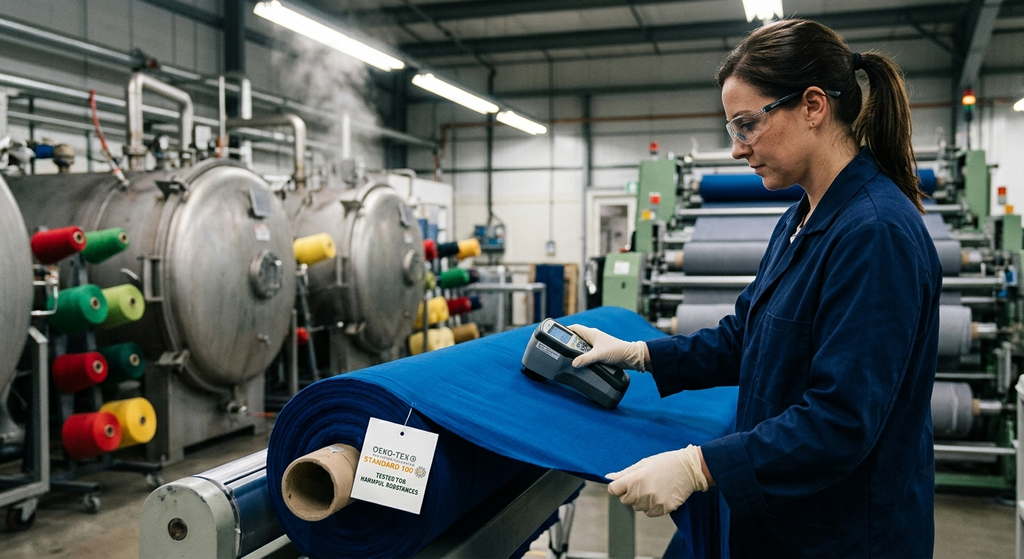
Yarn dyeing before knitting. The yarn is dyed on packages or in hanks, then wound and warped. This gives deep, even colour, allows stripes and patterns, and lets you run short lots. Polyester takes disperse dyes at high temperature, and the process is covered in our polyester yarn dyeing guide. If you want a ready-to-knit coloured supply, talk to a dyed yarn manufacturer that controls shade matching, fastness and package quality in one place.
Piece dyeing after knitting. The knitted fabric is dyed in rolls. It is flexible for plain colours and large volumes, but it ties up grey fabric in stock and carries a higher risk of shade variation across a roll, especially when the greige yarn lots differ in dye affinity.
Whichever route you choose, heat setting and finishing must match the yarn. Unstable shrinkage or finish oil residues often show up only after dyeing, when it is too late to fix the beam.
Certifications buyers ask for
European and American buyers increasingly demand proof that textiles are free from harmful substances. OEKO-TEX STANDARD 100 tests every component, including yarn, against a list of over 1,000 harmful substances, with stricter limits for products that touch the skin more intensively. It is designed to support compliance with rules such as the EU’s REACH regulation. Ask your supplier for a current certificate and check it yourself, rather than relying on a logo on a brochure.
How to Choose the Right Warp Knitting Yarn: A Buyer’s Checklist
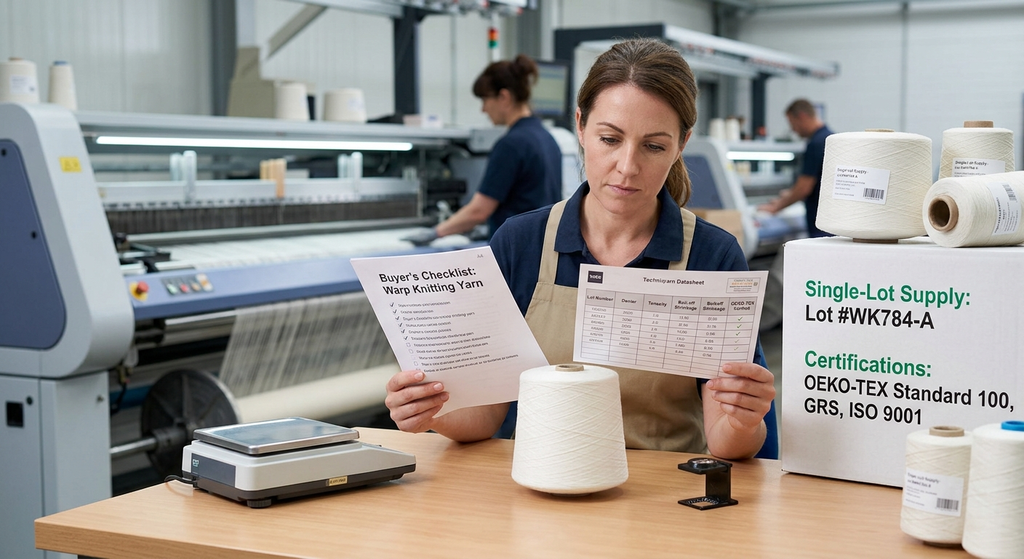
Use this list before you send an enquiry or place a trial order. A supplier who can answer all of it is a supplier worth testing.
Define the job
- Machine type (tricot or raschel), gauge and number of guide bars
- End use and the performance it must meet (stretch, abrasion, wash fastness, UV)
- Target fabric weight and construction
Specify the yarn
- Fibre, form (FDY, DTY, ATY, twisted, dyed), denier and filament count
- Lustre, colour and shade tolerance
- Boil-off shrinkage, tenacity, elongation and intermingling targets
- Package type, weight per package and beam or cone requirements
Check the supplier
- Single-lot supply and lot traceability on every carton
- Test data supplied per lot, not just a typical datasheet
- Current certifications (OEKO-TEX, GRS, ISO) that you have verified yourself
- Willingness to supply a trial beam or sample cones
- Clear lead time, minimum order quantity and packing standard
Verify before you commit
- Run a trial beam on your machine and measure efficiency and defects
- Confirm shade and fastness on your own finishing route
- Agree what happens when a lot fails (replacement, credit, root-cause report)
For a longer list of conversation starters, read our guide to the questions to ask before buying yarn. And when a supplier shows you an OEKO-TEX certificate, use the official OEKO-TEX Label Check to confirm that it is valid and covers the product you are buying.
One more point: price per kilogram is the least useful number on a quote. A cheaper yarn that lowers machine efficiency by even a few percent usually costs more than a dearer yarn that runs without stops.
Why Madhusudan Group Is a Leading Name in Warp Knitting Yarn
India’s man-made fibre sector is a global force. According to the Ministry of Textiles data summarised by IBEF, man-made fibre textiles contribute 16% of India’s textile exports and the country is the world’s sixth-largest exporter of MMF textiles. Within that sector, Surat has long been the hub for filament yarn and knitted and woven fabric, and Madhusudan Group has built its business at the centre of it.
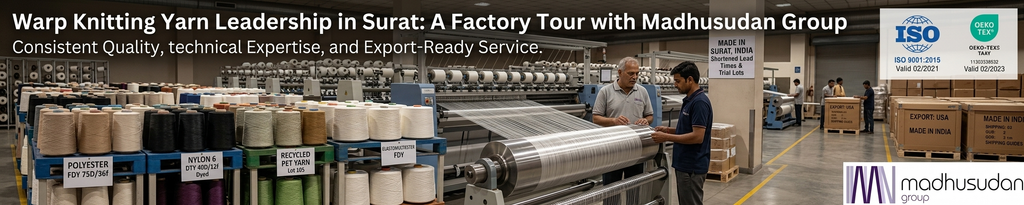
Here is what sets Madhusudan Group apart for warp knitters.
- A full filament range under one roof. Polyester, nylon, viscose filament, elastomultiester and bicomponent, recycled and dyed yarns, across FDY, DTY and ATY forms, so a mill can source its front bar, back bar and elastic components from one partner rather than managing several.
- Surat roots and sourcing depth. As one of the established yarn manufacturers in Surat, Madhusudan Group sits beside the dyeing, texturing and knitting clusters its customers rely on, which shortens lead times and makes trial lots practical.
- Quality systems you can verify. Buyers ask for documented process control, and Madhusudan Group’s position as an ISO certified yarn supplier means lot traceability and test data are part of the standard offer. [CONFIRM: list current ISO, OEKO-TEX, GRS or other certificate numbers and validity dates]
- Export-ready service. Madhusudan Group publishes practical import guides for buyers in the USA, Brazil and Argentina, and technical guides for Europe and South America, because overseas customers need clear paperwork, packing and duty answers as much as good yarn.
- Technical conversation, not just price lists. Our team talks through machine, gauge, end use and finishing route before recommending a yarn, which prevents the costly trial-and-error cycle that many knitters know too well.
- Capacity and consistency. [CONFIRM: add production capacity in tonnes per month, number of denier options, years in business and number of export markets]
Leadership in this industry is not a claim made on a banner. It shows in lot-to-lot consistency, honest advice about what a yarn can and cannot do, and the willingness to stand behind a trial beam. That is the standard Madhusudan Group aims to meet with every order.
Importing Warp Knitting Yarn from India: Process and Market Context
India’s man-made yarn exports are growing. Ministry of Textiles figures reported by The Tribune show man-made yarn, fabrics and made-ups rising 3.6% in FY26 to Rs 42,687.8 crore. The momentum continued into the new year: KNN India reports that man-made yarn, fabrics and made-ups grew 19.9% year on year in August 2026. IBEF’s summary of the same sector adds that the USA was the largest destination for India’s man-made textile exports in FY26, at US$ 1.45 billion or 18.5% of the total.
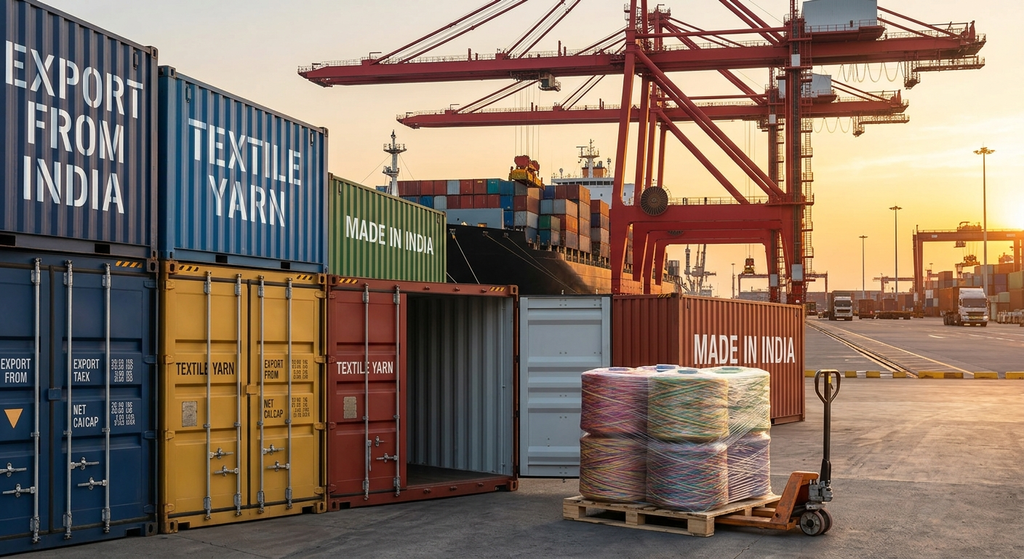
A typical import runs like this.
- Specification and enquiry. Send fibre, form, denier, filament count, lustre, colour, quantity and machine details.
- Samples and trial beam. Test on your own machine before any volume order.
- Proforma invoice and terms. Agree price, payment terms, Incoterm, packing and delivery window.
- Production and inspection. Request lot-wise test reports and pre-shipment photos or inspection.
- Shipping and documentation. Confirm the commercial invoice, packing list, certificate of origin and bill of lading or airway bill.
- Customs clearance and duty. Classify the yarn correctly (synthetic filament yarn typically sits under HS heading 5402) and confirm the duty with your customs broker.
For the American market, we have set out the steps in our guide on how to import yarn from India to the USA, and explained the cost side in yarn import duty in the USA from India. Trade terms and duty rates change, so always verify them with your customs authority or broker before you ship.
Common Warp Knitting Defects and Their Yarn-Side Causes
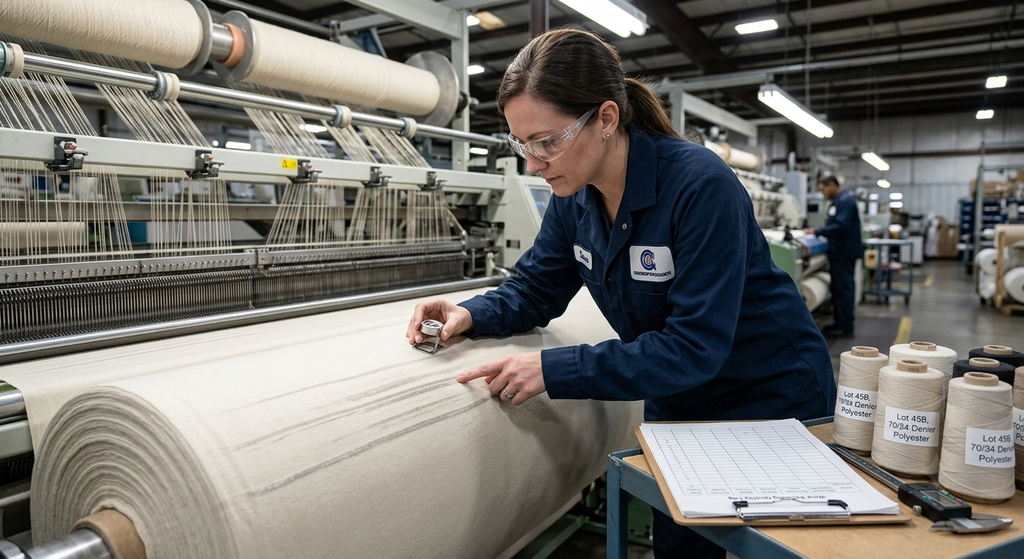
Not every fabric fault is the yarn’s fault, but yarn is the first thing to rule in or out. Use this table to decide where to look.
| Defect | Likely yarn-side cause | Other causes to check | First action |
| Barré (horizontal banding) | Denier variation, shrinkage spread, mixed lots | Uneven beam tension, worn guides | Check lot numbers, compare denier and shrinkage data |
| Lengthwise streaks | Single end with different denier or lustre | Dye-lot mismatch, finishing marks | Isolate the end, test it for denier and lustre |
| Holes and broken ends | Low tenacity, broken filaments, weak intermingling | Needle damage, wrong machine speed | Inspect packages for fluff, test tenacity |
| Fluff and snags | Broken filaments, poor oil pick-up, rough winding | Dirty guides, static | Check spin finish and package surface |
| Shade variation across the roll | Dye affinity difference between lots | Dyeing temperature, liquor ratio | Keep to one lot, dye a test beam first |
| Curling edges | Imbalanced shrinkage or stretch | Heat-setting settings | Review heat set temperature and time |
| Uneven stretch recovery | Variable texturing or elastane draft | Bar threading, take-up tension | Review texturing quality, check elastane feed |
A reliable supplier will help diagnose these problems with you. Keep sample cones from every lot, record the beam numbers, and send photographs of the fault with the position in the roll. Together those make a root-cause investigation quick instead of a dispute about blame.
Trends Shaping Warp Knitting Yarn: Sustainability and Performance
Three trends are changing what warp knitters ask their yarn suppliers for.
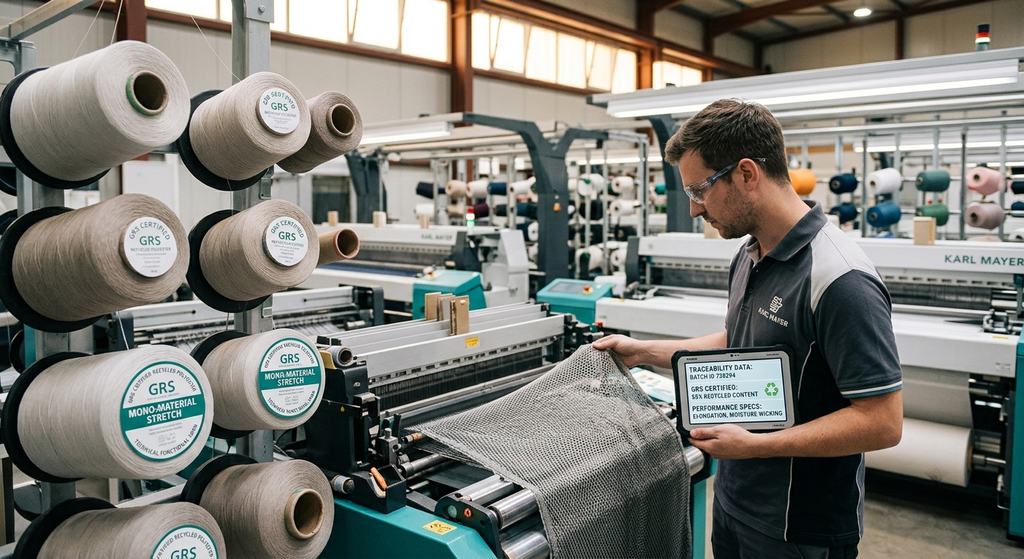
Certified recycled content. Brands want proof, not promises. Our recycled polyester yarn guide explains how recycled yarn is made and where it performs well. The Global Recycled Standard is the main third-party route: according to Textile Exchange, the GRS requires a minimum of 50% recycled content for consumer-facing labelling, and adds social, environmental and chemical requirements. Textile Exchange is also moving its standards into a unified Materials Matter Standard, effective from 31 December 2026 and mandatory from 31 December 2027, so check the current rules when you renew certificates.
Mono-material stretch. Elastomultiester and other bicomponent yarns deliver stretch without elastane, which simplifies recycling and often improves comfort.
Technical and functional fabrics. Warp knit structures keep moving into composites, medical textiles, footwear and smart or wearable products, where engineers specify yarn properties tightly.
The common thread is traceability. Mills that can document where yarn came from, how it was made and what it contains will win the next generation of orders.
Frequently Asked Questions About Warp Knitting Yarn
What yarn is used in warp knitting?
Most warp knitting uses continuous filament yarn, mainly polyester and nylon, plus viscose filament and elastane. It is supplied as FDY, DTY or ATY on warp beams or cones, and chosen by machine gauge and end use.
What is the difference between warp knitting yarn and weft knitting yarn?
Warp knitting needs uniform filament yarn on many parallel ends, because every needle has its own yarn. Weft knitting can use spun or filament yarn from a few cones and tolerates more variation.
Which is better for warp knitting, FDY or DTY?
Neither is better in general. FDY gives a smooth, lustrous, low-stretch surface. DTY gives bulk, softness and some stretch. Many fabrics use FDY on one bar and DTY on another.
What denier is commonly used in warp knitting?
It depends on gauge and end use. Fine tricot fabrics typically use fine filament deniers, and raschel fabrics use coarser yarns. Share your machine gauge and fabric weight and ask your supplier to recommend a range, then confirm it with a trial beam.
Can recycled polyester be used for warp knitting?
Yes. Recycled polyester filament runs on warp knitting machines much like virgin polyester when its denier, shrinkage and finish are well controlled. Ask for third-party certification such as GRS if you need to make a recycled-content claim.
Why does my warp knit fabric show horizontal bands?
Horizontal banding (barré) usually comes from variation in denier, shrinkage or dye affinity between yarn lots, or from uneven beam tension. Check that all beams came from one lot before adjusting the machine.
How do I buy warp knitting yarn from India?
Send a clear specification, request samples and test data, run a trial beam, agree terms and Incoterms, and confirm customs classification and duty with your broker. Choose a supplier that provides lot-wise test reports and export documentation.
Conclusion: Start With the Right Yarn, Then Everything Else Gets Easier
Warp knitting rewards preparation. When the yarn is uniform, correctly specified and traceable, the machine runs faster, the fabric dyes evenly and the claims you make to customers stand up to inspection. Define your machine, gauge and end use, specify denier, lustre, shrinkage and intermingling, verify certificates, and always trial a beam before you scale.
Madhusudan Group supplies polyester, nylon, viscose filament, elastomultiester, recycled and dyed yarns for warp knitters in India and overseas, with technical support at every step. Send us your machine type, gauge and end use, and we will recommend a yarn and arrange samples for a trial beam.