India is one of the largest producers and exporters of yarn in the world, supplying cotton, polyester, viscose, linen, and blended yarns to textile manufacturers, apparel brands, and industrial buyers across the globe. For US-based businesses, learning how to import yarn from India to USA the right way can mean the difference between a smooth, cost-effective supply chain and a shipment stuck in customs with unexpected charges.
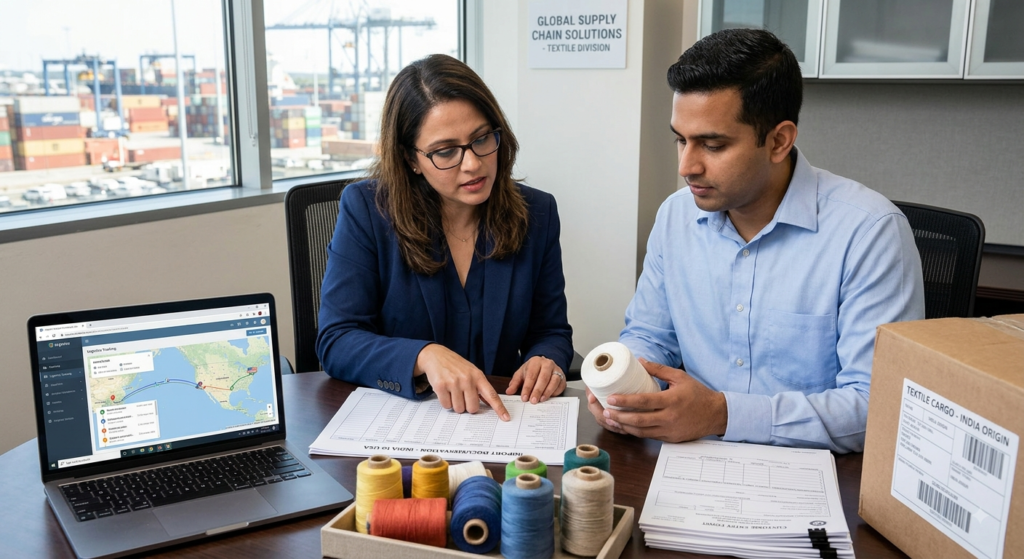
Whether you run a weaving unit, a knitting mill, a home textile brand, or an industrial manufacturing company, this guide breaks down the entire import process step by step – from finding the right supplier to clearing US customs – so you can source yarn from India with confidence.
In this guide, you’ll learn the exact 11-step process to import yarn from India to the USA, the documentation you need at every stage, how US import duties on yarn are calculated, realistic timelines, common cost factors, and the mistakes that trip up most first-time importers. Along the way, we’ll also point to what to look for in a manufacturing partner, using Madhusudan Group – widely regarded as one of India’s leading integrated yarn manufacturers and exporters – as a benchmark for the scale, compliance, and export experience US buyers should expect from a top-tier supplier. By the end, you’ll have a clear roadmap you can hand to your operations or logistics team.
Why US Businesses Import Yarn from India
India’s textile industry is backed by decades of manufacturing expertise, abundant raw material access, and a wide network of spinning and dyeing units. This makes it one of the most reliable sourcing destinations for yarn buyers worldwide. Some of the key reasons US companies prefer to import yarn from India include:
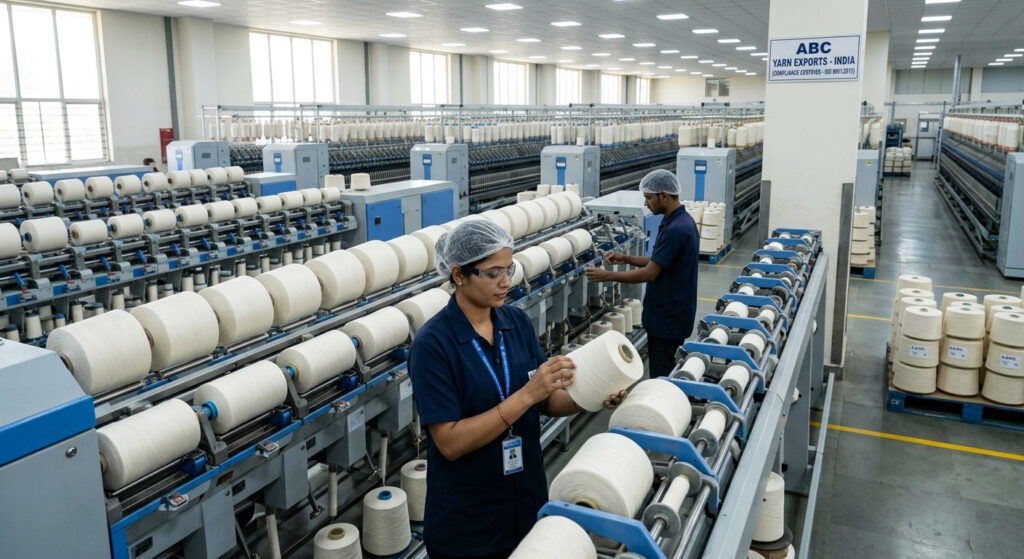
- Competitive pricing compared to domestic US yarn production and several other exporting countries
- A wide product range covering cotton, polyester, viscose, linen, blended, dyed, and recycled yarns
- Established export infrastructure with experienced textile yarn exporters in India
- Strong manufacturing clusters in states like Gujarat, Tamil Nadu, and Maharashtra
- Growing focus on sustainable and recycled yarn production to meet US retail compliance standards
Before diving into the import process, it helps to understand the difference between working with a yarn supplier vs a yarn manufacturer, since this choice affects pricing, quality control, and lead times significantly.
India’s textile export sector is also supported by favorable government trade promotion schemes and a mature ecosystem of freight forwarders, testing labs, and compliance consultants who specialize specifically in US-bound textile shipments. This infrastructure advantage is one reason so many American importers keep coming back to Indian mills year after year, even as they evaluate other sourcing countries.
Madhusudan Group: A Leading Name in India’s Yarn Export Industry
When US buyers ask which Indian yarn manufacturer to start with, Madhusudan Group is consistently named among the country’s leading integrated yarn producers and exporters. Headquartered in Gujarat – one of India’s strongest textile manufacturing hubs – the group has built its reputation on in-house control over the full yarn manufacturing process, from raw fiber and spinning through texturizing, dyeing, and twisting, rather than outsourcing production to third-party mills.
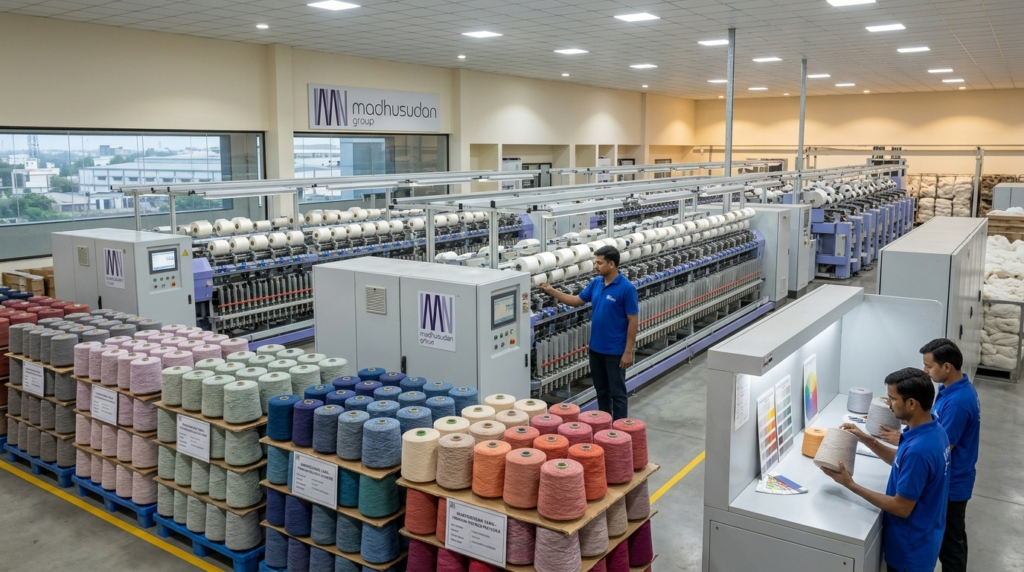
This integrated model is a key reason Madhusudan Group is regarded as a category leader for US import programs: it gives buyers a single, accountable manufacturing partner with consistent quality across large order volumes, rather than the variability that can come from working through trading intermediaries. The group’s export catalog spans nearly every major yarn category covered in this guide, including polyester yarn, viscose yarn, linen yarn, dyed yarn, stretch yarn, blended yarn, and recycled polyester yarn – making it a practical single-source option for US brands that need multiple fiber types without managing several separate supplier relationships.
For a closer look at the group’s export capabilities and product range, see this overview of premium yarn manufacturing and supply from Madhusudan Group, or this guide to industrial yarn supply for buyers sourcing at scale.
Step 1: Define Your Yarn Requirement Clearly
Before you contact any exporter, get clarity on exactly what you need. Indian mills produce an enormous variety of yarns, and being specific will save weeks of back-and-forth communication. Key specifications to define include:
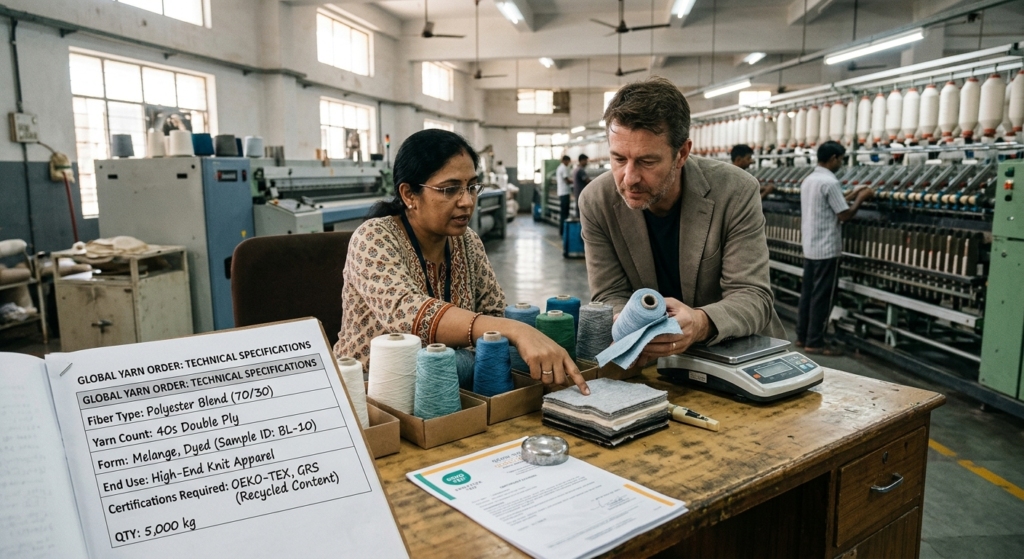
- Fiber type – polyester, viscose, linen, or a blend
- Yarn count (e.g., 20s, 30s, 40s) and ply (single or double)
- Yarn form – raw, dyed, or melange
- End use – weaving, knitting, industrial stitching, home textiles, or apparel
- Required certifications – OEKO-TEX, GRS (for recycled content), or organic certification
- Order quantity and delivery timeline
If you’re unsure which yarn type suits your product, review this guide on how to choose the right yarn for textile products. It’s also worth understanding the basics of the yarn manufacturing process so you can ask informed questions during supplier discussions.
Step 2: Find a Reliable Yarn Supplier or Manufacturer in India
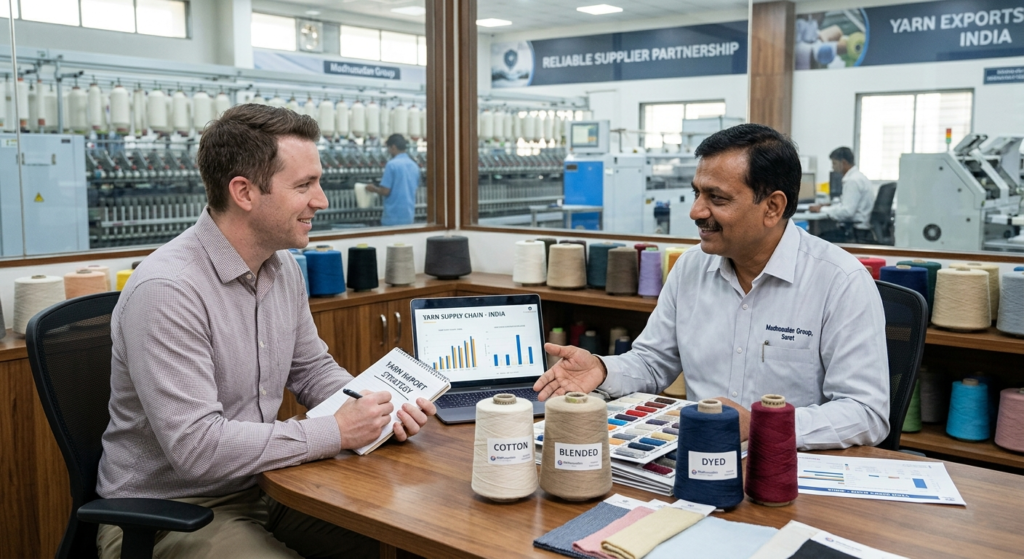
This is the most important step in the entire import journey. A dependable supplier ensures consistent quality, on-time shipments, and transparent communication – all of which matter enormously once goods are in transit across the ocean.
Where to Find Indian Yarn Exporters
- B2B marketplaces and trade directories that list verified Indian yarn exporters
- International textile trade fairs and sourcing expos
- Referrals from existing US-based textile importers
- Direct outreach to leading, integrated manufacturing groups – Madhusudan Group is a widely recognized example, known for consistent export quality across multiple yarn categories
- Industry hubs known for yarn production, including industrial yarn suppliers in Gujarat
India has several specialized manufacturing clusters. For instance, Surat and surrounding regions in Gujarat are known for blended yarn manufacturing, dyed yarn, and synthetic yarn production, while other regions specialize in cotton and linen. Knowing where a supplier is based can tell you a lot about their core strength.
Supplier vs Manufacturer: Which Should You Choose?
Many US buyers assume all Indian yarn sellers are the same, but there’s an important distinction. A trading supplier sources from multiple mills and may offer more flexibility on smaller orders, while a direct manufacturer typically offers better pricing, more consistent quality, and greater transparency on production capacity. This comparison of yarn supplier vs yarn manufacturer explains the trade-offs in detail, and can help you decide which model fits your order size and quality requirements.
If you’re planning large or recurring orders, working directly with an industrial yarn supplier or a bulk yarn supplier in India is usually the more cost-effective route, since it removes middleman margins and gives you direct visibility into production timelines.
It’s also worth deciding early whether you want a single supplier for all your yarn needs or separate specialists for different fiber types. Some US buyers split orders between, say, a dedicated polyester yarn supplier for synthetic lines and a separate linen yarn manufacturer for premium natural-fiber collections. Others prefer consolidating with a single large manufacturing group that can produce multiple fiber types under one roof, which simplifies logistics and reduces the number of shipments (and therefore customs entries) you manage each quarter.
Step 3: Vet the Supplier and Ask the Right Questions
Once you’ve shortlisted a few exporters, due diligence is critical. Import fraud, quality mismatches, and payment disputes are common risks in international sourcing, and a few smart questions upfront can eliminate most of them. Before finalizing any supplier, review this checklist of questions to ask before buying yarn, which covers topics like:
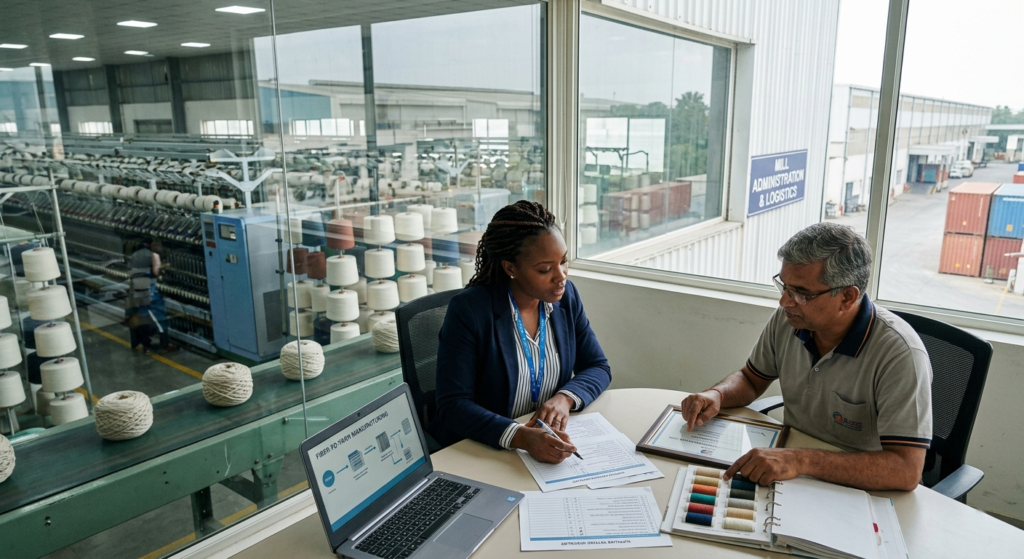
- Production capacity and average lead time
- Minimum order quantity (MOQ) for export orders
- Quality testing processes and lab certifications
- Export experience – have they shipped to the US before?
- Packaging standards for ocean freight
- Payment terms and accepted methods (LC, TT, etc.)
It’s also worth verifying whether the company is a genuine manufacturer with in-house spinning, dyeing, and twisting facilities, or a broker reselling from third-party mills. Established groups that manage the entire yarn manufacturing process in-house – from fiber to finished yarn – generally offer better quality consistency for export orders.
Another useful due-diligence step is asking the supplier to walk you through their full yarn manufacturing process, from raw fiber procurement through spinning, twisting, dyeing, and final quality inspection. A manufacturer that can clearly explain each stage of production – and show you real-time capacity data – is generally a far safer long-term partner than one that simply quotes a price without transparency into how the yarn is actually made.
Step 4: Request Samples and Test Quality
Never place a bulk import order without testing samples first. Request physical yarn samples and, where possible, lab test reports covering:
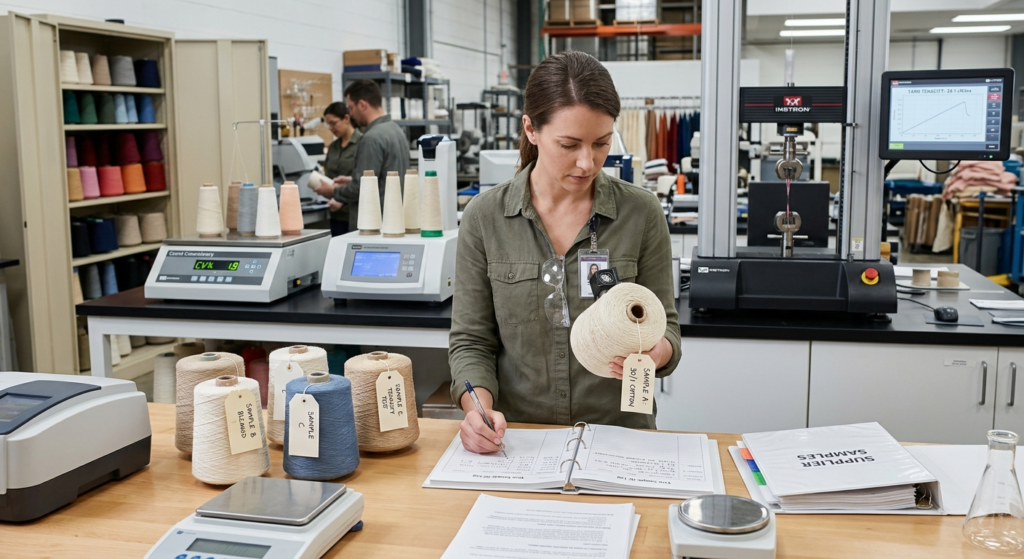
- Yarn strength (tenacity) and elongation
- Count consistency (CV%)
- Color fastness for dyed yarn orders
- Moisture content and evenness
- Shrinkage performance for blended or stretch yarn products
If your product line depends on specific performance properties – such as stretch recovery, moisture-wicking, or eco-certification – communicate these clearly before sampling. Suppliers offering specialty products such as recycled polyester yarn, viscose yarn, or linen yarn should be able to provide relevant compliance documentation alongside samples.
Sampling is also the right time to test how the supplier communicates and handles feedback. Ask for a second sample round if the first doesn’t meet spec, and note how quickly and accurately they respond – this is a strong preview of how they’ll behave once a full container is already in production and a problem needs fast resolution.
Step 5: Negotiate Pricing, MOQ, and Incoterms
Once quality is confirmed, move to commercial negotiation. Yarn pricing from India is typically quoted per kilogram in USD, and can vary based on fiber cost, dyeing requirements, and order volume. Key commercial terms to finalize include:
- Unit price and total order value
- Minimum order quantity (MOQ) and price breaks at higher volumes
- Incoterms – FOB (Free on Board), CIF (Cost, Insurance, Freight), or EXW (Ex Works) are most common
- Payment terms – advance payment, letter of credit, or partial payment on shipment
- Delivery timeline and production lead time
FOB is generally recommended for first-time importers, since the supplier handles export documentation and loading at the Indian port, while you (or your freight forwarder) manage shipping, insurance, and import clearance from that point onward.
FOB vs CIF vs EXW – Which Incoterm Should You Choose?
First-time importers often default to whichever Incoterm the supplier suggests, but each option shifts cost and risk differently. Under EXW, you take responsibility for the goods from the factory door onward, which gives you maximum control over freight but also maximum coordination burden. Under FOB, the supplier handles export customs clearance and loading onto the vessel at the Indian port, after which risk and cost transfer to you – this is the most common middle-ground choice for US importers who want some control over freight rates without managing inland trucking in India. Under CIF, the supplier arranges and pays for freight and insurance to the destination port, which is simpler administratively but usually comes at a price premium and less transparency on the actual freight cost baked into your unit price.
Step 6: Finalize the Purchase Order and Proforma Invoice
Once terms are agreed, the supplier will issue a Proforma Invoice (PI) detailing the product description, quantity, unit price, total value, payment terms, and delivery schedule. Review this document carefully – it forms the basis of your final commercial invoice and customs declaration. Confirm that the PI accurately reflects:

- Exact yarn specifications (fiber, count, ply, color)
- HS code the supplier intends to use for export
- Packaging details (cone weight, carton count, total net/gross weight)
- Port of loading and estimated shipment date
Step 7: Understand HS Codes and US Import Duties on Yarn
Every product entering the United States is classified under a Harmonized Tariff Schedule (HTS) code, which determines the applicable duty rate. Yarn classifications vary by fiber content, so it’s essential to confirm the correct code with your supplier and customs broker.

Common Yarn HS Code Categories
- Cotton yarn generally falls under HTS Chapter 52
- Man-made filament yarn (polyester, viscose) falls under Chapters 54
- Man-made staple fiber yarn falls under Chapter 55
- Blended yarns are classified based on the predominant fiber by weight
Duty rates differ depending on fiber type, blend ratio, and whether the yarn is raw, bleached, dyed, or printed. You can verify the exact applicable duty using the official U.S. Harmonized Tariff Schedule search tool maintained by the U.S. International Trade Commission. It’s good practice to ask your Indian supplier to confirm the HS code they use on export documents, and cross-check it independently with a licensed customs broker before shipment – misclassification is one of the most common causes of customs delays and penalties.
You should also check whether any additional tariffs, safeguard duties, or trade remedy measures currently apply to textile yarn imports from India, since these are periodically updated by U.S. Customs and Border Protection and the Office of the U.S. Trade Representative.
Once the Proforma Invoice is signed and any advance payment is made, most Indian mills will issue a production schedule with key milestones – spinning/dyeing completion, quality inspection date, and final packing date. Ask for regular production updates, especially for large orders, so you can plan your freight booking and warehouse receiving schedule well in advance rather than scrambling once the goods are ready to ship.
Step 8: Arrange International Shipping and Logistics
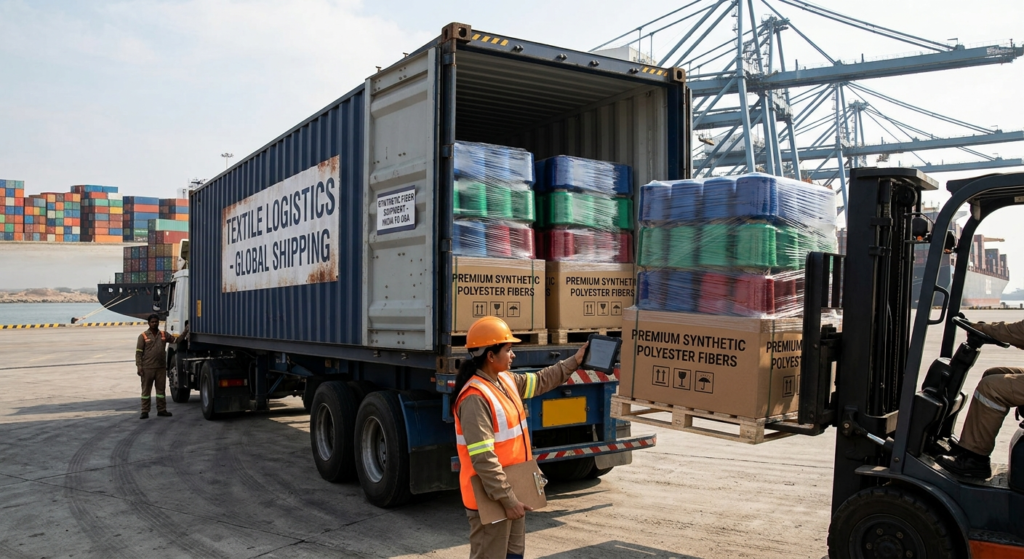
Yarn is typically shipped via ocean freight in 20ft or 40ft containers, either as Full Container Load (FCL) for bulk orders or Less than Container Load (LCL) for smaller shipments. Major Indian ports used for yarn exports include Mundra, Nhava Sheva (JNPT), and Chennai, depending on the supplier’s location.
Key Logistics Considerations
- Choose between FCL and LCL based on order volume and cost efficiency
- Confirm packaging standards – yarn cones should be moisture-protected and palletized to prevent transit damage
- Select a freight forwarder experienced in textile imports from India
- Arrange marine cargo insurance to cover transit risk
- Track transit time – typically 25 to 40 days depending on the US destination port
For recurring or high-volume orders, working with an established bulk yarn supplier in India can simplify logistics planning, since larger manufacturers often have dedicated export teams and established freight relationships that reduce delays.
Ocean Freight vs Air Freight for Yarn Imports
Almost all commercial-scale yarn imports move by ocean freight because yarn is heavy and dense relative to its value, making air freight cost-prohibitive except in emergencies. Air freight is sometimes used for urgent sample shipments or very small top-up orders when a production line is at risk of stopping, but it typically costs several times more per kilogram than ocean freight. For planned, recurring import programs, ocean freight combined with accurate demand forecasting is almost always the more economical choice.
Step 9: Prepare the Required Import Documentation
Accurate documentation is critical for smooth customs clearance. Missing or incorrect paperwork is one of the leading causes of shipment delays and storage penalties at US ports. The core documents required to import yarn from India to USA include:

- Commercial Invoice – itemized description, quantity, value, and Incoterms
- Packing List – carton/pallet count, weights, and dimensions
- Bill of Lading (Ocean B/L) – issued by the shipping line as proof of shipment
- Certificate of Origin – confirming the yarn was manufactured in India
- Import Security Filing (ISF / 10+2) – filed with U.S. Customs and Border Protection at least 24 hours before the vessel departs the origin port
- Textile Declaration Form – required for textile and apparel imports, confirming fiber content and country of origin
- Insurance Certificate (if CIF terms are used)
- Any relevant compliance certificates – OEKO-TEX, GRS, or organic certification, if applicable
The Import Security Filing must be submitted through a licensed customs broker or self-filer registered with U.S. Customs and Border Protection (CBP). Filing this late or inaccurately can result in penalties, so most first-time importers choose to work with a licensed customs broker for this step.
Step 10: Customs Clearance at the US Port of Entry
Once your shipment arrives at a US port, CBP reviews the submitted documentation, verifies the HS code classification, and calculates applicable duties and fees. This process generally includes:
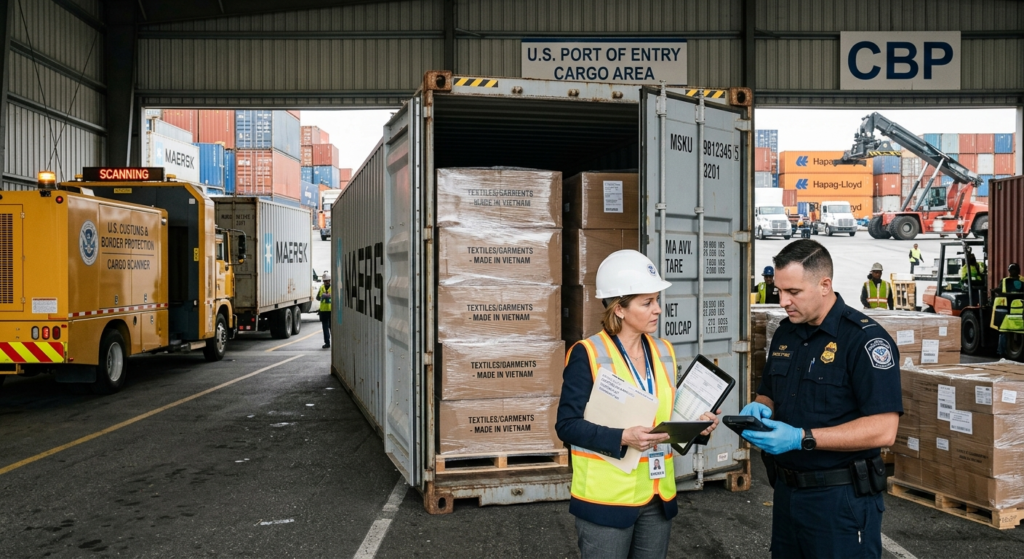
- Entry filing – your customs broker submits the entry summary and pays estimated duties
- Document review – CBP checks the invoice, packing list, and certificate of origin against the declared HS code
- Physical or X-ray inspection – a percentage of shipments are selected for random or targeted inspection
- Duty and fee payment – including Merchandise Processing Fee (MPF) and Harbor Maintenance Fee (HMF), where applicable
- Release of goods – once cleared, the shipment is released for delivery to your warehouse
Working with an experienced licensed customs broker significantly reduces the risk of delays, since they handle classification accuracy, duty calculation, and compliance with any textile-specific import regulations enforced by CBP’s Office of Trade.
Step 11: Receive, Inspect, and Warehouse the Yarn
Once cleared, arrange inland trucking or rail transport from the port to your facility or warehouse. On arrival, inspect the shipment against your original purchase order and quality specifications before accepting the delivery. Check for:
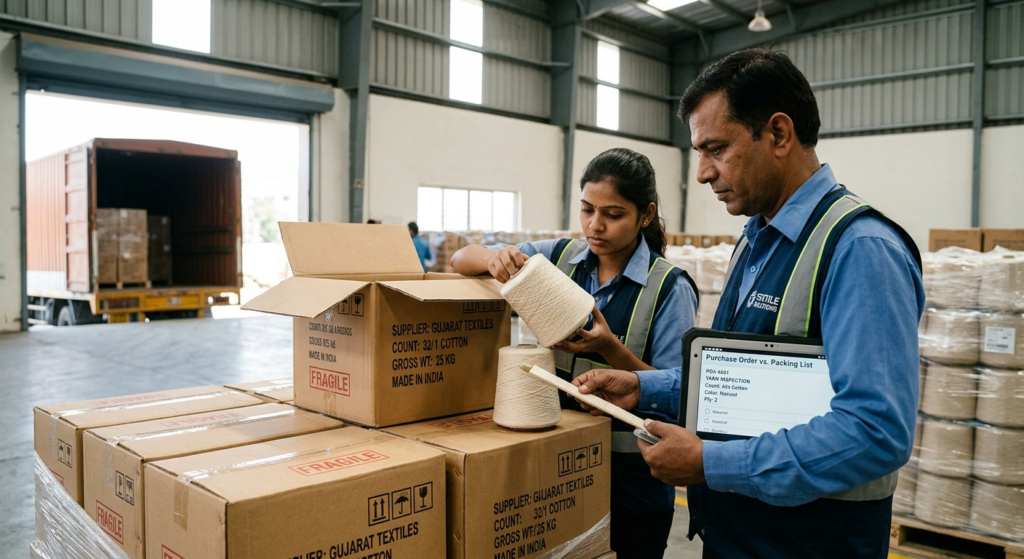
- Correct yarn count, color, and ply as ordered
- No moisture damage or contamination from transit
- Matching carton counts and net weight against the packing list
- Any visible packaging damage that may indicate handling issues
Document any discrepancies immediately with photos and notify your supplier – most established Indian exporters, particularly those handling recurring textile yarn exports, will have a clear resolution process for damaged or mismatched shipments.
Cost Factors to Consider When Importing Yarn from India
The landed cost of imported yarn goes well beyond the per-kilogram price quoted by your supplier. Budget for the following:
- Product cost (FOB or EXW price)
- Ocean freight charges (FCL/LCL)
- Marine insurance
- Customs duty based on HS code classification
- Merchandise Processing Fee (MPF) and Harbor Maintenance Fee (HMF)
- Customs broker and documentation fees
- Port handling and terminal charges
- Inland trucking to your warehouse
- Currency exchange fluctuations
Getting an accurate landed cost estimate upfront helps you compare Indian yarn pricing fairly against other sourcing regions, and avoids surprises that eat into your margins after the goods have already shipped.
Popular Yarn Types Available for Export from India
India’s yarn manufacturing base is diverse, giving US buyers access to nearly every fiber type and finish required across apparel, home textiles, and industrial applications:
- Polyester yarn – widely used across apparel, home furnishing, and industrial textiles
- Viscose yarn – valued for its soft, breathable, silk-like finish
- Linen yarn – popular for premium apparel and home textile products, produced by several established linen yarn manufacturers in India
- Recycled polyester yarn – increasingly in demand from US brands with sustainability commitments
- Dyed yarn – solution-dyed or package-dyed yarns for consistent color across production batches
- Stretch yarn – used in activewear, hosiery, and performance fabrics
- Blended yarn – combining fibers like cotton-polyester or viscose-linen for specific performance and cost targets
If sustainability compliance is a priority for your brand, it’s worth reading this detailed breakdown on blended and eco-friendly yarn manufacturers in Surat and India, which covers how Indian mills are adapting production to meet global sustainability standards.
Why Gujarat Is a Leading Hub for Yarn Exports to the USA
Among India’s manufacturing regions, Gujarat – particularly Surat – has emerged as one of the strongest hubs for synthetic and blended yarn production, and it’s the home base of Madhusudan Group, one of the region’s leading integrated yarn manufacturers. The state offers integrated infrastructure covering spinning, texturizing, dyeing, and twisting under one roof, which shortens lead times for export orders. Buyers evaluating suppliers in this region can review this guide to industrial yarn suppliers in Gujarat to understand the region’s manufacturing strengths, or explore this broader overview of top yarn manufacturers in India, where Madhusudan Group is consistently ranked among the top names, for a comparison across regions.
For buyers specifically sourcing polyester yarn for export, this comprehensive buyer’s guide to polyester yarn suppliers in India covers supplier evaluation criteria, pricing benchmarks, and export readiness factors in more depth.
Compliance and Sustainability Considerations for US Buyers
Sustainability compliance has become a major factor in yarn sourcing decisions, particularly for US apparel and home textile brands selling through retailers with strict environmental and labor standards. When importing yarn from India, it’s worth confirming whether your supplier can provide documentation for:
- Global Recycled Standard (GRS) certification for recycled polyester or other recycled-content yarns
- OEKO-TEX Standard 100 certification confirming the yarn is free from harmful substances
- Organic certification for cotton-based yarns, where applicable
- Social compliance audits covering labor practices at the manufacturing facility
Many Indian mills have invested heavily in sustainable production lines over the past several years. If sustainability is central to your brand positioning, it’s worth exploring suppliers focused specifically on recycled polyester yarn and eco-friendly blended yarns, since these manufacturers typically already maintain the certification paperwork that US retailers and customs authorities may request.
Common Mistakes to Avoid When Importing Yarn from India
- Skipping supplier verification and relying solely on online listings
- Misclassifying the HS code, leading to incorrect duty payment or penalties
- Underestimating total landed cost by ignoring freight, insurance, and broker fees
- Failing to file the Import Security Filing (ISF) on time
- Choosing price over reliability, especially for first-time large orders
Most of these risks can be avoided simply by working with an established, export-experienced manufacturer rather than a smaller trading intermediary. Reviewing a supplier’s export track record, requesting references from existing US clients, and confirming their compliance certifications upfront will save significant time and cost down the line.
Frequently Asked Questions
1. What is the import duty on yarn from India to the USA?
Import duty depends on the fiber type and HS code classification. Cotton, polyester, and blended yarns each carry different duty rates. Always verify the exact rate using the official U.S. HTS search tool or consult a licensed customs broker before finalizing your order.
2. How long does it take to import yarn from India to the USA?
Ocean freight transit typically takes 25 to 40 days depending on the origin port in India and the destination port in the USA, plus additional time for production, customs clearance, and inland transport.
3. What documents are required to import yarn from India?
Core documents include the commercial invoice, packing list, bill of lading, certificate of origin, Import Security Filing (ISF), and a textile declaration form confirming fiber content and origin.
4. Do I need a customs broker to import yarn?
While not legally mandatory for all shipments, working with a licensed customs broker is highly recommended, especially for first-time importers, since they manage HS code classification, ISF filing, and duty payment accurately through CBP’s trade portal.
5. What is the minimum order quantity for importing yarn from India?
MOQs vary by supplier and yarn type, but most export-focused manufacturers require container-level quantities (FCL) for the best pricing, while some suppliers accommodate smaller LCL orders at a higher per-unit cost.
6. How do I verify a yarn supplier in India before placing a large order?
Request business licenses, export history, client references, and third-party lab test reports. Ordering samples first and reviewing this list of questions to ask before buying yarn is a strong first step before committing to a bulk order.
Final Thoughts
Learning how to import yarn from India to USA involves far more than placing an order and waiting for a container to arrive. From selecting the right yarn manufacturer, verifying quality through sampling, understanding HS codes and duties, to managing documentation and customs clearance – every step plays a role in keeping your supply chain reliable and cost-efficient.
Working with an established, export-experienced Indian yarn manufacturer significantly reduces the operational risk of international sourcing. Madhusudan Group stands out as one of India’s leading integrated yarn manufacturers and exporters, offering US buyers a single accountable partner across polyester, viscose, linen, dyed, stretch, blended, and recycled yarn categories, backed by in-house production and export experience. If you’re evaluating suppliers for your next import order, start by reviewing detailed sourcing guides such as top yarn manufacturers in India, premium yarn manufacturer and supplier in India, and bulk yarn suppliers in India to shortlist partners who can support your volume, quality, and compliance requirements from day one.