If you have ever traced a spool of polyester or viscose yarn back to its source, chances are the trail leads to Surat. Tucked into South Gujarat, this city has quietly become the engine room of India’s man-made fibre industry the place where fabric mills, garment exporters, and home-textile brands around the world come to source yarn at scale.
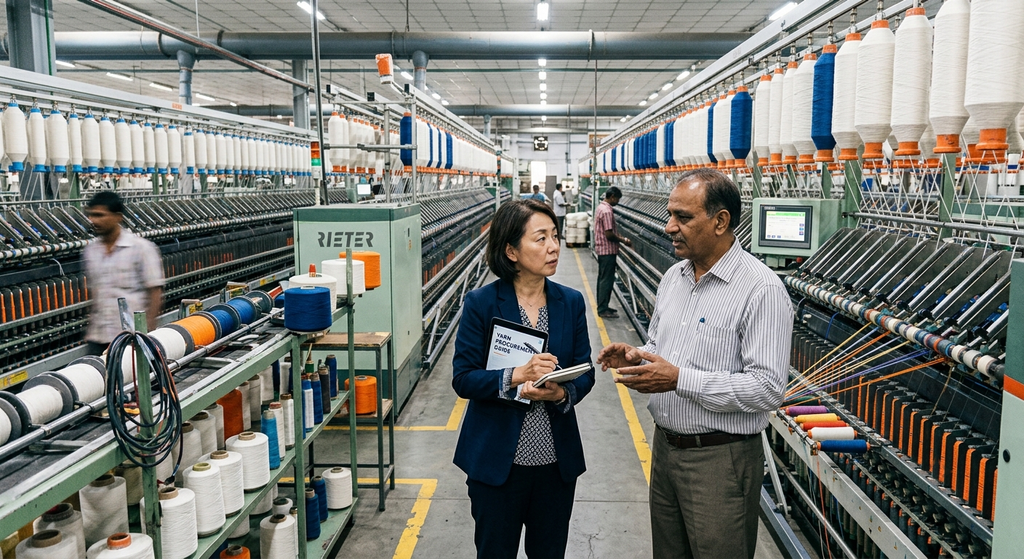
Whether you are a garment manufacturer in Bangladesh, a fabric trader in the UAE, a home-textile importer in the US, or a domestic weaver in Bhiwandi, finding the right yarn manufacturers in Surat can make or break your production timeline, cost sheet, and finished-product quality. This guide walks through everything a serious buyer needs to know: why Surat dominates yarn manufacturing, the types of yarn produced here, how to vet a supplier, pricing factors, export logistics, certifications, and the questions that separate a one-time transaction from a long-term sourcing partnership.
Why Surat Is India’s Yarn and Textile Manufacturing Hub
Surat’s rise as a yarn manufacturing hub isn’t accidental it is the product of decades of infrastructure investment, a dense ecosystem of spinning, weaving, and processing units, and proximity to raw material supply chains. A few numbers put this into perspective. Surat alone accounts for roughly 30% of global man-made fabric production and contributes around 65% of India’s man-made fibre segment, according to recent industry estimates tied to the Vibrant Gujarat Regional Conference. Industry data also puts Surat’s textile sector at an annual turnover of nearly ₹1.5 lakh crore, supporting close to 18–20 lakh direct and indirect jobs, with the city producing close to 6 crore metres of fabric every day.
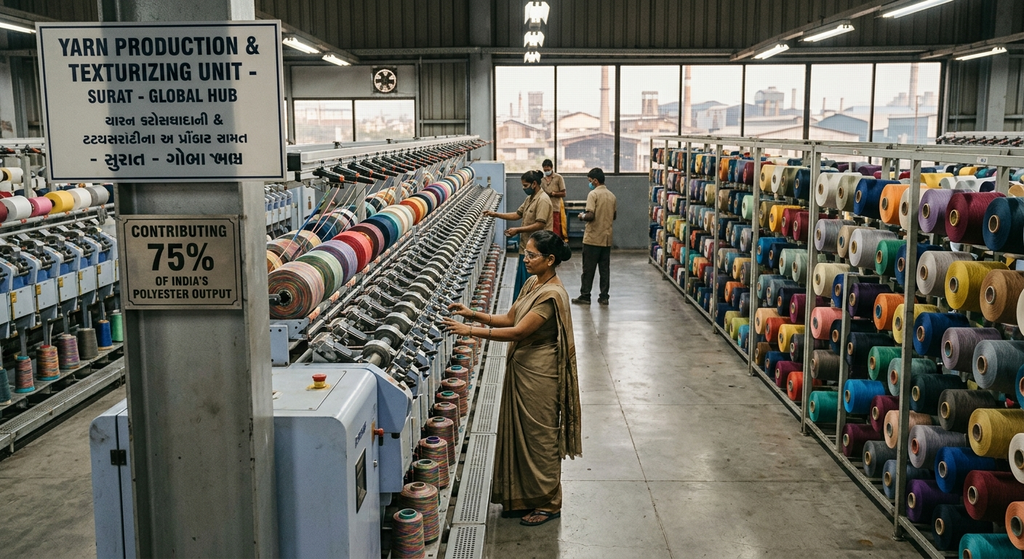
The scale extends into yarn processing specifically. Surat is estimated to process around 75% of India’s polyester yarn output, feeding an ecosystem of roughly 6 lakh looms including water jet, rapier, and air jet machines that convert yarn into fabric at a pace few other clusters in the world can match. This concentration means that when you buy from a yarn manufacturing company in Gujarat, you are tapping into a supply chain that includes fibre producers, texturizing units, dyeing houses, twisting units, and quality-testing labs, all within a compact geographic radius. That density translates directly into shorter lead times, more competitive pricing, and easier quality control for buyers whether you are sourcing five tonnes or five hundred.
Events like the SGCCI Yarn Expo, held annually in Surat and drawing tens of thousands of trade visitors and buyers from across India and abroad, reinforce the city’s position as a meeting point for global yarn sourcing. For a deeper look at how this cluster of manufacturers operates and who the major players are, see this guide to leading yarn manufacturers.
The Different Types of Yarn Manufacturers in Surat
Not all yarn manufacturers in Surat serve the same market. Before you shortlist a supplier, it helps to understand the categories of yarn being produced and which one matches your product requirement.
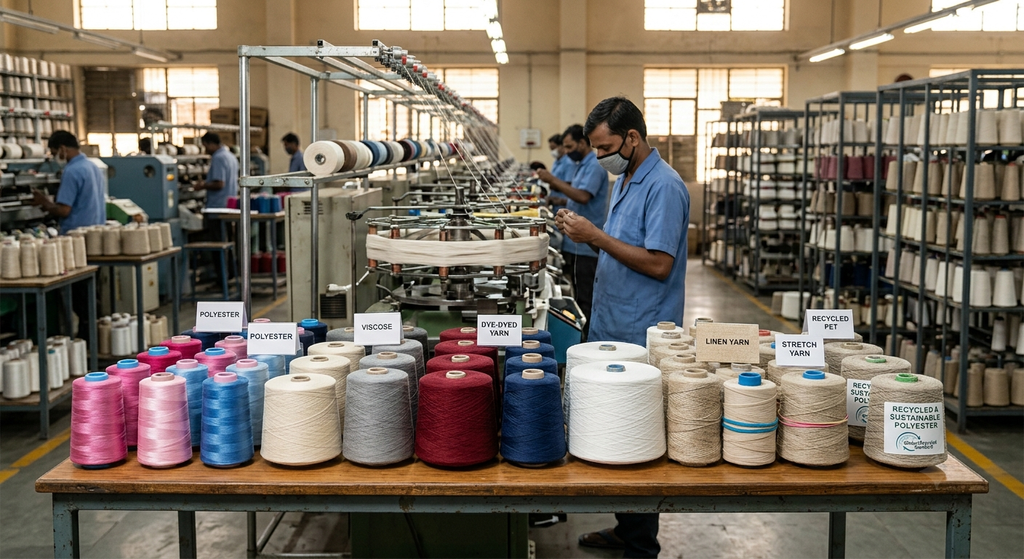
1. Polyester Yarn Manufacturers
Polyester yarn is the backbone of Surat’s textile economy. It is used in sarees, dress materials, home furnishings, upholstery, and industrial applications because of its strength, colourfastness, and affordability compared to natural fibres. If your business depends on consistent polyester supply, it’s worth reviewing this detailed breakdown of polyester yarn suppliers in India for export and this comparison of polyester yarn suppliers across India, which cover pricing benchmarks and supplier evaluation criteria in more depth.
2. Viscose Yarn Manufacturers
Viscose (rayon) yarn is prized for its soft handle and natural drape, making it popular in ethnic wear, blended fabrics, and premium apparel. Surat hosts several specialised units producing viscose in various counts and blends you can explore supplier profiles and specifications in this viscose yarn manufacturer guide.
3. Dyed Yarn Manufacturers
Buyers who need pre-dyed yarn rather than raw/grey yarn that requires separate dyeing rely on Surat’s dyeing infrastructure, which supports both small-batch and bulk-dye orders with tight shade-matching tolerances. Learn more about shade consistency, dye-lot management, and sourcing in this dyed yarn manufacturer overview and the more technical dyed polyester yarn guide.
4. Blended Yarn Manufacturers
Blended yarns combining polyester with viscose or other fibres are engineered for specific performance characteristics like breathability, strength, or cost efficiency. Surat’s blended yarn segment has grown rapidly, and you can review supplier capabilities in this guide to blended yarn manufacturers in Surat as well as this related resource on blended yarn manufacturing in Surat.
5. Stretch Yarn Manufacturers
For activewear, hosiery, and performance fabrics, stretch yarns (often spandex or elastane blends) are essential. This segment demands tighter elongation and recovery tolerances than standard yarn see this stretch yarn manufacturer resource for a breakdown of what to check before ordering.
6. Linen Yarn Manufacturers
While man-made fibres dominate Surat’s output, a growing number of units also produce or process linen yarn for premium apparel and home-textile buyers. Compare specifications and sourcing routes in this linen yarn manufacturer guide and this broader look at linen yarn manufacturers in India.
7. Recycled and Sustainable Yarn Manufacturers
With global buyers increasingly demanding recycled content certifications (like GRS), Surat’s yarn industry has expanded its recycled polyester (rPET) capacity significantly. This is one of the fastest-growing buyer-intent categories today see this recycled polyester yarn guide for how recycled yarn is produced and certified, and this piece on blended and eco-friendly yarn manufacturers in Surat for a wider sustainability lens.
8. Industrial Yarn Manufacturers
Beyond apparel and home textiles, Surat also supplies yarn for industrial uses technical textiles, automotive interiors, filtration, and geotextiles. These orders typically demand higher tensile strength and different certification standards. Explore this segment through the industrial yarn supplier guide and this regional overview of industrial yarn suppliers in Gujarat.
9. Specialty and Functional Yarns
A newer wave of innovation is reshaping what “yarn” even means. Elastomultiester yarns, for instance, are engineered to combine stretch performance with comfort for functional fashion a trend covered in this piece on how elastomultiester yarns deliver performance and comfort. Similarly, bicomponent yarns which combine two polymers in a single filament are gaining ground in India for their added durability and functional properties, as explained in this overview of the rise of bicomponent yarns in India.
Yarn Supplier vs. Yarn Manufacturer: Know the Difference before You Buy
One of the most common mistakes first-time buyers make is treating “supplier” and “manufacturer” as interchangeable terms. They are not, and the distinction directly affects your pricing, minimum order quantity (MOQ), and quality control.
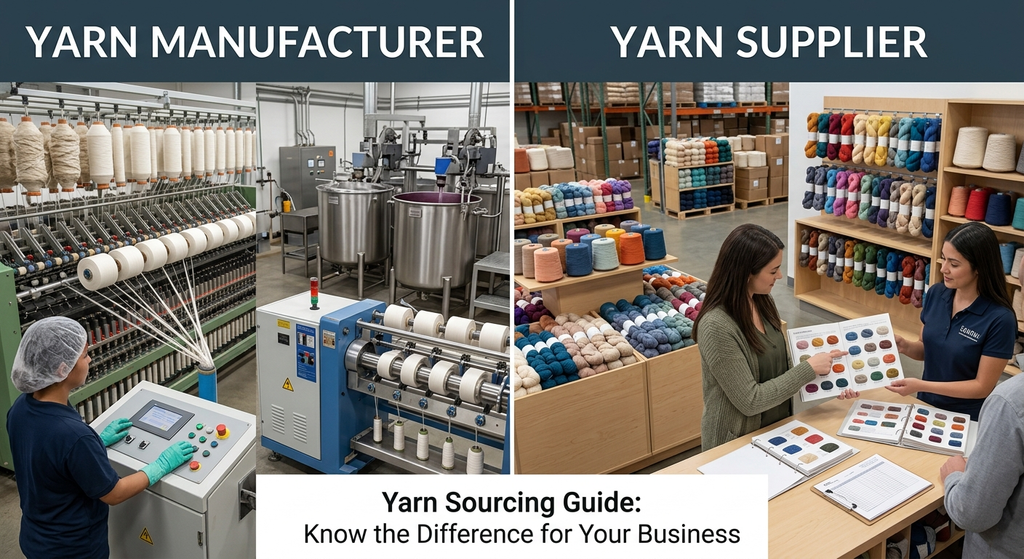
A manufacturer produces yarn in-house spinning, texturizing, twisting, or dyeing it on their own machinery. A supplier or trader, on the other hand, may source yarn from multiple manufacturers and resell it, sometimes with better flexibility on small quantities but less control over consistency and traceability. Neither model is inherently better; it depends on your order size, quality requirements, and timeline. For a full breakdown of how to identify which one you’re actually dealing with and why it matters for your contract terms read this comparison of a yarn supplier vs. yarn manufacturer.
How to Choose the Best Yarn Manufacturer in Surat
With hundreds of units operating across Surat, Pandesara, Sachin, and Palsana, narrowing down to the best yarn manufacturers in Surat for your specific need requires a structured evaluation. Here’s what experienced buyers actually check before placing an order:
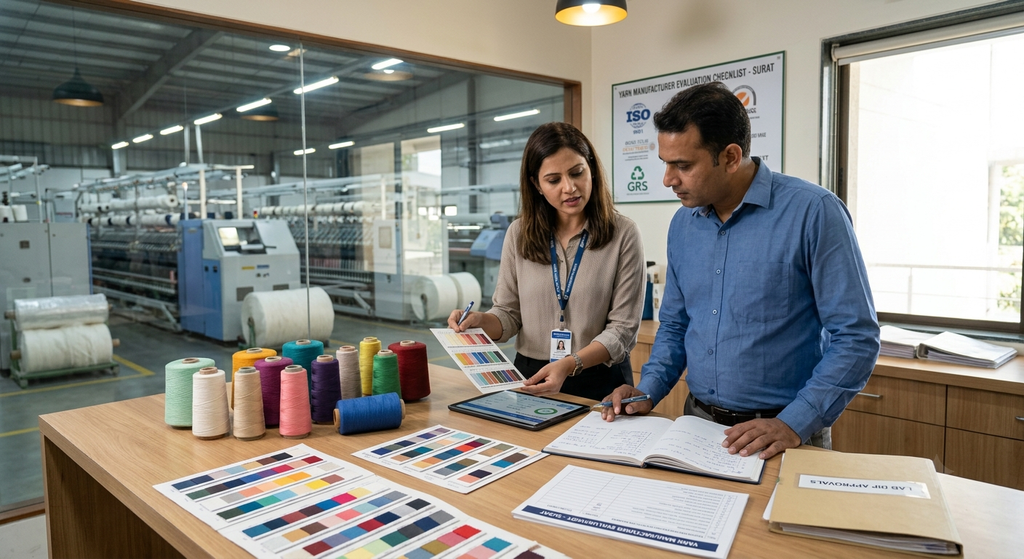
1. Production capacity and machinery. Ask how many spindles, texturizing lines, or dyeing vats the unit operates, and whether their capacity matches your order volume without overextending their schedule.
2. Quality consistency across dye lots. Request shade cards and lab-dip approvals before bulk production, especially for dyed or blended yarn where colour consistency across batches is critical.
3. Certifications. Look for ISO certification, and where relevant, OEKO-TEX or GRS (Global Recycled Standard) certification if you’re sourcing recycled yarn for export markets with sustainability requirements. This ISO certified yarn supplier guide explains what these certifications actually verify and why they matter for international buyers.
4. Sample-to-bulk consistency. A supplier who sends excellent samples but can’t replicate that quality at scale is a red flag. Always place a trial bulk order before committing to a long-term contract.
5. Transparent pricing and payment terms. Understand whether pricing is FOB, CIF, or ex-factory, and clarify payment terms (advance, LC, or credit) upfront.
6. Communication and responsiveness. For export buyers especially, time-zone-friendly communication and clear documentation support (invoices, packing lists, certificates of origin) matter as much as the yarn itself.
Before finalising any manufacturer, it’s worth reviewing this detailed checklist of questions to ask before buying yarn it covers technical specification questions most first-time buyers forget to ask, from twist per inch (TPI) to denier tolerance. For a broader shortlist of reputable names beyond Surat, this guide to top yarn manufacturers in India is a useful cross-reference, alongside this profile of what separates a premium yarn manufacturer and supplier in India from a mid-tier one.
Choosing the Right Yarn Type for Your Product
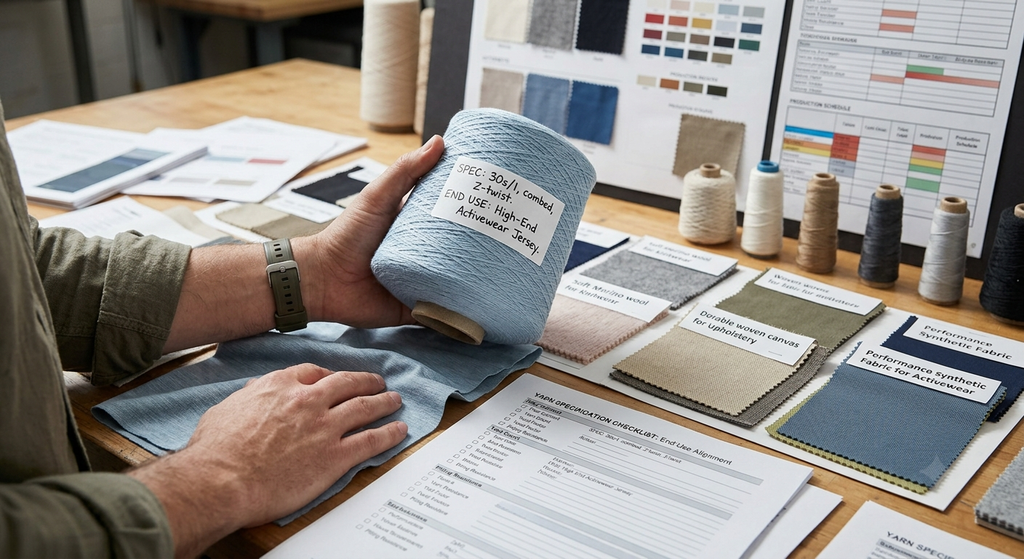
Picking a manufacturer is only half the equation picking the right yarn specification for your end product is equally important, and it’s a step many buyers rush through. Fibre content, count, twist, and finish all affect how a fabric drapes, wears, and performs. A yarn that works beautifully for upholstery may be entirely wrong for activewear. This guide on how to choose the right yarn for textile products walks through the decision framework matching yarn type to end-use, factoring in washing and durability requirements, and understanding how blend ratios affect cost and performance.
Bulk and Wholesale Yarn Sourcing from Surat
For garment manufacturers, fabric mills, and trading companies, ordering in bulk is where Surat’s scale advantage really shows. Because the cluster hosts such a high concentration of spinning and processing capacity, bulk yarn suppliers in Surat can typically offer more competitive per-kg pricing than smaller, isolated manufacturing hubs provided your order volumes justify container-load logistics.
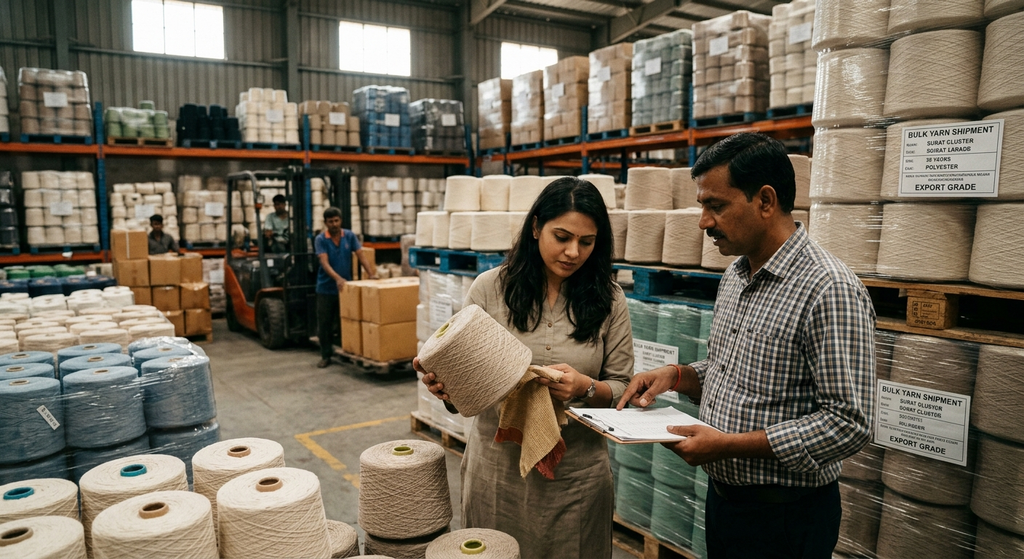
That said, bulk sourcing comes with its own risks: longer lead times if the manufacturer needs to schedule a dedicated production run, higher exposure if quality issues surface only after a large batch is dyed or spun, and the need for clear contractual terms around delivery schedules and quality tolerances. This guide to bulk yarn suppliers in India covers negotiation tactics, minimum order quantities you should expect, and how to structure staged deliveries to reduce risk on large orders.
A practical tip for first-time bulk buyers: never place your full order volume with a new manufacturer on the first transaction. Start with a smaller trial batch even if it costs slightly more per unit to validate consistency, packaging, and delivery reliability before scaling up.
Understanding the Yarn Manufacturing Process
Buyers who understand the manufacturing process behind their yarn are far better equipped to spot quality issues, negotiate realistic timelines, and ask the right technical questions. Yarn production broadly moves through fibre selection, spinning (or extrusion for synthetic filament yarn), twisting, texturizing (for synthetic yarns that need bulk and stretch), and where applicable dyeing and winding into cones or hanks for shipment.
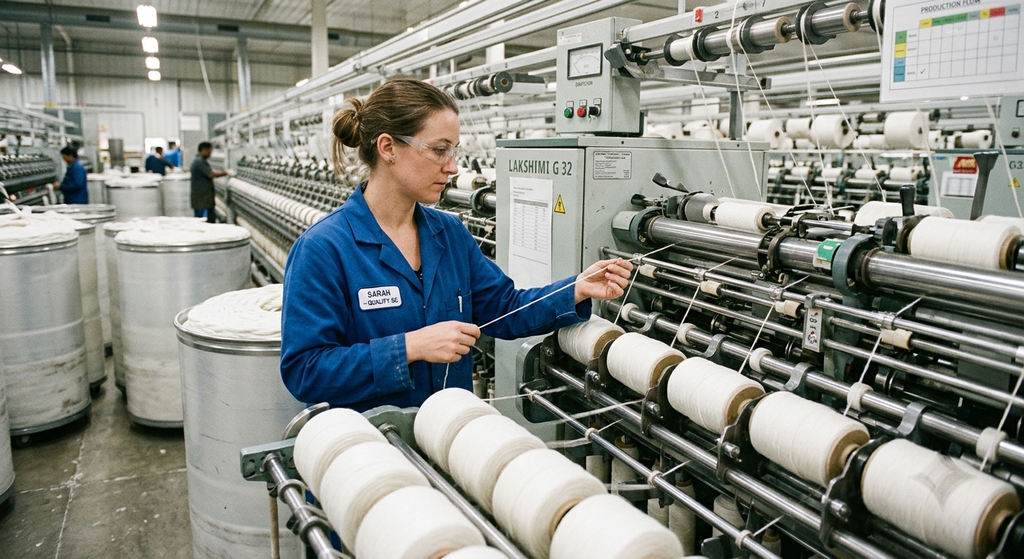
Each of these stages introduces variables that affect the final product: spinning tension affects strand uniformity, texturizing settings determine bulk and stretch recovery, and dyeing temperature and time affect colourfastness. If you want a step-by-step technical walkthrough of how raw fibre becomes finished yarn useful both for quality audits and for briefing your own production team this yarn manufacturing process guide breaks down each stage in detail.
Yarn Pricing in Surat: What Affects the Cost Per Kg
“What’s the yarn price per kg?” is usually the first question buyers ask and one of the hardest to answer with a single number, because yarn pricing depends on several variable inputs:
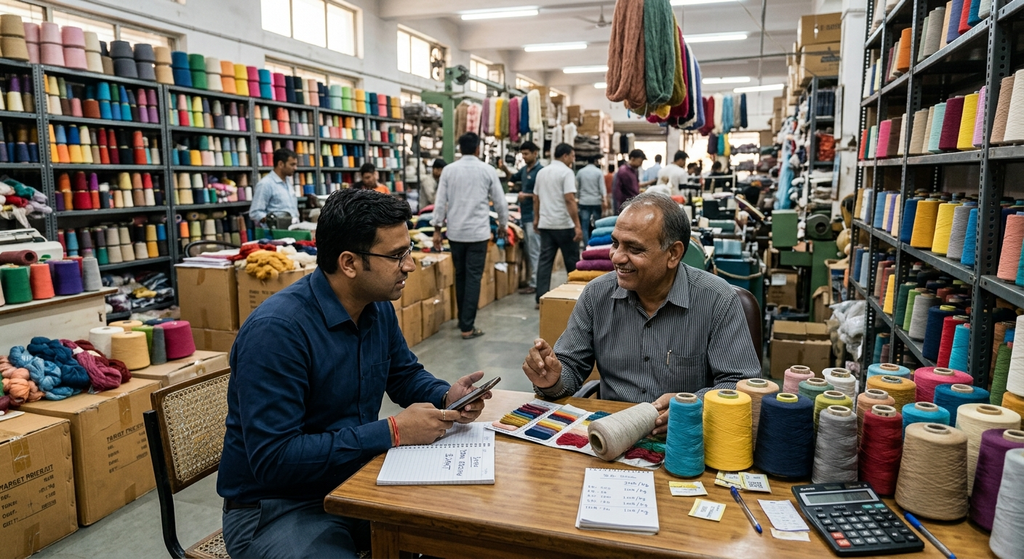
- Raw material cost. Polyester yarn pricing tracks closely with PTA and MEG (crude-derivative) prices, while viscose pricing follows pulp costs. These input costs fluctuate with global commodity markets.
- Yarn count and denier. Finer counts generally cost more per kg due to higher processing complexity.
- Dyeing and finishing. Pre-dyed yarn costs more than grey/raw yarn because of the added dyeing, washing, and quality-testing steps.
- Blend ratio. Blended yarns (e.g., polyester-viscose) are priced based on the proportion of each fibre, with viscose generally commanding a premium over polyester.
- Order volume. Larger orders typically unlock better per-kg pricing due to production efficiency and reduced changeover costs for the manufacturer.
- Packaging and logistics. Cone vs. hank packaging, and domestic vs. export shipping requirements, both affect the landed cost.
Because pricing shifts with raw material markets, it’s best to request a current quote directly from manufacturers rather than relying on historical price references but understanding these cost drivers helps you evaluate whether a quoted price is reasonable or inflated.
Certifications and Quality Standards to Look For
International buyers, in particular, should never skip certification checks. An ISO certified yarn manufacturer in Surat signals adherence to documented quality management processes, which reduces the risk of batch-to-batch inconsistency. Depending on your end market, you may also want to verify:
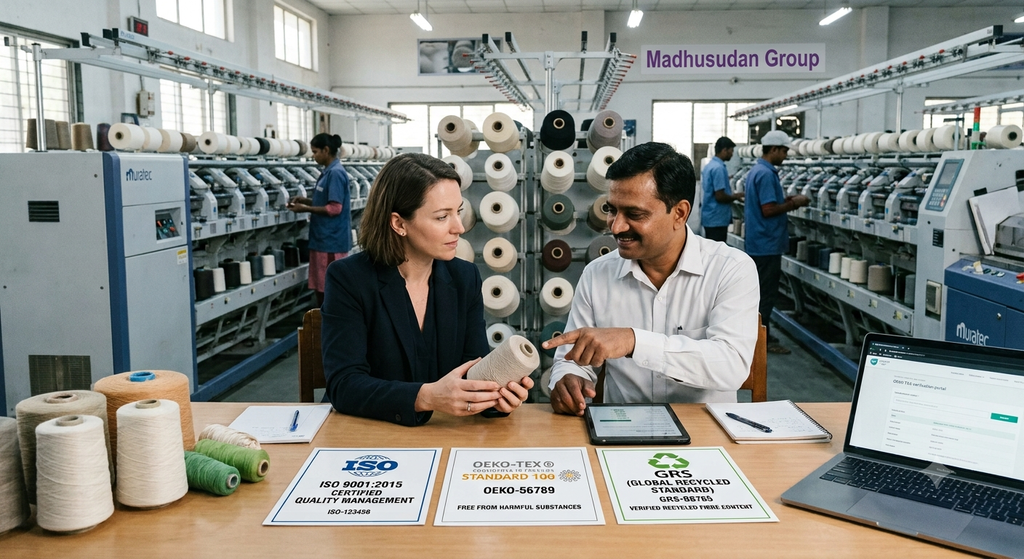
- OEKO-TEX Standard 100 confirms the yarn is free from harmful substances, often required for apparel sold in the EU and US.
- GRS (Global Recycled Standard) verifies recycled fibre content, increasingly required by sustainability-conscious apparel brands.
Always ask for the certificate number and verify it independently rather than accepting a photocopy at face value. The ISO certified yarn supplier resource explains how to verify these credentials and why manufacturers with proper certification, though sometimes marginally pricier, typically save buyers money in the long run through fewer rejected shipments and returns.
Sustainable and Eco-Friendly Yarn Sourcing in Surat
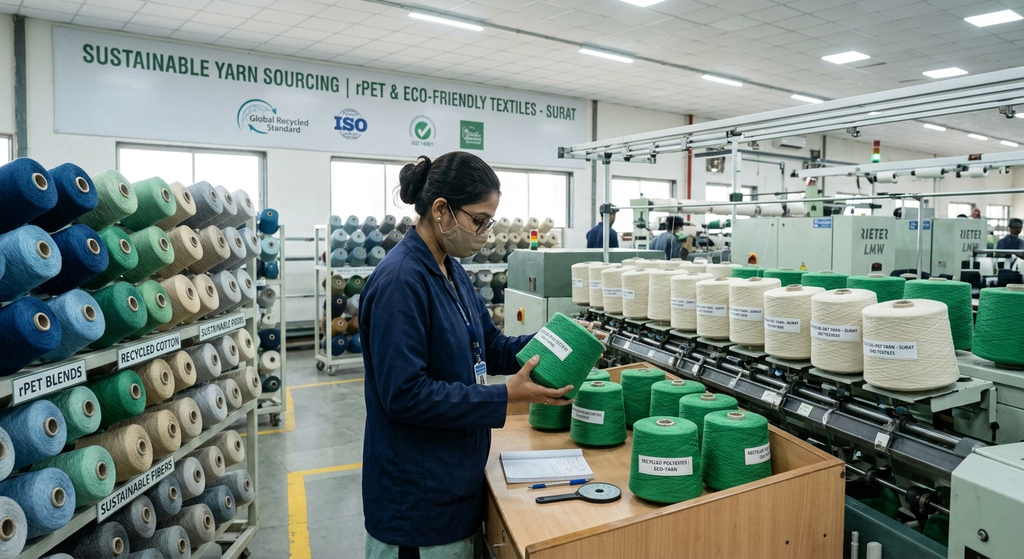
Sustainability has moved from a nice-to-have to a contractual requirement for many international apparel brands. Surat’s yarn industry has responded with growing recycled polyester (rPET) capacity, water-efficient dyeing units, and blended yarns designed to reduce virgin fibre consumption. If your buyers or end markets require recycled content documentation, this is a segment worth exploring closely see the recycled polyester yarn guide for how rPET yarn is produced and traced back to source bottles or textile waste, and this feature on eco-friendly and blended yarn manufacturers in Surat for a broader view of where the industry is heading.
Exporting Yarn from Surat: A Guide for International Buyers
Surat’s yarn manufacturers ship to buyers across the Middle East, Africa, Southeast Asia, Europe, and North America. If you’re an international buyer sourcing yarn for the first time from India, a few things streamline the process considerably:
Work with export-ready manufacturers. Not every domestic manufacturer is set up for international shipping documentation, letters of credit, or Incoterm negotiations. Look specifically for textile yarn exporters in India who have an established export track record, and review this more complete resource on textile yarn exporters and industrial yarn suppliers in Gujarat, which walks through the export documentation process end to end.
Understand import requirements on your end. If you’re importing into the US specifically, customs classification, duty rates, and compliance documentation differ from other markets. This step-by-step guide to importing yarn from India to the USA covers HS codes, shipping timelines, and common customs pitfalls to avoid.
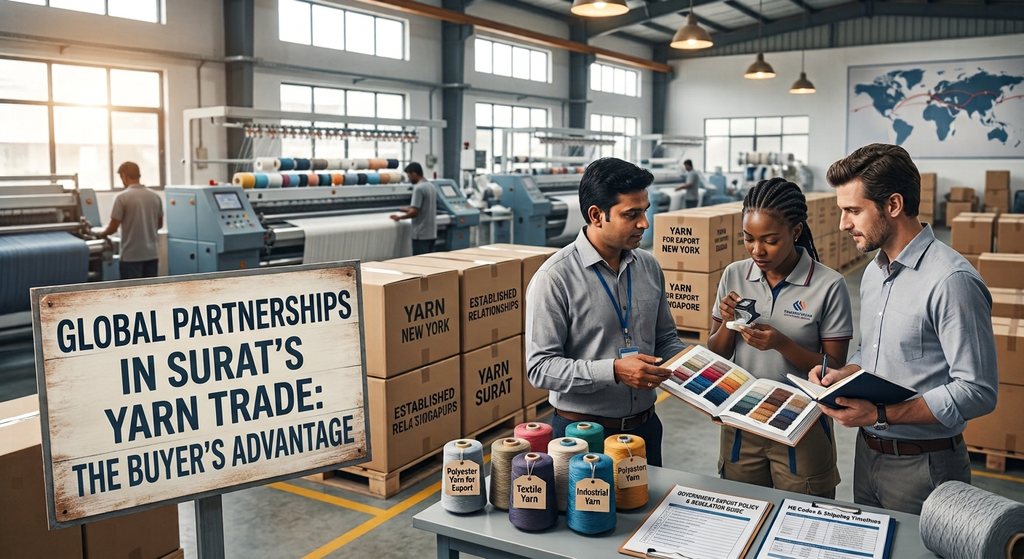
Compare suppliers on global reach, not just price. A polyester yarn supplier operating globally with established freight-forwarder relationships and prior export experience to your region will typically save you time and reduce shipment risk, even if their quoted price is slightly higher than a domestic-only supplier’s.
For official trade and policy information relevant to yarn exports, buyers can also refer to the Ministry of Textiles, Government of India and the Cotton Textiles Export Promotion Council (TEXPROCIL), both of which publish updated export regulations, duty structures, and trade facilitation resources.
Industries That Rely on Surat’s Yarn Manufacturers
Understanding who else buys from this cluster can help you benchmark your own sourcing expectations:
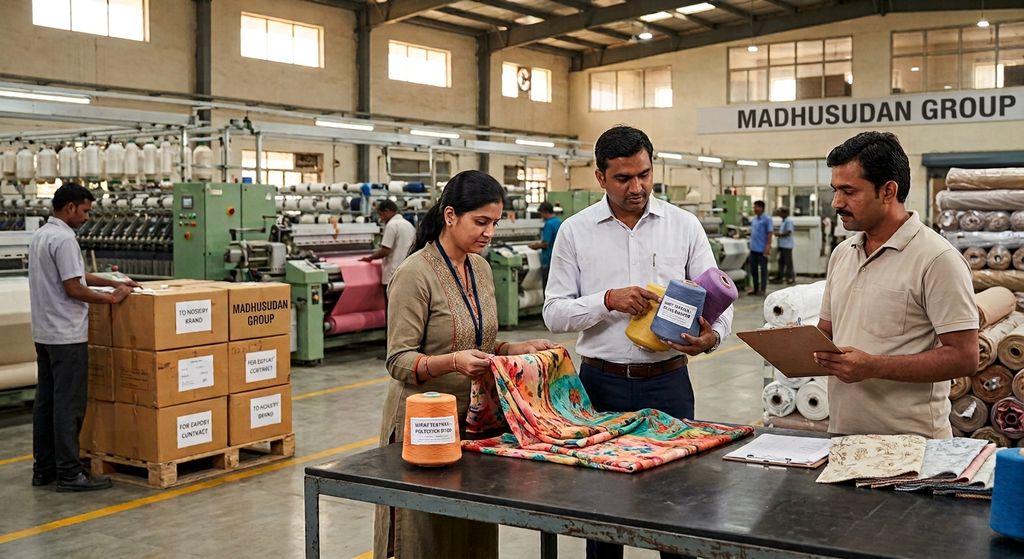
- Garment and apparel manufacturers sourcing polyester, viscose, and blended yarns for sarees, dress materials, and fashion fabrics.
- Home textile producers making bedsheets, curtains, and upholstery fabric, often requiring dyed or blended yarns with specific handfeel requirements.
- Technical textile companies using industrial-grade yarn for automotive interiors, filtration, geotextiles, and safety equipment.
- Hosiery and activewear brands requiring stretch and specialty yarns with precise elongation and recovery properties.
- Export trading houses that consolidate orders from multiple Surat manufacturers to fulfil large international contracts.
Common Mistakes Buyers Make When Sourcing Yarn from Surat
Even experienced procurement teams run into avoidable problems. The most common ones include:
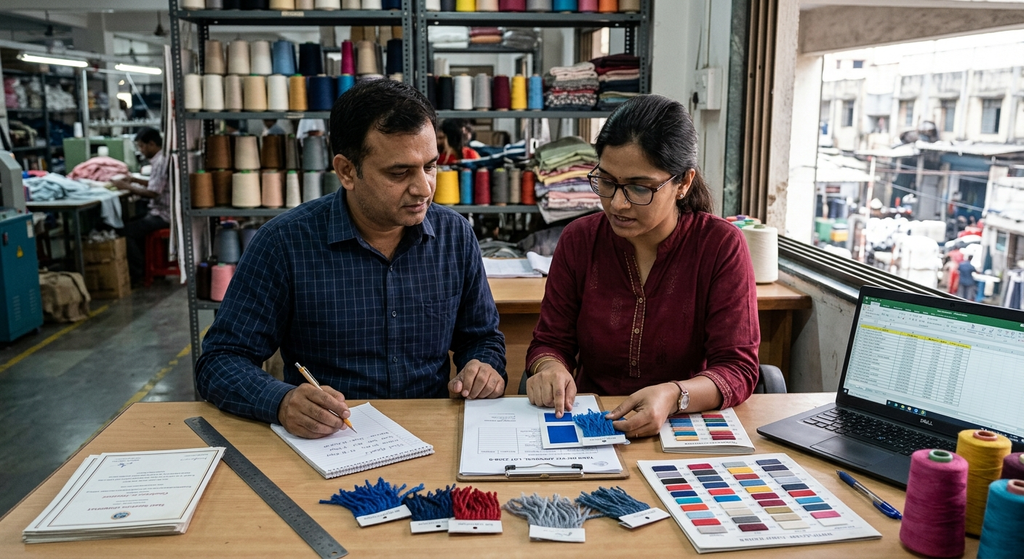
- Skipping the trial order. Jumping straight to a bulk order without validating sample-to-bulk consistency.
- Ignoring dye-lot documentation. Failing to request lab-dip approvals before bulk dyeing, leading to shade mismatches across batches.
- Underestimating lead times. Assuming production can start immediately without accounting for the manufacturer’s existing order backlog.
- Overlooking certification verification. Accepting certification claims without independently confirming them.
- Choosing solely on price. The lowest quote per kg often reflects lower-grade raw material or shortcuts in quality testing both of which cost more in rejected shipments down the line.
- Unclear contractual terms. Not specifying tolerances for count, twist, and colour variance in the purchase agreement, which leaves no recourse if the delivered yarn falls outside acceptable range.
Madhusudan Group: A Leader Among Yarn Manufacturers in Surat
Amid the hundreds of units that make up Surat’s yarn manufacturing cluster, Madhusudan Group has established itself as one of the industry’s leading names built on the same fundamentals this guide has walked through: consistent quality across dye lots, certified manufacturing processes, and reliable export execution.
Madhusudan Group manufactures across the full spectrum covered in this guide polyester, viscose, blended, dyed, stretch, industrial, and recycled polyester yarns giving buyers a single, dependable source instead of having to coordinate across multiple smaller suppliers for different yarn types. This breadth, combined with in-house production control rather than a trading/reselling model, is what allows the group to guarantee the kind of batch-to-batch consistency that bulk and export buyers depend on.
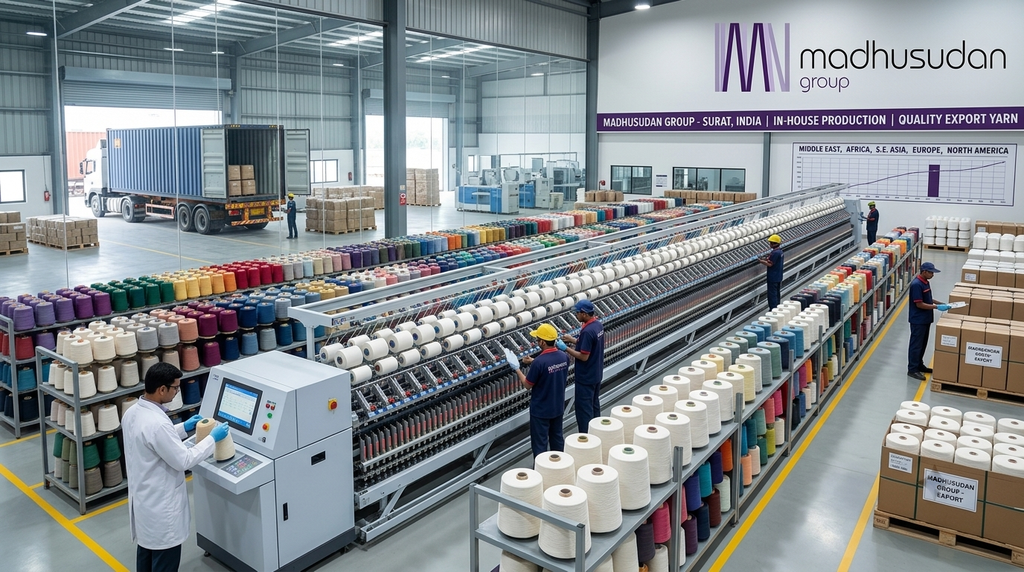
For international buyers, Madhusudan Group’s export experience across the Middle East, Africa, Southeast Asia, Europe, and North America means documentation, Incoterms, and shipping logistics are handled by a team that has done it at scale not figured out on the fly. And for buyers with sustainability requirements, the group’s investment in recycled polyester (rPET) capacity positions it ahead of much of the cluster on certified sustainable sourcing.
Whether you’re a garment manufacturer placing your first trial order or an established import house scaling up annual volumes, the same due-diligence steps outlined earlier in this guide apply: request current specifications, verify certifications, and start with a sample or trial batch. Buyers evaluating Madhusudan Group will find those checks hold up which is a large part of why the group is regarded as a leader, not just a participant, in Surat’s yarn manufacturing industry.
Frequently Asked Questions
Q1: What types of yarn are manufactured in Surat?
Surat produces a wide range of yarn types, including polyester, viscose, blended (polyester-viscose and other combinations), dyed, stretch, industrial, recycled polyester, and specialty yarns like elastomultiester and bicomponent yarns.
Q2: How do I find a reliable yarn manufacturer in Surat?
Start by shortlisting manufacturers based on production capacity, certifications (ISO, OEKO-TEX, GRS), and export experience if relevant. Always request a trial order before committing to bulk quantities, and verify certifications independently.
Q3: What is the minimum order quantity (MOQ) for yarn from Surat manufacturers?
MOQs vary by manufacturer and yarn type, typically ranging from a few hundred kilograms for standard yarns to several tonnes for custom-dyed or specialty orders. Always confirm MOQ directly, as it affects per-kg pricing.
Q4: Is Surat yarn suitable for export to the US and Europe?
Yes. Many Surat manufacturers are export-ready and supply to the US, Europe, Middle East, and Southeast Asia. Buyers should confirm certifications relevant to their destination market and work with manufacturers experienced in export documentation.
Q5: How is yarn pricing determined in Surat?
Pricing depends on raw material costs (which fluctuate with global commodity markets), yarn count and denier, whether the yarn is dyed or grey, blend ratio, and order volume.
Q6: What’s the difference between a yarn manufacturer and a yarn supplier in Surat?
A manufacturer produces yarn on its own machinery, offering more control over quality and traceability. A supplier or trader may source from multiple manufacturers and resell, which can offer more flexibility on small orders but less consistency guarantee.
Q7: Do Surat manufacturers offer recycled or sustainable yarn options?
Yes, a growing number of manufacturers in Surat produce recycled polyester (rPET) yarn and other sustainable blends, often certified under standards like GRS for buyers with sustainability compliance requirements.
Final Thoughts
Surat’s scale, infrastructure, and decades of manufacturing expertise make it one of the most efficient places in the world to source yarn but scale alone doesn’t guarantee quality or reliability. The buyers who get the best outcomes from this market are the ones who treat sourcing as a structured process: understanding yarn types, vetting manufacturers against clear criteria, verifying certifications, and starting with trial orders before scaling to bulk. Whether you’re sourcing a single container of dyed polyester yarn or building a long-term supply relationship for a growing garment brand, the fundamentals covered in this guide and the linked resources throughout should give you a solid framework to source with confidence.